
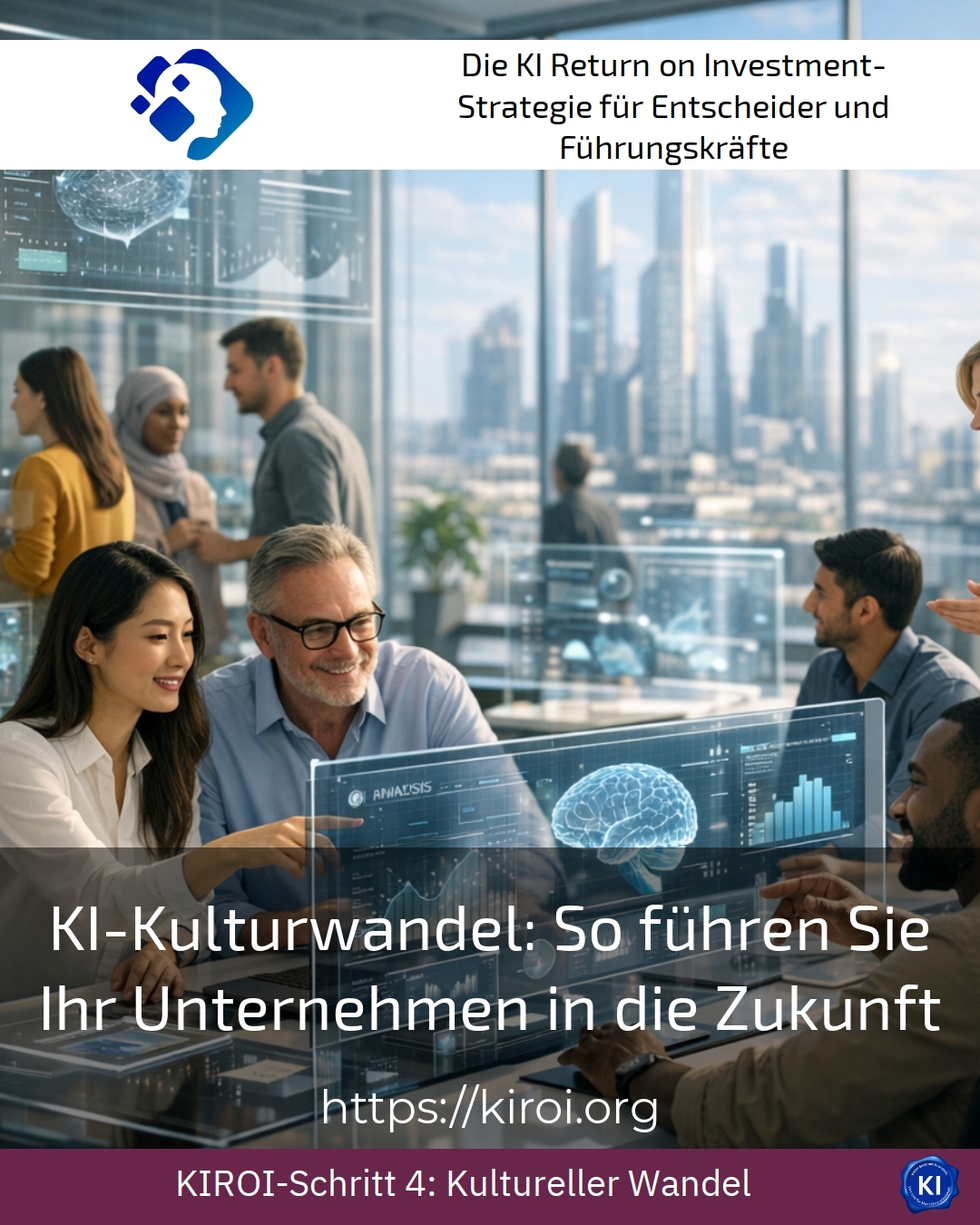
Have you ever wondered why some companies seem to sail effortlessly into the digital future while others, despite massive investments, are stuck at a standstill? The answer lies rarely in the technology itself, but rather in the profound changes that a digital transformation brings about. AI cultural change It requires change, because this transformation affects every single employee and every established habit within an organization. Many executives underestimate the fact that the implementation of intelligent systems means far more than installing new software or acquiring powerful hardware. It is about nothing less than a fundamental realignment of the entire corporate culture, which revolutionizes both ways of thinking and work processes, and which covers every aspect from sales to human resources.
Why the AI culture change is more than just a technology project
The biggest challenge in transformation lies not in the complexity of the algorithms. It lies in the minds of people. Studies show that over seventy percent of all digital transformation projects fail [1]. The main reason for this is almost always human resistance. Employees fear for their jobs. Leaders worry about their influence. And established processes suddenly seem threatened.
For example, a medium-sized machine engineering company invested several million euros in an intelligent maintenance system. The technology worked flawlessly. But the local technicians did not trust the predictions. They preferred their tried-and-tested routine inspections. The system was hardly used. A classic example of wasted potential.
A large insurance company experienced a similar situation. There, an intelligent system was intended to speed up claims processing. However, the claims officers perceived the automated decisions as an interference with their competence. Resistance took the form of passive refusal. The hoped-for efficiency gains remained elusive.
A well-known retail company also experienced this. Intelligent warehouse management systems met with skepticism. Experienced warehouse managers doubted that an algorithm could replace their decades of expertise. Only intensive training and the active involvement of employees turned the tide.
Best practice with a AIROI customer
An international logistics service provider approached us with a specific request, because despite significant investments in intelligent route optimization, the expected savings remained unachieved. The drivers systematically ignored the proposed routes. They trusted their own experience more than the digital recommendations. As part of the transruptive coaching, we first analyzed the underlying fears and resistance. We conducted workshops in which drivers were able to openly express their concerns. It turned out that many perceived the technology as a monitoring instrument. They felt controlled rather than supported. Together with the management, we developed a communication strategy that highlighted the benefits for each individual employee. Additionally, we implemented a feedback system that enabled drivers to feed their practical experiences into the system. Acceptance increased drastically within a few months. Fuel costs decreased by fifteen percent. Employees reported less stress and more planning certainty.
The five pillars of a successful AI cultural change
Sustainable change requires a well-thought-out foundation. This foundation consists of five central pillars that must interlock and reinforce each other.
Leaders as role models and catalysts for change
The first pillar concerns the leadership level itself. Managers do not just have to announce the change; they must also lead by example. For example, a manager of an automotive supplier uses intelligent analysis tools daily. He openly shares his experiences with the team. His enthusiasm is contagious.
The situation was different at a pharmaceutical company. There, management preached about the digital future. But the executives themselves continued to use printed reports. This discrepancy between words and actions undermined the credibility of the entire initiative.
The transformation at a medium-sized textile company was particularly impressive. The family owners themselves learned to use intelligent design tools. They showed no fear of new technology. This authentic attitude inspired the entire workforce [2].
Transparent communication as a foundation of trust
The second pillar is open and honest communication. Rumors and speculation poison any transformation. Employees need clear information about goals, timelines, and implications.
An energy provider established regular informational events where employees could ask questions and express concerns. The atmosphere was respectful and open. Fears were taken seriously. This transparency paid off in higher acceptance.
A financial services provider took a different approach. It created anonymous feedback channels. Employees could share their concerns without fear of consequences. Management responded to every submission. Trust gradually grew, but steadily.
Even a traditional media house embraced transparency. Regular newsletters informed about progress and setbacks. Success stories were shared. But mistakes were also openly named. This honesty strengthened the sense of community.
Continuing education as an investment in people
The third pillar includes systematic qualification measures. Technology is changing rapidly. Employees need to be able to keep up. Without continuous training, there is a risk of burnout.
A construction company invested heavily in training programs. Each employee received at least twenty hours of further education per year. The topics ranged from basic knowledge to specialized applications. The investment paid off multiple times.
A food manufacturer went one step further. They established an internal academy where employees could obtain various certifications. Career paths were linked to new competencies. Motivation and engagement increased significantly.
One telecommunications provider was particularly innovative. It implemented peer learning programs. Experienced employees trained their colleagues. This approach promoted both knowledge transfer and team cohesion [3].
Best practice with a AIROI customer
A family-run furniture manufacturer struggled with strong generational conflicts related to the digital transformation, as younger employees enthusiastically embraced the new systems, while experienced craftsmen felt left behind and not valued. The management turned to our transruptive coaching to find a solution. We developed a cross-generational mentoring program where young and old learned from each other. Young employees shared their technical knowledge with experienced colleagues. In return, the craftsmen provided invaluable practical expertise. These tandems worked together on concrete projects. The atmosphere shifted from competition to cooperation. Experienced employees recognized that their expertise remained valuable. Younger colleagues gained respect for traditional craftsmanship. The company benefited from this symbiosis in many ways. Product quality and innovation rate both increased in parallel. Employee satisfaction reached record levels.
Recognising and constructively using resistance in the AI culture shift
Resistance to change is of course valuable and even necessary. It signals that people are committed. It shows that they are thinking. Wise leaders use this energy constructively.
A chemical company appointed critical employees as project ambassadors. These skeptical voices were involved in decision-making processes. Their objections led to improvements. From critics, they became convinced advocates.
A machine builder did something similar. He invited the most vocal skeptics to pilot projects. These employees were able to test the new systems early on. Their feedback flowed directly into the development process. They felt included and respected.
A hospital also used resistance productively. Concerned nurses wrote down their concerns in writing. The management carefully reviewed every complaint. Many suggestions led to concrete adjustments. The final solution was better than originally planned.
Celebrating small successes and making them visible
Major transformations take time. But people need success stories. That’s why small milestones are so important. They motivate and show progress.
A trading company introduced monthly success reports. Each department shared their small victories. These stories inspired other teams. Positive competition emerged in a healthy way.
A software house established virtual awards. Employees could nominate colleagues for innovative use. The winners received public recognition. This simple measure significantly increased engagement.
A hotel group organized regular innovation breakfasts. Teams presented their progress there. The informal setting fostered open exchange. Ideas were shared and developed [4].
The Role of External Support in Transformation
Sometimes it takes a fresh perspective from the outside. Internal company blindness can hinder progress. External experts bring fresh perspectives. They recognize patterns that insiders miss.
A traditional publishing house sought external support. The consultants identified hidden resistance at the middle management level. These obstacles were specifically addressed. The change gained new momentum.
One automotive manufacturer used external coaches for its executives. These individual conversations helped them address personal fears. Managers became authentic agents of change. The effect radiated to their teams.
Even a medium-sized tool manufacturer benefited from external support. Experts moderated difficult conversations between departments. Old conflicts were resolved. Cooperation replaced the mindset of isolationism.
Best practice with a AIROI customer
A rapidly growing e-commerce company faced a particular challenge, as its corporate culture had not kept pace with the rapid growth. New employees adopted old habits without questioning them. At the same time, intelligent systems were to be introduced in all areas. The management recognized the need for professional support. In our transruptive coaching, we first analyzed the existing corporate culture. We identified supportive and hindering elements. Together with representatives from all levels, we developed a target culture. This was translated into concrete behaviors. Workshops at all hierarchical levels conveyed the new understanding. Leaders received individual coaching to change their leadership role. Regular reflection rounds ensured progress. After one year, the corporate culture had noticeably changed. The introduction of intelligent systems was now running smoothly. Employees reported more meaning and fulfillment in their work.
My AIROI Analysis
After numerous projects and intensive support for companies from various industries, clear patterns of success have emerged that are sustainable. AI cultural change Enable and contribute in the long term. The most successful transformations always begin with an honest assessment of the existing culture. Companies that know their weaknesses can work specifically on them. The leadership level plays a crucial role here, because without authentic leadership, any change remains superficial.
The effect of small, consistent steps is particularly impressive. Big announcements often fizzle out without any real impact. But continuous progress in manageable areas creates confidence and momentum. Employees experience that change is possible and has positive effects.
Involving skeptics regularly proves to be a key factor. Their critical questions improve solutions. Their conversion is more convincing than any marketing campaign. Resistance is not a threat, but a resource for smart leaders.
External support can significantly accelerate processes. It brings objectivity and specialized expertise. But it never replaces internal responsibility. The most lasting changes arise when external knowledge meets internal commitment. This combination creates transformations that not only appear superficial but are deeply embedded in the organization and bear lasting fruit.
Further links from the text above:
[1] McKinsey Insights on digital transformation
[2] Harvard Business Review on Leadership and Change
[3] Gartner Research on Continuing Education and Human Resources Development
[4] Forbes Innovation on the topic of corporate culture
For more information and if you have any questions, please contact Contact us or read more blog posts on the topic Artificial intelligence here.







 Deutsch
 English (UK)