
Will your employees still be relevant in five years, or will the machine take over their jobs?
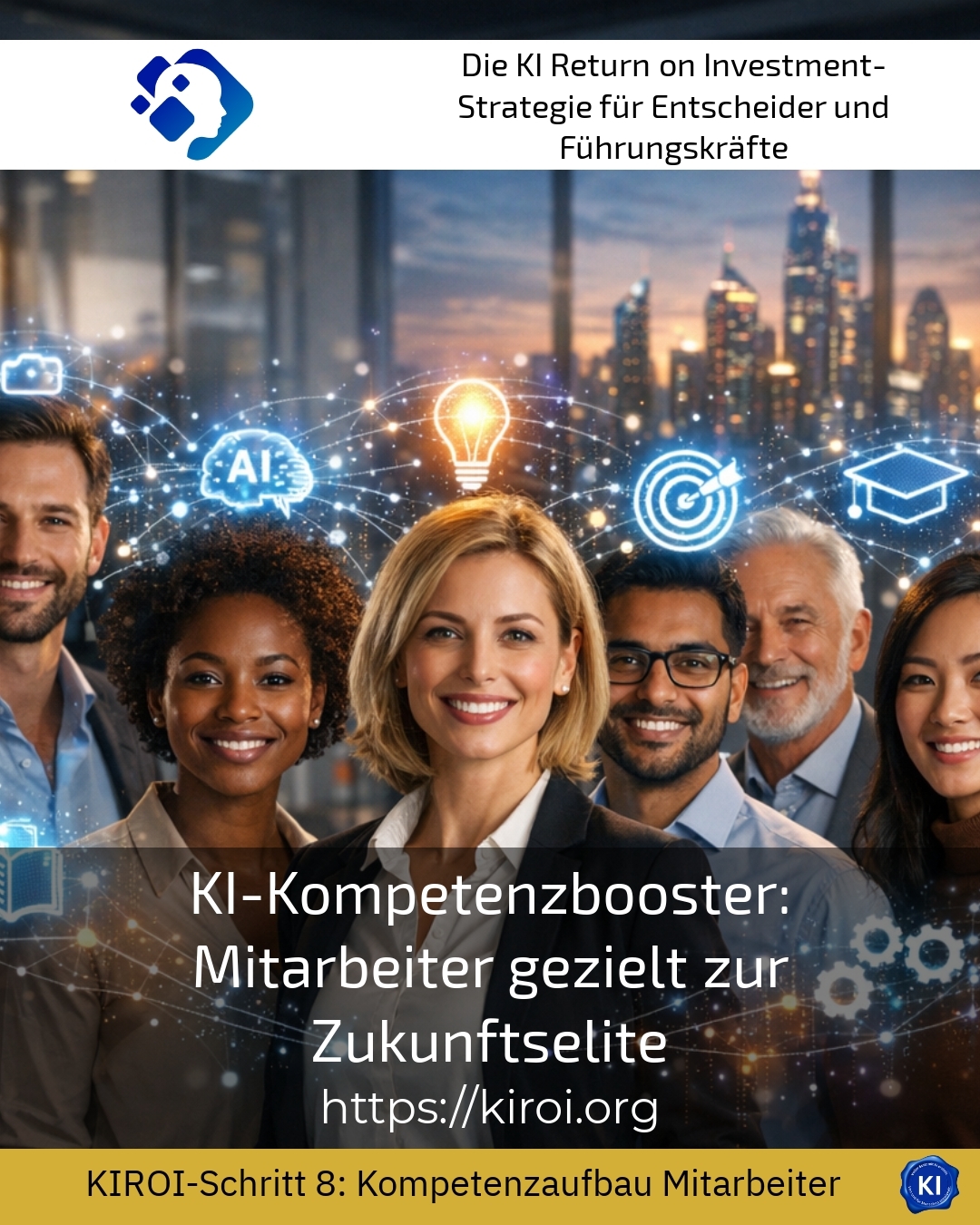
This question concerns executives and human resources managers worldwide. The transformation of the workplace is advancing relentlessly. The AI Skills Booster In doing so, it becomes the crucial tool. Companies that specifically prepare their workforce for the digital future secure a sustainable competitive advantage. But how can one turn average employees into a real elite of the future? What skills will be indispensable in the future? And why do many training programs fail to meet the realities of working life?
The need for strategic competence development
Rapid technological development is fundamentally changing professional roles. Activities that are still performed by humans today could be automated tomorrow. Therefore, companies must act proactively and empower their employees. The traditional approach of one-time training is no longer sufficient. Instead, a continuous learning ecosystem is needed. This system must be able to react flexibly to changes in the market. At the same time, it should enable individual learning paths.
Many executives report on uncertainties within the team. Employees often feel overwhelmed by new technologies. They do not know which competencies they should build. This is where structured coaching comes into play. transruptions coaching supports companies in addressing these very challenges. The focus is on sustainable development rather than short-term knowledge dissemination.
Best practice with a AIROI customer
A medium-sized manufacturing company faced a particular challenge in its personnel development. The workforce was on average over fifty years old and had little contact with digital technologies. The management feared resistance to the introduction of new systems. Together we developed a low-threshold approach to competency development. First, we identified so-called multipliers in various departments. These individuals showed openness to change and enjoyed the trust of their colleagues. In intensive workshops, we provided them with fundamental knowledge about technological connections. Subsequently, they passed on this knowledge in peer-to-peer sessions. The result exceeded the company’s expectations. Within six months, the acceptance of digital tools increased by over sixty percent. The multipliers became internal ambassadors of change. Today they actively support the introduction of further innovations in the company.
The AI Competence Booster as a Catalyst for Growth
An effective AI Skills Booster It encompasses several dimensions simultaneously. It is not just about technical knowledge. Rather, soft skills such as critical thinking must also be promoted. The ability to meaningfully connect humans and machines is becoming increasingly important. Creativity remains a human domain. However, it must be able to be used purposefully.
Clients often report feeling overwhelmed in the early stages. They don’t know where to start. The abundance of available tools and methods overwhelms them. Therefore, we recommend a structured approach with clear priorities. First, we analyze the existing competencies within the team. Then we identify gaps between the current state and the desired state. Finally, we develop customized learning paths for each employee.
A retail company used this method to digitize its stores. Salespeople suddenly had to work with intelligent cash registers. In addition, they were required to support customers using an app. Through targeted competency development, the transition went smoothly. A logistics service provider followed a similar approach when introducing automated warehouse systems. The employees learned to work with robots instead of against them. In healthcare, a clinic implemented training for diagnostic support systems. The nursing staff gained time for patient care.
Individual learning paths as a success factor in the AI competence booster
People learn differently and at different speeds. This insight must be taken into account by every modern training program. Standardized training often fails to achieve its goal. It overloads some people and bores others. Individual learning paths, on the other hand, adapt to the individual’s pace.
In the financial sector, an asset manager implemented such personalized development plans. Each advisor received a customized curriculum based on their experience. Younger employees focused on technological fundamentals. Experienced colleagues learned to multiply their expertise digitally. An insurance company followed a similar approach in claims processing. The claims officers developed skills in collaborating with intelligent systems. A bank trained its customer advisors in using automated analysis tools.
The role of leaders in the transformation process
Without committed leadership, any competence initiative fails. Managers must lead by example themselves. They should demonstrate their own willingness to learn and actively participate in programs. Only then can a real learning culture be created in the company. Employees are guided by the behavior of their superiors.
Many executives come to us with questions about their own positioning. They feel uncertain in the new digital world. transruptions coaching supports them in this personal development. We provide impulses for an authentic leadership style in the midst of change. This is not about perfect professional knowledge. Rather, it is about the ability to lead teams through uncertainty.
Best practice with a AIROI customer
A female manager from the mechanical engineering sector came to us with a specific request. Her management team showed strong resistance to technological changes. The managers feared a loss of control and saw their position threatened. In several coaching sessions, we worked on overcoming this obstacle. First, we explored the individual fears and concerns of the management team. Then, we jointly developed a new perspective on their role. The managers recognized that their experience is particularly valuable in times of change. They learned to see themselves as facilitators rather than controllers. This change in attitude had a positive impact on the entire company. The management team became active supporters of the transformation. They motivated their teams and removed obstacles. The implementation of new technologies was therefore significantly accelerated. Today, the company is considered a pioneer in its industry.
Measurable results through systematic competence development
Investments in further training must be worthwhile. Therefore, systematic measurement of success is indispensable. Key metrics such as productivity increases and error rates provide important insights. Employee satisfaction should also be recorded regularly. Qualitative feedback rounds complement the quantitative data.
An automotive supplier carefully documented the progress of its competence initiative [1]. The error rate in quality control significantly decreased thanks to trained staff. A pharmaceutical company measured the time savings in documenting clinical trials. Researchers were able to focus more strongly on their core tasks. An energy provider pursued cost savings through optimized grid control. The employees had learned to effectively use intelligent systems.
Future-oriented employees as a competitive advantage
Companies with competent workforces attract the best talent. A strong learning culture acts like a magnet for ambitious applicants [2]. At the same time, employee turnover among existing employees decreases. People stay where they can develop. The AI Skills Booster It thus becomes a strategic instrument for recruiting personnel.
In the consulting industry, a renowned management consulting firm is successfully using this approach. It positions itself as a learning organization and attracts top talent. A technology company has made similar experiences with recruiting engineers. The prospect of continuous development appeals to many candidates. This trend is also evident in the labor market in the craft sector. Companies with modern training programs find it easier to recruit new talent.
The AI literacy booster in practical implementation
Implementing a comprehensive competency program requires careful planning. First, an inventory of existing skills must be conducted. Then, target competencies for different roles are defined. Finally, concrete action plans with clear milestones are developed [3].
A media company recently underwent this process within its editorial department. The journalists learned to use intelligent research tools. At the same time, they honed their critical judgment in dealing with sources. A construction company adopted similar structures for its project managers. Today, they coordinate complex projects with digital support. In the restaurant industry, a hotel chain is experimenting with new service concepts. The staff combines technological tools with personal hospitality.
My AIROI Analysis
The systematic development of employees’ competencies represents one of the most important strategic tasks for companies. My experience from numerous projects shows that success depends on several factors. First and foremost is the genuine commitment of the management. Without this support, all initiatives remain piecemeal. Equally important is the involvement of employees from the very beginning. People are more likely to support changes if they can participate in their implementation.
Choosing the right methods and tools also plays a central role. Not every format suits every company or target audience. Some teams benefit from intensive workshops in person. Others develop better through self-directed digital learning. The combination of different approaches usually yields the best results.
What particularly impressed me was the power of multipliers within organizations. These internal ambassadors of change reach out to their colleagues on an equal footing. They speak the same language and understand the everyday challenges. Their authenticity often convinces more than external experts. That’s why I always recommend companies to specifically identify and promote these individuals. Building a true learning culture takes time and patience. But the investment is worth it in the long run for all involved.
Further links from the text above:
[1] McKinsey – Insights on People and Organisational Performance
[2] Gartner – Future of Work Research
[3] World Economic Forum – Skills and Workforce
For more information and if you have any questions, please contact Contact us or read more blog posts on the topic Artificial intelligence here.






 Deutsch
 English (UK)