
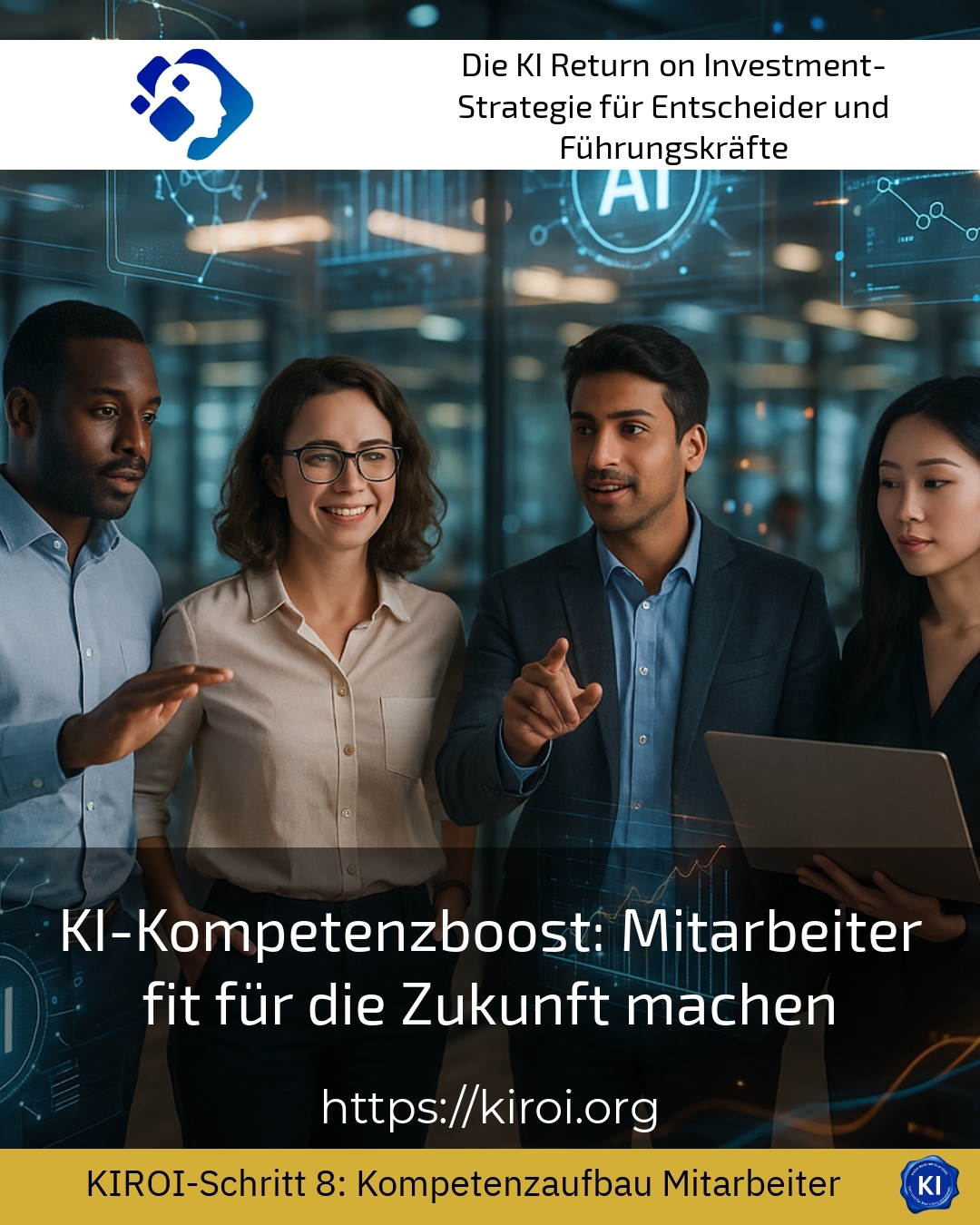
The digital transformation is changing our working world at a rapid pace. Companies face the challenge of preparing their teams for new technologies. AI Skills Boost: Getting Employees Ready for the Future This is no longer an option, but a strategic necessity. Anyone who does not invest in the further training of their employees today risks falling behind in the competition. But how can this change be achieved in a sustainable and human-centric way?
Why the AI skills boost is becoming indispensable now
The integration of intelligent systems into operational processes is advancing relentlessly. At the same time, uncertainty among many employees about their future role is growing. This tension can only be resolved through targeted training measures. This involves more than just technical understanding. Teams need a holistic competency profile that combines analytical thinking with creative problem solving. Transruptions coaching closely accompanies organizations through this complex transformation.
Many executives report similar challenges in their projects. The introduction of automated analysis tools often fails due to a lack of acceptance. Employees feel left behind or fear being replaced. Such resistance can be overcome through transparent communication and gradual competence development. A structured approach helps reduce fears and spark enthusiasm. This creates a learning organization that perceives change as an opportunity.
Industry-specific applications of intelligent technologies
In the manufacturing industry, predictive maintenance systems are revolutionizing production planning. Sensors continuously collect machine data and detect potential failures early. This requires completely new interpretative skills from technicians. In healthcare, intelligent diagnostic systems support doctors in image analysis. Radiologists must learn to interact with these tools and critically evaluate their recommendations. The financial sector relies on algorithmic risk analyses and automated fraud detection [1].
Retail uses personalized recommendation systems for individual customer interaction. Marketing teams need a deep understanding of data structures and customer segmentation to achieve this. In logistics, intelligent route planners optimize supply chains and significantly reduce transportation costs. Dispatchers work closely with digital assistants. The insurance industry is automating claims assessment through image recognition systems. Claim adjusters are increasingly taking on advisory and control functions instead of repetitive inspection tasks.
Best practice with a AIROI customer
A medium-sized mechanical engineering company faced the challenge of preparing its service team for predictive maintenance concepts. The technicians were highly skilled in classical mechanics and electronics. But they were unfamiliar with using data-based predictive models. Together with transruptions coaching, we developed a multi-month qualification program. First, we analyzed the existing competencies and identified development potential. Then we designed practical learning modules that linked theoretical knowledge with concrete application cases. The technicians learned to interpret sensor data and adapt maintenance intervals based on data. Particularly important was the teaching of a critical approach to algorithmic recommendations. After six months, the participants reported significantly increased confidence in handling new technologies. The production downtime decreased by significant percentages. The company now positions itself as an innovative service partner with a future-oriented workforce.
Strategies for a sustainable boost in AI competence within the company
A successful qualification strategy begins with an honest assessment of the existing skills. What competencies do the teams already possess? Where are there development needs and hidden potential? This analysis forms the foundation for all further steps. Subsequently, companies define clear learning objectives that are based on specific application scenarios. Abstract technology training often remains ineffective. Instead, employees should learn and experiment on real projects.
The chemical industry, for example, relies on lab-based training with simulated process optimizations. Researchers learn to evaluate algorithmic recommendations for recipe changes. In the automotive industry, engineers work with digital twins of their production facilities [2]. These virtual representations enable risk-free experimentation with new parameters. The energy sector trains grid planners in using load forecasting models. This enables the integration of renewable energy sources more efficiently.
Learning formats for different target groups
Not every employee needs the same level of qualification. Leaders should understand strategic potential and ethical implications. Subject matter experts need deep application knowledge in their specific field of work. All employees benefit from a fundamental understanding of data-driven decision-making processes. This differentiation enables resource-efficient and targeted training.
Banks have developed modular learning paths for different functional areas. Customer advisors learn to explain algorithmic investment recommendations in a comprehensible way. Risk managers deepen their knowledge of automated credit screening procedures. IT specialists qualify themselves to maintain and develop these systems. In the pharmaceutical industry, the requirements differ significantly depending on the department. Researchers require different competencies than approval experts or production workers. This diversity requires flexible and adaptable qualification concepts.
Best practice with a AIROI customer
A large insurance company wanted to prepare its claims department for automated assessment systems. The claims officers had decades of experience in manual case assessment. It was necessary to preserve this expertise while simultaneously adding new skills. Transruptions coaching accompanied the company in designing a two-stage program. In the first phase, experienced employees worked closely with the development team. They brought their expertise and learned at the same time the functioning of the algorithms. This tandem approach created valuable understanding on both sides. In the second phase, the trained employees took on the role of internal multipliers. They conveyed the new knowledge to their colleagues in a familiar language and with relevant examples. This peer-learning approach proved significantly more effective than external standard training courses. The acceptance of the new system steadily increased. Today, people and machines work harmoniously together in the damage department.
The human-centered approach to AI competence boost
Technology alone does not create transformation. People drive change and are instrumental in determining its success. Therefore, any qualification initiative must take the individual’s needs and concerns seriously. Clients often report initial fears about new systems. This uncertainty is human and understandable. It can be overcome through gradual introduction and positive success experiences.
In healthcare, the importance of trust in new technologies is particularly evident. Caregivers need to be convinced that digital assistants will support their work [3]. Only then will they integrate these tools meaningfully into their daily routines. The construction industry is experimenting with automated planning tools for construction projects. Architects and engineers are learning to use generative design suggestions as inspiration. In the media industry, hybrid work models are emerging between human creativity and algorithmic support. Journalists use intelligent research tools while still retaining editorial control.
Leadership skills for the technology-based work environment
Leaders play a key role in successfully developing the competencies of their teams. They must provide guidance and at the same time create spaces for experimentation. This requires a new balance between control and trust. Many managers report that it is challenging to remain learners themselves. This openness can become a model for the entire organization.
In the telecommunications industry, executives have formed their own learning groups. They exchange experiences and jointly develop new leadership approaches. The mechanical engineering industry relies on regular technology updates for management. This ensures that decision-makers are informed about current developments and their potential. The food industry promotes cross-departmental projects to optimize processes. Executives learn to coordinate interdisciplinary teams and integrate technological insights.
Best practice with a AIROI customer
An international logistics company wanted to qualify its branch managers for data-driven decision-making processes. The executives were operationally well-positioned but lacked familiarity with analytical tools. Transruptions Coaching developed a customized program for this specific target group. First, we identified the specific decision situations in the day-to-day management. Then we analyzed which data sources and analysis methods could support them. The training sessions took place in small groups and enabled intensive exchange. The participants worked with real data from their own branches. They developed dashboards for their key metrics and learned to interpret them. Particularly valuable were the joint reflection sessions on the decisions made. The executives reported on a significantly expanded perspective on their business areas. Today, they routinely use data-based insights for strategic and operational decisions.
My AIROI Analysis
The systematic development of skills in handling intelligent technologies is not a short-term initiative. It requires long-term commitment and continuous adaptation of training programs. Organizations that invest in their workforce today create sustainable competitive advantages for the years to come. Time and again, it is shown that technical training alone is not enough. The human factor determines the success or failure of any transformation initiative.
My experience from numerous mentoring projects confirms a key success factor: the combination of professional expertise with new technological possibilities. Employees who understand both worlds become valuable bridge builders within their organizations. They are able to recognize potential while providing realistic assessments. This hybrid competence is increasingly in demand on the labor market and is difficult to replace.
Transruptions coaching supports companies in designing individual development paths. We guide teams through change processes and provide impulses for sustainable learning cultures. The examples from various industries show that successful training must always be context-specific. What works in the financial sector cannot be applied directly to the healthcare sector. Therefore, we first analyze the specific requirements and constraints of each organization. Based on this, we develop tailored concepts for the AI competence boost: Making employees fit for the future is only possible with this individual approach.
Further links from the text above:
[1] McKinsey – The Economic Potential of Generative AI
[2] World Economic Forum – Future of Jobs Report
[3] PwC – Artificial Intelligence in Germany
For more information and if you have any questions, please contact Contact us or read more blog posts on the topic Artificial intelligence here.











 Deutsch
 English (UK)