
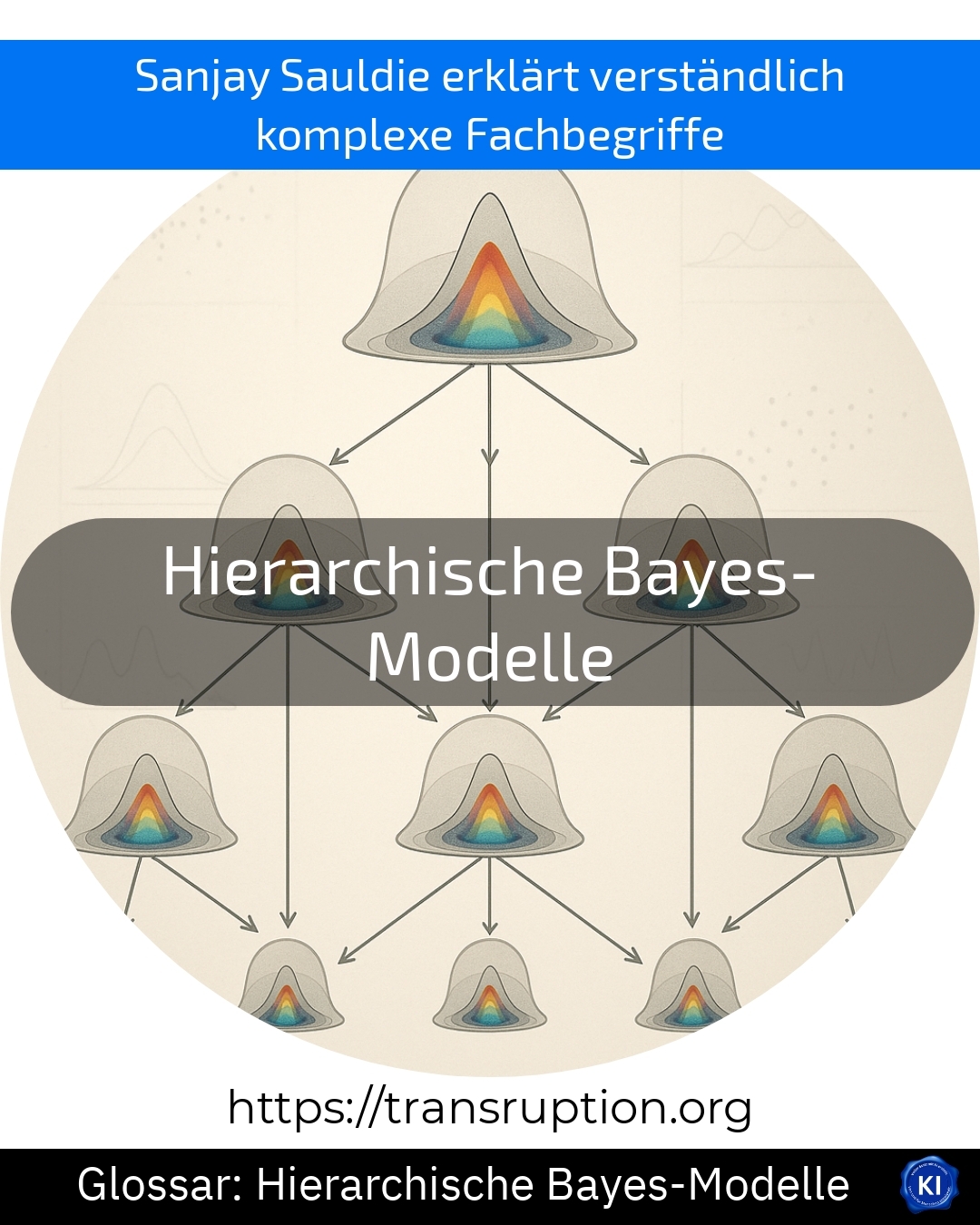
Hierarchical Bayes models belong in the realm of Big Data and Smart Data, as well as Artificial Intelligence. These models help to make better predictions from large and often complex datasets. The term „hierarchical“ means that the model considers different levels – for example, individual customers and then entire customer groups. „Bayes“ refers to a method that uses probabilities to optimally evaluate existing data.
A commonly used example can be found in online retail: a company wants to predict the purchasing probability of individual customers. Hierarchical Bayesian models not only consider the purchasing behaviour of each individual customer, but also recognise patterns across the entire customer group. This allows for targeted offers to be made that truly suit the individual.
Such models are used wherever data from different sources and at different levels need to be meaningfully combined. This enables more precise analyses, better forecasts and optimised decisions, for example in marketing, pricing strategies or product development. Hierarchical Bayesian models thus make modern data analysis even smarter and more effective.











 Deutsch
  English (UK)