
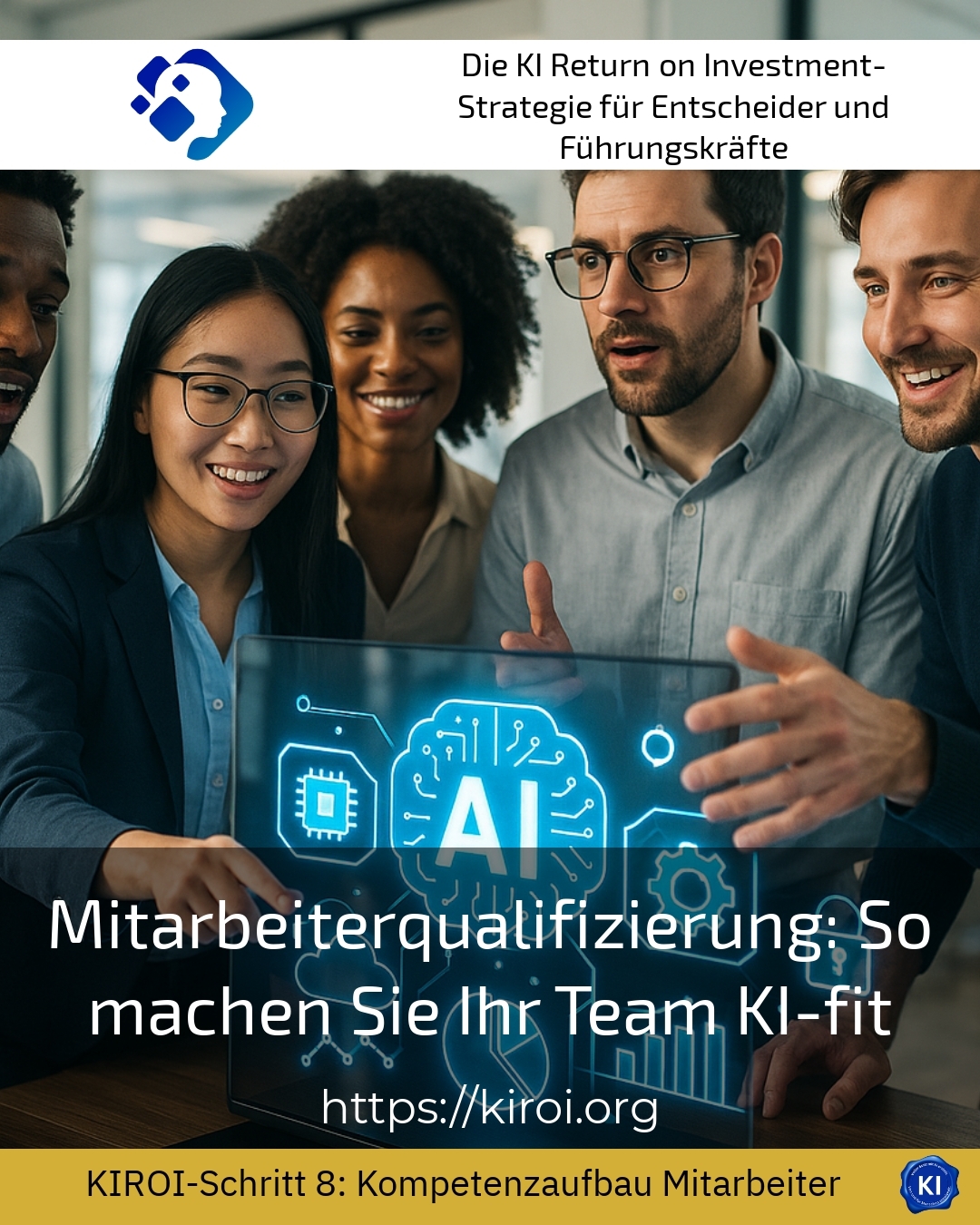
The digital transformation is changing all industries at an unprecedented pace. Companies today face a crucial challenge. They must prepare their workforce for completely new requirements. This is no longer just about technical knowledge. The Staff training encompasses a broad spectrum of competencies today. Anyone who wants to position their team for the future needs to think strategically. This article shows you practical ways for a successful transformation.
Why traditional further education is no longer sufficient today
Traditional training concepts are reaching their limits in the modern working world. In the past, it was sufficient to send employees to a seminar once a year. Today, requirements and technologies change almost daily. Therefore, companies need completely new approaches. Continuous learning must become an integral part of the corporate culture. Various factors play a crucial role in this.
We are experiencing this development particularly clearly in the healthcare sector, for example. Nursing staff suddenly have to work with digital documentation systems. Doctors use intelligent diagnostic tools to support their work. Administrative staff organise appointments via automated systems. These changes require completely new skills from all those involved. At the same time, interpersonal skills must not be neglected.
Hospitals often report initial resistance when introducing new systems. Staff feel overwhelmed and not adequately prepared. This is precisely where a well-thought-out Staff training This is how fears are allayed and trust is built in new processes. This creates a positive learning culture throughout the entire company.
Employee qualification as a strategic success factor
Forward-thinking staff development begins with an honest assessment. What competencies already exist within the team? What skills will be needed in the future? Where are the biggest gaps? Managers must answer these questions together with their teams. Only then can a realistic picture of the current situation be created.
This necessity is particularly evident in the logistics industry. Warehouse workers today operate highly automated picking systems. Dispatchers work with intelligent route planning tools. Customer advisors use chat-based assistance systems for quicker responses. All these changes require systematic training measures. This isn't just about technical operation.
Employees need to understand why certain changes are necessary. They must grasp the logic behind new systems. Only then can they truly use the technology effectively. Furthermore, this develops their ability to solve problems independently. This deeper competence distinguishes superficial training from genuine qualification.
Best practice with a AIROI customer
A medium-sized logistics company with around three hundred employees was facing a major challenge. The management wanted to introduce intelligent warehouse management systems, but the workforce showed considerable reservations. Many long-serving employees feared for their jobs and rejected the innovations. transruptions coaching accompanied the company through this sensitive transformation process over a period of several months. Firstly, we held detailed discussions with employees from all departments to understand their specific concerns. On this basis, we developed a multi-stage qualification programme that combined technical training with personal support. It was particularly important to involve experienced employees as internal multipliers and contacts. These digital ambassadors received intensive preliminary training and then supported their colleagues in their day-to-day work. After six months, the mood in the company had changed fundamentally. Productivity in the warehouse increased by more than twenty per cent and employee satisfaction reached new highs. This example shows impressively how important a holistic approach to change processes can be.
Practical approaches for a successful qualification strategy
An effective training strategy takes into account different learning types and needs. Not all employees learn in the same way. Some prefer classic in-person training with direct interaction. Others prefer self-directed learning via digital platforms. Still others benefit most from practical on-the-job training.
In retail, these differing preferences are a regular occurrence. Sales staff at checkouts need to master new payment systems. Store managers require expertise in data-based staff planning. Buyers work with intelligent forecasting tools for their product range. Each of these groups needs tailored learning opportunities and sufficient time.
Clients often report feeling overwhelmed by too many simultaneous changes. This is where we provide support with sensible prioritisation and pacing. Not everything needs to happen at once. A phased introduction gives employees time to adjust. This leads to sustainable learning successes rather than short-term overwhelm.
Staff Qualification in Practice: Best Practices
Microlearning has established itself as a particularly effective method. Complex content is broken down into small, digestible units. Employees can flexibly integrate these short learning sequences into their daily work routines. Fifteen minutes daily are often sufficient for sustainable learning progress. This method significantly reduces the barrier to entry and increases motivation.
The benefit of this approach is particularly evident in the manufacturing industry. Machine operators learn new functions through short video sequences directly at their workstations. Quality inspectors train on the use of intelligent inspection systems in manageable modules. Maintenance technicians update their knowledge of predictive maintenance systems step-by-step and continuously. This keeps ongoing operations largely undisturbed.
Peer learning represents another valuable method. Employees learn from each other through collegial exchange. More experienced colleagues share their knowledge with newcomers. At the same time, younger employees often bring fresh perspectives. This mutual cross-pollination creates a positive learning culture throughout the entire company.
Best practice with a AIROI customer
A large insurance company wanted to fundamentally modernise and automate its claims processing. In future, employees were to deploy and utilise intelligent assistance systems when assessing claims. The initial scepticism was enormous because many employees felt that their years of expertise were being called into question. As part of our support, we developed an innovative mentoring programme that worked across generations. Younger, tech-savvy employees explained the technical functions of the new systems to their more experienced colleagues. In return, the experienced clerks shared their valuable expertise on complex claims and important assessment criteria. This tandem structure created trust and mutual respect between the different generations in the company. Both sides benefited considerably from this exchange and developed new skills. After the successful pilot phase in one department, we gradually rolled out the programme to other areas. The error rate in damage assessment fell significantly and processing times were noticeably reduced. At the same time, employee satisfaction increased measurably because they felt valued and involved. Management recognised the value of employee experience as an indispensable complement to technological expertise.
The role of managers in staff training
Leaders play a key role in any upskilling initiative. They must lead by example and show a willingness to learn themselves. Employees very much take their cue from their managers' behaviour. If they view further training as a tiresome chore, this attitude will rub off on the team.
We observe this dynamic particularly frequently in the banking sector. Branch managers have to lead their teams through profound digital transformations. In doing so, many struggle themselves with the new requirements. Customer advisors are suddenly expected to conduct video consultations and use digital tools. These changes are only successful with convinced and competent leaders [1].
Leaders therefore often require intensive guidance and support themselves. They must learn to communicate change positively and take fears seriously. At the same time, they need to formulate clear expectations and provide direction. This leadership competence in transformation processes can be learned and developed.
Overcoming resistance and building motivation
Resistance to change is entirely normal and human. It often signals unspoken concerns or a lack of information. Savvy leaders take these signals seriously and address them. Open communication and genuine listening build trust. This creates space for constructive engagement with change.
In the hotel sector, we are experiencing this challenge in a particularly distinctive way. Reception staff must get used to and adapt to self-check-in systems. Housekeeping teams work with digital task management and prioritisation systems. Restaurant staff use intelligent reservation and ordering systems for better service [2]. Initially, all these changes unsettle many employees.
The solution lies in a supportive accompaniment of the change process. Employees must understand that technology is intended to support their work. It does not replace human competence, but meaningfully complements it. Conveying this understanding is a central task of leadership.
Establish a sustainable learning culture
One-off training measures are no longer sufficient for lasting change. Companies must establish and cultivate a continuous learning culture. Learning must be understood as an integral part of everyday work. This requires appropriate frameworks and sufficient resources.
In the manufacturing sector, innovative companies are implementing various measures. They are creating learning zones within production halls for practical training. They are establishing regular knowledge-sharing formats between different shifts. They are visibly rewarding learning progress and acknowledging commitment. This is how continuous learning becomes an integral part of the company culture [3].
The time constraints also play a crucial role. Employees need free time for learning during working hours. Those who expect further training only in their free time will encounter resistance. Smart companies consciously invest time in the development of their workforce.
Best practice with a AIROI customer
A family-run mechanical engineering company with a long tradition was facing a major generational change. At the same time, the management wanted to push ahead with digitalisation and introduce modern systems. Many older skilled workers with decades of experience were sceptical about the plans. In transruptions coaching, we jointly developed a strategy to secure knowledge and build expertise. Firstly, we systematically and comprehensively documented the valuable experience of the long-serving employees. This knowledge was incorporated into the configuration of the new intelligent systems and improved them considerably. At the same time, younger employees trained their experienced colleagues in the use of modern technologies and tools. This resulted in a respectful dialogue between the generations, which enriched the entire company. The older employees felt valued and recognised their contribution to success. The younger ones learnt that experience cannot be replaced by technology. After a year, the company had increased its productivity while retaining valuable knowledge. The Staff training It has become an integral part of corporate culture and strategy. Regular learning circles and knowledge-sharing formats are now part of the daily routine for all employees.
My AIROI Analysis
The systematic Staff training represents one of the most important success factors for companies. Technological developments will continue to accelerate and present new demands. Those who do not continuously develop their workforce risk falling behind. This goes far beyond mere technical training.
Successful qualification strategies always consider the whole person. They take fears seriously and build trust in change processes. They combine technical knowledge with social skills and personal development. Only then can resilient teams be created that can also master future challenges.
The examples from various industries impressively show that there are no one-size-fits-all solutions. Each company must find and follow its own path. Professional guidance and external impulses can offer valuable support in this process. Transruption coaching positions itself precisely here as a competent partner for transformation projects.
The crucial insight is that training cannot be a one-off measure. It must be understood and designed as a continuous process. Companies that consistently follow this path will continue to be successful in the future. Their employees will become active shapers of change rather than passive recipients.
Investing in people is demonstrably worthwhile. Committed and competent employees are a company's most valuable asset. They contribute to innovations and successfully implement them. Therefore, staff development should be the highest priority on every strategic agenda.
Further links from the text above:
[1] McKinsey Insights on Organisational Development and Leadership
[2] Bitkom: Digital Transformation in Companies
[3] Haufe: HR Management and Staff Development
For more information and if you have any questions, please contact Contact us or read more blog posts on the topic Artificial intelligence here.








 Deutsch
  English (UK)