
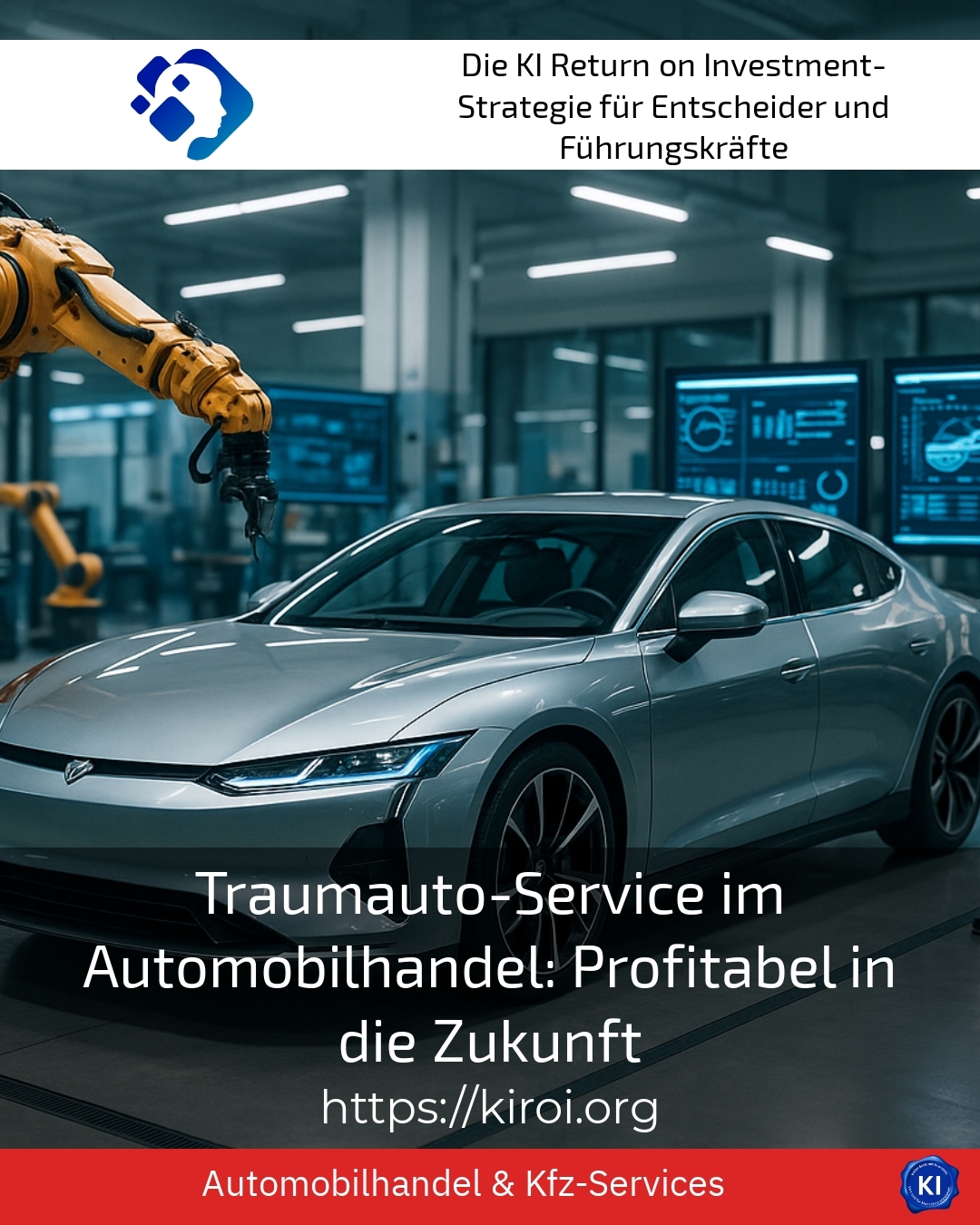
Have you ever wondered why some car dealerships thrive despite difficult market conditions while others struggle for survival? The answer often lies hidden in an area that many companies in the sector still underestimate, even though it holds enormous potential and enables long-term customer loyalty. The Dream car service in car retail has developed in recent years into a crucial differentiator that goes far beyond classical workshop services and accompanies the entire lifecycle of a vehicle. In this article, you will learn how advanced approaches and digital transformation are changing the industry, which concrete measures have proven successful, and how transruptions coaching can support such projects. In doing so, we will examine various perspectives together and draw inspiration from examples that show what is already possible today.
The evolution of customer service in the automotive industry
The automotive industry is undergoing a profound transformation. Today, customers expect far more than just the sale of a vehicle. They want comprehensive support that begins even before the purchase and extends well beyond handover. Dealers who have understood this shift are relying on emotional experiences and personalised accompaniment. An example of this is the introduction of digital customer portals, through which vehicle owners can book appointments at any time, view maintenance histories and receive individual recommendations [1]. Furthermore, innovative businesses are using virtual reality applications to present prospective buyers with their desired configuration in an immersive environment. The integration of 24/7 chatbots has also proven to be an effective means of answering initial enquiries quickly and competently.
Another practical example shows how a South German car dealership was able to significantly increase its customer satisfaction. The company introduced a concierge programme in which personal contact persons accompany every customer from initial contact to vehicle handover. This personal touch builds trust and fosters long-term relationships. In addition, some dealerships today offer collection and delivery services for workshop appointments, which busy people in particular greatly appreciate. These little touches often make all the difference.
Dream car service as a strategic success factor
The Dream car service today encompasses significantly more than just technical services. It embodies a holistic concept that addresses emotional and practical needs in equal measure. Customers frequently report that they feel particularly well looked after by certain dealers because their individual wishes are taken seriously there. This emotional component cannot simply be copied, but it can be built up systematically. A northern German premium car dealership, for example, has established a so-called wish-fulfilment department that deals exclusively with special requests. Whether exclusive paint finishes, bespoke interiors or personalised accessories – almost every customer wish is made possible here.
Best practice with a AIROI customer
A medium-sized car dealership with several locations in western Germany was faced with the challenge of better connecting its various service areas and creating a uniform customer experience. The different locations worked with disparate systems and processes, which led to a loss of information and inconsistent customer service. As part of a transruption coaching project, we jointly developed a digital platform that linked all customer touchpoints and gave employees a complete overview of the customer history. Implementation took place gradually over several months, with a particular focus on involving the workforce. Training sessions and workshops accompanied the entire process so that everyone involved understood the benefits of the new solution and used it actively. Following full deployment, both customers and employees reported significantly improved processes. The average processing time for customer enquiries fell noticeably, while satisfaction scores in surveys increased. This example impressively demonstrates how digital transformation and human guidance can go hand in hand.
Digitalisation as a facilitator for excellent customer experiences
Modern technologies are opening up completely new possibilities for the automotive trade. Artificial intelligence can help to identify customer needs at an early stage and make appropriate offers. Predictive maintenance makes it possible to plan servicing proactively before a problem even arises [2]. This forward-looking care builds trust and reduces unexpected downtime for the customer. A practical example illustrates this clearly: a large car dealership in the Rhine-Main region uses telematics data to provide optimum care for its fleet customers. The system analyses driving patterns and wear indicators in order to suggest maintenance appointments in good time. Customers greatly appreciate this proactive approach.
In addition, innovative dealers are relying on augmented reality for vehicle presentation. Using a tablet or smartphone, prospective buyers can visualise various equipment variants directly on a real vehicle. This technology makes abstract options tangible and supports the purchasing decision. Digital twins are also increasingly being used to explain complex technical relationships in an understandable way. A Bavarian dealer reports that his conversion rates have noticeably increased since the introduction of these technologies.
Challenges in implementing the dream car service
The implementation of a holistic Dream car serviceconcept also brings challenges with it, of course. Many companies come to us with questions concerning the right prioritisation of measures. Others are intensively occupied with how they can inspire their employees for new approaches. These concerns are understandable and justified, because every change requires energy and resources. Transruption coaching accompanies companies with such projects and provides impulses that facilitate the transformation process. The focus here is not on blanket solutions, but on individually adapted strategies.
A common issue is, for example, the integration of various data systems. Many car dealerships work with legacy IT structures that do not interact optimally. The consolidation of these systems requires careful planning and expert support. Another example concerns the qualification of the workforce: new digital tools are only as good as the people who operate them. Therefore, in our projects we place great emphasis on accompanying training measures. The measurability of successes also concerns many companies, which is why we develop suitable key performance indicators together.
Sustainability and social responsibility
A contemporary service approach also takes ecological and social aspects into account. Customers increasingly value businesses acting responsibly. Car dealerships can score points here in various ways [3]. The installation of charging facilities for electric vehicles is an obvious step that is now implemented by many businesses. In addition, some dealerships focus on sustainable mobility concepts that go beyond mere vehicle sales. An example of this is car-sharing services offered as a supplement to the traditional business.
The workshop areas also offer potential for sustainable optimisation. The use of reconditioned spare parts, the reduction of packaging waste and energy-efficient operational processes are just a few examples. A car dealership in Hamburg recently converted its entire lighting system to LED and installed photovoltaic systems on the roof. These measures not only reduce costs, but also demonstrate a sense of social responsibility. Customers frequently reward such commitment with loyalty and positive word-of-mouth recommendations.
Best practice with a AIROI customer
An automotive retail group focusing on electromobility was looking for ways to adapt its service processes to the specific requirements of this vehicle category. The challenge was that traditional maintenance intervals for electric vehicles are structured differently and new advisory skills are required. As part of our support, we developed a comprehensive training concept for service employees that took technical and communicative aspects equally into account. Particular emphasis was placed on the ability to competently advise customers on the use of charging infrastructure and to recommend individual charging solutions. In addition, we implemented a digital information system that gives employees quick access to relevant data. Feedback from the workforce was consistently positive because people felt better prepared and developed greater confidence in customer interactions. Customer satisfaction also benefited measurably from these measures, which justified the investment.
Employees as the key to success in dream car service
No technology, no matter how sophisticated, can replace dedicated and competent employees. The Dream car service thrives on people who are passionate about what they do and show a genuine interest in the needs of their customers. Attracting and retaining qualified professionals is therefore a key success factor. An example from Baden-Württemberg shows how a car dealership is tackling this issue: the company has developed a comprehensive onboarding programme that systematically introduces new employees to the company culture. In addition, there are regular training opportunities and clear prospects for development.
Appreciation of the workforce is also reflected in everyday things. Flexible working hour models, modern workplace equipment and an open communication culture contribute to satisfaction. For example, a Berlin car dealership has introduced an internal innovation competition where employees can submit their ideas for improvement. The best proposals are rewarded and actually implemented. This approach fosters engagement and utilises the knowledge of the entire organisation. Involvement in decision-making processes also sustainably strengthens identification with the company.
Future prospects and strategic direction
The coming years will bring further changes for which forward-looking dealers should be preparing today. Autonomous driving, new mobility services and changing ownership structures will further transform the business model of motor vehicle retail. Those who invest in excellent customer relationships today are creating a solid foundation for future challenges. An example from North Rhine-Westphalia illustrates how a dealer is anticipating this development: the company has established its own department for mobility services, offering subscription models and flexible usage concepts [4].
Networking with other industries is also gaining in importance. Collaborations with insurance companies, energy suppliers and smart home providers are opening up new business areas. For example, a car dealership in Franconia, in cooperation with a local energy supplier, is offering complete solutions for electromobility that include the vehicle, wallbox and electricity tariff from a single source. These integrated offerings meet many customers' desire for simple, convenient solutions. The development of such ecosystems requires strategic thinking and a willingness to cooperate beyond traditional industry boundaries.
My AIROI Analysis
A close examination of this topic clearly shows that successful car dealers today must offer far more than just vehicles and repairs. A holistic approach to service, which addresses both emotional and practical needs in equal measure, is becoming a decisive competitive advantage in a changing industry. The examples examined illustrate that technological innovation and human expertise are not mutually exclusive, but can complement each other perfectly when combined wisely. I find the trend towards proactive service offerings – which anticipate customers’ needs before they have even been articulated – particularly noteworthy. This forward-looking approach builds a level of trust and loyalty that traditional business models struggle to achieve.
The challenges in implementing such concepts should not be underestimated, but they can be mastered with the right guidance. Transruption coaching can provide valuable impetus here and support the transformation process in a structured manner. It repeatedly becomes clear that success depends crucially on the involvement and qualification of employees. Technology alone does not create excellent customer experiences – it takes people who use these tools with competence and enthusiasm. The future of automotive retail belongs to those companies that internalise this insight and act on it consistently. The path there requires courage, perseverance and the willingness to leave familiar paths behind, but the opportunities far outweigh the risks.
Further links from the text above:
[1] Digital customer portals in car retailing – Automobilwoche
[2] Predictive Maintenance in the Automotive Industry – IAA Mobility
[3] Sustainability and Environment – German Association of the Automotive Industry
[4] Trade and Service – Central Association for the German Motor Vehicle Trades
For more information and if you have any questions, please contact Contact us or read more blog posts on the topic Artificial intelligence here.










 Deutsch
  English (UK)