
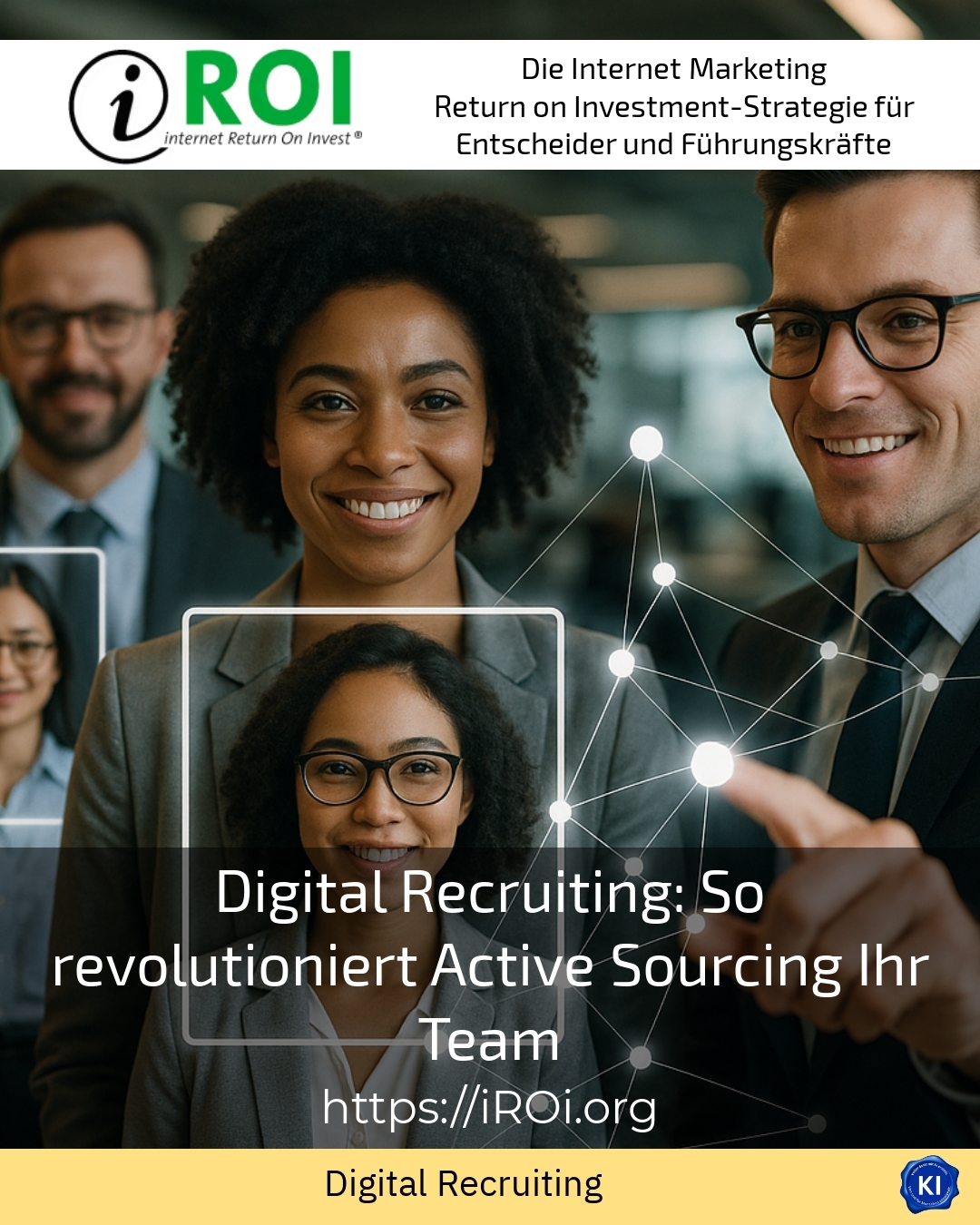
Digital recruiting is no longer a trend, but the new normal around personnel responsibility. Companies have long been using digital channels to target talent, engage them, and ultimately win them over. In particular, actively searching for suitable candidates – so-called active sourcing – is becoming increasingly important in order to discover the right people for your team, even outside the classic application process.
Why Digital Recruiting is indispensable today
In a rapidly changing world of work, the focus is on skills shortages and high expectations for personal development. Companies that rely on traditional job advertisements risk missing out on many exciting talents. Digital recruiting makes it possible to design the entire recruiting process more efficiently, transparently, and with a clearer focus – from the initial contact to onboarding.
For example, a mechanical engineering company from the DACH region specifically uses LinkedIn to approach engineers who are not actively applying for jobs on the traditional market. Through targeted story posts and direct messages, they manage to reach highly specialised talent who are open to new challenges but not actively looking.
Another example comes from the IT sector: a tech start-up is using job portals, social media campaigns, and automated chatbots to speed up application processes. This way, interested parties receive immediate feedback and suitable offers, which significantly improves the experience.
Even a medium-sized service provider in the healthcare sector benefits from digital recruiting. Here, events such as virtual open days and webinars are specifically used to get to know potential candidates and to reduce reservations.
Active Sourcing as a Game-Changer in Digital Recruiting
Active sourcing is a creative, proactive approach to identify talent that perfectly fits the company culture – even if they are not currently looking for a job. The goal is to specifically engage in conversations with potential candidates, give them insights into the company and thus build a long-term relationship.
This way, a classic headhunter can specifically study XING profiles, conduct targeted search queries on LinkedIn, and filter for suitable skills, project experience, and industry expertise. Contact is then made with a personal, appreciative message, and the company positions itself as an attractive employer.
AI-powered tools also help to identify the right profiles within large datasets. Automated screening and matching processes allow for the quick and precise selection of suitable profiles, significantly reducing the effort for HR managers[6]. This leaves more room for individual conversations and building genuine relationships.
Another example: an internationally active retailer uses social media recruiting to attract attention with targeted stories and interactive formats. This creates an authentic impression of the company culture, and candidates feel engaged even before the first interview.
Digital recruiting and active sourcing are not isolated measures, but central components of a modern recruiting strategy that engages talent where they are – online, interactively, and personally at the same time[7].
Processes and methods in digital recruiting
Digital recruitment begins with a clear definition of which skills and values fit the company. Only then does the targeted search for suitable profiles follow, for example via social networks, job platforms or specialised recruitment tools that also attract passive candidates.
For example, an established e-commerce provider uses online assessments to determine early on how well candidates align with the company's own goals. This saves time and avoids mishires, as the selection process is targeted from the outset.
Job interviews are also increasingly taking place digitally, for example via video call or asynchronous interview. This creates flexibility for both sides and shows how modern the company operates. Candidates appreciate being able to present their strengths via video without the hassle of long journeys.
A best practice shows how an international consulting firm is supplementing its application process with digital onboarding solutions. Even before their first day, new employees receive access to relevant information, checklists, and training materials – this ensures they start well-prepared and feel immediately welcome.
For digital recruiting to be sustainably successful, the entire candidate journey should be well thought out. From the initial contact through application management to onboarding, companies benefit from efficient processes supported by suitable tools.
Typical challenges businesses face with me include uncertainty about choosing the right platforms, a lack of active sourcing strategies, or questions about how to intelligently integrate digital methods into existing HR processes. I regularly support them by providing impetus, presenting best practices, and guiding the introduction of digital recruiting methods.
Best Practice from the client project
BEST PRACTICE for a client (Name hidden due to NDA agreement) A medium-sized mechanical engineering company from North Rhine-Westphalia had previously experienced significant difficulties in finding suitable development engineers. As part of a transruption coaching programme, we collaboratively developed a digital recruiting strategy focused on targeted active sourcing and the systematic build-up of a talent pipeline. We utilised LinkedIn Recruiter, specific search queries, and social media marketing. Within just a few weeks, the company was able to identify several promising candidates, significantly accelerate the recruitment process, and substantially increase the quality of applications. Internal communication was supported by digital tools such as Slack to promote exchange between HR and specialist departments. The success demonstrates: active sourcing and digital processes are a powerful lever for succeeding in the competition for talent.
My analysis
Digital recruiting is not just a buzzword, but a conscious decision for more efficient, agile and transparent HR work. Companies that rely on digital and active methods can specifically address the needs of their target audience, accelerate recruiting processes and sustainably increase the quality of their teams[1][7].
Digital recruiting thrives on a clear strategy, the right choice of tools, and open, appreciative communication. Those who digitise their processes in a targeted manner and take their target audience's experiences into account will benefit from greater visibility, higher candidate quality, and shorter time-to-hire periods. The digitisation of recruitment is therefore no longer a trend, but an essential building block for future-proof organisations.
Further links from the text above:
Digital Recruiting: Definition & Benefits (bgc-group.com)
Modern recruiting methods and digital recruiting (workerhero.com)
Candidate Sourcing: Your Ultimate Guide (+Tips & Strategies) (aihr.com)
For more information and if you have any questions, please contact Contact us or read more blog posts on the topic internet Return on Investment - Marketing here.








 Deutsch
  English (UK)