
When leaders and project managers look for new ways to master knowledge sharing within their organisation, they face an exciting and complex task. This is because knowledge is one of the most valuable raw materials in modern organisations, but managing it often proves more difficult than anticipated. In many industries – be it consulting, manufacturing, retail, or public service – project success depends significantly on how effectively knowledge is shared, stored, and developed. Relying solely on technology and tools is no longer sufficient. Clear strategies, a vibrant culture of learning from mistakes, and methods that truly motivate people to contribute their knowledge are needed.
Why knowledge sharing is so valuable
Knowledge can only create real added value for an organisation when it flows between the right people at the right time. This may sound trivial, but in practice we repeatedly encounter the same challenges: knowledge is often tied to individuals, gets lost during staff changes, or is simply not recognised as being able to help others[1]. And this is precisely where knowledge sharing comes in – as a process that sustainably distributes and makes accessible information, skills, and experience within the company[2][3].
Here's an example from the consulting industry: A large project team is working remotely across multiple locations. The documentation is digital, but the most important knowledge resides in the minds of experienced employees. Without targeted knowledge sharing, information silos emerge, decisions are delayed, and duplication of effort occurs.
Customers regularly report these hurdles
Clients frequently report that they have introduced knowledge management systems, but adoption is lacking. The tools are not used because they are too complicated, or there's a lack of trust in sharing knowledge. In manufacturing companies, there's the added challenge that process knowledge is mostly implicit and difficult to formalise. The IT sector, in turn, struggles with the rapid change of standards – here, only continuous knowledge exchange helps.
Another typical situation: a healthcare team leader wants to capture the expertise of a departing colleague. However, the most important solutions and tricks aren't documented but exist in small notes and anecdotes. Without targeted measures, this knowledge will be lost.
How is knowledge sharing achieved in everyday life?
The first step is to create the right framework. This starts with corporate culture: openness, trust, and mutual respect are the basis for knowledge sharing [1]. Only then do tools and platforms come into play to support the process – for example, social intranets, chat groups, or regular exchange formats such as „Lunch & Learn“ [2][3].
There are successful examples in retail time and again: Employees are specifically invited to present best practices from their area in weekly team meetings. For instance, an apprentice might demonstrate how they stack goods more effectively, and everyone benefits. In the public sector, knowledge is often documented in the form of Standard Operating Procedures (SOPs), but practice shows here too: documentation alone is not enough. Space is needed for questions, discussions, and the sharing of experiences.
A third example from logistics: errors and bottlenecks are documented in a digital warehouse management system. Management ensures that the lessons learned from errors are shared transparently so that all teams can learn from them. This strengthens the error culture and makes knowledge common property.
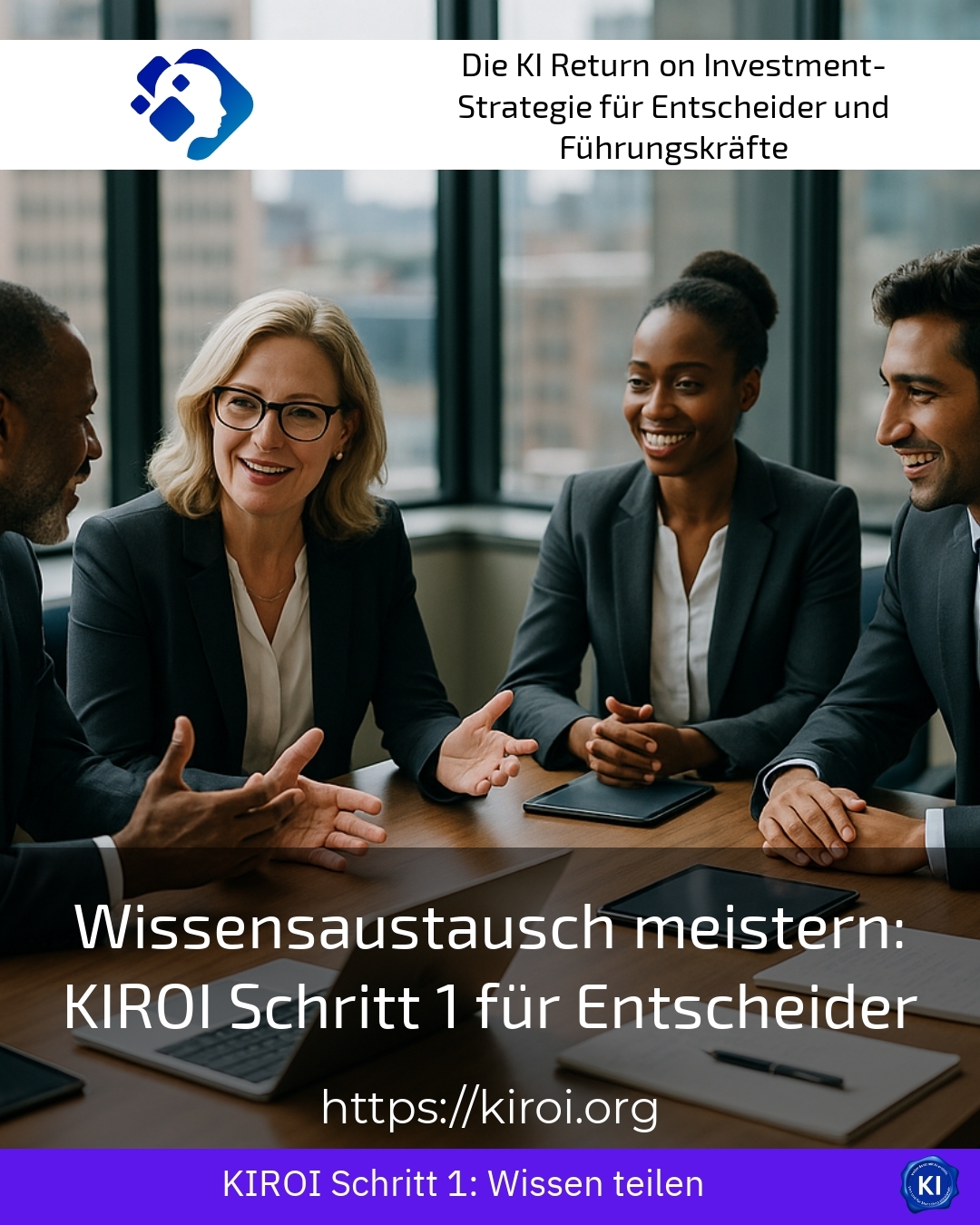
AIROI Step 1: Shaping the Cultural Change
The first step in the AIROI model – and therefore the cornerstone of successful knowledge exchange – is a conscious cultural change. Organisations must create a space where it is safe to ask questions, discuss mistakes, and share knowledge – without fear of negative consequences. This is precisely where transruption coaching targets its efforts: as support during the introduction of new structures and for sustainable knowledge exchange, suitable measures are jointly developed to strengthen the company's culture.
It is important to view knowledge sharing as a continuous process that is embraced by everyone. Tools such as regular reflection sessions, knowledge cafés, or the involvement of „Knowledge Champions“ have proven effective. These individuals specifically focus on sharing knowledge, absorbing new ideas, and breaking down barriers.
Practical examples
In the automotive industry, an experienced project team supports younger colleagues through its own mentoring programme. Here too, the starting gun for successful knowledge exchange is an open culture of dialogue, where uncertainties are also permitted.
In the service sector, some companies are establishing so-called „storytelling sessions“. Here, employees share in short, informal formats how they have resolved customer cases – including the odd critical situation. This way, knowledge doesn't just remain with individuals but becomes tangible within the organisation.
Another example is the introduction of knowledge marketplaces: In companies, digital platforms are used where colleagues can specifically search for expertise or register as experts. This creates transparency and connects people who would otherwise work in different departments.
My analysis
Knowledge sharing is key to keeping organisations innovative, flexible and resilient. Experience shows that technology alone is not enough – a deliberately designed culture is needed that promotes collaboration and makes knowledge sharing the norm. Those who wish to successfully integrate knowledge sharing should seek dialogue early on, make real examples visible, and continuously work on cultural change. transruptions-Coaching supports you in systematically implementing these steps and making your company fit for the future.
Further links from the text above:
Definition of knowledge exchange [1]
Knowledge sharing in knowledge management [2]
Guide to knowledge sharing [3]
For more information and if you have any questions, please contact Contact us or read more blog posts on the topic Artificial intelligence here.
BEST PRACTICE with one customer (name hidden due to NDA contract)
A medium-sized energy company had to consolidate its internal expertise more effectively in order to respond to dynamically changing market requirements. Together, we first analysed the existing knowledge base and found that valuable experience was predominantly held by long-serving employees. In the course of an open workshop, we established a so-called „knowledge network“ that specifically promotes exchange between older and younger employees. This includes








 Deutsch
  English (UK)