
Why do so many promising technology projects fail already in the planning phase, even though the ideas seem brilliant and the budget is available?
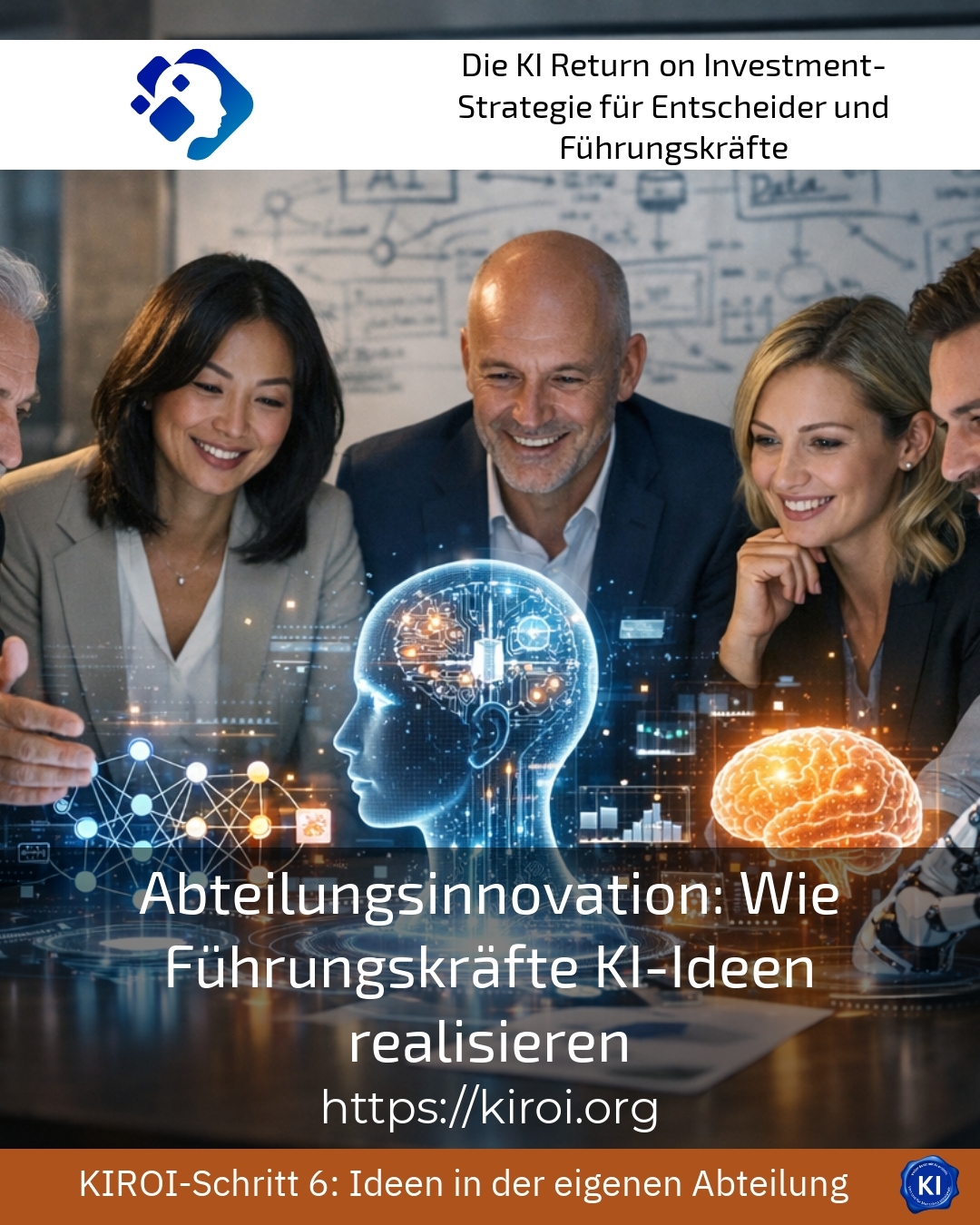
This question concerns numerous decision-makers in organizations of all sizes. The answer often lies not in a lack of resources or insufficient expertise. Rather, a systematic approach is lacking in the decision-making process. Departmental innovation: How leaders implement AI ideas And involve all those involved. The journey from the initial vision to successful implementation requires more than technical understanding. It demands genuine leadership skills, strategic foresight, and the ability to inspire teams. In this article, you will learn what concrete steps experienced leaders take. You will also learn proven methods that can be applied in different corporate environments.
Understanding the role of leadership in digital transformation
Executives face a special challenge today. They must understand technological developments while empowering their teams. In the field of software development, for example, we are witnessing how automated code generation is changing workflows. Project managers in logistics companies are using intelligent route optimization to create more efficient supply chains. Human resources managers are relying on automated pre-screening of application documents. These examples show the breadth of possible applications. But without clear leadership, such initiatives often remain piecemeal.
Successful implementation begins with a change in perspective. Leaders should see themselves as facilitators, not controllers. They create spaces for experimentation and accept setbacks along the way. In customer service, progressive team leaders, for example, gradually implement chatbot systems. They start with simple requests and continuously expand the range. Financial departments initially automate standard bookings before integrating more complex analyses. Marketing teams start with automated text generation for social media posts. Each of these steps requires a leader to provide guidance.
Departmental innovation: How leaders implement AI ideas and involve teams
Team involvement often determines success or failure. Employees bring valuable practical knowledge that no external advice can replace. In production environments, machine operators know exactly where there is potential for optimization. Sales representatives know the true pain points of their customers. Claims processors in insurance companies understand the complexity of claims handling. This knowledge must be systematically captured and utilized. Leaders moderate this process and ensure a structured collection of ideas.
A proven approach begins with open discussion sessions in a protected atmosphere. Here, all ideas are allowed to be expressed without immediate evaluation. Subsequently, a prioritization is carried out based on effort and expected benefits. For example, a team in quality assurance identified recurring testing patterns. The solution lay in image-based error detection, which now works reliably. A controlling team recognized potential in the creation of standard reports. Automated reporting today saves several workdays per month. These successes arise from genuine collaboration.
Best practice with a AIROI customer
A medium-sized manufacturing company faced the challenge of optimizing its maintenance cycles. The management of the technical department initiated a structured workshop with all shift supervisors and experienced technicians. Together, they identified critical machine components where unexpected failures were particularly costly. Next, a pilot project for predictive maintenance was launched, with sensor data systematically analyzed. Transruptive coaching helped overcome internal resistance and create a realistic roadmap. After six months, a significant reduction in unplanned downtime was observed. Employees reported improved predictability of their work processes and higher job satisfaction. Particularly valuable was the experience that technical innovation and human expertise can reinforce each other. The project became a model for other departments in the company.
Strategic planning and realistic goal setting
Without clear goals, innovation projects often flounder. Defining measurable success criteria provides guidance for all involved parties. In e-commerce, a goal could be reducing the response time for customer inquiries. In production, the focus might be on reducing the error rate. Human resources departments might measure the time to successful hiring. These specific metrics enable an objective assessment of progress.
Strategic planning also takes into account potential obstacles and risks. Data protection requirements play a central role in many industries [1]. Technical infrastructure often has to be built or expanded first. Skill gaps in the team require targeted training measures. For example, a pharmaceutical company had to develop special validation processes for automated documentation. A financial services provider initially invested in cleaning up its data repositories. A retail chain trained its store managers on how to use intelligent forecasting systems. All these measures were part of a well-thought-out strategy.
Making effective use of resources in department innovation
Budgets and personnel capacities are limited in most organizations. Therefore, it is all the more important to wisely prioritize the available resources. Experienced executives often start with manageable pilot projects. These allow for rapid learning experiences with limited risk. A pilot project for automated billing can deliver initial results within a few weeks. The insights gained from this can be incorporated into larger follow-up projects.
Collaboration with external partners can meaningfully complement internal resources. Specialized consulting brings experience from comparable projects. Technology providers often provide test environments and training [2]. Universities and research institutions can support complex issues. For example, a mechanical engineering company cooperated with a Fraunhofer Institute to develop a predictive model. An insurance company used the expertise of a start-up to assess damages. A hospital worked with a university institute to analyze medical imaging data. These partnerships significantly accelerate progress.
Promote willingness to change and overcome resistance
Technological changes cause uncertainty among many people. This reaction is understandable and should be taken seriously. Leaders have a responsibility to address fears and build trust. Transparent communication about goals and expected outcomes is essential. In the banking sector, customer advisors sometimes fear losing their personal relationships with clients. In the legal department, employees worry about the quality of contracts automatically created. Call center agents wonder what role they will have in the future.
The answer lies in a positive vision of the future that includes people. Automation takes on repetitive tasks and creates space for more demanding activities. The customer advisor can focus on complex consultations. The lawyer devotes herself to strategic legal issues instead of standard clauses. The service worker solves difficult customer problems that require empathetic action. This perspective makes change more attractive for many people.
Best practice with a AIROI customer
A senior executive at a service company recognized early on the concerns of her team regarding new technologies. Instead of imposing changes, she invited open discussion and actively listened. Specific concerns emerged, particularly regarding their own workplace safety and lack of skills. Together with the human resources department, she developed a comprehensive qualification program for all team members. The transruptions coaching accompanied this process and helped develop individual learning paths for different roles. After several months, the attitude within the team had fundamentally changed, as the employees now actively brought in improvement suggestions. The initial skeptics became engaged supporters of the change, as they were able to experience their expanded skills in practice. The company benefited from increased productivity and a significantly improved employee satisfaction.
How leaders implement AI ideas through continuous learning
Technological progress requires a culture of lifelong learning. Leaders should lead by example and make their own development visible. In industrial companies, production managers attend seminars on intelligent manufacturing. Marketing directors are engaged in automated campaign optimization. CFOs deepen their understanding of predictive financial analysis [3]. This willingness to learn signals to the team the importance of the topic.
At the same time, learning opportunities must be created for all employees. Internal training programs provide basic knowledge and practical skills. External certifications document acquired competencies in a comprehensible manner. Mentoring programs connect experienced and younger colleagues for mutual learning. For example, a technology company introduced weekly learning circles in which teams tried out new tools. A bank enabled each employee to have a personal continuing education budget. A trading company developed an internal learning platform with practical modules.
My AIROI Analysis
Observing numerous projects and accompanying various organizations has given me valuable insights. The successful implementation of innovation projects depends much more on human factors than on technical details. Leaders who communicate authentically and show genuine interest in their teams achieve significantly better results. They understand that Departmental innovation: How leaders implement AI ideas A marathon is not a sprint.
The AIROI-methodology provides a structured framework for this complex process. It combines strategic planning with practical implementation support, taking into account all relevant dimensions. Particularly valuable is the involvement of the people who will be working with the new systems on a daily basis. Their acceptance and commitment determine the sustainable success of every initiative. Clients often report a fundamental change in their work culture after successful projects.
For leaders facing similar challenges, I recommend a step-by-step approach. Start by conducting an honest assessment of your current situation and goals. Engage in dialogue with your team and listen attentively before making decisions. Invest in ongoing training and create safe spaces for experimentation. The guidance of experienced partners can significantly facilitate this journey and help avoid common pitfalls. Transruptive coaching has proven to be a valuable support for many organizations on this path.
Further links from the text above:
[1] Federal Commissioner for Data Protection and Information Freedom – Data Protection Principles
[2] Bitkom – Germany’s digital association with studies and guidelines
[3] McKinsey Germany – Analyses and reports on corporate transformation
For more information and if you have any questions, please contact Contact us or read more blog posts on the topic Artificial intelligence here.







 Deutsch
 English (UK)