
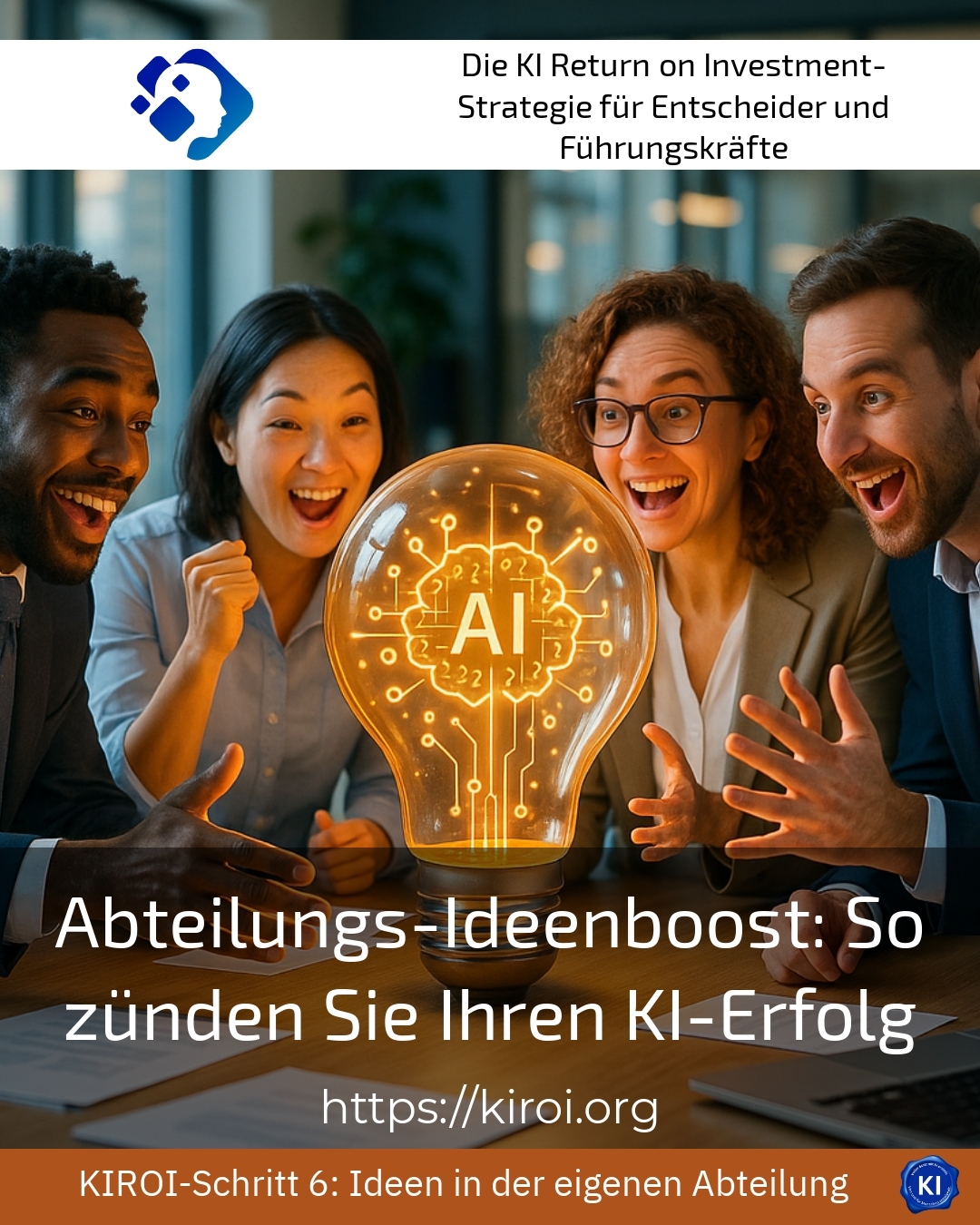
Imagine your department transforming into an innovation hub that continuously generates fresh impetus while utilising cutting-edge technologies to completely rethink processes and secure competitive advantages. The Departmental idea boost is not an abstract concept, but a tangible method that empowers teams to unlock the full potential of intelligent systems and achieve sustainable success. At a time when digital transformation is no longer an option, but has become an absolute necessity, the ability to generate creative ideas determines long-term corporate success. This article shows you tried-and-tested ways to create an environment in your organisation that fosters innovation while making the most of technological opportunities.
Establishing the foundations for a successful department idea boost
Before intelligent technologies can unfold their full potential, fundamental prerequisites must be created within the organisation. Teams first need a shared understanding of which goals they are striving for and what resources are available to them. Both technical infrastructures and cultural aspects play a decisive role here, because without the readiness to change, even the best tools remain ineffective. Many companies underestimate the importance of a solid foundation and prematurely rush into implementation projects.
Experience shows that successful transformation projects always begin with a thorough stocktake. Which processes are currently running inefficiently? Where are information silos being created that hinder the exchange of knowledge between departments? These questions must be answered honestly before new technologies can be introduced. For example, a manufacturing company discovered that communication between development and production was causing significant delays. A logistics service provider realised that manual data entry led to avoidable errors. And a financial institution discovered that valuable customer knowledge was lying dormant in isolated databases.
Best practice with a AIROI customer
A medium-sized trading company with several hundred employees approached us because the generation of ideas within the various departments had stagnated and innovative impulses were lacking. The executive board had recognised that traditional brainstorming methods were no longer sufficient to survive in the competitive market environment. As part of the transruption coaching, we accompanied the company over a period of six months and jointly developed a structured approach to idea generation. First, we analysed the existing communication channels and identified bottlenecks that hindered creative exchange. Subsequently, we implemented a system that brought together employees from different areas and promoted interdisciplinary dialogue. The results exceeded even the most optimistic expectations, as numerous actionable proposals for process optimization emerged within a few weeks. The company reported a noticeably increased motivation of the workforce and improved cooperation between departments. Particularly noteworthy is that these positive developments were sustained and a genuine culture of innovation was established.
Technological tools as catalysts for the departmental idea boost
Modern software solutions offer a wide range of possibilities to support and accelerate creative processes [1]. Intelligent systems can, for example, analyse large amounts of data and recognise patterns that remain hidden to the human eye. They support teams in making informed decisions and adopting new perspectives. It is important to understand that these technologies do not replace humans, but rather extend and complement their capabilities.
In the field of word processing, intelligent assistance systems enable the rapid summarisation of complex documents. Marketing teams use automated analysis tools to evaluate customer feedback and identify trends at an early stage. Development departments rely on simulation software that runs through various scenarios and demonstrates optimal solutions [2]. These application examples illustrate just how versatile the potential uses are and what added value they can offer for various business areas.
Cultural transformation as the key to success
The introduction of new technologies alone does not guarantee success, because what is crucial is the willingness of employees to embrace these tools and use them productively. Clients frequently report initial resistance within their teams, which stems from uncertainty or a lack of understanding. This is where transruptions coaching comes in, supporting organisations in establishing an open culture ready to learn. Experience shows that change processes proceed successfully when all participants understand the purpose and benefit.
An essential aspect is the creation of psychological safety, which encourages employees to voice unconventional ideas too [3]. Leaders play a central role in this as role models and enablers. They must create spaces where experimentation is permitted and mistakes are viewed as learning opportunities. For example, a technology company established weekly innovation hours during which employees were allowed to experiment freely. A healthcare provider introduced cross-departmental workshops that promoted the exchange of knowledge. And an educational provider developed a mentoring programme that connected experienced colleagues with newcomers.
Practical methods for a sustainable department idea boost
Concrete methods help to integrate abstract concepts into everyday working life and achieve measurable results. Design Thinking, for example, provides a structured framework to understand user needs and develop innovative solutions. Agile working methods enable rapid iterations and continuous improvements. And digital collaboration platforms facilitate cross-location collaboration in real time.
The combination of different approaches has proven particularly effective in practice. For example, a team can use design thinking workshops to generate new product ideas. These ideas are then further developed and tested in agile sprints. Intelligent analysis tools provide valuable data that supports decision-making. A consultancy successfully combined these methods in a transformation project. An industrial company used the approach to optimise its supply chains. And a service provider significantly improved its customer service processes with it.
Best practice with a AIROI customer
An internationally active service company was looking for ways to systematically foster the creativity of its employees while making sensible use of modern technologies. The challenge was that the various locations had developed different work cultures, making knowledge sharing correspondingly difficult. As part of our support, we initially developed a shared vision that was supported by all participants and served as a framework for orientation. Subsequently, we gradually introduced digital tools that facilitated collaboration across location boundaries and promoted the exchange of ideas. Of particular importance was the training of employees, which not only imparted technical skills but also sharpened their understanding of the possibilities and limitations of the systems used. The participants reported a significantly increased efficiency in their daily work and improved communication with colleagues at other locations. Management noted that innovative ideas were now generated faster and implemented more quickly. These positive changes contributed significantly to strengthening the company's competitive position and opening up new business opportunities.
Recognising and overcoming challenges
Every transformation project brings challenges that must be overcome. Clients frequently report difficulties when integrating new systems into existing IT landscapes. Furthermore, the upskilling of employees requires time and resources that are not always available to the desired extent. In addition, data protection concerns and regulatory requirements can restrict the deployment of certain technologies [4].
A realistic assessment of these challenges is crucial for project success. Organisations that identify potential obstacles early on and plan countermeasures significantly increase their chances of success. For example, an insurance company developed a phased implementation plan that enabled gradual improvements. A retailer relied on intensive training programmes that reduced inhibitions. And an energy supplier established a dedicated project team that was available as a point of contact for all questions.
Measurability and continuous improvement
The success of innovation initiatives must be made measurable in order to demonstrate progress and identify potential for improvement. Key performance indicators such as the number of improvement suggestions submitted, the implementation rate of ideas or the time span from the initial idea to market readiness provide valuable insights. These metrics should be collected and evaluated regularly in order to identify trends and make adjustments if necessary.
At the same time, it is important not to neglect qualitative aspects, because not everything of value can be expressed in numbers. Employee satisfaction, the climate of innovation and the quality of collaboration are likewise significant success factors. For example, an automotive supplier regularly assessed the morale within its teams through anonymous surveys. A pharmaceutical company introduced retrospectives that structured the learning process. And a media company established a feedback system that enabled continuous improvements.
My AIROI Analysis
Guiding numerous organisations through their transformation projects has shown me that success depends largely on the combination of technological and cultural factors. Intelligent systems offer enormous potential, but this potential can only be realised when people are willing to explore new paths and question established patterns of thought. The departmental ideas boost is not a one-off event, but an ongoing process that requires continuous attention and nurturing.
I always find it particularly impressive how quickly positive changes can occur when the right framework conditions are created and everyone involved pulls together. Teams that were initially sceptical often develop an enthusiasm for new possibilities that is contagious and sparks further innovation. At the same time, it is important to have realistic expectations and not to strive for overly rapid successes, because sustainable transformation takes time and patience.
My recommendation for organisations that want to launch their own departmental idea-boost is therefore: begin with an honest stocktake, define clear goals and bring everyone on board. Invest in training your staff and create spaces for experimentation and creative exchange. Use technological tools as support, not as a replacement for human creativity. And for complex projects, have experienced experts accompany you who can provide impetus and assist with challenges. In this way, you lay the foundation for sustainable success in an increasingly digitalised world.
Further links from the text above:
[1] Bitkom – Artificial Intelligence in Corporate Use
[2] McKinsey – Insights on artificial intelligence
[3] Harvard Business Review – Organisational Culture and Innovation
[4] BSI – Security aspects of artificial intelligence
For more information and if you have any questions, please contact Contact us or read more blog posts on the topic Artificial intelligence here.







 Deutsch
 English (UK)