
Why do many companies lose millions of dollars even though they have mountains of information that could be worth a fortune?
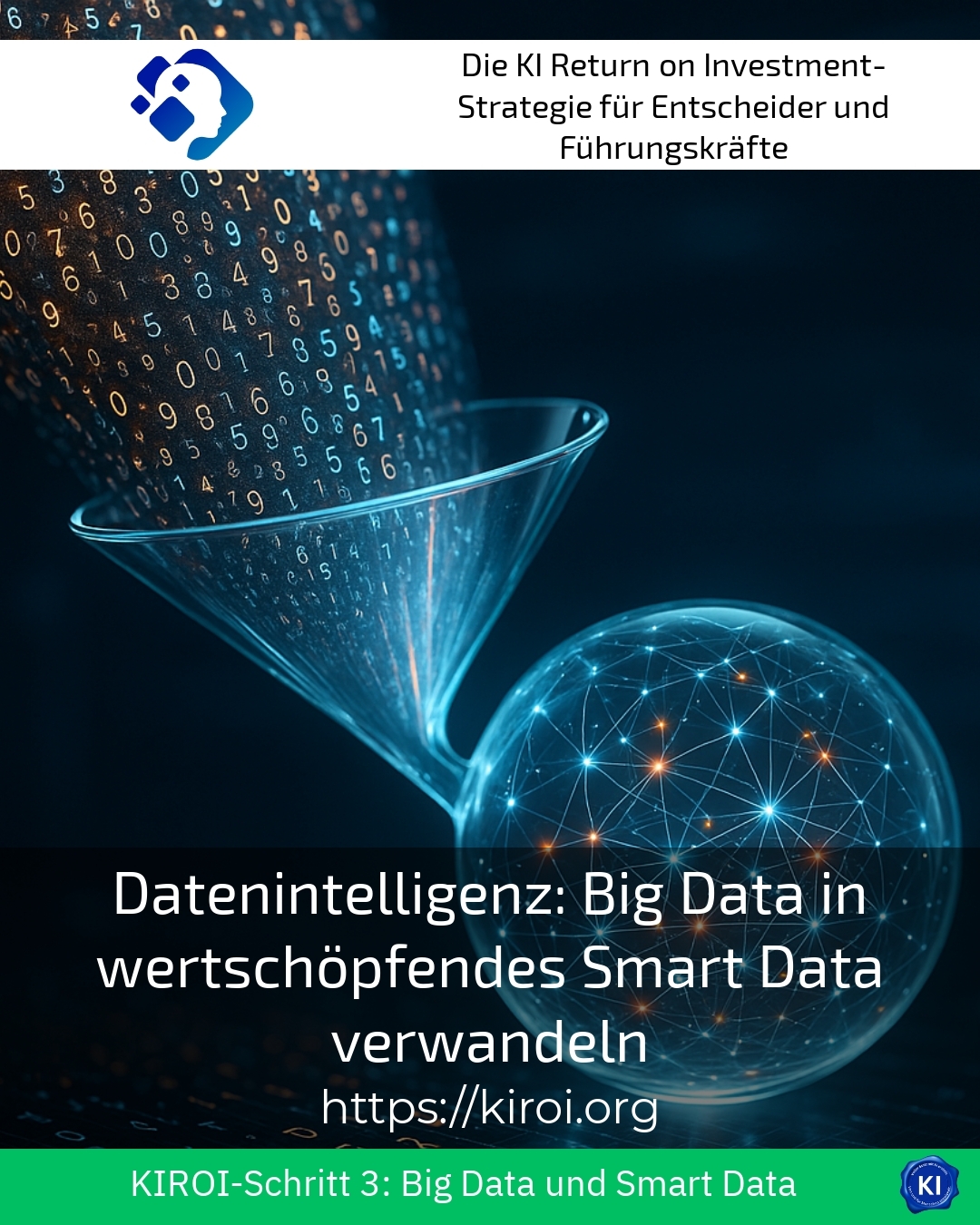
This question concerns numerous executives, business owners, and decision-makers in almost all industries, because they experience daily how valuable insights remain untapped in digital archives. Transforming unstructured data into actionable insights represents one of the greatest challenges of our time. Data intelligence It enables organizations to selectively filter out the sheer flood of information and identify the patterns and connections that actually create value. This involves not only technical solutions, but above all a fundamental change in thinking and corporate culture.
The challenge: When data overload leads to paralysis
Companies collect more information today than ever before in human history. Every click, transaction, and customer interaction leaves digital traces. These traces form a complex network of information. However, without intelligent analysis, these traces remain meaningless. For example, a medium-sized machine manufacturer generates several terabytes of measurement data daily through sensors on its production facilities. At the same time, information from sales and customer support flows in. In addition, there are external market data and competitive analyses.
The real difficulty lies in extracting relevant insights from this sea of information. Many organizations invest substantial sums in storage capacity, but neglect the analytical capabilities. A car parts supplier recently reported on its data warehouse. Millions of data records were stored there without any discernible use. The employees simply did not know what questions to ask. This situation is by no means unusual, as a clear strategy is often lacking. Moreover, there is a shortage of appropriately trained personnel.
A logistics company faced similar challenges. It collected GPS data from its entire fleet of vehicles. Additionally, it recorded fuel consumption and driving times. Nevertheless, it was unable to derive optimization potential from this data. The information existed in isolated silos. An overall analysis was practically impossible.
Best practice with a AIROI customer
An international manufacturer of precision tools approached our team with a complex problem. The company had extensive production data from several plants worldwide. However, it was not possible to identify quality issues early enough. The rejection rate remained constant at around eight percent. As part of our transruptive coaching process, we developed a multi-stage approach together. First, we identified the relevant data sources and their relationships. Subsequently, we established standardized processes for data collection. In the third step, we implemented analytical models for pattern recognition. After six months of intensive collaboration, the company was able to reduce the rejection rate to under three percent. The savings amounted to several hundred thousand euros annually. Particularly noteworthy was the cultural change within the company. The employees began to ask data-based questions on their own and to make suggestions for improvement.
Data intelligence as a strategic competitive advantage
The transition from pure data storage to real Data intelligence it requires a fundamental change in perspective. It is no longer enough to simply accumulate information. Instead, organizations must learn to formulate the right questions. For example, a pharmaceutical company uses clinical trial data to develop personalized treatment approaches. In doing so, it combines genetic information with treatment outcomes. In this way, new insights about efficacy and side effects are generated.
In the financial sector, intelligent analysis methods enable more precise risk assessment. A regional bank was able to significantly reduce its credit default rate through improved customer analysis. It linked internal account data with external economic indicators. This resulted in meaningful risk models. These models take into account far more factors than conventional scoring methods. An insurance company went one step further. It analyzed claims reports using text recognition algorithms. In this way, it identified fraud patterns more quickly and reliably.
Promising application areas are also emerging in the healthcare sector. A hospital network is using patient data to optimize treatment paths. By analyzing stay durations and complication rates, improved protocols are being developed. These support medical staff in their decision-making processes. At the same time, patient satisfaction is measurably improved.
The path to value-added smart data through data intelligence
The transformation of raw information into actionable insights follows a structured process. First, it is necessary to inventory the existing data sources. Then, an assessment is made regarding quality and relevance. Subsequently, connections are established between different data pools. For example, a retail company combines cash register data with weather data. This allows it to identify correlations between weather conditions and purchasing behavior. These insights are then incorporated into personnel planning. The goods ordering process is also optimized accordingly.
An energy provider uses Smart Meter data for load forecasting. It combines this with historical consumption patterns and weather forecasts. This enables more precise planning of electricity generation. Excess capacities are reduced. The cost savings are significant. A telecommunications provider analyzes network data in real time. It detects capacity bottlenecks before they lead to outages. Customers benefit from more stable connections.
Best practice with a AIROI customer
A leading provider of industrial automation equipment was looking for ways to optimize its service processes. The company serviced several thousand systems for its customers worldwide. Service calls were predominantly reactive after failures occurred. The costs of unplanned downtime significantly burdened both the manufacturer and its customers. Together with our transruptions coaching team, the company developed a predictive maintenance approach. We integrated sensor data from the installed systems into a central analysis platform. Using machine learning techniques, we identified characteristic patterns before typical failures occurred. The system continuously learned from new data and continuously improved its predictive accuracy. After implementation, the company was able to reduce unplanned downtime by more than sixty percent. Service technicians are now deployed specifically before critical situations arise. Customer satisfaction increased significantly. At the same time, service costs decreased by about twenty percent.
Technological foundations and human expertise combine
Modern analytical tools form the technical foundation for Data intelligence. But technology alone does not create added value. The combination of powerful systems and competent people is crucial. A chemical company initially invested exclusively in software. The expected results were not achieved. Only when qualified analysts joined the team did the potential of the solution become apparent. These experts understood the technical relationships. They were able to formulate relevant questions. And they interpreted the analysis results expertly.
In the field of food production, a similar picture emerges. A dairy farm uses production data for quality assurance. Sensors continuously monitor temperatures, pressures, and compositions. Algorithms automatically detect deviations from set values. However, the decision about corrective measures is made by experienced staff members. They bring contextual knowledge that no algorithm can replace.
A textile manufacturer combines sales data with social media analytics [1]. This way, it can identify emerging trends early. Product development can react accordingly. Collections are designed more precisely. The conversion rate for new products increases significantly. A furniture manufacturer uses configuration data from its online store. It analyzes which options customers often combine. These insights are incorporated into product design.
Embed data intelligence into practical business management
The sustainable integration of data-based decision-making processes requires organizational adjustments. Leaders must recognize the importance of analytical competence. They should provide the necessary resources. A medium-sized machine engineering company established a dedicated analysis department. This department works closely with all departments. It translates business questions into analytical tasks. And it prepares results for management to use.
A construction company uses project data to improve its calculations [2]. It analyzes deviations between planned and actual costs. It systematically identifies the causes of cost overruns. These insights improve future offerings. The profitability of projects is demonstrably increasing. A software company analyzes usage data of its products. This enables it to identify which functions are actually used. The product development focuses on relevant improvements.
Best practice with a AIROI customer
A long-established manufacturer of household appliances faced the challenge of further developing its business model. Margins in the pure product business were continuously declining. The company had extensive service data from several decades. However, this data was stored in various systems and formats. As part of our transruptive coaching support, we developed a strategy to monetize this information. First, we consolidated the distributed data sources into a unified platform. Subsequently, we developed analytical models to predict appliance lifecycles. On this basis, new service offerings for end customers were created. The company now offers extended warranties with individual pricing. The prices are based on the actual usage profile of the devices. Customers appreciate the transparency and fairness of this model. The company generates additional revenue and sustainably strengthens customer loyalty.
Ethical Aspects and Responsible Handling
The use of Data intelligence It also raises ethical questions. Organizations must handle sensitive information responsibly. Transparency towards customers and employees is essential. A staffing provider analyzes applicant documents using algorithmic procedures. It strictly adheres to freedom from discrimination. Regular audits verify the fairness of the selection processes. A shipping company uses customer data to personalize offers. It informs its customers transparently about the methods used. Opt-out options are clearly communicated.
In the healthcare sector, particularly strict requirements apply. A diagnostic company processes medical image data to support doctors. The anonymization is carried out to the highest standards [3]. Patients retain control over their data. An insurance company uses health data to set pricing policies. It adheres to the protection of vulnerable groups. Solidarity principles are upheld.
My AIROI Analysis
Transforming unstructured data into valuable insights represents one of the key challenges for organizations across all industries. Based on my many years of experience in guiding companies through this transformation, I can confirm that success depends less on the technology used than on strategic direction and corporate culture. Organizations that want to establish data-driven decision-making processes sustainably need a holistic approach. This includes technical infrastructure, qualified personnel, and cultural change alike. The examples from various industries vividly illustrate the potential of intelligent use of existing information. At the same time, it becomes clear that isolated technology investments rarely lead to success. Transruptive coaching offers companies structured support on this transformation journey. We help you formulate the right questions and develop appropriate solutions. Our experience shows that measurable results typically become visible within six to twelve months. The return on investment often significantly exceeds the initial expenses. It is always crucial to consistently align all activities with the actual business goals.
Further links from the text above:
[1] Bitkom – Data analysis and artificial intelligence
[3] Federal Commissioner for Data Protection and Freedom of Information
For more information and if you have any questions, please contact Contact us or read more blog posts on the topic Artificial intelligence here.










 Deutsch
 English (UK)