kiroi.org

KIROI - Artificial Intelligence Return on Invest
The AI strategy for decision-makers and managers

Business excellence for decision-makers & managers by and with Sanjay Sauldie

KIROI - Artificial Intelligence Return on Invest: The AI strategy for decision-makers and managers

KIROI - Artificial Intelligence Return on Invest: The AI strategy for decision-makers and managers

Start » Unleashing data intelligence: Big Data & Smart Data for Decision Makers
28 October 2025

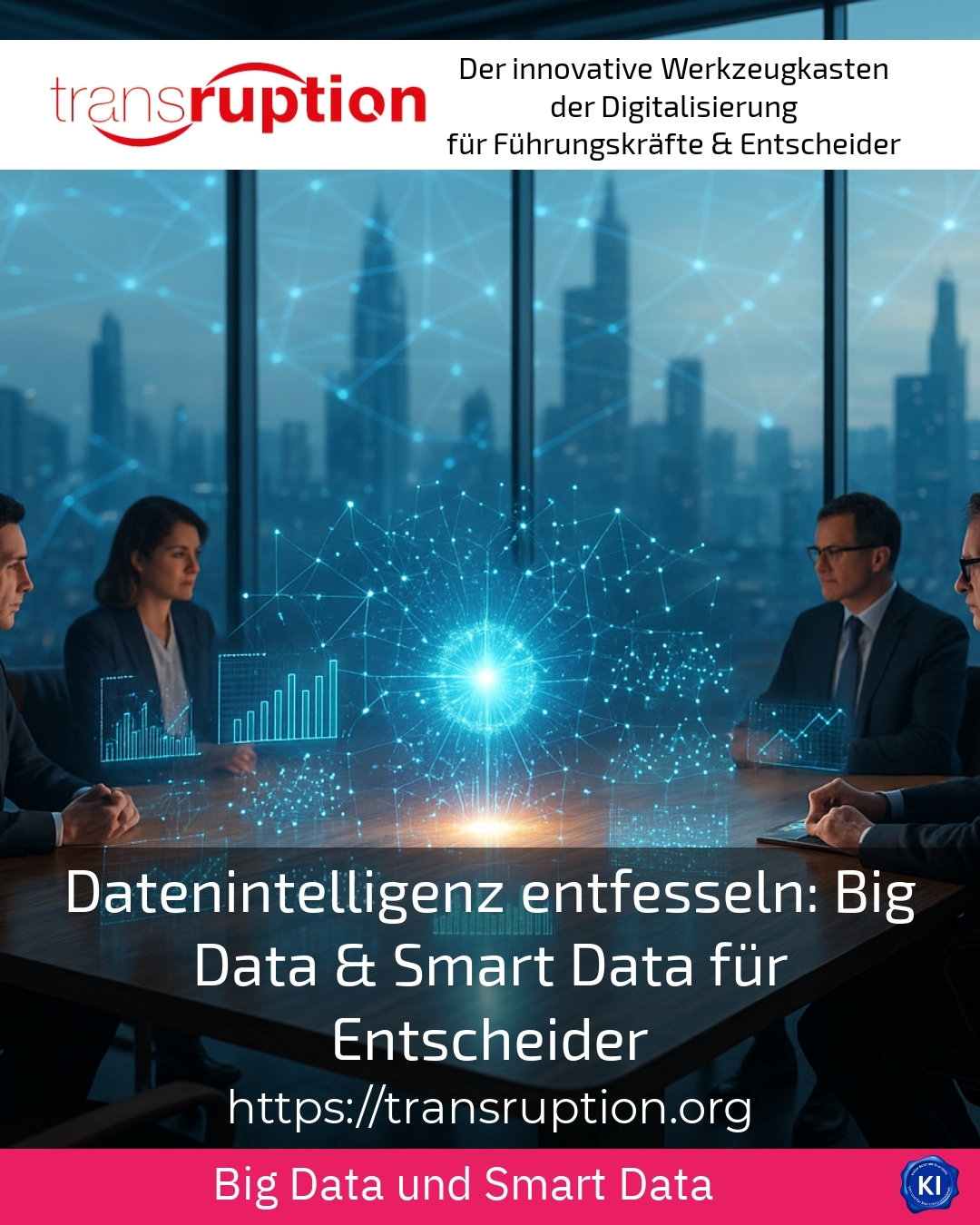
Unleashing data intelligence: Big Data & Smart Data for Decision Makers

4.3
(991)

In the digital age, Data intelligence has become a key success factor for companies. It's not just about collecting large amounts of data, but primarily about generating valuable smart data from big data using analysis methods. Only in this way can decision-makers make informed and at the same time practically relevant decisions that secure long-term competitive advantages.

Understanding Data Intelligence: From data overload to clear decision-making foundations

Big Data describes the sheer mass of diverse information that arises daily within companies. This data comes from various sources, such as customer interactions, machine or sensor data, social media, and many others. However, the sheer quantity alone does not make data usable. This is where Data intelligence It filters, refines, and analyses this information to generate Smart Data with tangible benefits.

In retail, for instance, data-intelligent systems help to recognise customer preferences early on and to tailor product ranges accordingly. In industry, intelligent data analysis optimises machine maintenance and improves production processes. Insurance companies use data intelligence to assess damage risks more accurately and to design tailor-made policies. In this way, large amounts of data are transformed into valuable information that makes everyday business significantly more effective.

BEST PRACTICE at the customer (name hidden due to NDA contract) A manufacturing company used data intelligence to analyse sensor data from production. This enabled faults to be identified early and maintenance to be planned more efficiently. The result was reduced machine downtime and a noticeable increase in productivity.

Big Data and Smart Data: The Combination for Valuable Insights

Big Data refers to extensive, diverse, and high-velocity data volumes, whereas Smart Data describes high-quality and specifically selected information extracted from this data. The true power of Data intelligence lies in transforming Big Data into Smart Data using modern technologies such as artificial intelligence, machine learning, and data analytics.

While many companies collect vast amounts of data, they struggle to derive concrete recommendations for action from it. Smart Data closes this gap by excluding unnecessary information and providing precisely the data that is relevant for strategic decisions. This saves time and resources, and improves decision quality.

For example, data-intelligent analyses in the financial sector help to base portfolio decisions on reliable data, rather than relying on unstructured masses of information. In logistics, targeted filtering of big data has made supply chains more transparent and enabled bottlenecks to be identified early on.

BEST PRACTICE at the customer (name hidden due to NDA contract) A logistics company used data intelligence to extract relevant KPIs from big data. This enabled more accurate prediction of delivery times and better inventory control. This helped to reduce costs and increase customer satisfaction.

Smart Data as the Basis for Successful Project Decisions

Decision-makers frequently report how data-intelligent approaches provide valuable impetus for the planning and execution of complex projects. By selecting relevant data, risks can be minimised and opportunities identified more quickly. Data intelligence thus supports leaders in reacting in a well-informed and agile manner.

Manufacturing benefits from this by monitoring production key figures and initiating adjustments promptly. In marketing, smart data allows for more precise targeting of audiences and higher campaign efficiency. In healthcare too, personalised therapies are prepared with the help of intelligent data analysis.

BEST PRACTICE at the customer (name hidden due to NDA contract) A marketing agency implemented data-intelligent systems to analyse customer behaviour in real-time. This enabled flexible campaign adjustments and significantly reduced wasted expenditure. This led to a noticeable increase in revenue and improved customer loyalty.

Boosting data intelligence: Practical tips for decision-makers

Anyone wishing to specifically promote data intelligence can employ several levers. Firstly, a clear definition of analysis goals is important for identifying relevant data. Secondly, modern analysis tools and AI methods should be used to automatically filter and interpret large volumes of data.

Thirdly, a company-wide data strategy helps to break down data silos, thereby improving the flow of information. In addition, ongoing employee training in data handling supports the creation of greater awareness of quality and data protection. Ultimately, transparent processes promote the acceptance of data-driven decisions in all areas.

Practical use cases from e-commerce demonstrate how data intelligence enables personalised recommendations. In manufacturing, it facilitates predictive maintenance of machinery. In the financial sector, it leads to more precise risk analyses. These examples reflect the broad applicability across various industries.

My analysis

In summary, Data intelligence is indispensable for decision-makers today in order to extract real added value from the flood of data. The combination of Big Data and Smart Data not only enables faster and more precise decisions, but also sustainable competitive advantages. Companies that integrate data-driven intelligent methods improve their efficiency, minimise risks and open doors for innovations. The development towards greater data quality and utilisation will continue to accompany central projects and support companies in many sectors.

Further links from the text above:

Smart data: How intelligent data is shaping our future

Big data vs. smart data: is more always better?

Data Intelligence: How Decision-Makers Use Big & Smart Data…

Smart Data: Definition, Application and Difference to Big …

Unleashing data intelligence: Big Data & Smart Data for…

For more information and if you have any questions, please contact Contact us or read more blog posts on the topic TRANSRUPTION here.
How useful was this post?

Click on a star to rate it!

Average rating 4.3 / 5. Vote count: 991

No votes so far! Be the first to rate this post.

Spread the love

transruption.org

The digital toolbox for
the digital winners of today and tomorrow

Business excellence for decision-makers & managers by and with Sanjay Sauldie

transruption
transruption

transruption: The digital toolbox for
the digital winners of today and tomorrow

Start » Unleashing data intelligence: Big Data & Smart Data for Decision Makers
28 October 2025

Unleashing data intelligence: Big Data & Smart Data for Decision Makers

4.3
(991)

In the digital age, Data intelligence has become a key success factor for companies. It's not just about collecting large amounts of data, but primarily about generating valuable smart data from big data using analysis methods. Only in this way can decision-makers make informed and at the same time practically relevant decisions that secure long-term competitive advantages.

Understanding Data Intelligence: From data overload to clear decision-making foundations

Big Data describes the sheer mass of diverse information that arises daily within companies. This data comes from various sources, such as customer interactions, machine or sensor data, social media, and many others. However, the sheer quantity alone does not make data usable. This is where Data intelligence It filters, refines, and analyses this information to generate Smart Data with tangible benefits.

In retail, for instance, data-intelligent systems help to recognise customer preferences early on and to tailor product ranges accordingly. In industry, intelligent data analysis optimises machine maintenance and improves production processes. Insurance companies use data intelligence to assess damage risks more accurately and to design tailor-made policies. In this way, large amounts of data are transformed into valuable information that makes everyday business significantly more effective.

BEST PRACTICE at the customer (name hidden due to NDA contract) A manufacturing company used data intelligence to analyse sensor data from production. This enabled faults to be identified early and maintenance to be planned more efficiently. The result was reduced machine downtime and a noticeable increase in productivity.

Big Data and Smart Data: The Combination for Valuable Insights

Big Data refers to extensive, diverse, and high-velocity data volumes, whereas Smart Data describes high-quality and specifically selected information extracted from this data. The true power of Data intelligence lies in transforming Big Data into Smart Data using modern technologies such as artificial intelligence, machine learning, and data analytics.

While many companies collect vast amounts of data, they struggle to derive concrete recommendations for action from it. Smart Data closes this gap by excluding unnecessary information and providing precisely the data that is relevant for strategic decisions. This saves time and resources, and improves decision quality.

For example, data-intelligent analyses in the financial sector help to base portfolio decisions on reliable data, rather than relying on unstructured masses of information. In logistics, targeted filtering of big data has made supply chains more transparent and enabled bottlenecks to be identified early on.

BEST PRACTICE at the customer (name hidden due to NDA contract) A logistics company used data intelligence to extract relevant KPIs from big data. This enabled more accurate prediction of delivery times and better inventory control. This helped to reduce costs and increase customer satisfaction.

Smart Data as the Basis for Successful Project Decisions

Decision-makers frequently report how data-intelligent approaches provide valuable impetus for the planning and execution of complex projects. By selecting relevant data, risks can be minimised and opportunities identified more quickly. Data intelligence thus supports leaders in reacting in a well-informed and agile manner.

Manufacturing benefits from this by monitoring production key figures and initiating adjustments promptly. In marketing, smart data allows for more precise targeting of audiences and higher campaign efficiency. In healthcare too, personalised therapies are prepared with the help of intelligent data analysis.

BEST PRACTICE at the customer (name hidden due to NDA contract) A marketing agency implemented data-intelligent systems to analyse customer behaviour in real-time. This enabled flexible campaign adjustments and significantly reduced wasted expenditure. This led to a noticeable increase in revenue and improved customer loyalty.

Boosting data intelligence: Practical tips for decision-makers

Anyone wishing to specifically promote data intelligence can employ several levers. Firstly, a clear definition of analysis goals is important for identifying relevant data. Secondly, modern analysis tools and AI methods should be used to automatically filter and interpret large volumes of data.

Thirdly, a company-wide data strategy helps to break down data silos, thereby improving the flow of information. In addition, ongoing employee training in data handling supports the creation of greater awareness of quality and data protection. Ultimately, transparent processes promote the acceptance of data-driven decisions in all areas.

Practical use cases from e-commerce demonstrate how data intelligence enables personalised recommendations. In manufacturing, it facilitates predictive maintenance of machinery. In the financial sector, it leads to more precise risk analyses. These examples reflect the broad applicability across various industries.

My analysis

In summary, Data intelligence is indispensable for decision-makers today in order to extract real added value from the flood of data. The combination of Big Data and Smart Data not only enables faster and more precise decisions, but also sustainable competitive advantages. Companies that integrate data-driven intelligent methods improve their efficiency, minimise risks and open doors for innovations. The development towards greater data quality and utilisation will continue to accompany central projects and support companies in many sectors.

Further links from the text above:

Smart data: How intelligent data is shaping our future

Big data vs. smart data: is more always better?

Data Intelligence: How Decision-Makers Use Big & Smart Data…

Smart Data: Definition, Application and Difference to Big …

Unleashing data intelligence: Big Data & Smart Data for…

For more information and if you have any questions, please contact Contact us or read more blog posts on the topic TRANSRUPTION here.

How useful was this post?

Click on a star to rate it!

Average rating 4.3 / 5. Vote count: 991

No votes so far! Be the first to rate this post.

Spread the love

Other content worth reading:

Unleashing data intelligence: Big Data & Smart Data for Decision Makers

written by:

Keywords:

#Big Data #Data analysis #Datenintelligenz #KI #SmartData

Follow me on my channels:

Questions on the topic? Contact us now without obligation

Contact us

[wpforms id="331781" title="false"]

More articles worth reading

    3 thoughts on “Datenintelligenz entfesseln: Big Data & Smart Data für Entscheider”

    Leave a comment