
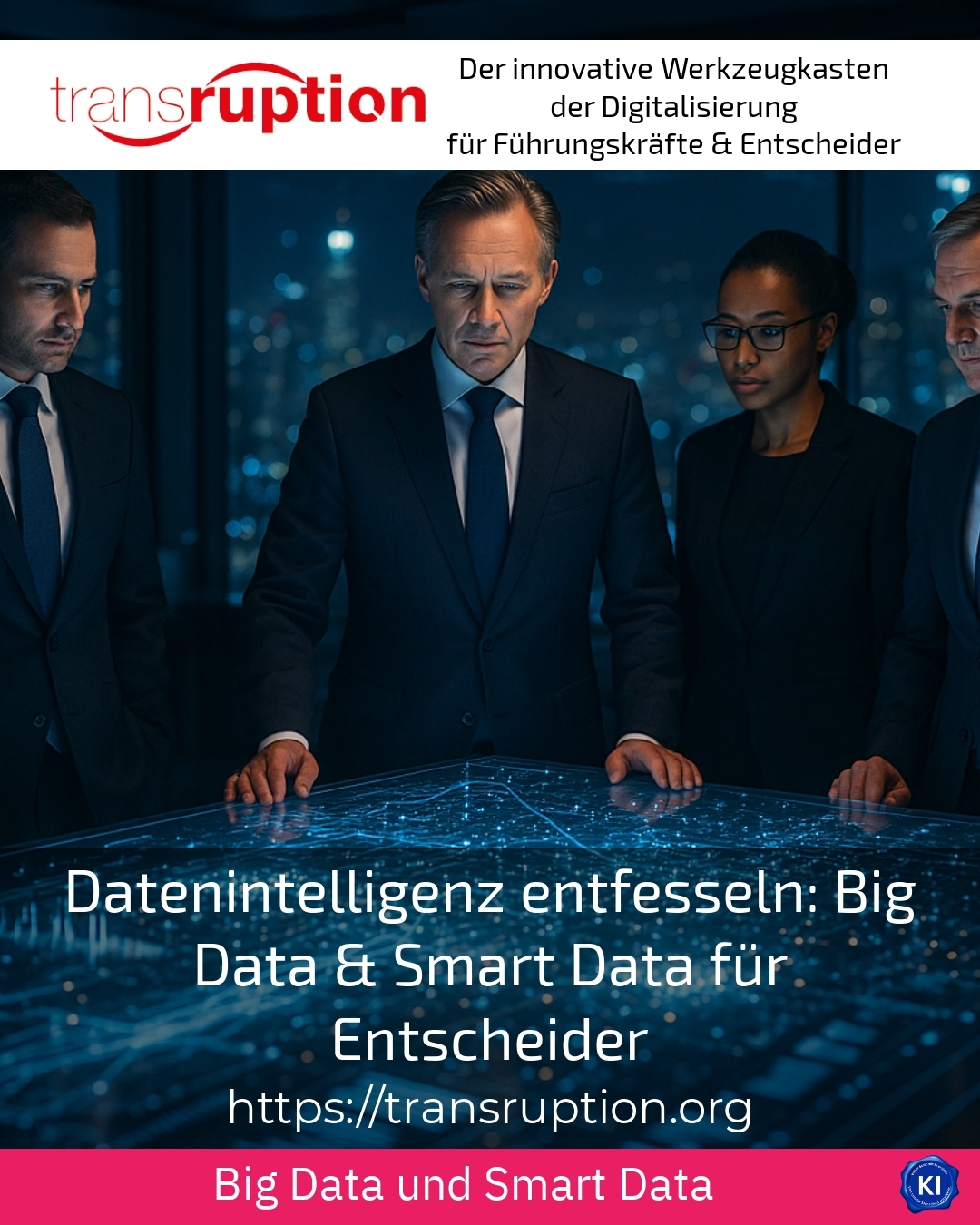
In the digital age, the ability to recognise crucial added value in large volumes of data is central for executives. The combination of Big Data and Smart Data, also known briefly as Data intelligence Known for providing effective support for informed decision-making, this goes beyond merely collecting data. It's about gaining actionable insights that help companies operate in a future-oriented and competitive manner.
Understanding Data Intelligence: From Data Flood to Actionable Knowledge
Large data streams, also known as Big Data, describe the sheer volume of diverse information that is generated within companies every day. This can originate from customer interactions, machine data, or social networks. However, sheer volume alone does not guarantee benefit. This is where the concept of Data intelligence She filters, sorts, and analyses these data streams, transforming them into Smart Data – that is, high-quality, relevant data that provides direct added value.
For example, in retail, data-intelligent analyses enable early detection of customer trends and effective adjustment of inventory. In the manufacturing industry, production is stabilised and maintenance cycles are optimised through sensor monitoring and intelligent data evaluation. Insurance companies are also increasingly relying on these methods to assess claims risks more precisely and tailor offers.
Smart Data as the core of data intelligence
Smart Data ideally complements Big Data. While Big Data is primarily characterised by volume, variety and velocity, Smart Data focuses on data quality and context. Intelligent algorithms sift through vast data sets, eliminate noise and highlight relevant patterns. Decision-makers thus receive precisely the information that specifically supports their business strategy.
In marketing, for instance, personalised campaigns can be designed more precisely with smart data, achieving significantly higher success rates. In the energy sector, consumption analysis is optimised to develop sustainable and cost-effective concepts. Banks, in turn, benefit from more precise analyses in credit risk management, thus creating more secure decision-making foundations.
BEST PRACTICE at the customer (name hidden due to NDA contract) A global logistics service provider used data-intelligent methods to generate smart data from big data. Targeted analysis of traffic data and shipment tracking optimised route planning. Delays were measurably reduced, significantly improving customer satisfaction and cost structure.
Using data intelligence in complex projects
Implementing data-intelligent solutions presents organisations with challenges. They require a clearly structured analytics architecture, suitable technologies, and well-trained employees. Clients often report that accompanying coaching during the implementation of new data-driven approaches provides valuable impetus and instils confidence. This allows projects such as digitised production control or customer-focused sales optimisation to be systematically managed.
In the telecommunications industry, data-intelligent coaching supported a provider in preventing customer churn by early detection of usage patterns. This was achieved by combining usage data, feedback analyses, and service histories. The data-driven support led to more stable customer relationships and significantly improved offerings.
Data intelligence as a competitive advantage for leaders
Data intelligence is not a short-term trend, but a strategic factor for success. Decision-makers who use data-intelligent methods gain a head start, reduce risks and unlock new potential. The correct interpretation of Smart Data can promote innovation, optimise processes and open up markets more effectively.
An example from the automotive industry demonstrates how data-intelligent systems are revolutionising vehicle maintenance: Sensor data is used to detect potential defects early on. This allows for scheduled workshop appointments instead of expensive emergency repairs. This increases customer satisfaction and reduces costs.
Intelligent data analysis is also providing impetus for personalised patient care in the healthcare sector. For example, hospitals analyse patient histories and treatment data to plan therapies more effectively. This increases treatment efficiency and helps to deploy resources more precisely.
My analysis
Data intelligence is indispensable for decision-makers today who want to transform traditional data floods into valuable competitive advantages. The combination of Big Data and Smart Data creates robust insights that support companies in effectively aligning their strategy and efficiently overseeing projects. Practical use cases demonstrate how data-intelligent action across industries promotes success and ensures future viability.
Further links from the text above:
[1] Data intelligence: big data and smart data for decision-makers
[2] Big data vs. smart data: is more always better?
[4] Data Analysis – Big Data & Smart Data for Decision Makers
[5] Data Intelligence: How Decision-Makers Use Big & Smart Data…
[7] Smart Data: Definition, Application and Difference
[8] What is smart data?
For more information and if you have any questions, please contact Contact us or read more blog posts on the topic TRANSRUPTION here.










 Deutsch
  English (UK)