

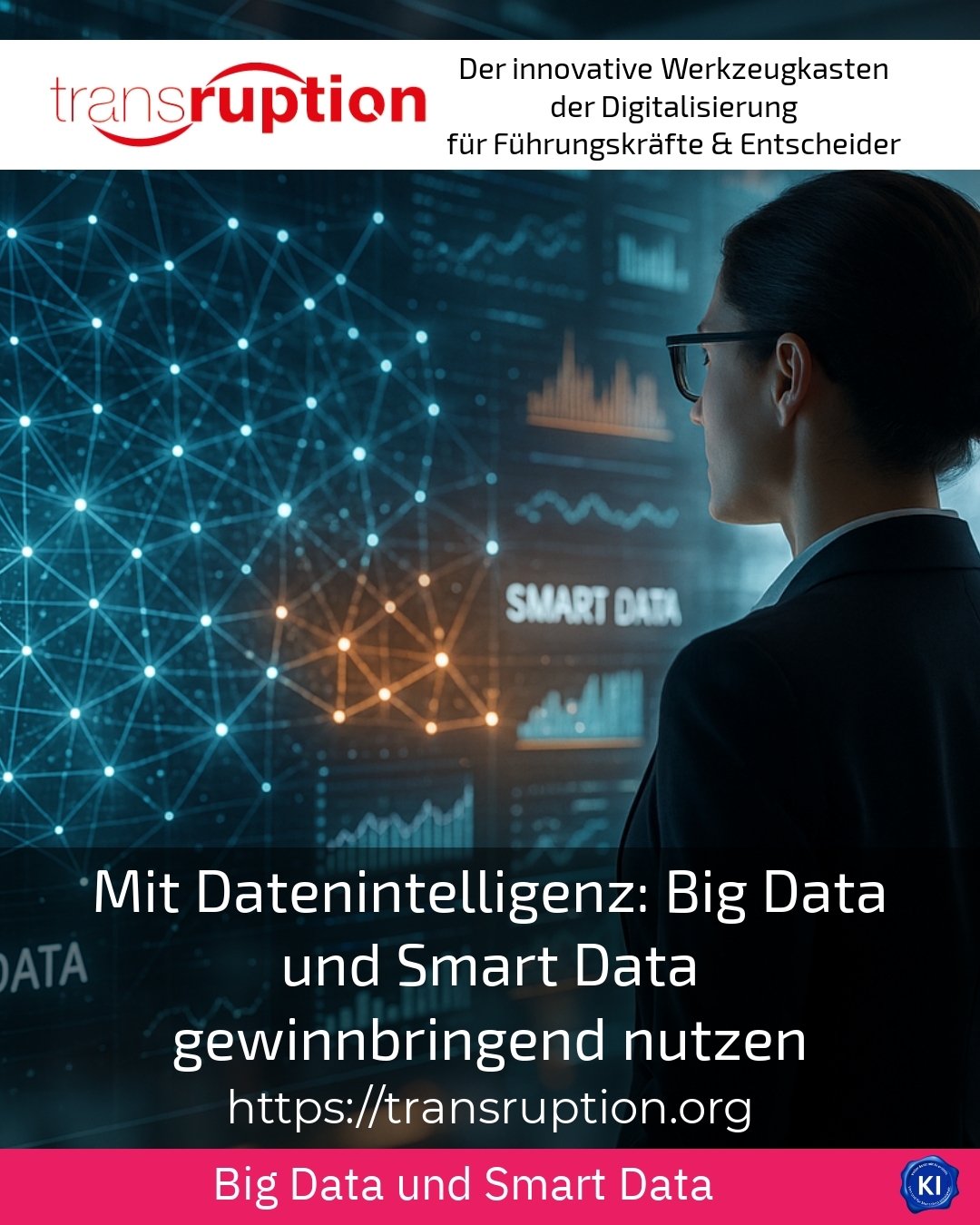
Data intelligence is a crucial factor today for companies looking to extract real added value from large volumes of data. It makes it possible to gain not just mass, but relevant insights from the multitude of available information. Data intelligence helps to use big data efficiently and transform it into high-quality, targeted smart data. This supports business processes, promotes innovation, and creates competitive advantages.
Big Data and Smart Data: The Difference
Big Data refers to enormous volumes of data, which are often unstructured and complex. They arise in many areas, such as industrial manufacturing, commerce, or healthcare. However, the sheer volume of data is of little help if the right methods for analysis and processing are not used.
Smart Data, on the other hand, are intelligent data extracted from large datasets using algorithms, and they contain usable knowledge. They are more targeted, precise, and of higher quality. Companies use Smart Data to make informed decisions and optimise processes.
An example from industry: Manufacturers collect sensor data from production facilities. With data intelligence, they can recognise patterns and optimise maintenance cycles. This reduces unplanned downtime and increases efficiency.
In the financial sector, smart data analytics help to detect attempted fraud early. Companies also rely on smart data in marketing to precisely target audience groups and increase customer loyalty.
Another example: a logistics company uses data-intelligent methods to dynamically optimise route planning. This shortens delivery times and reduces fuel costs.
Data intelligence in practice
Data intelligence in mechanical engineering
In mechanical engineering, companies collect sensor data from machinery. With data intelligence, they can analyse this data and recognise patterns. This allows them to predict maintenance needs and avoid unplanned downtime.
A manufacturer uses data intelligence to extend the lifespan of machines. They analyse sensor data to detect when a part needs replacing. This saves costs and increases productivity.
Another example: A company uses data intelligence to improve the energy efficiency of its facilities. It analyses energy consumption and optimises processes.
Retail Data Intelligence
In retail, companies gather extensive purchasing profiles. With data intelligence, they can analyse this data and address customer needs with pinpoint accuracy.
A retailer uses data intelligence to create personalised marketing campaigns. They analyse purchasing behaviour and send targeted offers to their customers.
Another example: A company uses data intelligence to optimise warehousing. It analyses goods consumption and adjusts stock levels.
Here's another example: A retailer uses data intelligence to increase customer loyalty. They analyse customer behaviour and offer personalised services.
Healthcare Data Intelligence
In healthcare, companies are collecting vast amounts of data. With data intelligence, they can analyse this data and recognise patterns.
A hospital uses data intelligence to improve patient care. It analyses treatment data and identifies which therapies are most effective.
Another example: A company uses data intelligence to increase the efficiency of its processes. It analyses the workflows and optimises resource utilisation.
Another example: A hospital uses data intelligence to improve the quality of care. It analyses patient data and identifies where improvements can be made.
Data intelligence and Smart Data: The advantages
Data intelligence offers many advantages. It makes it possible to gain relevant insights from large amounts of data. This allows companies to make targeted decisions and optimise processes.
Smart data is more targeted, precise, and of higher quality. It provides actionable insights as soon as the data is collected. This enables companies to make faster and better decisions.
Data intelligence supports business processes, drives innovation, and creates competitive advantages. Companies that leverage data intelligence are better positioned and can react more quickly to changes.
For example, a company uses data intelligence to increase customer satisfaction. It analyses customer feedback and identifies areas for improvement.
Another example: A company uses data intelligence to increase the efficiency of its processes. It analyses the workflows and optimises resource utilisation.
Another example: A company uses data intelligence to improve the quality of its products. It analyses production data and identifies where improvements can be made.
Data Intelligence and Smart Data: The Challenges
Data intelligence and smart data bring many advantages, but also present challenges. Companies must ensure that the data is of high quality and that the right methods for analysis and preparation are used.
For example: A company uses data intelligence to increase the efficiency of its processes. It analyses operations and optimises resource utilisation. In doing so, it must ensure that the data is accurate and complete.
Another example: A company uses data intelligence to improve the quality of its products. It analyses production data and identifies areas where improvements can be made. In doing so, it must ensure that the data is processed securely and in compliance with data protection regulations.
Another example: A company uses data intelligence to increase customer satisfaction. It analyses customer feedback and identifies where improvements can be made. In doing so, it must ensure that the data is anonymised and processed in compliance with data protection regulations.
My analysis
Data intelligence is a crucial factor for companies that want to extract real value from large amounts of data. It enables the extraction of relevant insights, not just volume, from the multitude of available information. Data intelligence helps to efficiently utilise Big Data and transform it into high-quality, targeted Smart Data. This supports business processes, drives innovation and creates competitive advantages.
Companies that leverage data intelligence are better positioned and can react more quickly to change. They can make targeted decisions and optimise processes. Data intelligence is an important building block for success in the digital world.
Further links from the text above:
Unleashing Data Intelligence: Big Data and Smart Data
Data Intelligence: With Big & Smart Data for Better Decision-Making
Big data vs. smart data: is more always better?
Smart data: definition, application and difference to big data
For more information and if you have any questions, please contact Contact us or read more blog posts on the topic TRANSRUPTION here.















 Deutsch
  English (UK)