
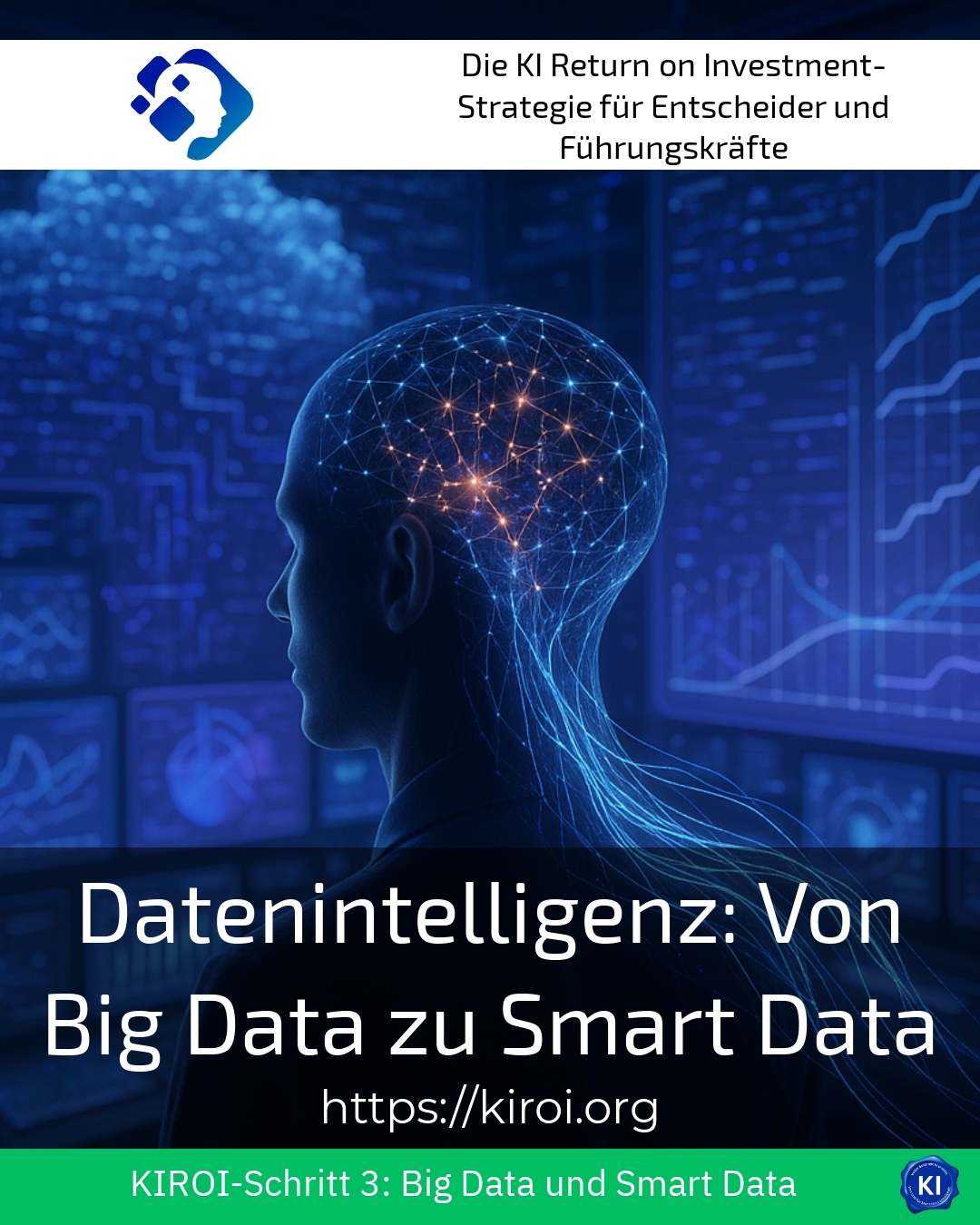
Have you ever wondered why many companies, despite having vast amounts of data, are unable to make better decisions? The transformation of Data Intelligence: From Big Data to Smart Data It currently employs numerous organizations because they have recognized that mere data sets alone do not create competitive advantage. In a world where billions of data points are generated daily, the ability to intelligently filter and interpret data becomes the decisive factor of success. Clients often report that they are overwhelmed by the sheer volume of available information and do not know where to begin. This is where a well-thought-out data strategy comes into play that goes far beyond simply collecting information.
The change in the way we handle information flows
The way organizations handle their information assets has fundamentally changed. In the past, the motto was: the more data, the better. Today we know that quality trumps quantity. Companies increasingly recognize that unfiltered data streams can create more confusion than clarity. The real challenge lies in filtering out the relevant signals from the noise.
In the manufacturing industry, this change is particularly evident. Production lines generate millions of sensor data per hour. A machine engineering company can, for example, collect temperatures, vibrations, and flow rates. The crucial question is: Which of these measurements are truly relevant for quality assurance? In retail, we see similar patterns in analyzing customer behavior. Cash register data, movement profiles, and online clicks generate a complex overall picture. In healthcare, electronic patient records generate enormous amounts of data. The trick is to derive actionable insights from them.
Data intelligence: From Big Data to Smart Data as a strategic necessity
The transition to intelligent data usage requires a fundamental change in corporate management. It is no longer about storing all available information. Instead, organizations must learn to specifically ask the right questions. This strategic realignment helps companies use their resources more efficiently. Transruptions coaching can provide valuable support in such transformation projects.
A logistics company faces the daily challenge of optimizing routes. GPS data, weather conditions, and traffic information flow together. The intelligent combination of these information enables predictive planning. In the banking sector, institutions use transaction data to detect fraud. The combination of historical patterns and real-time analysis protects customers from financial damage. Energy providers, in turn, analyze consumption patterns to predict peak loads and stabilize the grid.
Best practice with a AIROI customer
A medium-sized manufacturing company in the mechanical engineering sector faced the challenge of optimizing its maintenance cycles. The company had collected sensor data from its production facilities over the years without systematically evaluating them. As part of a transformation project, transruptive coaching accompanied the team in developing an intelligent analysis strategy. First, the project managers jointly identified the critical measurement values for plant availability. Subsequently, they developed pattern recognition algorithms that could detect impending failures early on. The result was impressive: unplanned downtime was reduced by more than thirty percent within a year. At the same time, maintenance costs significantly decreased because components were no longer replaced according to rigid intervals but as needed. Employees reported a significantly lower level of stress because unexpected production disruptions occurred less frequently. This example impressively demonstrates how the targeted use of existing information can improve concrete business results.
Technological foundations for intelligent data processing
The technical prerequisites for a successful data strategy have evolved significantly in recent years. Cloud platforms enable flexible scaling of storage and computing capacities. Machine learning automates the detection of complex relationships. Real-time processing systems provide insights within seconds instead of days. This technological foundation creates new opportunities for data-driven decision making [1].
The automotive industry uses these technologies for predictive quality control. Sensors on welding robots capture process parameters in real time. Deviations from set values are immediately detected and reported. In the field of pharmaceutical research, intelligent analysis systems accelerate drug development. Molecular databases are linked to clinical study results. Telecommunications providers optimize their networks using usage forecasts. Dynamic bandwidth allocation significantly improves the customer experience.
The human component in data intelligence: From big data to smart data
Despite all technological advancements, humans remain an indispensable factor. Algorithms can recognize patterns and make predictions. However, interpreting these results requires expertise and experience. Data analysts must understand which questions are relevant to the business. Executives need the ability to critically question data-based recommendations.
In the insurance industry, this challenge is particularly evident. Risk models provide probabilities of claims. The final decision on insurance coverage is still made by humans. In human resources, analytics systems support candidate selection. Assessing soft skills and cultural fit remains a human task. In journalism, automated reports based on data are also emerging. Editorial classification and ethical evaluation remain the responsibility of the editorial teams [2].
Best practice with a AIROI customer
A nationwide retail conglomerate wanted to base its product planning on a data-driven approach. Until now, experienced buyers had made decisions based on their market knowledge. The company had extensive sales data, competitor information, and market research results. As part of the guidance provided by transruptive coaching, the teams developed a hybrid decision model. This model combined algorithmic recommendations with the expert knowledge of the buyers. First, machine learning systems analyzed historical sales patterns and identified correlations. Subsequently, they presented a preliminary selection of potential product adjustments to the buyers. The final decisions were still made by the professionals, but now on the basis of more solid information. This combination of human expertise and machine analysis led to measurable improvements in product performance. The employees felt valued for their expertise and readily embraced the new system. This approach demonstrates impressively how people and machines can work together successfully.
Ethical dimensions of intelligent data usage
With increasing technological capabilities, the ethical requirements for handling data are also increasing. Data protection and personal rights must be safeguarded. Algorithms must not make discriminatory decisions. Transparency about the use of data creates trust among customers and employees. Companies bear a social responsibility for the responsible handling of information [3].
In the credit sector, ethical issues are of particular importance. Scoring models directly affect people's living situations. Unfair discrimination against certain groups must be avoided. Employers increasingly use analytical tools for performance evaluation. Monitoring employees raises questions about privacy and trust. In the healthcare sector, tensions arise between data use and patient protection. The possibilities of personalized medicine are in conflict with the right to informational self-determination.
Implementation strategies for sustainable data projects
The successful implementation of an intelligent data strategy requires a structured approach. Isolated pilot projects rarely lead to lasting changes. Instead, a holistic transformation of the data culture is needed. Leaders must lead by example and promote data-driven decisions. The qualification of employees plays a central role for long-term success.
The construction industry faces specific challenges in digitalization. Construction projects generate complex data flows from planning to completion. Building Information Modeling enables the integration of various disciplines. In agriculture, Precision Farming revolutionizes the management of agricultural land. Sensors, satellite images, and weather data are integrated into cultivation decisions. Tourism uses booking data and movement patterns to plan capacity. Dynamic pricing reacts to fluctuations in demand in real time.
Data intelligence: From Big Data to Smart Data in practice
The practical implementation of intelligent data strategies differs depending on the industry and the size of the company. Small and medium-sized companies often have different requirements than large corporations. The available resources for data infrastructure are limited. At the same time, opportunities arise through more agile decision-making structures. Choosing the right technology partners plays a crucial role.
For example, craft businesses can benefit from digital order management. The linking of customer data, material inventories, and scheduling optimizes workflows. Restaurants analyze ordering patterns to reduce food waste. Intelligent inventory planning reduces costs and conserves resources. Freelancers such as architects or consultants use project data to better calculate costs. Analyzing past orders improves future proposal creation [4].
Best practice with a AIROI customer
A service company in the field of technical building equipment sought ways to improve efficiency. The company managed numerous commercial properties with complex equipment systems. The service technicians performed routine maintenance daily without knowledge of the actual state of the equipment. In a project led by transruptive coaching, the team developed a sensor-based condition monitoring system. Critical equipment components were equipped with inexpensive IoT sensors. The collected data flowed into a central analysis platform with automatic anomaly detection. The system learned from historical failure patterns and was able to signal impending problems early. The dispatching of service technicians was now prioritized based on actual operational needs. Unnecessary trips were significantly reduced, while at the same time the failure rate of the equipment under maintenance decreased. Customers appreciated the proactive service and often extended their maintenance contracts. The company was able to increase its profitability and positioned itself as an innovative provider in the market.
My AIROI Analysis
The transformation from pure data collection to intelligent information utilization represents one of the most significant challenges for modern organizations. Companies that successfully manage this change gain sustainable competitive advantages in their respective markets. The technological prerequisites are largely in place today and are also accessible to smaller organizations. The real hurdle often lies in the corporate culture and established decision-making processes. Leaders must learn to view data-based insights as an enrichment rather than a threat to their experience.
Collaboration between human expertise and machine analysis becomes the key factor for successful data projects. Pure automation without human control carries risks and creates acceptance problems among employees. At the same time, decision-makers cannot do without the support of intelligent systems if they want to remain competitive. Transruptions coaching can provide valuable impulses in this transformation and accompany teams in developing a data-oriented culture. The ethical dimensions of data use deserve special attention, because trust forms the foundation of any successful customer relationship. Organizations that handle information responsibly will be more successful in the long term than those that prioritize short-term optimization over sustainable relationships. The future belongs to companies that do not view data intelligence as a technical project but as a core strategic competency that they continuously develop.
Further links from the text above:
[1] Gartner Research – Information Technology Insights
[2] McKinsey Digital – Insights into Digital Transformation
[3] Bitkom – Data protection and data security
[4] Fraunhofer Society – Digital Transformation
For more information and if you have any questions, please contact Contact us or read more blog posts on the topic Artificial intelligence here.








 Deutsch
 English (UK)