
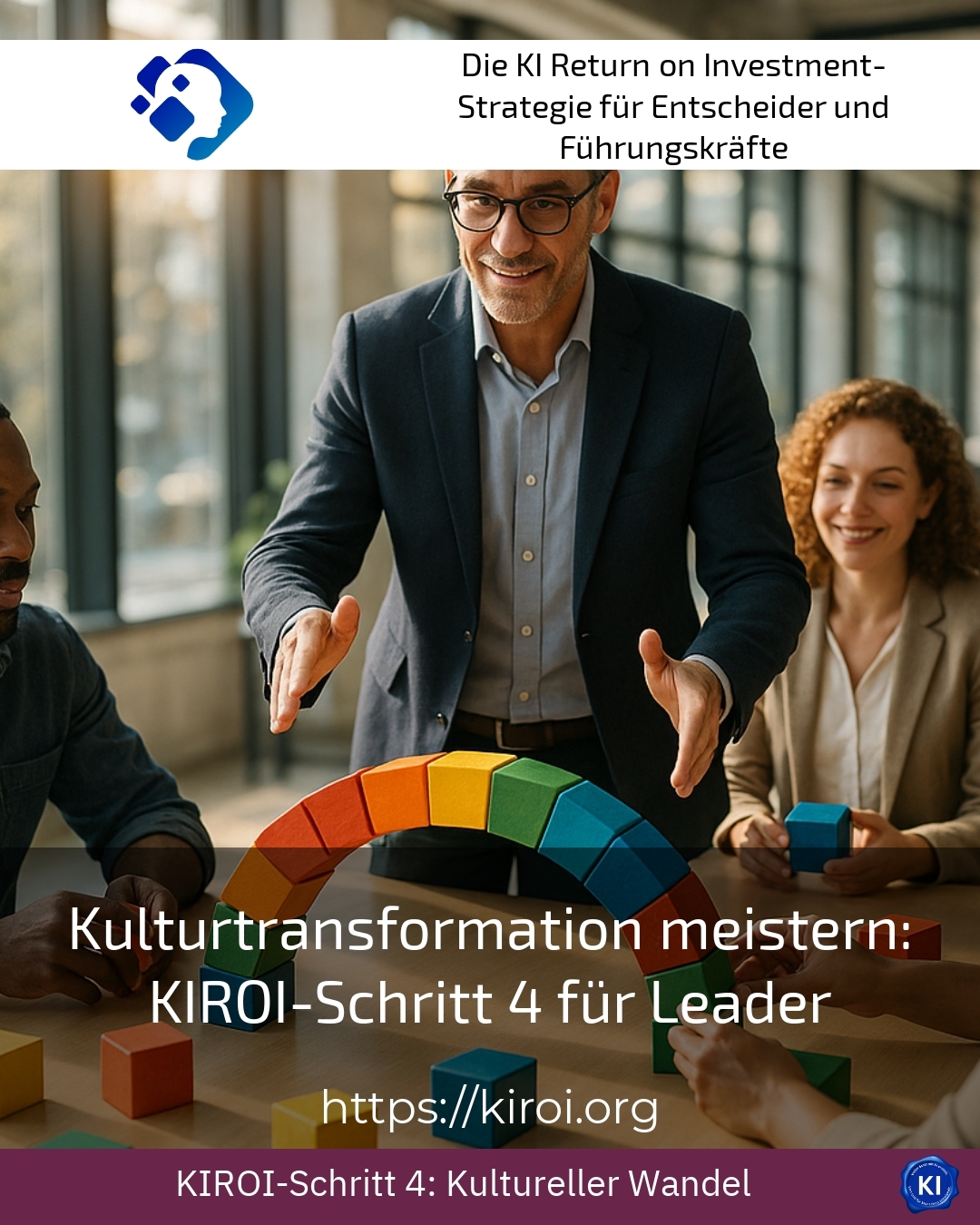
The challenge of a successful culture transformation lies in embedding sustainable changes in values, behaviours, and mindsets throughout the entire organisation. Leaders, in particular, play a central role in this. Within the scope of the AIROI Step 4, the focus is on how leaders can actively shape cultural change as role models and catalysts, thereby generating positive momentum for the organisation.
Leadership as a key role in cultural transformation
In the AIROI model, the fourth step is crucial because leaders embody and multiply the new culture. They take responsibility and create an atmosphere where change becomes possible. This behaviour must be authentic and consistent so that employees recognise that change is more than just lip service.
An example from industry shows how a CEO fostered transparency through regular open discussion rounds and thus initiated a culture of trust. In a large IT company, managers established a feedback culture by actively soliciting feedback themselves, thereby creating a role model effect. In medium-sized businesses, team coaching enabled managers to uncover blind spots and jointly develop consistent leadership behaviour.
BEST PRACTICE with one customer (name hidden due to NDA contract)
A development program was conducted with the leadership team at a medium-sized technology company. This involved reflecting on individual values and everyday leadership behaviour. In parallel, new communication formats were introduced to encourage greater employee participation. After a few months, managers reported increased trust within the team and a greater willingness to embrace change.
Practical implementation in everyday leadership
So that cultural transformation does not remain merely theoretical, coaching and further training support managers in sustainably changing their behaviour. Regular reflection helps to recognise and readjust ingrained patterns. Effective managers encourage courage and openness, even to question old habits.
Examples from various sectors illustrate this: In the care sector, regular supervisions were introduced to strengthen coping with stress and resilience. A financial services provider used digital training to improve intercultural competence and agile leadership. In retail, workshops raised awareness for dealing with resistance and developing shared visions.
BEST PRACTICE with one customer (name hidden due to NDA contract)
In a retail company, executive coaching was undertaken, which, alongside strengthening the role model function, also supported the implementation of a continuous feedback system. Managers reported that this not only improved communication but also significantly increased employee motivation and engagement.
How leaders can purposefully guide culture transformation
In culture transformation, leadership means understanding change as a process and actively shaping it. This includes developing visions collaboratively, involving employees, and promoting transparent decision-making processes. This fosters a trusting working relationship that supports change.
In practice, it's about clearly communicating cultural change goals. Through small, visible steps, the process becomes tangible. For example, in a creative agency, a weekly meeting was established that provides space for open dialogue. A manufacturing company focused on cross-departmental workshops to break down silos and strengthen shared values. In the service sector, a values manifesto was developed that serves as a guide for all decisions.
BEST PRACTICE with one customer (name hidden due to NDA contract)
An international logistics company initiated a cultural transformation workshop with leaders from various levels. The aim was to identify existing barriers and develop a common attitude. Since then, leaders have become more aware of their role as culture bearers and are implementing the new culture in operational processes as well.
My analysis
Cultural transformation is a key process for modern companies wanting to hold their own in dynamic markets. Step 4 of AIROI shows the importance of the role of leaders: they are role models, catalysts, and companions on the journey of change. Practical examples from business, healthcare, or retail demonstrate that sustainable change arises from the concrete behaviour of leaders. Coaching and targeted training support this process.
Leaders who are open to reflection and actively embody new values lay the foundation for an agile and resilient company culture. This ensures that culture transformation is not a one-off measure, but a long-term success factor.
Further links from the text above:
Mastering cultural transformation: AIROI step 4 for leaders [2]
Successful culture transformation for businesses [1]
Understanding cultural transformation with the AIROI method [5]
For more information and if you have any questions, please contact Contact us or read more blog posts on the topic Artificial intelligence here.









 Deutsch
  English (UK)