
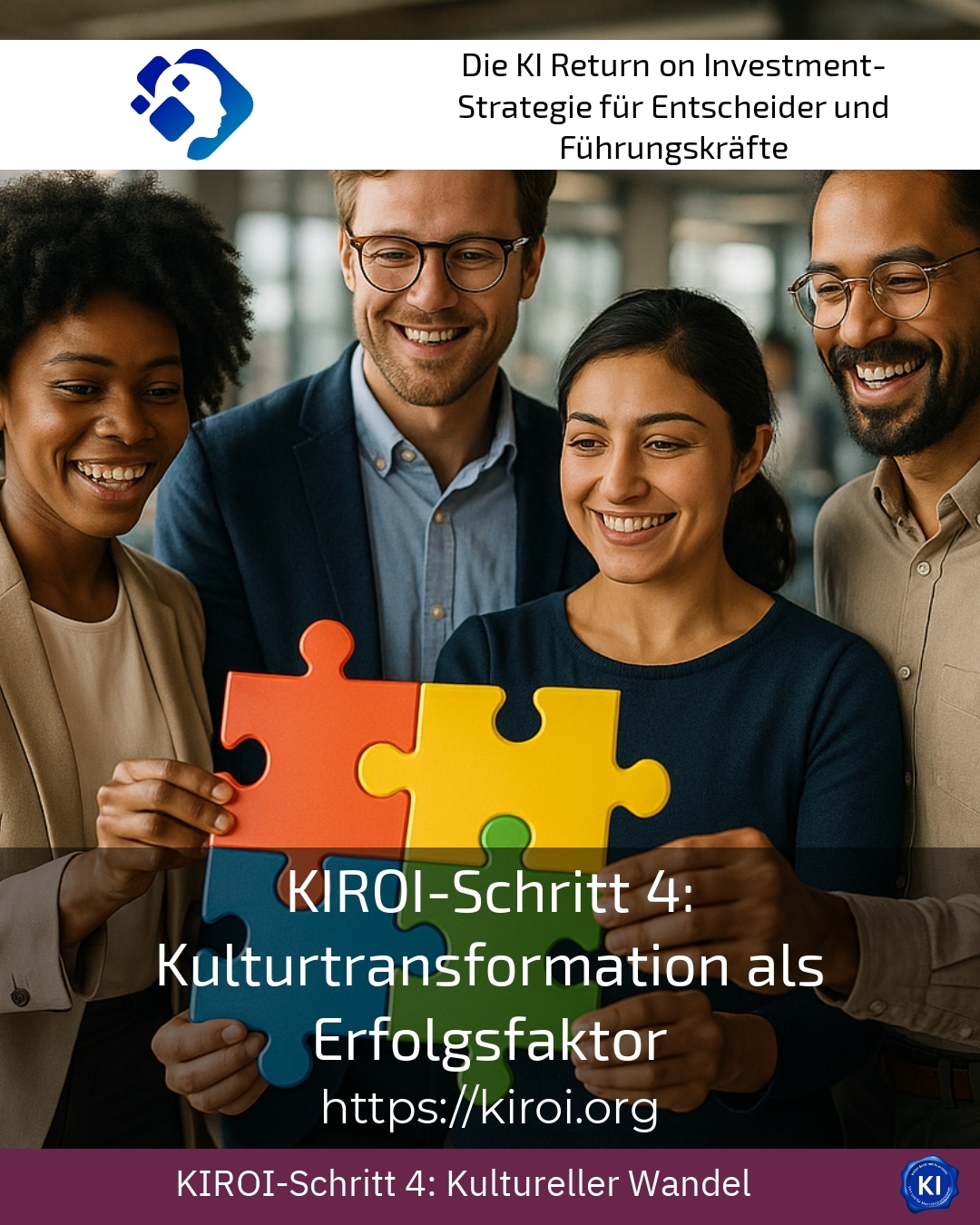
Cultural transformation as the key to sustainable success
Anyone wanting to succeed in today's dynamic world of business needs more than just lean processes and digital tools. More and more clients are calling for a genuine culture transformation because they are realising that sustainable success arises where people work together and live values collectively – and that goes beyond superficial changes. Culture transformation is therefore not a „nice to have“, but a central success factor, making the difference between stagnation and growth.
But what does that mean in concrete terms? In recent years, we've observed that companies aren't just introducing new methods, but are questioning their entire corporate culture – from strategy to everyday work. Culture transformation influences how teams communicate, how problems are solved, and which values are truly lived within the company. The goal is clear: a culture that fosters innovation, strengthens collaboration, and motivates employees.
Why culture transformation is so crucial
Many companies face similar challenges: conflicting goals, internal resistance, or a lack of motivation are frequently mentioned when we speak with managers. Culture transformation offers a way to address these issues not in isolation, but systematically. Examples such as Bosch, Netflix, and Zappos show how organisations can reposition themselves through a conscious cultural change.
Bosch, for example, was long known for rigid structures and slow decision-making processes. Since the beginning of its cultural transformation, the company has been working much more agilely and is adapting its development cycles to the demands of innovative customers like Tesla. Important company decisions are communicated openly and promptly, which makes collaboration more trusting.
Netflix, on the other hand, relies on the principle of „freedom and responsibility“. Employees are afforded a great deal of trust and can arrange their working hours flexibly, as long as they achieve their goals. The result is a highly motivated workforce that finds creative solutions for complex challenges[8][10].
Zappos in retail demonstrates how a customer-centric and value-based culture emerges: Flat hierarchies, a focus on employee satisfaction, and the opportunity to bring one's own personality to work have sustainably changed the company image[8][10].
Four steps to successful cultural transformation
How can we achieve a new corporate culture that fosters innovation, collaboration, and commitment? Many successful companies go through a clearly structured process, which we guide step-by-step through transruption coaching.
1. Capture and analyse the status quo
The process begins with an honest assessment of the existing culture. Tools such as anonymous employee surveys or workshops help to uncover strengths, weaknesses, and blind spots[5]. Only when the team understands where the company stands culturally can meaningful change be achieved.
BEST PRACTICE with a customer (name hidden due to NDA contract): In a medium-sized engineering company, collaboration between departments had become increasingly difficult over the years. As part of a cultural transformation, an analysis was carried out together on how silos had emerged. Through open dialogues, regular feedback rounds and the active involvement of all employees, the issue of silo thinking was actively addressed after just a few months.
2. Develop vision, values, and goals together
Only values and goals that are jointly defined will have a lasting impact. In this step, leadership and teams define what the company stands for and which behaviours are desired. Formulating mission statements can help, but it is crucial that they are not just hung on the wall but are lived.
Google is also a good example: here, the corporate culture is so strongly embedded that it permeates all decisions and innovations. Openness, transparency and a high tolerance for error shape everyday life and enable rapid adaptation to new requirements.
3. Actively implement and support changes
Cultural transformation means change – and change requires courage, trust, and patience. Leaders must lead by example, but employees should also have the opportunity to set their own impulses. Regular reflections and adjustments are part of this, because cultural development is never finished.
BEST PRACTICE with a customer (name hidden due to NDA contract): An internationally active IT company has trained so-called „Culture Ambassadors“ as part of its cultural transformation. These ambassadors for value change act as bridge-builders between teams and management, initiate workshops on new working methods, and feed back practical insights directly to senior management. This creates a continuous dialogue about progress and challenges.
4. Measuring successes and embedding them sustainably
The effect of cultural transformation is not immediately apparent, but it can be measured. Indicators such as employee satisfaction, innovative strength, absenteeism, or customer satisfaction provide initial clues. It is crucial that the process is not ticked off after a few months, but remains permanently embedded in the company.
BEST PRACTICE with a customer (name hidden due to NDA contract): A medium-sized logistics company has viewed a cultural shift as a process over many years, rather than a one-off event. Employees are regularly surveyed about their satisfaction and needs, and managers receive targeted coaching to embody the desired culture. The measurable successes include a significantly higher innovation rate and reduced staff turnover.
Practical tips for cultural transformation.
Would you like to kick-start a sustainable cultural transformation in your company? Here are some approaches that have proven effective in practice:
– Conduct regular culture audits to objectively assess the current situation.
– Get all employees actively involved in the change process, because only shared values will endure.
– Start with small pilot projects to make initial successes visible and reduce resistance.
– Focus on continuous communication, as cultural transformation thrives on open exchange.
– Utilise external impulses, such as transruption coaching, to bring new perspectives into the company and guide the process objectively.
Transruptions-Coaching individually supports companies in implementing and evaluating their cultural transformation – tailored to the specific challenges and goals. The focus is always on the people, because cultural change only succeeds when the values are lived by everyone.
My analysis
Cultural transformation isn't a sprint, but a marathon – and it's worth it. Companies that actively work on their culture report greater innovative strength, better collaboration, and higher employee retention[10][3]. Experience shows that those who take value change seriously lay the foundation for sustainable success in a constantly changing world.
Whether it's a large corporation or a medium-sized business, cultural transformation always begins with the courage to question existing patterns and break new ground. The path may be challenging, but it leads to a company culture that engages everyone involved and makes it future-proof.
Further links from the text above:
- Examples of company culture: Bosch, Google, Netflix[2]
- Successful culture transformation for businesses[3]
- Strong Company Culture: Top 3 Examples (Google, Netflix, Bosch)[4]
- Culture transformation – 4 steps and 4 interconnections[5]
- 4 Companies with Successfully Implemented Cultural Change[8]
- Cultural transformation as a growth driver[10]
For more information and if you have any questions, please contact Contact us or read more blog posts on the topic Artificial intelligence here.











 Deutsch
  English (UK)