
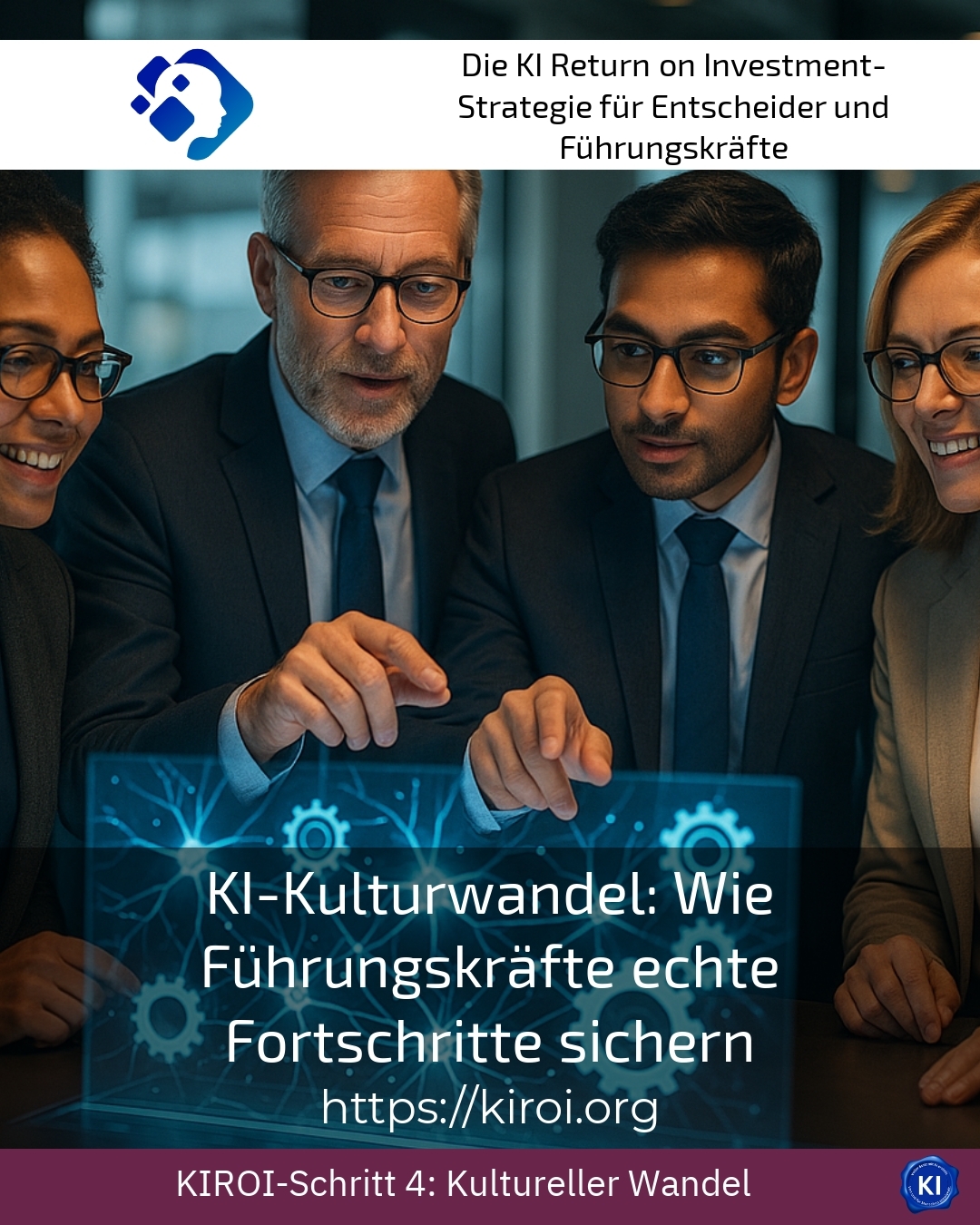
The rapid development of intelligent technologies presents businesses with a fundamental challenge that goes far beyond technical implementation. AI Culture Shift: How Leaders Ensure Real Progress Currently, decision-makers across all sectors and hierarchy levels are employed. Many organisations invest substantial sums in modern systems, yet fail at the human component. Technology alone does not solve problems. People must understand, accept, and use it productively. This is precisely where the true leadership quality of those responsible at all levels becomes apparent.
Why traditional approaches often fall short in AI culture change
Many companies treat the introduction of smart systems like a classic IT project. They define milestones, set budgets, and expect measurable results. However, this approach falls significantly short. The real transformation takes place in the minds of the employees. Managers often underestimate the emotional resistance to change. Concerns about job security play a central role here. At the same time, there is often a lack of understanding of the new possibilities. Transruption coaching supports organisations with precisely these complex transformation projects.
This problem is particularly evident in the retail sector. Checkout staff fear replacement by automated systems. Branch managers don't always understand the benefits of intelligent inventory management. Marketing teams see automated campaign control as a threat to their creativity. At the same time, customers increasingly expect personalised shopping experiences. The tension between these expectations creates considerable pressure on all parties involved. Management must actively shape this dynamic rather than passively observe it.
Best practice with a KIROI customer
A medium-sized retailer with over fifty branches faced considerable resistance when implementing an intelligent inventory management system. Branch managers felt overridden and patronised. They interpreted the automated ordering suggestions as a vote of no confidence in their years of experience. Initially, management responded with increased pressure, which significantly exacerbated the situation. As part of the KIROI support, we jointly developed a completely new approach. We organised experience-sharing sessions between pilot branches and sceptical locations. The successful branch managers shared their positive experiences with their colleagues. Furthermore, we integrated practical feedback directly into system optimisation. Employees suddenly felt like co-designers rather than those affected. Within six months, acceptance rose from under thirty to over eighty percent. Simultaneously, shrinkage decreased by twelve percent, as employees were now actively using the system.
Understanding the Role of Leaders in Cultural Change Driven by AI
Leaders significantly shape the success of technological transformations through their own behaviour. They must become convinced users themselves. Their scepticism is immediately transferred to the teams. Conversely, their enthusiasm is contagious and motivating. Authenticity plays a crucial role in this. Employees immediately recognise whether their superiors are truly convinced. Superficial lip service generates cynicism rather than commitment [1].
In the financial sector, we're observing interesting patterns in successful transformations. Bank branches with high technology adoption generally have leaders who are keen to experiment. These branch managers try out new tools themselves first. They openly share their learning experiences with the team. They communicate mistakes as valuable insights rather than failures. This creates a psychologically safe learning environment. Employees feel confident asking questions and admitting uncertainties. This openness significantly speeds up the entire adaptation process.
Insurance companies often report similar experiences in claims processing. Claims handlers fear the loss of their expert function through automated decision-making systems. Team leaders must actively mediate here and develop new role models. Human expertise remains indispensable for complex cases. Routine decisions are handled more efficiently by the system. This division of labour increases quality for all involved. Transruption coaching supports managers in developing these new narratives.
Developing communication strategies for sustainable change
The quality of internal communication is a decisive factor in the success of transformation. Many organisations inform too late and too superficially. Rumours then fill the information vacuum with negative scenarios. Proactive communication prevents this harmful dynamic. Leaders should talk about planned changes early on. In doing so, they must also honestly acknowledge uncertainties [2].
Manufacturing companies have particular challenges to overcome here. Factory workers often fear the complete automation of their tasks. However, reality paints a more nuanced picture. Intelligent systems take over dangerous or monotonous tasks. People concentrate on quality control and problem-solving. This development requires retraining and new skills. Communication must clearly convey these perspectives.
Best practice with a KIROI customer
A multi-thousand-employee automotive supplier was struggling with significant uncertainty among its workforce. Media reports about job cuts due to automation had fuelled fears. Works council elections were approaching, further exacerbating the situation. The company's management opted for a proactive communication strategy. Together, we developed a multi-stage dialogue format called "Future Workshop". All departments were given the opportunity for direct discussion with the management team. Specific use scenarios were explained and discussed transparently. Employees were able to contribute their own ideas for technology deployment. Many suggestions were actually implemented, which significantly strengthened trust. The works council elections proceeded constructively, and both sides found common ground. The implementation of the new systems subsequently progressed significantly faster than originally planned.
Shaping competence development as the key to AI cultural change
Technological transformation requires systematic skills development at all levels. Many companies invest too little in training and further education. They expect intuitive use of complex systems without adequate preparation. This attitude leads to frustration and rejection. Employees feel overwhelmed and left to their own devices. Successful organisations, on the other hand, establish comprehensive learning programmes. They create time and space for continuous professional development [3].
In healthcare, specific requirements for competence development are evident. Doctors and nurses must be able to understand and classify intelligent diagnostic systems. They remain responsible for medical decisions. Technology supports their work but does not replace it. This distinction must be clearly communicated in training. Hospitals report significantly better outcomes with intensive support. Transruption coaching offers systematic support for all those involved.
Law firms are experiencing similar challenges in document analysis. Junior associates fear losing their traditional induction. Intelligent research systems are taking over tasks that used to be done by junior lawyers. Partners have to develop new ways of nurturing junior talent. Competence development is shifting towards strategic and creative tasks. This shift requires entirely new training concepts.
Constructively use and transform resistance
Resistance to change contains valuable information for leaders. Skeptics often identify real problems and risks. Their concerns deserve serious attention rather than outright rejection. Successful leaders actively integrate critical voices into the change process. They turn skeptics into constructive co-creators. This strategy significantly improves the quality of implementation.
Logistics companies frequently report experienced dispatchers with enormous practical knowledge. These experts immediately recognise weaknesses in automated route planning. Their criticism measurably improves system quality. At the same time, they experience appreciation for their expertise. This recognition transforms initial resistance into commitment. The entire transformation process benefits from this integration.
Best practice with a KIROI customer
A freight forwarding company with an international presence struggled with considerable resistance from experienced dispatchers. These employees had decades of experience and excellent customer relationships. They viewed the new optimisation system as a threat to their position and importance. Management recognised that these employees possessed indispensable knowledge. Together, we developed an expert-mentor programme with a clear structure. The experienced dispatchers were tasked with testing and improving the system. Their criticism was systematically documented and passed on to the developers. Many suggestions for improvement were incorporated directly into the software adaptations. The dispatchers saw themselves as indispensable knowledge carriers rather than obsolete. Younger colleagues learned from their experience and contributed technical understanding. This intergenerational collaboration created a completely new team spirit and increased efficiency by over twenty percent.
Define and communicate measurable successes transparently
The AI culture shift requires clear success criteria and regular review. Vague objectives lead to a lack of direction and frustration. Leaders must define and communicate concrete milestones. Progress should be made visible and celebrated. Setbacks require honest analysis and adaptation. This transparency builds trust and motivation [4].
Trading companies use various key figures to measure success. Customer satisfaction, processing times and error rates provide objective data. Employee surveys capture the subjective perception of changes. The combination of both perspectives creates a complete picture. Regular reports keep all stakeholders informed. Successes are motivating, and problems are identified early on.
Telecommunications providers are reporting measurable improvements in customer service. Intelligent assistance systems significantly shorten processing times. Employees can concentrate on complex customer issues. Satisfaction is measurably increasing on both sides. These concrete successes are convincing even initial sceptics. Transruption coaching supports the definition of meaningful key performance indicators.
My KIROI Analysis
The guidance of numerous transformation projects shows clear patterns of successful change processes. Leaders play a crucial role in cultural adaptation. Their attitude, communication, and behaviour significantly shape the entire course. Technical excellence alone does not guarantee success during implementation. People must be able to understand, accept, and actively participate in shaping it.
The KIROI methodology offers a structured framework for these complex change processes. It equally and carefully considers technical, organisational, and human factors. The systematic approach prevents typical transformation errors. At the same time, sufficient flexibility is maintained for industry-specific adjustments. The best practice examples impressively demonstrate the potential with professional support.
Companies across all sectors face similar challenges in technological transformations. The human element determines the success or failure of projects. Leaders require new competencies for these changed demands. Coaching support offers valuable stimuli and structured assistance. The investment in cultural transformation pays off measurably and sustainably. Organisations that consistently pursue this path secure their future viability in the long term.
Further links from the text above:
[1] Harvard Business Review: Change Management
[2] McKinsey: Insights into People and Organisational Performance
[3] World Economic Forum: Future of Work
[4] MIT Sloan: Artificial Intelligence Insights
For more information and if you have any questions, please contact Contact us or read more blog posts on the topic Artificial intelligence here.











 Deutsch
  English (UK)