
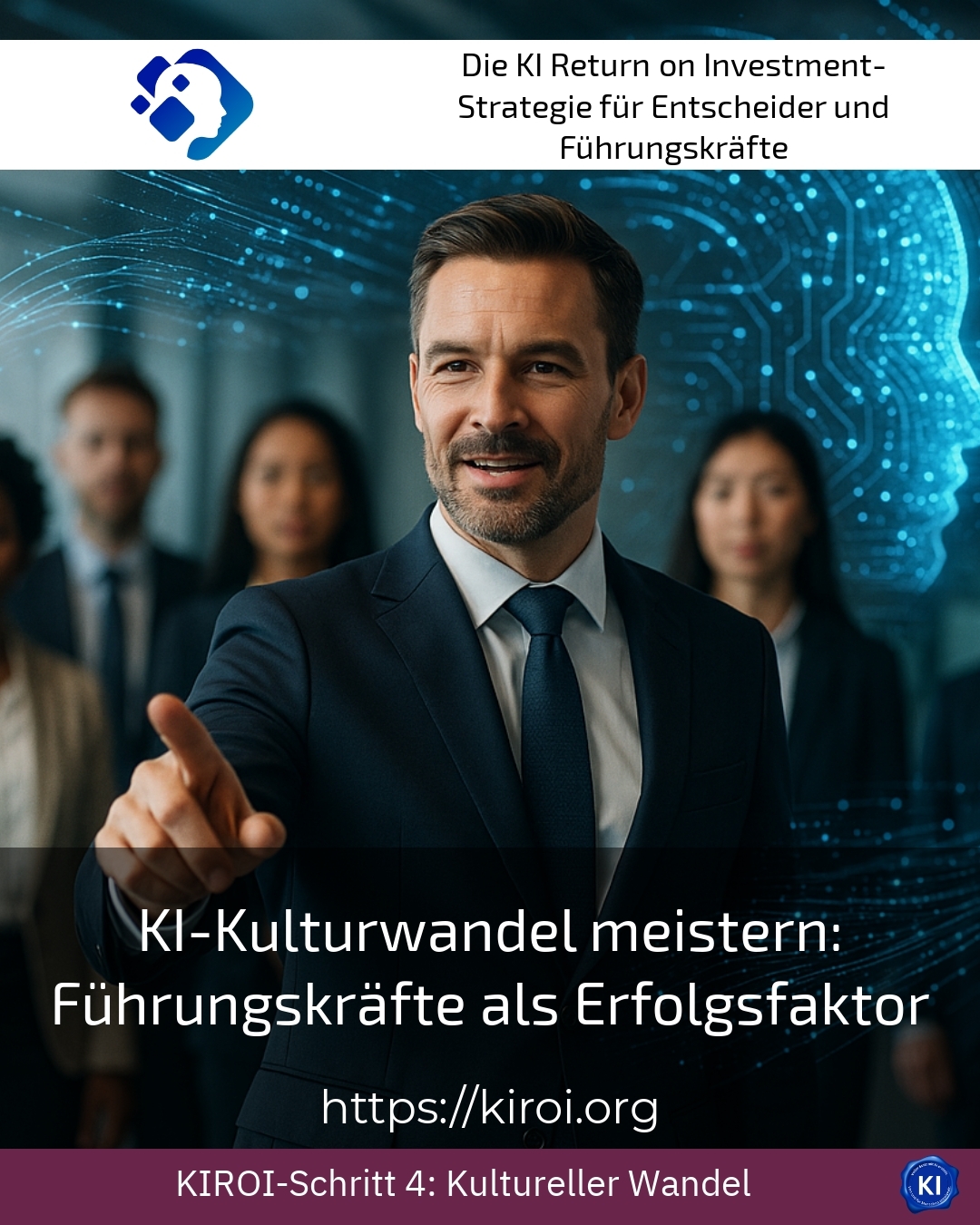
The digital revolution has been underway for a long time, and yet many organisations are only at the beginning of a profound transformation that goes far beyond technical implementations and fundamentally changes the entire fabric of entrepreneurial action. As machines learn to recognise patterns and prepare decisions, the role of humans shifts to new, often still unknown, areas of responsibility, which is why now, precisely, the Mastering AI cultural change: Leaders as a success factor has evolved into a central theme. But what does this transformation mean in concrete terms for those who lead teams and set strategic direction? And how can employees not only be taken along on this journey, but be made active shapers of this change? The answers to these questions will determine which companies will flourish in the coming years and which will fall behind.
Understanding and actively shaping the new reality
Intelligent systems are now permeating almost every business sector and fundamentally changing established ways of working. For example, logistics companies are using algorithmic route optimisation. Financial service providers are using automated risk analyses for their lending. Retail groups are forecasting demand through machine analysis of sales data. These developments require a rethink at all levels of the organisation [1]. Leaders are faced with the task of not only building technological understanding but also creating a culture that encourages a willingness to experiment while simultaneously establishing ethical guardrails.
The transformation affects not only operational processes but also the way decisions are made and communicated. Clients often report feeling overwhelmed by the speed of change. They come to us with questions revolving around uncertainty and a lack of direction. Some experience resistance within their teams or feel left alone. Transruption coaching supports these processes and provides impulses to gain clarity.
Best practice with a KIROI customer
A medium-sized manufacturing company faced the challenge of optimising its production planning using intelligent systems, but initially, the workforce harboured significant reservations about the new technology, fearing that their expertise would be devalued. The management decided on a participatory approach and formed cross-departmental working groups where employees from manufacturing collaborated with IT specialists to shape the implementation. Through regular information events, practical training sessions, and the involvement of experienced professionals as internal multipliers, fears were dispelled and enthusiasm for the new possibilities was generated. After six months of intensive support from transruptions coaching, not only had acceptance significantly increased, but employees were also independently offering suggestions for improvement that optimised the original system configuration and led to a more than twenty per cent increase in planning accuracy, impressively demonstrating that technological progress and human expertise can enrich one another.
Mastering AI Culture Change: Leaders as a Success Factor through Emotional Intelligence
Paradoxically, especially in times of technological upheaval, interpersonal skills are gaining importance. The more routine tasks are automated, the more crucial empathy and communication become. Leaders must learn to take the fear of change seriously and address it constructively. They should create spaces for open dialogue and foster trusting relationships [2]. For example, an automotive supplier established weekly discussion rounds where concerns and ideas were given equal consideration. An insurance company introduced mentoring programmes that paired experienced employees with younger colleagues. A technology group implemented anonymous feedback channels to capture even reticent voices.
The ability to tolerate uncertainty while still providing direction distinguishes successful transformation leaders from less successful ones. They communicate transparently about opportunities and risks. They acknowledge that not all answers are firm from the outset. At the same time, they convey confidence and a clear vision for the future. Transruption coaching supports leaders in finding and authentically embodying this balance.
Systematically develop and promote skills
The development of new skills represents a central pillar of every successful transformation. This is by no means solely about technical knowledge. Critical thinking and the ability to interpret data are becoming increasingly important. Creativity and problem-solving skills remain human domains. Collaboration skills in hybrid teams of humans and machines need to be developed [3]. For instance, a pharmaceutical company invested in comprehensive further training programmes that, in addition to technical content, also trained reflection skills. A bank established learning partnerships in which employees of different generations benefited from each other. An energy provider set up an internal innovation laboratory that served as a protected space for experimentation.
Investing in staff development pays off multiple times over. Qualified employees feel valued and remain loyal to the company. They contribute their own ideas and drive innovation forward. The organisation gains adaptability and resilience. Clients often report that they act more confidently after targeted skill development.
Rethinking structures and processes
Technological changes often necessitate organisational adjustments, as rigid hierarchies and lengthy decision-making processes frequently prove to be hindrances for rapid responses and flexible adaptations in dynamic environments. Agile working methods are therefore gaining importance across industries. A media house restructured its editorial department into cross-functional teams. A retail chain decentralised decision-making authority to branch level. A consulting firm replaced rigid project plans with iterative process models [4].
At the same time, the redesign of structures must not become an end in itself. Every change should serve a concrete benefit. It must fit the company culture and the people. Involving those affected significantly increases acceptance. Transruption coaching accompanies such transformation processes and helps to identify stumbling blocks early on.
Best practice with a KIROI customer
An internationally operating management consultancy recognised that its traditional partner structure, with its lengthy decision-making processes, was no longer keeping pace with the increasing speed of the market. As a result, a fundamental reorganisation appeared necessary, but this encountered significant resistance from established partners. As part of intensive support through transruption coaching, the differing perspectives and concerns were first carefully recorded and then brought together in a structured dialogue process. Particular emphasis was placed on valuing the expertise and experience of the long-standing partners and integrating them into the new model. By developing a hybrid organisational model that combined agile project teams with strategic control at partner level, it was finally possible to ensure both speed and quality assurance, while even strengthening the identification of all stakeholders with the company. This was reflected in a significantly improved employee satisfaction and an increased innovation rate.
Mastering AI culture change: Leaders as a success factor in the ethical dimension
The integration of intelligent systems inevitably raises ethical questions that cannot be ignored by leaders. Transparency in dealing with automated decisions becomes imperative. Employee data protection and privacy must be maintained. Responsibility for algorithmic decisions cannot be delegated to machines. For example, a healthcare provider established an ethics committee for the use of diagnostic systems. A recruitment consultancy developed guidelines for the fair use of matching algorithms. A telecommunications company implemented regular audits of its customer segmentation [5].
The proactive engagement with ethical aspects strengthens the trust of all stakeholders. Employees experience that their dignity and rights are respected. Customers appreciate the responsible handling of their data. Society as a whole benefits from companies that take responsibility.
Communication as the key to success
No transformation succeeds without compelling and continuous communication, as people need to understand the why and how of changes in order to embrace them internally and actively support them. Successful leaders use a variety of channels and formats. They tell stories that make abstract developments tangible. They celebrate successes and speak openly about setbacks. A mechanical engineering company produced internal podcasts with testimonials from pilot projects. A financial service provider organised regular town hall meetings with interactive elements. A chemical group established a digital platform for cross-departmental knowledge sharing.
The quality of communication often determines the success or failure of transformation. Authenticity and credibility are essential here. One-off announcements are not enough. The message must be continuously repeated and substantiated.
Understanding resistance as an opportunity
Every profound change naturally gives rise to resistance, which should not be understood as a disruption, but rather as a valuable signal pointing to legitimate concerns or overlooked aspects. Critical voices often contain important information for improving a process. They indicate where additional explanations or support are needed. They can help uncover blind spots. For example, an insurance company used sceptical employees as constructive sparring partners. A logistics company invited critics into pilot teams and benefited from their detailed questions. A technology company established an ombudsman system for concerns of all kinds.
Transruption coaching supports leaders in constructively using resistance. Often, unspoken fears or unmet needs are hidden behind rejection. Identifying and addressing these builds trust and acceptance.
My KIROI Analysis
The successful navigation of technological change depends crucially on the quality of leadership, which encompasses far more than the mere management of projects and resources. Leaders who Mastering AI cultural change: Leaders as a success factor take seriously, understand their role as bridge-builders between established practices and new opportunities, between technological systems and human needs, between short-term demands and long-term visions.
The KIROI methodology offers a structured framework for this complex task. It helps to systematically capture and address the various dimensions of the transformation. It encourages reflection on one's own assumptions and behaviours. It supports the development of tailored strategies for different contexts.
The realisation that technological progress and human values do not have to be in opposition, but can mutually reinforce each other with clever design, thereby creating organisations that are both efficient and liveable, appears particularly important to me. Transruption coaching provides impetus for this integrative perspective. It supports the development of a leadership culture that sees change as an opportunity. It supports the establishment of structures that combine agility with stability.
The coming years will show which organisations successfully overcome these challenges. Those with forward-thinking and people-oriented leaders will be best placed to do so. The path may be demanding, but it also opens up opportunities for growth and development.
Further links from the text above:
[1] McKinsey – The State of AI
[2] Harvard Business Review – Emotional Intelligence
[3] World Economic Forum – Future of Jobs Report
[4] Gartner – Future of Work Insights
[5] EU Commission – European Approach to AI
For more information and if you have any questions, please contact Contact us or read more blog posts on the topic Artificial intelligence here.









 Deutsch
  English (UK)