
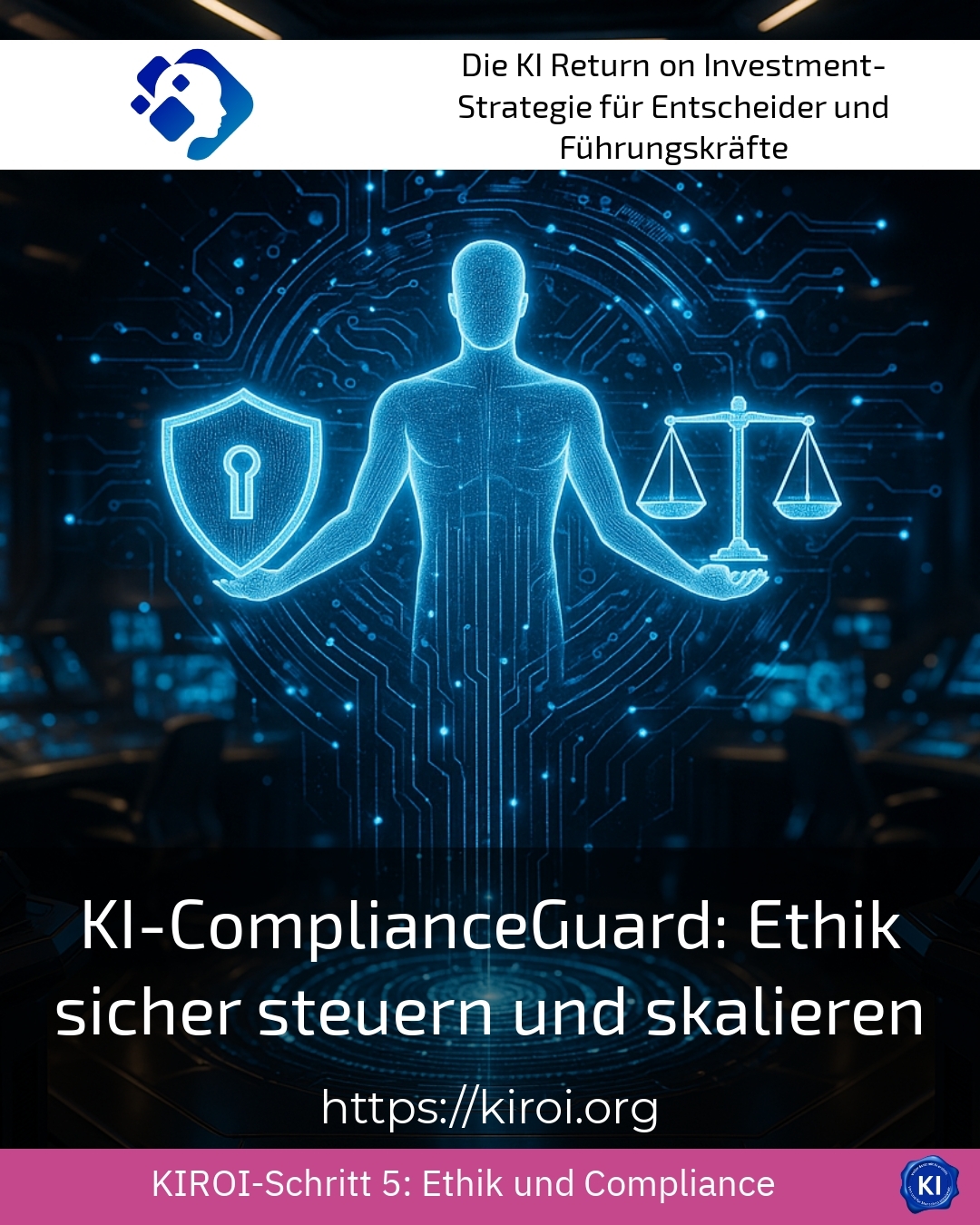
Imagine your organisation deploys intelligent systems that make thousands of decisions daily, yet no one can explain why these decisions are made as they are. This is precisely where a journey begins, one that many companies currently need to undertake. This is because the demands for transparency, traceability, and responsible technology usage are steadily increasing, while simultaneously, the pressure to scale these systems is enormous. KI-ComplianceGuard: Steering and scaling ethics securely becoming a central theme that concerns leaders and project managers alike. This article explores how organisations can implement responsible technology governance.
Why responsible management is indispensable today
Digital transformation has gained a momentum in recent years that has surprised even experienced technology experts. Intelligent systems are now permeating almost every business sector. They analyse customer behaviour and predict market trends. They optimise supply chains and automate processes. However, with this penetration, the risks also grow considerably. A financial service provider, for example, uses algorithms for credit scoring. These systems can unintentionally reproduce discriminatory patterns. A trading company uses automated pricing. Ethically questionable price differentiations can arise here [1].
The challenge lies in balancing innovation and responsibility. Many organisations report uncertainty in implementation. They often don't know where the boundaries lie. Regulatory requirements are continuously tightening. The European legal framework is setting new standards in this regard. Companies must create transparency and be able to account for their actions. This requires structured processes and clear responsibilities. For example, an insurance company must be able to demonstrate that automated claims assessments are carried out fairly. A human resources service provider must prove that applicant analyses do not disadvantage any groups.
KI-ComplianceGuard as a strategic framework for ethical scaling
Implementing a comprehensive control framework first requires a profound understanding of one's own system landscape. Organisations must know which algorithms influence decisions and where. This stocktaking forms the foundation for all further measures. A telecommunications provider, for example, identified over fifty different use cases. An energy supplier discovered automated decision-making processes in areas previously considered purely manual. These findings are often both surprising and insightful.
The approach of the KI-ComplianceGuard: Steering and scaling ethics securely comprises several interlinked components. Firstly, risk assessment is at the centre of all activities. Each use case is systematically analysed and categorised. The criteria are based on potential impacts on people. A fraud detection system requires different protective measures than a product recommendation. An algorithm for medical diagnosis support must meet the strictest requirements.
Best practice with a AIROI customer
A medium-sized company from the financial sector was faced with the challenge of making its automated decision-making systems transparent and comprehensible. The organisation had already been using algorithms for customer evaluation for several years. However, no one could explain exactly how these evaluations were made. The management recognised the urgency of a structured approach. Together with transruptions coaching, the company developed a comprehensive governance framework. This framework defined clear responsibilities for each use case. The team also established regular review cycles. Employees were systematically trained and sensitised. The establishment of an interdisciplinary ethics committee was particularly important. This committee now assesses all new use cases prior to implementation. The results are both impressive and measurable. Customer satisfaction has increased significantly thanks to more transparent decisions. Regulatory enquiries can now be answered promptly and in full. The company is positioning itself as a trustworthy partner in the market.
Practical implementation in various company departments
The concrete implementation of responsible control mechanisms varies significantly depending on the area of the company. In human resources, for example, issues of fairness and equal opportunities are paramount. A recruitment system must ensure that no applicant group is systematically disadvantaged. This requires regular audits of decision patterns. For example, a logistics company implemented monitoring dashboards for its personnel selection. A retail group established feedback loops between automated suggestions and final personnel decisions.
Specific requirements for the responsible use of technology also arise in customer service. Chatbots and virtual assistants interact with thousands of people every day. These systems must be able to recognise and adhere to boundaries. They must not make promises that the company cannot keep. One travel provider had to adjust its virtual assistant multiple times. The assistant had given customers misleading information about cancellation conditions. An insurer found that its chatbot did not adequately escalate complex queries [2].
Establish governance structures for sustainable scaling
Scaling intelligent systems is only possible with robust governance structures. Organisations need clear decision-making processes and defined responsibilities. A Chief Ethics Officer can play a central role in this regard. This position coordinates all activities relating to responsible technology use. Alternatively, companies establish ethics committees with representatives from various specialist areas. A pharmaceutical company, for example, set up such a body. It now assesses all projects with potential influence on patient decisions. An automotive supplier has integrated ethical assessment criteria into its project management process.
The approach of the KI-ComplianceGuard: Steering and scaling ethics securely emphasises the importance of continuous monitoring. Systems are constantly evolving through learning processes. What was fair at the point of commissioning can become problematic after months. Therefore, regular audits are indispensable for lasting success. A fintech company conducts monthly bias analyses. A media conglomerate reviews the recommendation algorithms of its platforms quarterly. A healthcare provider documents every adjustment to its diagnostic systems without gaps.
Best practice with a AIROI customer
An international retail group wanted to expand its pricing systems to other markets. The existing algorithms had proved successful in the domestic market and enabled sales increases. However, initial tests in other regions revealed problematic patterns in price differentiation. Certain customer groups were systematically treated differently to other comparable groups. The project managers recognised the need for external support for this sensitive project. The transruptions coaching provided support in the development of a fairness framework for pricing. This framework defined clear limits for permissible price differences between customer groups. Transparency obligations were also defined for internal documentation. The team developed simulation models to pre-test new pricing strategies. These models identify potential problems before they can occur in the market. This enabled the company to continue its international expansion in a responsible manner. Regulatory authorities expressly praised the company's proactive approach. Brand perception improved noticeably as a result of the communicated commitment.
Employees as the key to success
Technical solutions alone are not enough for successful implementation. People need to understand why responsible technology use is important. They need to know and be able to use the tools. Training programmes are therefore an essential part of any strategy. An engineering company developed a multi-stage training programme for different target groups. Managers received different content than developers or end-users. A consumer goods manufacturer systematically integrated ethical aspects into regular further training courses [3].
Corporate culture plays a crucial role in sustainable embedding. Employees must feel secure when they want to voice concerns. An open culture of error significantly promotes the early identification of problems. A financial institution established anonymous reporting channels for ethical concerns. A technology company celebrates employees who ask critical questions and make suggestions for improvement. An energy group permanently embedded ethical criteria in the performance reviews of its project managers.
Connecting AI ComplianceGuard and regulatory requirements
The regulatory landscape is developing dynamically and requires attention. New laws and regulations are coming into force and present requirements. Organisations must actively follow these developments and be able to assess them. A proactive approach offers significant advantages over reactive action. Companies that act early avoid costly rectifications later. They position themselves as trustworthy partners to customers and regulatory authorities alike. An insurance group used the preparation for new regulations as a driver of innovation. A credit institution systematically further developed its compliance processes into a competitive advantage.
The frame of the KI-ComplianceGuard: Steering and scaling ethics securely systematically integrates regulatory requirements. Documentation obligations are considered and implemented from the outset. Risk classifications are aligned with legal requirements wherever possible. Audit processes are designed to withstand external audits. A telecommunications company was able to drastically reduce its preparation time for authority requests as a result. A logistics provider successfully and regularly uses the established processes for certifications.
My AIROI Analysis
The support of numerous organisations in implementing responsible governance mechanisms has yielded important insights. Success depends significantly on the involvement of management. Without visible commitment from the top leadership level, even the best initiatives will falter sooner or later. Integration into existing processes is crucial for the sustainability of all measures. Parallel structures are, based on experience, quickly neglected or ignored by employees.
Project managers often report initial overwhelm due to the complexity of the subject. The key lies in a step-by-step approach with clear priorities and realistic goals. Teams do not need to address all use cases simultaneously. Risky systems should be prioritised over less critical applications. Documentation should be considered from the outset and not done retrospectively.
Transruption coaching acts as a reliable partner, supporting organisations through these challenging projects. The insights help to identify blind spots and adopt new perspectives. External viewpoints complement internal expertise in a valuable and constructive way. The combination of strategic consulting and practical implementation support has proven effective. Organisations benefit from tried-and-tested frameworks and individual adaptation to their specific situation. The journey towards responsible technology use is demanding but also rewarding and achievable.
Further links from the text above:
[1] Federal Ministry for Economic Affairs and Climate Protection – Artificial Intelligence
[2] European Commission – Regulatory Framework for AI
[3] Bitkom – Artificial Intelligence
For more information and if you have any questions, please contact Contact us or read more blog posts on the topic Artificial intelligence here.










 Deutsch
  English (UK)