
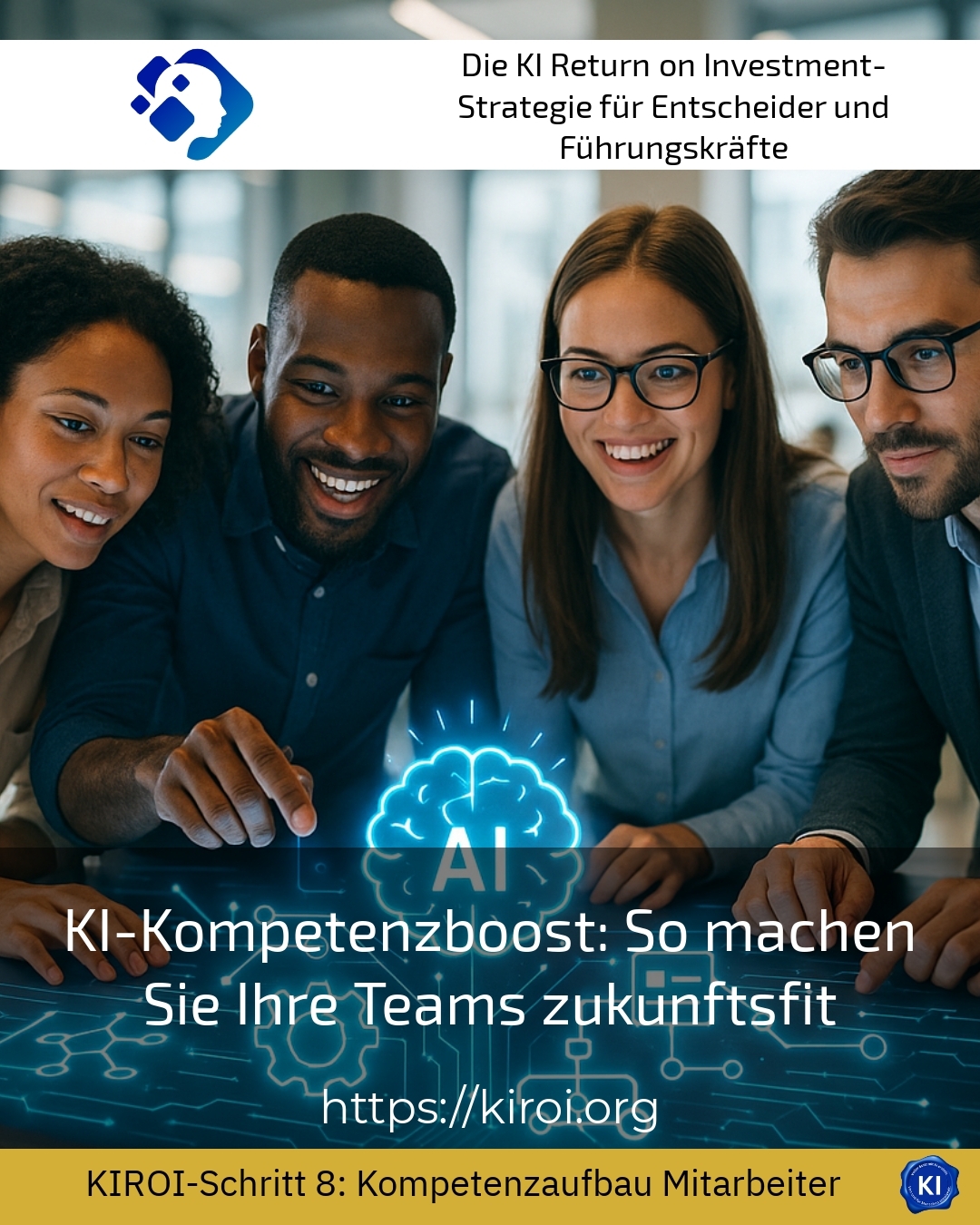
The digital transformation is changing our working world at a breathtaking pace. Companies face the challenge of equipping their workforce for a future shaped by intelligent systems. A targeted AI Skills Boost This is a key factor in determining whether organisations fall behind or emerge stronger from change. Many leaders report feeling uncertain when it comes to preparing their teams for new technologies. This uncertainty is understandable and widespread. At the same time, it offers a huge opportunity for those who are ready to act proactively and guide their employees in a targeted way.
The AI competence boost as a strategic necessity
Intelligent algorithms are now permeating almost every business sector. They analyse customer data, optimise production processes and assist with complex decisions. This creates entirely new demands on employees' skills. Anyone who ignores this development risks losing valuable talent. Employees are increasingly looking for employers who offer them development prospects.
For example, a medium-sized mechanical engineering company recognised early on that its service technicians needed new skills. Traditional maintenance was giving way to predictive maintenance concepts. Through targeted training measures, technicians were able to learn to interpret sensor data and act proactively. We are observing similar developments in the logistics sector. Warehouse workers are now using intelligent assistance systems for order picking. They therefore require a basic understanding of how these technologies work.
Exciting application areas are also emerging in the healthcare sector. Nursing staff are increasingly working with diagnostic support systems. The acceptance of these tools depends significantly on the users' level of knowledge. Clients often report that initial scepticism turns into constructive collaboration through well-founded background knowledge.
Practical implementation in daily business operations
The successful implementation of a competency programme requires careful planning. First, an inventory of existing skills is recommended. Building on this, individual learning paths can be developed. These should take into account both technical and methodological aspects.
For example, a retail company introduced weekly learning sessions for its managers. These focused on interpreting sales forecasts from intelligent systems. Participants learned to critically question recommendations and incorporate them meaningfully into their decisions. Similar formats have become established in the banking sector for customer advisors. They now use algorithmic analyses as the basis for individual consultations. Human expertise remains indispensable for contextualising the results.
Trade businesses also benefit from targeted training. Electricians are increasingly working with networked building systems. An understanding of intelligent controls is becoming a core competency. Many companies report that their employees appear more confident after relevant training.
Best practice with a AIROI customer
An internationally operating automotive supplier faced the challenge of preparing its quality inspectors for new inspection systems. The previous visual inspection was supplemented by camera-based analysis methods. Initially, the workforce showed considerable reservations towards the technology. Many feared their expertise would be devalued. Together with transruptions-coaching, we developed a multi-stage support programme. This programme began with basic information sessions on the technological background. The employees received insights that helped them understand how the systems worked. The second step involved practical workshops in small groups. There, participants were able to gain their own experience and ask questions. The exchange between experienced quality inspectors and technical experts proved particularly valuable. The inspectors' many years of professional experience contributed to the optimisation of the systems. After six months, managers reported significantly improved acceptance. The error rate decreased measurably because humans and machines now collaborated optimally. This example impressively shows how structured support can transform resistance into constructive collaboration.
Making teams future-ready through targeted development
The development of future skills is particularly successful in a supportive environment. Leaders play a central role in this as role models and enablers [1]. They should demonstrate a willingness to learn themselves and talk openly about their own uncertainties. This attitude creates psychological safety within the team.
In the insurance industry, we are observing exciting developments in claims processing. Claims handlers are using intelligent systems for the initial assessment of claims notifications. The technology supports categorisation and speeds up processing. At the same time, the final decision remains with the experienced employee. This combination requires new competencies in human-machine collaboration.
Pharmaceutical companies are increasingly focusing on data-driven research processes. Scientists are learning to handle algorithmic analyses. They assess the quality of the analyses and draw their own conclusions. In publishing, new roles are emerging for collaboration with text generation systems. Editors are evolving into curators and quality checkers. Their linguistic expertise is complemented by technical understanding.
The AI competence boost in various business areas
The HR department particularly benefits from intelligent matching systems when selecting candidates. However, HR managers need to be aware of potential biases in the algorithms. Only then can they critically assess the results and make fair decisions. Marketing uses advanced analysis tools for personalised campaigns. Creative teams learn to translate data-based insights into emotional messages.
In purchasing, forecasting models support demand planning [2]. Buyers interpret the forecasts against their market knowledge. They make well-informed decisions based on both data and experience. The finance department works with automated reporting systems. Controllers are developing into data analysts with a strategic perspective.
The legal department employs contract analysis tools. Legal professionals review the algorithmic evaluations and supplement them with their expert judgement. The technology significantly accelerates routine work. At the same time, the demand for a deeper content analysis by human reviewers is increasing.
Best practice with a AIROI customer
A medium-sized logistics company wanted to set up its dispatching in a future-oriented way. The existing employees had years of experience in route planning. New algorithmic optimisation systems were intended to complement this expertise. The company came to us because initial implementation attempts met with considerable resistance. The dispatchers felt threatened by the technology. As part of the transruption coaching, we developed a participative approach. The experienced employees were actively involved in the system configuration. Their knowledge of local specificities was incorporated into the algorithms. At the same time, all participants received training to understand the technical basics. They learned to evaluate the system's suggestions and to override them if necessary. After the implementation phase, the dispatchers reported a significant easing of their workload. Routine calculations were now handled by the system. The employees could concentrate on complex special cases. Satisfaction within the team increased noticeably. Management also recorded improved tour efficiency. This project illustrates the importance of involving those affected from the outset.
Shaping sustainable competence development
Building future competencies is not a one-off project. It requires continuous attention and investment. Successful companies establish permanent learning structures. They create spaces for experimentation and foster a culture of curiosity.
For example, an energy supplier set up internal innovation labs. Employees from various departments test new technologies there in a protected environment. They gain experience without performance pressure and share their findings within the company. In the catering industry, chefs experiment with data-driven menu planning. They use sales forecasts for procurement, thereby reducing food waste.
Architectural firms are using generative design tools for initial drafts [3]. The creative expertise of architects remains indispensable. They evaluate, refine, and transform algorithmic suggestions into feasible concepts. In event management, intelligent systems assist with resource planning. Event planners are learning to critically question forecasts and align them with their experience.
Constructively support resistance
Change naturally elicits resistance. These reactions are human and deserve respectful consideration. Clients often report anxieties about job loss or feeling overwhelmed. Taking such concerns seriously is the first step to overcoming them.
A call centre introduced voice analytics systems for quality assurance. Initially, employees perceived this as surveillance. Through transparent communication and involving those affected, their perception changed. The technology came to be seen as a support for their own development. In skilled trades, we see similar patterns when introducing assistance systems. Experienced craftspeople fear their implicit knowledge might be devalued.
Targeted coaching can provide valuable impetus here. It supports individuals and teams in developing a constructive attitude. Support through transruption coaching focuses on strengthening individual agency. Those affected become active shapers of change.
The role of leaders in the transformation process
Leaders bear a particular responsibility for the success of qualification initiatives. They must themselves possess sufficient competence. Only in this way can they credibly act as role models. At the same time, they should openly deal with their own learning processes.
A production manager in the food industry impressively described his journey. He started with basic online courses on data-driven decision-making. He openly shared these experiences with his team. This openness also encouraged even sceptical employees to learn for themselves. In the advertising industry, new leadership roles for technological advancement are becoming established. Creative Directors are learning to integrate algorithmic creative tools into their processes.
Hospital managers face the challenge of getting medical staff excited about digital diagnostics. They need both technical understanding and high social competence. The combination enables them to build bridges between different worlds.
Best practice with a AIROI customer
A medium-sized tax consultancy firm recognised the need for a digital transformation of its working methods. The partners approached us with the desire to prepare their employees for new automation tools. Accounting processes were to be modernised through intelligent document capture and automated posting. Many clerks had decades of experience in manual processing. The concern about the loss of established workflows was palpable. As part of our support, we developed a phased introduction concept. Initially, all employees received basic knowledge about the technological background. The training imparted an understanding of how the new systems function. In the next step, experienced colleagues supported the practical introduction as internal multipliers. These ambassadors had overcome their own reservations and could report authentically. The firm set up regular exchange meetings where experiences were shared. Problems were solved together and successes were celebrated. After one year, the partners reported significantly increased efficiency. At the same time, no employee had been dismissed. The freed-up capacity flowed into higher-value consulting services. Client satisfaction increased measurably.
My AIROI Analysis
The examination of the topic of future competencies reveals clear patterns. Successful transformations are always based on a holistic approach. Technical qualification alone is not enough. Emotional support and the involvement of those affected are just as important. The AI Skills Boost succeeds particularly well where companies see their employees as partners in change.
The analysed practical examples highlight common success factors. Transparent communication builds trust and reduces anxiety. Involving experienced employees in the development process increases acceptance. Continuous learning formats are more sustainable than one-off training measures. Valuing existing expertise forms the basis for integrating new competencies.
At the same time, typical stumbling blocks become apparent. Introductions that are too hasty and lack sufficient preparation lead to rejection. Neglecting emotional aspects jeopardises the entire process. A lack of role models at leadership level undermines the credibility of the initiative. Unrealistic timelines create frustration at all levels.
The AIROI methodology offers a structured framework for systematic competence development. It combines strategic planning with pragmatic implementation. The approach considers both organisational and individual perspectives. Companies that follow this path position themselves well for upcoming challenges. Investing in the future readiness of teams pays off in the long term. It strengthens competitive positioning and increases attractiveness as an employer.
Further links from the text above:
[1] Harvard Business Review – Leadership Insights
[2] McKinsey – Operations and Supply Chain Insights
[3] Autodesk – Generative Design in Architecture
For more information and if you have any questions, please contact Contact us or read more blog posts on the topic Artificial intelligence here.










 Deutsch
  English (UK)