
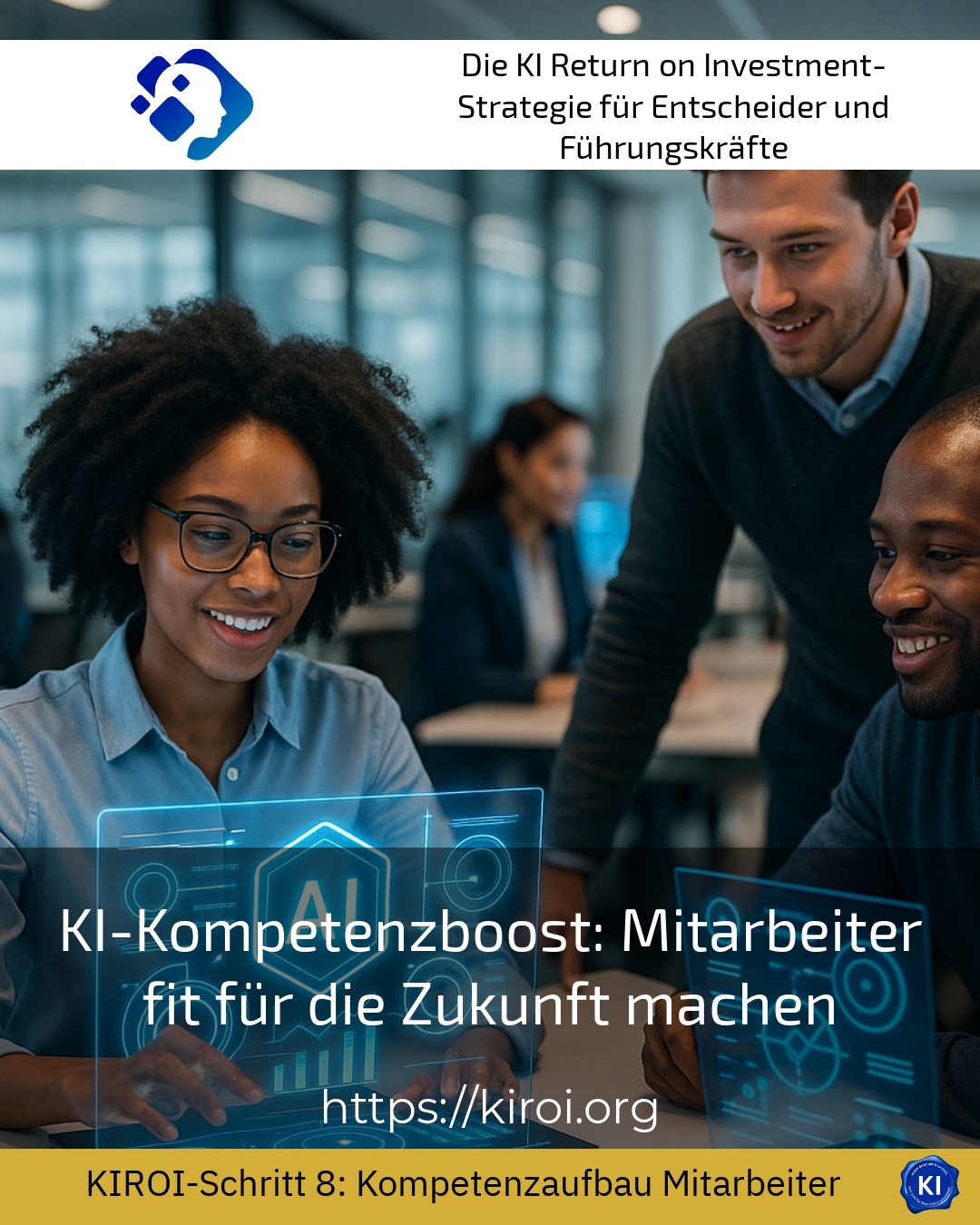
The world of work is undergoing profound change, presenting companies and their workforces with entirely new challenges. Digital technologies now permeate almost every business area, fundamentally altering established processes. Those who can AI Skills Boost: Getting Employees Ready for the Future To implement successfully, one must understand that it is not just about technical knowledge. Rather, a comprehensive transformation of the company culture is at the heart of this development. Managers frequently report uncertainty within their teams. At the same time, intelligent systems are creating entirely new possibilities for collaboration. This article outlines ways in which organisations can competently support their workforce.
Why the change has become inevitable
The integration of intelligent systems into operational processes has gained considerable momentum in recent years. Companies of all sizes are increasingly relying on automated processes and data-driven decision-making. For example, manufacturing companies are using predictive maintenance systems that can detect machine failures early on [1]. In turn, retail companies are optimising their inventory management through intelligent demand forecasting. Financial service providers are employing automated analysis tools to better assess risks. These examples illustrate that technological progress is no longer an abstract future vision. It has long since become a lived reality across numerous industries and departments.
The effects on existing job profiles and skill requirements are considerable. Employees who previously carried out routine-based tasks are facing altered job descriptions. At the same time, entirely new roles and areas of responsibility are emerging within organisations. Leaders are tasked with actively shaping this transformation and supporting their teams through it. Clients frequently report initial resistance and anxieties within the workforce. Taking these concerns seriously and addressing them constructively forms the basis for successful change. Transruptions coaching can provide valuable impetus for shaping this transformation process.
Typical challenges in boosting AI expertise in companies
The introduction of new technologies rarely fails due to the technology itself. Instead, it is human and organisational factors that significantly influence success. For example, a logistics company implemented an intelligent route planning system. However, the dispatchers felt bypassed and continued to use their familiar methods. A medium-sized mechanical engineering firm introduced predictive analysis tools without adequately involving the service technicians. The result was a parallel use of old and new systems, which caused more confusion than benefit. An insurance company relied on automated claims processing, but the clerks fundamentally distrusted the system's recommendations. These examples clearly show that technological innovations cannot unfold their potential without accompanying competence development.
Best practice with a AIROI customer
A long-established family business in the plant engineering sector faced the challenge of fundamentally modernising its service processes. Management recognised that intelligent remote maintenance systems could offer significant efficiency potential. At the same time, however, they feared massive resistance from experienced service technicians who felt their expertise was threatened. As part of a guided transformation project, a comprehensive assessment of existing skills was first carried out. This revealed that many employees possessed valuable experiential knowledge that was not documented in any manual. This tacit knowledge was systematically captured and incorporated into the development of the new systems. The technicians were not treated as recipients of a finished solution but as active co-creators of the change process. Regular workshops facilitated open discussion about concerns and suggestions for improvement. After one year, those involved reported significantly increased acceptance and improved job satisfaction. Fluctuation in the service department noticeably decreased, while customer satisfaction measurably increased. This example illustrates the importance of involving the workforce from the outset for the success of such projects.
Developing core competencies for digital transformation
The demands on employees are shifting significantly in an increasingly automated working world. Purely executive activities are losing importance, while analytical and creative skills are becoming more crucial. This is not about training all employees to be technology experts. Rather, the focus is on developing a fundamental understanding of digital contexts. For example, a sales representative doesn't need to know how to program. However, they should understand how data-driven customer analyses work and what insights they can provide. A manager responsible for human resources doesn't require in-depth technical expertise. However, they should be able to assess the impact that automated selection processes can have on application procedures.
Alongside a foundational understanding of technology, so-called future competencies are gaining considerable importance. Critical thinking enables system recommendations to be appropriately assessed and questioned. Creativity remains an essential human strength that machines cannot replace [2]. Emotional intelligence becomes even more important in a technologised environment. The ability for continuous further development forms the foundation for long-term employability. These competencies cannot be imparted through standardised training. Instead, they require ongoing support and the creation of suitable learning spaces within the organisation.
Successful learning formats for boosting AI competence
Traditional frontal training sessions quickly reach their limits when it comes to imparting complex digital skills. Innovative companies therefore rely on diverse and interconnected learning formats. For example, an energy supplier established an internal mentoring programme in which digitally affine junior employees support experienced colleagues. A pharmaceutical company set up experimental rooms where employees can try out new technologies safely. An automotive supplier introduced weekly learning sprints in which teams explore new digital tools together. These approaches combine formal learning with informal exchange of experience and promote a culture of continuous learning. The involvement of external expertise can help to identify blind spots and bring in new perspectives.
transruptions-Coaching offers companies professional guidance in designing such learning processes. The focus is not on imparting technical details, but rather on creating frameworks that enable and promote self-directed learning. Managers receive inspiration on how to navigate their teams through phases of uncertainty. Individual coaching sessions support the recognition and utilisation of personal development potential. Group formats encourage the exchange and joint reflection on change experiences. This guidance complements internal development measures and sustainably enhances their effectiveness.
The role of leadership in the transformation process
Leaders play a key role in the successful integration of new technologies. Their behaviour significantly shapes how changes within the company are perceived. A bank's board of directors that demonstrates a willingness to learn sends strong signals to the entire organisation. A department head who openly discusses their own insecurities creates psychological safety for their team. A team leader who values experiments, even if they fail, fosters an innovation-friendly culture. These examples illustrate that competence development must begin at the leadership levels. Only those who authentically embody the use of new technologies themselves can credibly guide others on this path.
The demands on leadership are fundamentally changing in the context of digital transformation. Classical control and steering mechanisms are losing importance in favour of enabling leadership styles [3]. Leaders are becoming learning facilitators and culture designers within their areas of responsibility. They must create space for experimentation while simultaneously providing clear direction. Finding the balance between stability and change presents a central challenge. Clients often report pressure to deliver quick results. At the same time, sustainable competence development requires patience and perseverance. Navigating these points of tension constructively demands a high degree of reflective ability.
Best practice with a AIROI customer
A medium-sized retail company with multiple locations wanted to prepare its store managers for the increasing digitalisation of the retail sector. Previous training programmes had focused heavily on operational issues such as inventory management and personnel planning. However, senior management recognised that local managers increasingly needed to steer digital transformation processes. As part of a supported development programme, the individual starting situations of the participants were first recorded. This revealed very different prior experience and attitudes towards technological innovations. Some store managers were tech-savvy and eager to experiment. Others expressed concerns and felt their existing expertise was being devalued by new systems. The programme was deliberately designed so that both groups could learn from each other. Experienced managers shared their knowledge of successful staff leadership during change processes. Tech-savvy participants demonstrated practical applications of digital tools in daily store operations. Regular reflection sessions allowed for open exchange about successes and setbacks. Upon completion of the programme, participants reported increased confidence in dealing with technological changes. The stores showed a greater willingness to actively use and further develop new digital offerings.
Making employees fit for the future through a sustainable learning culture
Individual training measures are not sufficient to permanently prepare organisations for technological change. Instead, a fundamental embedding of learning in the corporate culture is required. For example, a chemical company established fixed, scheduled learning times that may not be used for operational tasks. A software company introduced regular "failure celebrations" where unsuccessful experiments are acknowledged. A healthcare provider set up an internal knowledge network that promotes cross-departmental exchange of experience. These examples illustrate various approaches for organisations to create a learning-conducive environment. What they all have in common is the recognition that competence development is not a one-off measure. Rather, it must be understood and shaped as an ongoing process.
Establishing such a learning culture requires perseverance and consistent action at all levels. Quick successes are more the exception than the rule. Many companies underestimate the time commitment and resources required. Clients often report initial euphoria that turns into disillusionment after the first setbacks. External support from transruptions coaching can have a stabilising effect during such phases. It helps to develop realistic expectations and to appreciate progress, even in small steps. Regular reflection loops enable continuous adaptation of the chosen approach. This creates a robust learning culture over time that can successfully manage future changes.
Practical steps to get started
Embarking on comprehensive skills development can seem overwhelming. It is therefore advisable to start with manageable initial steps and implement them consistently. An inventory of existing skills provides a sensible starting point for further measures. For instance, an industrial company conducted anonymous surveys to identify development needs. A service company organised cross-departmental workshops for joint future planning. A craft business started with small pilot projects before initiating more extensive changes. These pragmatic approaches reduce complexity and create early successes. They also form the basis for further measures with a greater reach.
The integration of external expertise can significantly facilitate and accelerate the implementation. External consultants bring fresh perspectives and have experience from various contexts. They can uncover blind spots that may remain hidden to internal stakeholders. At the same time, they relieve internal resources and allow for a focus on the core business. Transruptions-Coaching offers various formats for different starting situations and needs. Whether it's individual coaching for executives, team development, or organisation-wide programmes – the guidance is individually tailored. This results in a customised approach that considers the specific framework conditions of the respective company.
My AIROI Analysis
Developing digital competencies is a crucial strategic task for companies across all sectors. Technological advancement is progressing at high speed and does not wait for hesitant organisations. Simultaneously, the examples provided demonstrate that successful transformation requires more than the mere introduction of new systems. People are at the centre of all change processes and must be involved accordingly. Companies that view their workforce as active drivers of change create the conditions for sustainable success.
My experience from numerous support projects shows that the factor of time is often underestimated. Sustainable skills development cannot be achieved in a few weeks. It requires continuous commitment over months and years. However, organisations that demonstrate this staying power are rewarded with a more resilient and adaptable workforce. The investment in people pays off in the long term in the form of greater innovative capacity and competitiveness.
The realisation that fears and resistance do not present obstacles seems particularly important to me. They are, rather, important information about the needs and concerns of the workforce. Those who take these signals seriously and address them constructively create the basis for genuine willingness to change. The role of leadership can hardly be overestimated in this regard. Leaders who themselves demonstrate a willingness to learn and create psychological safety enable their teams to grow beyond themselves. The AI Skills Boost: Getting Employees Ready for the Future only succeeds if it is understood and lived as a joint project.
Further links from the text above:
[1] McKinsey: Predictive Maintenance – Transforming Operations
[2] World Economic Forum: The Future of Jobs Report
[3] Harvard Business Review: Leadership in the Digital Age
For more information and if you have any questions, please contact Contact us or read more blog posts on the topic Artificial intelligence here.










 Deutsch
  English (UK)