
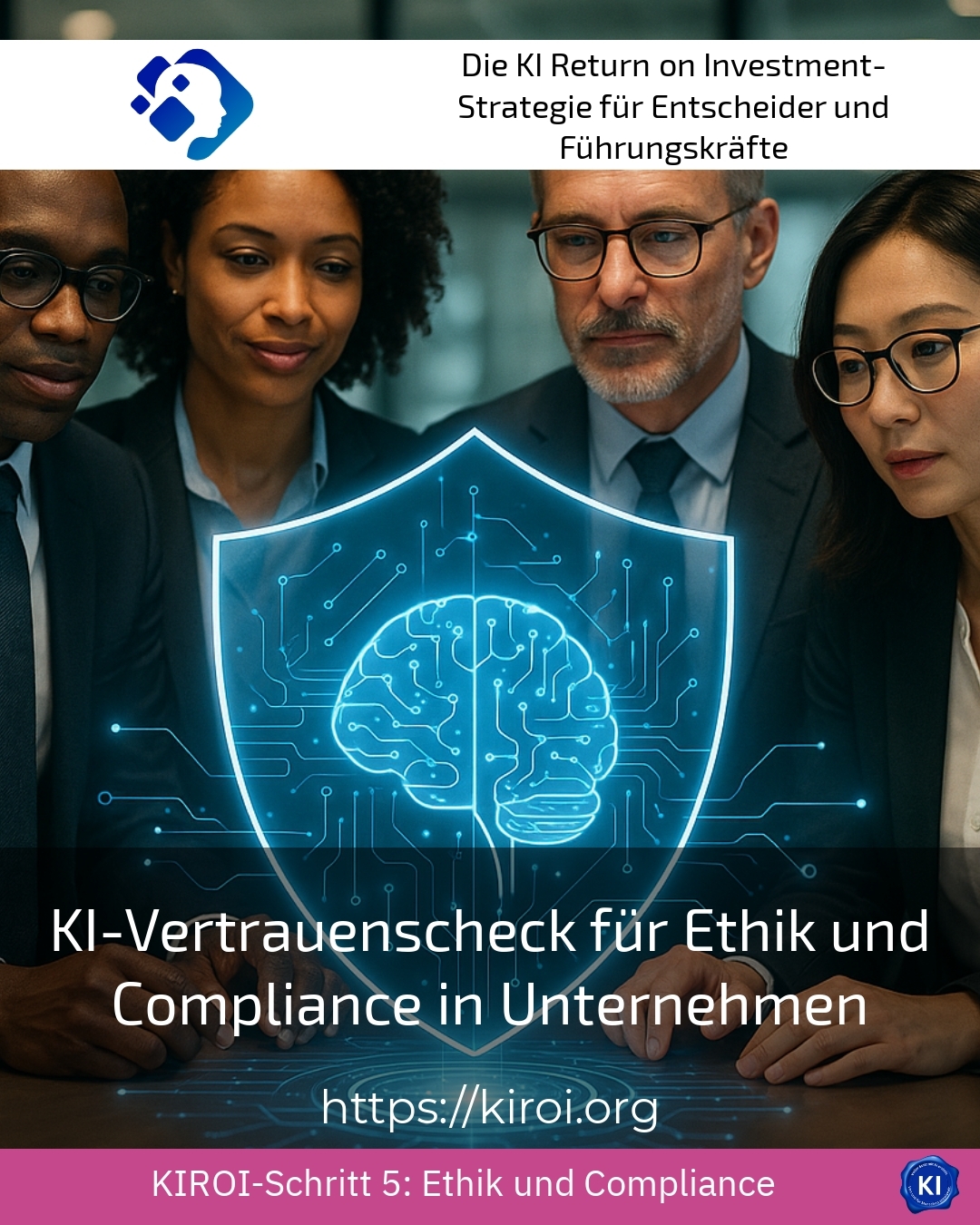
How can organisations ensure that their algorithmic systems not only operate efficiently, but also comply with ethical principles and meet regulatory requirements? This question is currently occupying leaders in almost all industries, and the answer to it requires a systematic AI Trust Check for Ethics and Compliance in Business, which goes far beyond technical audits and takes into account an organisation's entire value system. At a time when automated decision-making processes are having an increasingly profound impact on our economic life, the ability to responsibly govern these technologies is becoming a decisive competitive factor that determines reputation and long-term success.
The fundamentals of a systematic AI trust check for ethics and compliance in corporate environments
Organisations face the challenge not only of implementing algorithmic systems technically, but also of embedding them within a comprehensive governance framework that takes account of both internal values and external regulatory requirements. A structured auditing approach begins with the identification of all application areas in which automated decision-making processes are used, and extends from the assessment of potential risks through to continuous monitoring during ongoing operations. It frequently becomes apparent here that while many organisations possess advanced technological solutions, they have not yet sufficiently established the processes necessary for ethical assessment and compliance assurance.
In the financial services sector, for example, clients report difficulties in tracing the traceability of credit decisions made by algorithmic systems, and the regulatory requirements for the explainability of these decisions pose significant challenges for many institutions. Insurance companies use automated systems for risk assessment and claims processing, with the issue of freedom from discrimination in tariff pricing increasingly coming into the focus of regulatory authorities. In the healthcare sector too, where diagnostic support systems and treatment recommendations are generated by algorithms, ethical questions are at the centre of discussion, particularly when it comes to the allocation of limited medical resources.
Best practice with a AIROI customer
A mid-sized financial institution approached us with the challenge that their automated credit decision-making processes were increasingly receiving critical queries from the regulatory authority, and the internal compliance department was struggling to present the decision-making logic transparently. As part of our support, we jointly developed a multi-stage audit procedure that encompassed both technical aspects, such as data quality and algorithm transparency, and organisational elements, such as responsibilities and escalation paths. It was particularly important to involve various stakeholders from the risk management, legal, IT, and customer service departments in order to develop a holistic understanding of the challenges. Following a six-month implementation phase, the institution was not only able to meet regulatory requirements, but also noticeably strengthen customer trust in the fairness of credit decisions, which was reflected in a reduction in complaints of around forty percent. Employees also reported a greater sense of confidence in handling critical customer queries, as they could now refer to documented decision-making criteria that aligned with ethical principles.
Risk assessment as the foundation of trust-building
The systematic identification and assessment of risks forms the foundation of any sustainable strategy for the responsible use of algorithmic systems, whereby different risk classes must be considered distinctively. Technical risks encompass aspects such as data quality, model accuracy and system stability, whereas ethical risks touch upon questions of fairness, freedom from discrimination and human dignity. Legal risks arise from the multitude of regulatory requirements, ranging from data protection regulations to sector-specific rules and general liability issues.
In retail, these risk levels are evident, for example, in personalised pricing systems which, while able to increase efficiency, can lead to the discrimination of certain customer groups if improperly applied and cause significant reputational damage [1]. Logistics companies use algorithmic systems for route optimization and workforce planning, where workers' rights and fair working conditions must be safeguarded. In the manufacturing industry too, where predictive maintenance systems and quality control algorithms are deployed, questions of accountability arise when automated decisions lead to production errors or safety issues.
Organisational embedding of ethical principles
The mere development of ethical guidelines is not enough to ensure the responsible use of algorithmic systems; rather, these principles must be deeply anchored in the organisational culture and daily work processes. Transruption coaching can provide impetus on how leaders and employees can be sensitized to ethical issues and what structures must be created to enable continuous reflection on the impact of technological decisions. Clients frequently report that the greatest challenge lies not in the technical implementation, but in changing mindsets and establishing a culture of ethical responsibility.
For example, telecommunications companies face the task of designing algorithmic systems for network optimisation and customer service in such a way that they not only operate efficiently, but also take aspects such as net neutrality and consumer protection into account. Energy suppliers use automated systems for load forecasting and grid control, whereby security of supply and fair tariff structures must be guaranteed. In the media and entertainment sector, recommendation algorithms and content moderation systems raise fundamental questions regarding diversity of opinion and protection against harmful content that go far beyond purely technical solutions [2].
Best practice with a AIROI customer
An internationally active trading company approached us with the problem that its human resources department was increasingly using algorithmic systems for recruitment and performance appraisal, but concerns regarding potential discrimination and a lack of transparency were arising. Through our support with this complex transformation project, we first developed an awareness at the management level of the ethical dimensions of these technologies and then gradually established auditing mechanisms. The establishment of an interdisciplinary ethics committee, which regularly evaluated the impacts of the systems in use and issued recommendations for adjustments, proved particularly valuable. Through specific training programmes, the human resources department was empowered to ask critical questions and identify potential problems at an early stage, which led to a significantly improved quality of hiring decisions. Within a year, the company was able to demonstrate that the diversity of new hires had increased while employee satisfaction with the recruitment process rose because it was perceived as fairer and more transparent.
AI trust check for ethics and compliance in business as a continuous process
A one-off audit process is by no means sufficient to ensure permanently responsible practices; rather, it requires a continuous process of monitoring, evaluation and adaptation that is firmly anchored in organisational procedures. The dynamics of technological developments, changing regulatory requirements and new societal expectations demand permanent attention and a willingness to further develop existing approaches. Transruption coaching helps organisations to develop this agility and to create structures that ensure both stability and adaptability.
Pharmaceutical companies face the particular challenge of deploying algorithmic systems in drug development and clinical research while having to meet the highest ethical standards and stringent regulatory requirements. In the banking sector, algorithms for anti-money laundering and fraud detection must be constantly adapted to new threat scenarios without disproportionately burdening blameless customers. In the automotive industry as well, where autonomous driving systems and connected vehicles are gaining increasing importance, fundamental questions of responsibility and ethical decision-making arise in critical situations [3].
Transparency and accountability as anchors of trust
Transparency forms an essential building block for the trust of internal and external stakeholders in algorithmic systems, whereby a distinction must be made between different levels of transparency. Technical transparency refers to the comprehensibility of the algorithms themselves, whereas procedural transparency encompasses the disclosure of decision-making processes and responsibilities. Finally, communicative transparency concerns the way in which information about the use of automated systems is conveyed to those affected and the public.
In the public sector, where algorithmic systems are increasingly used for administrative decisions, transparency is particularly important in order to maintain citizens' trust in government action and to ensure democratic control mechanisms. Educational institutions use adaptive learning systems and algorithmic assessment methods, whereby fairness towards learners from different backgrounds must be ensured. In the field of agriculture, precision farming systems are used which, while enabling efficiency gains, also raise issues of data sovereignty and dependency on technology providers.
Best practice with a AIROI customer
A large insurance company approached us because, although their automated claims processing systems had significantly increased efficiency, they were receiving an increasing number of complaints from policyholders who felt treated unfairly and could not understand the decisions. In our support of this transformation process, we developed a multi-layered approach that included both technical improvements in explainability and organisational measures for better communication. First, a system was implemented that documents the key factors in understandable language for every automated decision and makes them accessible to the case handlers. In addition, we trained customer-facing staff to communicate this information empathetically and transparently without revealing technical details that could lead to attempts at manipulation. Following the introduction of these measures, the complaint rate dropped significantly, and internal surveys showed that both employees and policyholders rated the new procedure as significantly more trustworthy than the previous opaque practice.
The role of leadership in ethical transformation
Leaders play a crucial role in establishing a culture of ethical responsibility, as they set standards through their behaviour and decisions and signal which values are actually lived out in the organisation. The integration of ethical aspects into strategic decisions requires not only professional competence, but also the willingness to weigh up short-term efficiency gains in favour of long-term trust-building. Transruption coaching accompanies leaders in this demanding task and provides impetus on how they can raise their teams' awareness of ethical issues and foster an open culture of discussion.
In the aviation industry, where algorithmic systems are used for flight planning, maintenance optimisation and customer service, leaders bear a special responsibility for passenger safety and the integrity of decision-making processes. Hotel chains and tourism companies use dynamic pricing systems and personalised marketing algorithms, whereby the balance between business interests and customer trust must be maintained. Also in the field of professional services, where consulting firms and law firms increasingly use algorithmic tools, questions of professional ethics and responsibility towards clients arise.
My AIROI Analysis
The systematic testing and ensuring of ethical standards in algorithmic systems is developing into a core competency of future-proof organisations that goes far beyond the mere fulfilment of regulatory requirements. My experience from numerous accompanying projects shows that the success of a AI Trust Check for Ethics and Compliance in Business depends significantly on the willingness to understand it as an integral part of organisational development and not to treat it as a tedious tick-box exercise. Organisations that invest early in robust governance structures not only position themselves better regarding regulatory requirements, but also gain a sustainable competitive advantage through increased trust among customers, employees and business partners.
Particularly noteworthy is the observation that successful transformation projects in this area are always driven by a genuine commitment from executive management rather than solely by technical experts or compliance departments. Interdisciplinary collaboration between technical, legal, ethical, and business perspectives proves to be indispensable for the development of holistic solutions. Transruption coaching can provide valuable support in this regard by creating spaces for reflection and imparting methods for integrating various stakeholder perspectives.
The coming years will show which organisations successfully master the challenge of responsible technology use and which fail due to the complexity of this task. Those that invest in solid foundations today will benefit tomorrow from a competitive advantage in trust that cannot be built up in the short term. The journey towards an ethically responsible organisation is not a destination that is reached once, but a continuous process of further development and adaptation to new challenges.
Further links from the text above:
[1] Federal Ministry for Economic Affairs – Artificial Intelligence
[2] European Commission – European Approach to Artificial Intelligence
For more information and if you have any questions, please contact Contact us or read more blog posts on the topic Artificial intelligence here.











 Deutsch
  English (UK)