
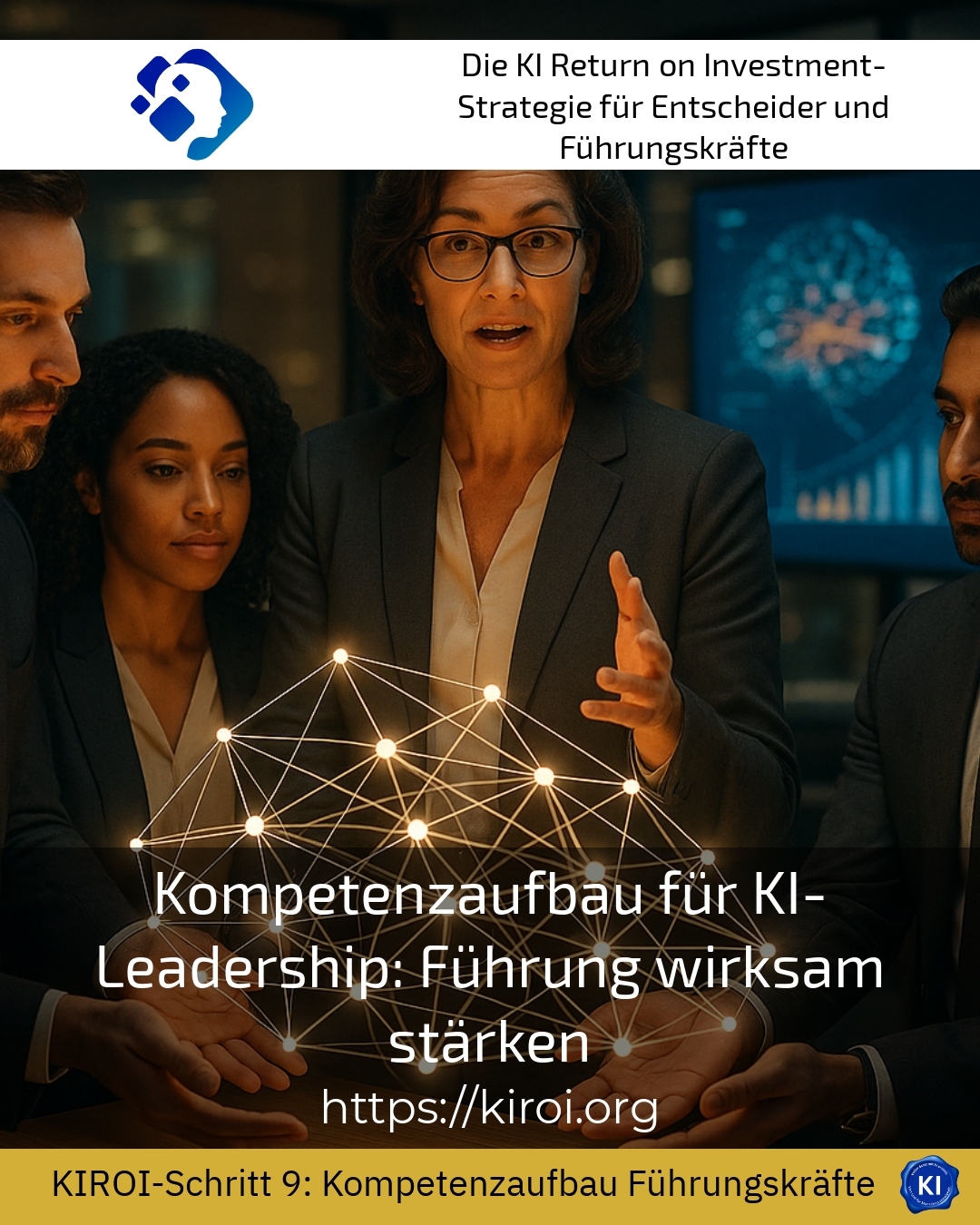
The rapid development of intelligent technologies is fundamentally and sustainably changing the way businesses are managed. Today, leaders face the challenge not only of understanding technological innovations, but also of strategically integrating them into their organisations. The Building competence for AI leadership becomes a decisive success factor in this process, as it empowers leaders to navigate their teams through digital transformation. Many decision-makers report feelings of uncertainty when dealing with algorithmic systems and their impact on business processes. This is precisely where targeted leadership skills development comes in, going far beyond technical knowledge.
Why modern leadership requires new skills
The demands placed on leaders have changed dramatically in recent years. Classical management methods are reaching their limits because the complexity of modern business environments has increased exponentially. Today, leaders must be able to make data-driven decisions while simultaneously supporting their teams emotionally. This dual role requires a completely new competence profile that combines a technological understanding with pronounced emotional intelligence [1].
Often, clients report that they feel torn between innovation and stability. On the one hand, they want to introduce new technologies, but on the other hand, they do not want to jeopardise their established processes. For example, a manufacturing company faced the question of how to implement automated quality control without unsettling experienced employees. A financial services provider, in turn, sought ways to integrate algorithmic analyses into its advisory processes without the personal customer relationship suffering. A medium-sized retail group wanted to optimise warehouse processes and needed managers who could credibly represent this transformation.
Building competence for AI leadership as a strategic process
The systematic development of leadership skills for digital transformation does not follow a rigid template, but must be individually tailored to the respective organisation. Both professional and personal areas of development play a central role here, because sustainable change must always take place on several levels simultaneously. transruptions coaching supports leaders in precisely these multifaceted projects by providing stimulus and creating spaces for reflection [2].
Best practice with a AIROI customer
An international mechanical engineering company approached us with the challenge that its senior management was showing massive resistance to the introduction of intelligent production control. The executive board had already made substantial investments in modern technologies, but middle management was blocking the implementation in subtle yet effective ways. Using the AIROI framework, we first developed a deep understanding of the individual fears and concerns of the managers involved. It became clear that many managers feared that automated systems would strip them of their decision-making authority and ultimately render them redundant. Through targeted workshops and one-to-one coaching sessions, we were able to address these fears and channel them into constructive energy. The managers learnt to redefine their roles and see themselves as architects of change rather than its victims. After six months of intensive support, the participants reported a significant increase in their confidence when dealing with technological innovations. The implementation of the new systems subsequently went smoothly because the managers were genuinely committed to the project and were able to get their teams on board accordingly.
The importance of emotional intelligence in technological transformations
Technological competence alone is not enough to successfully shape change processes. Managers must be able to understand the emotional reactions of their employees and respond to them appropriately. For example, a logistics company experienced fierce resistance when automated route planning was introduced. The experienced dispatchers felt their expertise was unvalued, even though the new system was supposed to make their work easier. Only when the managers began to actively listen and take concerns seriously did the situation ease.
Similar patterns emerge in healthcare because particularly sensitive data is processed here and patient trust is at stake. Clinics frequently report resistance from medical staff to algorithmic diagnostic support. One hospital was able to overcome this hurdle by leaders positioning the technology as an assistance system that complements medical expertise, but never replaces it. A care home, in turn, used intelligent sensor systems for fall prevention, whereby acceptance only increased when staff were actively involved in the system design.
Practical approaches to capability building for AI leadership
Building leadership skills for the digital era requires a holistic approach that combines various learning formats and development methods. While traditional training courses impart theoretical knowledge, the actual development of competence takes place in practical application and reflection [3]. Transruption coaching supports managers in testing new behaviours in their specific day-to-day work and continuously improving them.
For example, a telecommunications company relied on so-called learning circles, in which managers from various departments could exchange their experiences with technological projects. These peer-to-peer formats proved particularly effective because participants were able to learn from the successes and mistakes of their colleagues. An energy supplier, in turn, established mentoring programs in which younger, tech-savvy managers accompanied their more experienced colleagues. This reverse mentoring arrangement promoted knowledge transfer in both directions while simultaneously strengthening cross-generational cooperation.
Ethical Dimensions of Technology-Enabled Leadership
Modern leadership must also grapple with the ethical implications of algorithmic decision-making systems. Leaders bear the responsibility for ensuring that technological solutions are deployed fairly and transparently. An insurance company faced the challenge of introducing automated risk assessments while needing to minimise the risks of discrimination. The managers learned to ask critical questions and not to trust algorithms blindly [4].
In human resources, these ethical dimensions are particularly apparent. A retail group wanted to use algorithmic systems for candidate pre-selection and had to ensure that no groups were systematically disadvantaged. During the coaching process, the HR managers developed a deep understanding of how such systems work and their potential biases. Meanwhile, a recruitment agency established regular audits of its matching algorithms in order to identify and correct unintentional discrimination.
Best practice with a AIROI customer
A local authority approached us with the request to prepare their managers for the introduction of smart citizen services. The particular challenge was that public administrations are under intense public scrutiny and mistakes can quickly lead to political controversy. Together with the department heads, we developed a competency model that combined a basic technical understanding with ethical reflection skills and communication competence. In several workshop series, we worked on concrete scenarios, such as the automated processing of applications or the use of chatbots in citizen services. The managers learned to identify potential risks at an early stage and address them proactively. A particular focus was placed on transparent communication with citizens, because trust in public institutions depends largely on how openly technological innovations are handled. Upon completion of the programme, the managers felt significantly more confident in dealing with technological issues and were able to lead their teams accordingly. Public acceptance of the new services exceeded expectations, which was largely due to the careful rollout strategy.
Sustainable embedding of new leadership skills
The one-off acquisition of competencies is not enough to lead successfully in the long term, because technological frameworks are continuously evolving. Leaders must develop an attitude of lifelong learning and model this within their organisations as well. For example, a pharmaceutical company established regular reflection formats in which leaders could systematically process their experiences with technological projects.
Transruption coaching continues to support leaders even after initial development programmes. An automotive supplier used continuous coaching impulses to help its leaders with the gradual introduction of autonomous manufacturing systems. A media company, on the other hand, relied on quarterly reflection meetings in which leaders could discuss their experiences with algorithmic content recommendations. This ongoing support ensured that the competences that had been developed did not atrophy, but continued to evolve [5].
My AIROI Analysis
Developing leadership skills for the digital transformation is not a one-off project, but an ongoing process that requires continuous attention and investment. My experience from numerous advisory projects shows that success depends crucially on the willingness of leaders to engage in genuine personal change. Technical knowledge can be imparted relatively quickly, but the profound transformation of leadership attitudes and behavioural patterns takes time and professional guidance.
The Building competence for AI leadership proves to be an effective lever for making organisations fit for the future. Leaders who develop these skills can guide their teams through uncertainty whilst capitalising on the opportunities presented by technological innovation. The AIROI framework provides a structured guide that can be tailored to the specific needs of each organisation. The integration of professional development and personal coaching proves particularly effective, as sustainable change must always take both dimensions into account.
For businesses, I recommend a step-by-step approach starting with an honest assessment of existing leadership skills. Building on this, targeted development measures can be designed that encompass both individual and collective learning formats. Involving external support from experienced coaches can accelerate the process and significantly improve the quality of the results. Ultimately, it is about empowering leaders to actively shape the future of their organisations rather than merely reacting to change.
Further links from the text above:
[1] Harvard Business Review – Leadership Insights
[2] Transruption Framework at RISAWAVE
[3] McKinsey – People and Organisational Performance
[4] World Economic Forum – AI and Ethics
[5] The AIROI methodology at RISAWAVE
For more information and if you have any questions, please contact Contact us or read more blog posts on the topic Artificial intelligence here.







 Deutsch
  English (UK)