
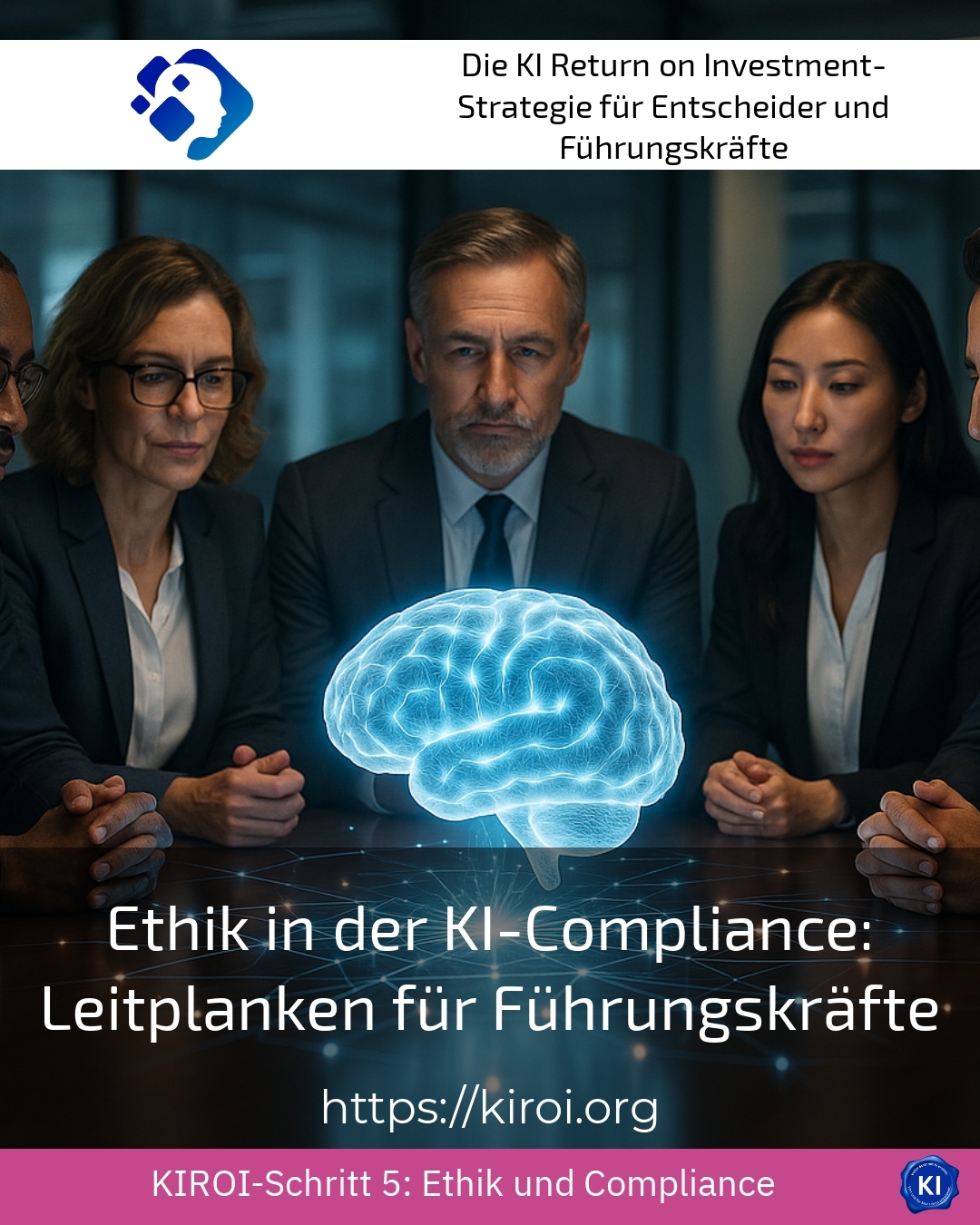
Imagine an algorithmic system making split-second decisions that can affect the lives of thousands of people. This idea is no longer science fiction. Ethics in AI Compliance: Guardrails for Leaders describes one of the most pressing issue complexes of our time. Companies face the monumental challenge of deploying innovative technologies responsibly. At the same time, they must meet regulatory requirements. The question of how to properly handle automated decision-making systems is a burning issue for many decision-makers. This article provides impetus for a thoughtful approach to these complex issues.
Why responsible technology use is essential today
The rapid development of algorithmic systems has triggered profound changes in practically all economic sectors. Managers frequently report the difficulty of reconciling technological progress with social responsibility. For example, a financial services provider implemented an automated credit decision system. It transpired that certain population groups were systematically disadvantaged. Such situations clearly demonstrate the importance of well-thought-out frameworks. A large retail company used predictive analytics for workforce planning. However, the staff council raised massive concerns regarding transparency. A telecommunications provider deployed chatbots in customer service. This unintentionally resulted in discriminatory response patterns that caused considerable reputational damage.
These examples powerfully illustrate that technological capabilities alone are not enough. Rather, clear guidelines for day-to-day use are needed. Leaders bear the responsibility of creating the corresponding structures. They must raise awareness and train their teams. At the same time, innovation potential must not be left unexploited. Finding this balance represents one of the greatest management challenges.
Ethics in AI compliance: guardrails for leaders in everyday business practice
Establishing effective governance structures requires a systematic approach. Many decision-makers initially feel overwhelmed by the complexity. An insurance group therefore established an interdisciplinary ethics committee. This body evaluates every planned use of technology according to defined criteria. A car manufacturer developed a comprehensive testing catalogue for algorithmic applications. Every department must go through this before new systems go live. A pharmaceutical group introduced mandatory training for all project managers. Participation is a prerequisite for leading such projects.
Transruptions-Coaching supports companies with precisely such transformation projects. The implementation of new structures rarely succeeds single-handedly. External perspectives can provide valuable impetus in this regard. Clients frequently report initial resistance within middle management. This can be overcome through transparent communication and involvement. The key lies in the early participation of all relevant stakeholders.
Best practice with a AIROI customer
A medium-sized logistics company was faced with the challenge of automating its route optimisation. The management had already taken the first steps, but encountered significant resistance from the drivers. The workforce feared that their work performance would be subject to comprehensive monitoring. There were also concerns regarding fairness in the allocation of shifts. As part of the AIROI support programme, a comprehensive stakeholder analysis was first carried out. In doing so, we identified the key pain points for all groups involved. We then developed a transparent communication plan in collaboration with the HR department. The technical department was given clear guidelines on the anonymisation of sensitive data. A representative from the works council was added to the company’s ethics committee. This measure built trust and facilitated a constructive dialogue. After six months of intensive support, the system was successfully rolled out. Staff satisfaction remained stable and efficiency increased measurably. This example clearly demonstrates how important the human element is when it comes to technological change.
Transparency as a cornerstone of responsible technology use
The traceability of algorithmic decisions represents a central aspect. Those affected must be able to understand how decisions are reached. An energy supplier therefore implemented an explanation system for its pricing [1]. Since then, customers have been able to trace which factors influence their individual tariff. A health insurance fund developed understandable information materials on its billing systems. Insured persons receive detailed breakdowns of all automated processes upon request. An online retailer now transparently labels product recommendations as algorithmically generated. This openness sustainably strengthens customer trust.
The European regulatory landscape is developing dynamically in this area [2]. Leaders must monitor these developments closely. Acting proactively provides significant competitive advantages. Companies that establish high standards early on will benefit in the long term. They will have to make fewer adjustments later and will enjoy greater trust.
Practical areas of action for decision-makers
The concrete implementation of responsible technology use requires clear areas for action. First, companies should systematically inventory their existing systems. A media group conducted a comprehensive stocktake of all algorithmic applications. In the process, over three hundred different systems requiring review were identified. A hotel chain analysed its booking systems for potential patterns of discrimination. The findings led to important adjustments in pricing. A construction company reviewed its supplier evaluation for hidden biases. The results surprised even experienced purchasing managers.
Ethics in AI compliance: guardrails for leaders also means clearly defining responsibilities. Who bears responsibility when a system makes flawed decisions? This question must be answered prior to implementation. To achieve this, a mechanical engineering company established a three-tier responsibility structure. The business department is responsible for the content-related design of the decision-making logic. The IT department ensures technical functionality. The executive board bears overall strategic responsibility.
Training and awareness-raising as an ongoing task
Technological competence alone is not enough for responsible decision-making. Employees need a fundamental understanding of ethical issues. A chemical company integrated corresponding modules into its leadership programme. Participants discuss real-life case studies from their industry there. A bank developed an interactive e-learning programme on responsible data usage [3]. The completion rate is over ninety percent. A food manufacturer organises regular ethics workshops for project teams. These formats encourage an open exchange about difficult decision-making situations.
Transruptions-Coaching supports companies in the design of such formats. The content is individually tailored to specific challenges. Clients frequently report positive cultural changes following such measures. Employees are more inclined to ask critical questions. The error culture improves measurably.
Best practice with a AIROI customer
An international retail group was planning to introduce a staff performance evaluation system. The HR department hoped for more objective assessments and fewer conflicts during salary negotiations. However, the initial pilot tests met with massive resistance from the workforce. Many employees felt reduced to mere metrics and monitored. As part of our accompanying support, we first analysed the specific concerns of various employee groups. It became apparent that communication prior to the start of the pilot had been inadequate. Furthermore, clear rules for handling the collected data were lacking. Together with the company, we developed a comprehensive code of ethics for the use of technology in human resources. This code defines clear limits for data usage and guarantees co-determination rights. Since then, a jointly staffed committee has monitored compliance with all requirements. The reintroduction of the system went much more smoothly. Acceptance rates rose by over fifty percent compared to the first attempt. This project illustrates the importance of participatory approaches in sensitive technology projects.
Develop forward-looking governance structures
Technological development is advancing at an enormous speed. Governance structures must therefore be designed to be adaptable. A technology group reviews its guidelines quarterly for relevance. A financial service provider has implemented automated monitoring for regulatory changes. An industrial company is actively involved in the development of industry-wide standards [4]. This proactive attitude pays off in the long term.
Ethics in AI compliance: guardrails for executives also requires looking beyond one's own horizon. Exchange with other companies yields valuable insights. Industry initiatives provide platforms for joint learning. A consortium of several insurance companies developed common minimum standards. These intentionally significantly exceed legal requirements. The participating companies benefit from increased consumer trust.
The role of external support in complex transformation projects
Many companies underestimate the effort involved in responsible technology implementation. Internal resources are frequently insufficient. External expertise can provide valuable support here. Transruptions coaching accompanies companies in the development of individual solutions. Collaboration is always on an equal footing. The aim is to enable internal teams to drive further development independently.
An engineering company used external support for the development of its governance structures. The internal experts initially had reservations about external consultants. This scepticism quickly gave way to constructive cooperation. A retail company had its existing systems externally audited [5]. The independent perspective uncovered blind spots. A service provider sought assistance with stakeholder communication. The external moderation enabled a more open dialogue.
My AIROI Analysis
Engaging with responsible technology use has gained significant importance in recent years. Leaders face the task of balancing technological possibilities with societal responsibility. Finding this balance requires a systematic approach and continuous reflection. The examples described in this article show that successful implementations are possible. However, they require clear structures, transparent communication and the involvement of all stakeholders. Companies that neglect these aspects risk reputational damage and regulatory consequences. European legislation is evolving dynamically and setting increasingly higher demands. Proactive action provides competitive advantages and builds trust with customers and employees. Technological development will continue to advance. Ethical questions will become more complex. Leaders who address these issues today are better prepared. They can seize opportunities and minimise risks. Guidance from experienced partners can provide valuable impetus. Ultimately, however, the responsibility lies with each individual decision-maker. Technology is neutral. The manner of its use is determined by people.
Further links from the text above:
[1] Federal Network Agency – Artificial Intelligence
[2] European Commission – regulatory framework for AI
[3] BaFin – Digitalisation in the financial sector
[4] DIN – Standards for Artificial Intelligence
[5] TÜV audit of AI systems
For more information and if you have any questions, please contact Contact us or read more blog posts on the topic Artificial intelligence here.











 Deutsch
 English (UK)