
Have you ever wondered why so many experienced financial professionals are suddenly fearing for their professional future, even though they appeared indispensable for decades?
The answer to this question is currently shaking an entire profession to its core, because the AI bookkeeping transforms traditional ways of working at a pace that surprises even experts. Where file folders once lined up next to one another and calculators clattered, intelligent systems now take over routine tasks with a precision that almost eliminates human error rates. This development does not only affect large corporations, but is now also reaching medium-sized enterprises and small tax consultancy firms at a speed that catches many of those affected unprepared. The question is therefore no longer whether this transformation is taking place, but rather how professionals can adapt to it.
The quiet transformation in finance departments
A fundamental upheaval is currently taking place in numerous companies, which at first appears barely visible. Employees frequently report that their daily tasks have changed insidiously. Traditional voucher entry is increasingly disappearing from the everyday working environment. Instead, automated systems are taking over the scanning and categorising of invoices. Account reconciliation takes place in real time and without human intervention. These changes affect various areas within the finance departments simultaneously.
A medium-sized wholesaler from the Ruhr region reduced its manual document processing by more than seventy percent within just eighteen months [1]. The saved time is now used by the remaining specialists for analytical tasks and strategic consulting. A hotel chain with over thirty locations in the German-speaking region had a similar experience. There, intelligent systems took over the processing of more than twenty thousand incoming invoices monthly. The error rate dropped to below one percent, while processing time shrank by two thirds.
Particularly interesting is the development in the construction sector, where complex projects traditionally require extensive documentation. A main contractor implemented a system for the automatic allocation of supplier invoices to individual construction projects. The software now independently recognises which invoice must be assigned to which trade. This not only saves time, but also significantly increases transparency towards clients.
Best practice with a AIROI customer
An internationally active logistics company faced the challenge of processing more than five hundred consignment notes and associated invoices every day. Manual data entry tied up four full-time staff in this repetitive task, with the average error rate standing at around three per cent. As part of a transruptions coaching support programme, the company first analysed all existing processes in accounts payable. It emerged that more than eighty per cent of incoming documents featured standardised formats and were therefore suitable for automated processing. Following the implementation of an adaptive document recognition system, manual effort was reduced by seventy-five per cent within six months. In parallel, the affected employees received further training in the areas of data analysis and process optimisation. Today, three of the original four employees work in strategic roles, while one person oversees quality assurance for the automated processes. The error rate fell to under half a per cent, and the turnaround time for an invoice decreased from an average of three days to less than four hours.
Why traditional tasks in AI accounting are becoming obsolete
The reasons for the disappearance of traditional tasks lie in rapid technological development. Modern systems continuously learn from processed data and steadily improve their recognition rates. They require neither breaks nor holidays and work around the clock with consistent quality. These characteristics simply make them superior for certain activities.
Manual data entry is among the first areas that can be almost completely automated. Intelligent text recognition now captures even handwritten notes with high accuracy. The allocation of business transactions to the correct accounts is also increasingly carried out automatically. A mechanical engineering company from Baden-Württemberg reports that its system now independently and correctly allocates over ninety percent of all entries [2]. The remaining ten percent mainly concern unusual business transactions that continue to require human expertise.
A similar picture emerges in the food industry when processing delivery notes and goods receipts. A large-scale bakery with several production sites linked its merchandise management system to financial accounting through automated interfaces. Since then, invoice verification has been carried out largely by machine through the matching of purchase orders, delivery notes and invoices. Discrepancies are automatically detected and forwarded to the responsible employees. This process would previously have required several hours of manual work per day.
The area of travel expense accounting is also undergoing profound changes. A pharmaceutical company with several thousand field staff automated its travel expense processing almost entirely. Employees take photos of their receipts with a smartphone application that automatically extracts the relevant data. The system independently checks compliance with guidelines and creates the bookings without further human intervention. The monthly processing time fell from over two hundred hours to less than twenty hours for exceptional cases.
The role of pattern recognition in AI accounting
Particularly impressive is the ability of modern systems for pattern recognition. They identify irregularities and potential errors faster than human inspectors. An automotive supplier discovered several cases of double-booking through automated analyses that had gone unnoticed for years [3]. In doing so, the systems do not work according to rigid rules, but independently recognise deviations from the usual pattern.
In retail, this technology enables continuous monitoring of the cash register reconciliations of all branches. Anomalies are reported immediately and can be investigated promptly. A clothing retail chain with over two hundred locations reduced its inventory discrepancies by more than forty percent through such analyses. The systems recognise patterns that indicate shrinkage or errors in cash management long before they would be visible in the regular financial statements.
Energy suppliers use similar technologies to analyse their extensive customer data. The automated recognition of payment patterns enables the early identification of default risks. At the same time, the systems optimise dunning procedures through the intelligent prioritisation of cases. Employees are thus able to concentrate on truly critical situations, whilst standard cases are processed fully automatically.
What is left for human expertise?
Despite all automation, certain areas remain reserved for human expertise. Strategic decisions require contextual knowledge and experience that machines cannot yet replicate. The interpretation of complex tax matters demands a deep understanding of legal contexts. Negotiations with auditors or tax authorities require interpersonal skills that technical systems cannot replace.
A medium-sized mechanical engineering company describes the change as liberation from routine tasks. Today, its accountant acts as a strategic adviser to the management board. She analyses key performance indicators and identifies potential for optimisation instead of sorting receipts. This upgrading of the remaining positions offers opportunities for skilled professionals who are willing to develop their competencies further.
A similar picture emerges in the healthcare sector among hospital operators and care facilities. Billing with health insurance funds is increasingly automated based on documented services. Instead, professionals dedicate themselves to optimising documentation processes and training nursing staff. Their expertise no longer lies in data entry, but in ensuring correct source data.
Property management companies report comparable experiences regarding utility bills. The technical calculation is carried out automatically on the basis of recorded consumption data. Human expertise remains in demand for checking special cases and communicating with tenants in the event of queries. Personal advice is gaining in importance, while technical processing is taking a back seat.
Best practice with a AIROI customer
A supra-regional tax consultancy with more than fifty employees recognised early on the need for strategic realignment. The partners opted for comprehensive support from transruptions-Coaching to actively shape the change rather than passively endure it. First, a detailed analysis of all client relationships was carried out regarding the automation potential of the respective activities. This revealed that for about sixty percent of the mandates, pure document processing accounted for the largest share of time, while actual tax advice was neglected. The firm subsequently implemented a concept for digital document submission by clients with automatic pre-processing of the submitted documents. At the same time, the partners developed a new advisory service for business analyses and strategic tax planning. Within two years, the range of services changed fundamentally from reactive document processing to proactive business consulting. The average added value per employee increased by more than forty percent, even though the number of documents processed actually rose. The clients benefit from faster evaluations and significantly more intensive support in strategic matters.
Changing qualification requirements due to AI bookkeeping
The changed requirements demand new skills from the specialists. A technical understanding of digital systems is increasingly becoming indispensable. Analytical skills are gaining in importance compared to operational abilities. Communication competence is developing into the decisive differentiating factor between being replaceable and indispensable.
Educational institutions are responding to these changes with adapted curricula. The traditional accounting course is increasingly giving way to a combination of technical and business administration content. Students no longer primarily learn manual bookkeeping, but rather how to use complex software systems. The ability to interpret automatically generated reports is coming to the fore.
An employment agency from the temporary staffing sector is clearly observing this shift in its clients' requirements. Whilst precise data entry used to represent the most important criterion when filling positions, companies today increasingly ask for candidates with process understanding and interface competence. The technical execution is taken care of by the systems, but the orchestration of the various components still requires human intervention.
Trade businesses face special challenges in this transformation. An electrical installation company with twenty employees describes how the integration of order processing, time management and bookkeeping fundamentally changed their work. The fitters record their working hours and materials used directly on site via mobile devices. Invoicing is carried out almost automatically on the basis of this data. The former office worker now takes on the role of a controller, evaluating projects and checking estimates.
Strategies for successful transformation
Change cannot be stopped, but it can be shaped. Companies benefit from a proactive approach to change. A phased introduction of automated processes gives employees the necessary time to adapt. Transparent communication about the planned changes reduces anxiety and resistance.
A wholesale plumbing supplies company proceeded particularly cautiously with its transformation. From the outset, the management communicated openly that automation would not equate to job cuts. Instead, all affected employees were given the opportunity for upskilling. After two years, most of them are working in upgraded positions with higher remuneration. Nevertheless, the company was able to significantly increase its productivity.
In the restaurant industry, a multi-site restaurant group is demonstrating a successful path of transformation. The introduction of digital point-of-sale systems with an automatic connection to financial accounting was carried out gradually over eighteen months. The former bookkeeper has developed into a controller and today analyses the profitability of individual dishes and locations. Her practical experience from document processing is proving valuable for understanding the underlying business processes.
Non-profit organisations are also undergoing this transition, facing distinct challenges. A welfare association with several thousand voluntary helpers largely automated its donation management. The systems process direct debits, generate donation receipts and maintain the donor database automatically. The capacity thus freed up is now channelled into the personal care of major donors and the strategic further development of fundraising activities.
My AIROI Analysis
The transformation of financial accounting through intelligent systems represents one of the most profound processes of change in the history of the commercial professions. This development cannot be stopped and affects companies of all industries and sizes equally. The AI bookkeeping not only creates new challenges in the process, but also opens up significant opportunities for professionals who are ready to develop their skills further. Transruption coaching can provide support in actively shaping this change and providing impetus for strategic realignment.
From my analysis of the various practical examples, several key insights emerge. Firstly, the transformation is happening faster than many expected and is increasingly reaching areas that were long considered safe. Secondly, those companies benefit the most that proactively shape the change rather than passively suffering it. Thirdly, the value contribution of human labour is shifting from operational execution to strategic management and personal advisory services.
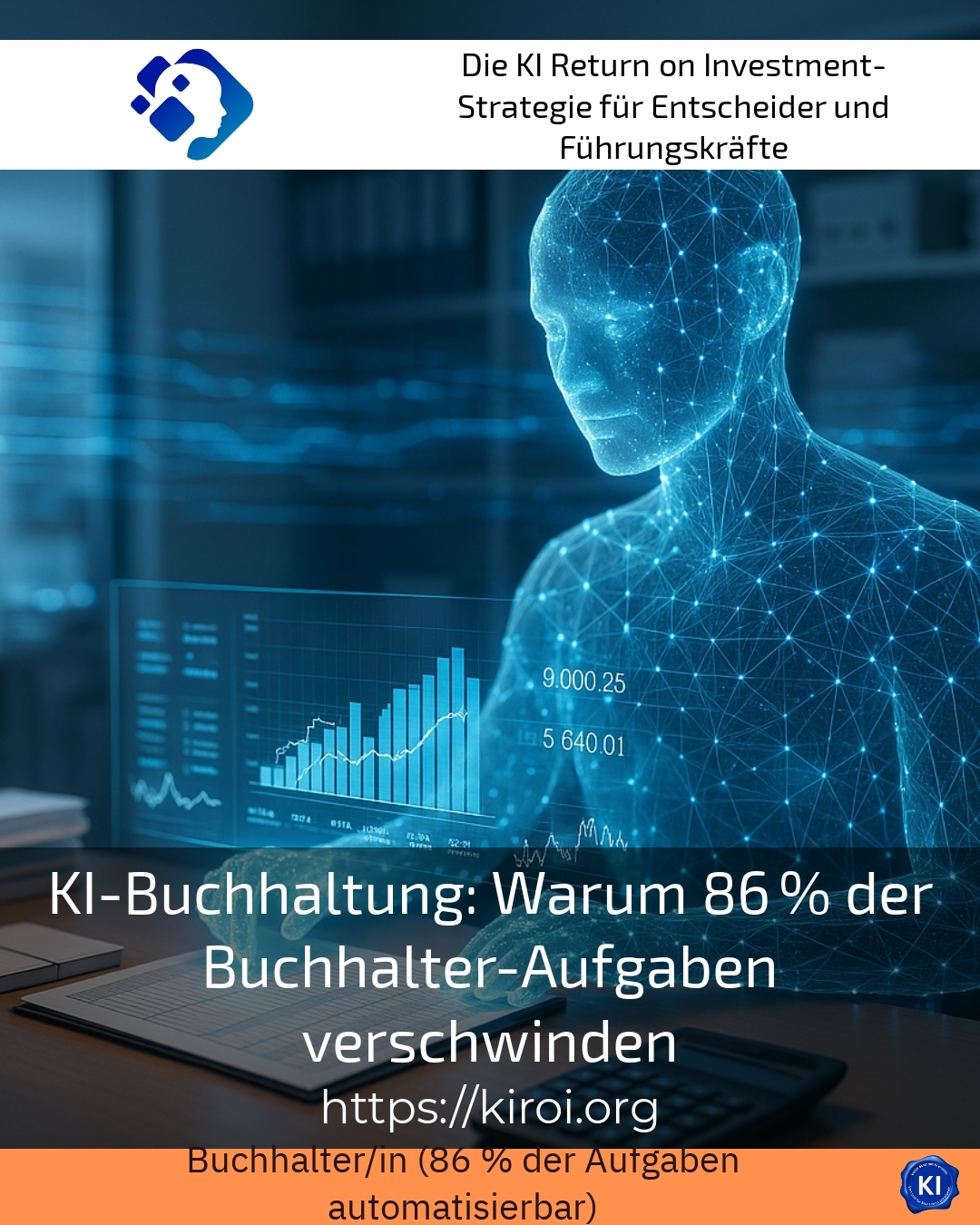
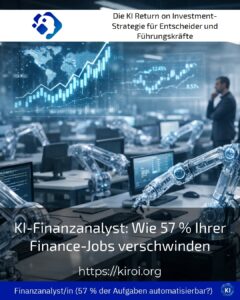
The figure of eighty-six per cent of disappearing tasks may initially seem threatening, but it tells only part of the story. The remaining fourteen per cent comprises precisely those activities that place higher demands on qualification and creativity. Anyone willing to take this path will find new and often more fulfilling tasks in the transformed world of work. Those affected frequently report a significant enhancement of their professional activities following a successful transformation. The AI bookkeeping does not eliminate the need for human expertise, but fundamentally changes its focus.
Further links from the text above:
[1] Bitkom – Digital Transformation in Companies
[2] PwC – Studies on Digital Transformation in Finance
[3] McKinsey – analyses on automation in the financial sector
For more information and if you have any questions, please contact Contact us or read more blog posts on the topic Artificial intelligence here.






 Deutsch
 English (UK)