
Why do so many leaders fail to pass on their valuable knowledge to teams, even though they themselves are experts in their field?
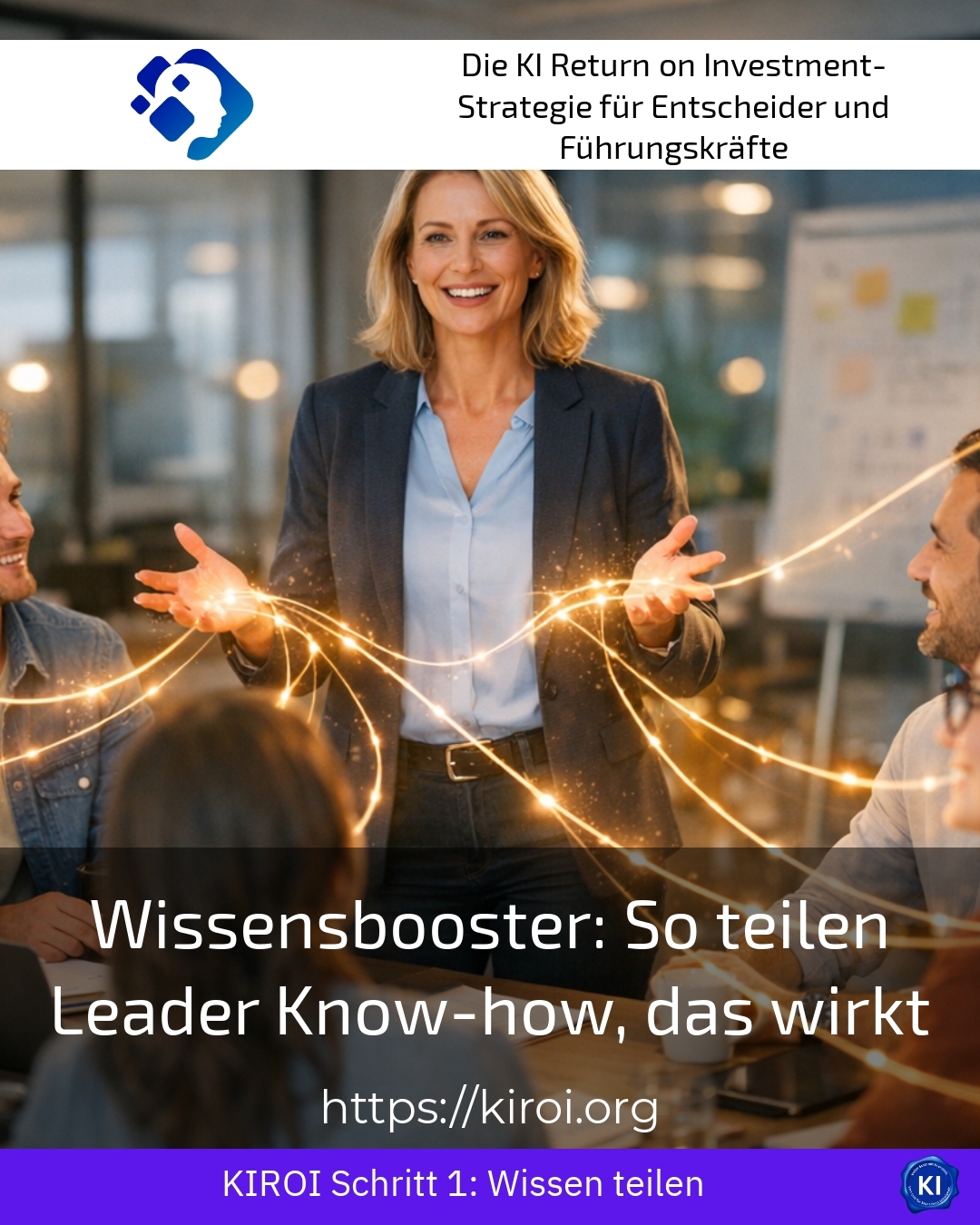
This question concerns companies across all industries. The decisive factor Knowledge booster: This is how leaders share know-how that works Leadership is not just about information sharing. It only becomes effective through targeted methods and authentic communication. Many leaders underestimate the complexity of this process. They mistakenly believe that good content automatically arrives. However, reality paints a different picture. Knowledge often remains trapped in silos. It does not reach the people who need it most. There are proven strategies that can revolutionize this transfer of knowledge. In this article, you will learn how modern leaders can impart their expert knowledge in a sustainable way.
The psychology behind effective knowledge transfer
People do not learn through passive absorption of information. They need emotional anchors and personal relevance. A manager from the automotive industry recognized this truth after years of failure. His detailed presentations did not reach the workforce as desired. Only when he began incorporating personal stories did the resonance change. The employees could suddenly connect to their own work life. Another example comes from retail. There, a regional manager introduced so-called storytelling sessions. She shared her experiences from difficult customer conversations and together with the team analyzed successful solution strategies. This method proved extraordinarily effective for the entire region. In healthcare, a clinic director uses regular case discussions as a knowledge platform. In doing so, she combines medical expertise with the human aspects of patient care.
Knowledge boosters through structured dialogue formats
Structured conversations form the foundation for sustainable knowledge exchange within organizations. A technology company in the renewable energy sector developed its own format for this purpose. The so-called Knowledge Cafés take place monthly and follow a clear structure. Executives first briefly present a topic from their field. Subsequently, small groups discuss the practical applicability of the content. This method combines theory with practice. In the financial sector, a similar model has proven successful. There, team leaders meet weekly for structured knowledge exchange. They discuss current challenges and share successful solutions. A pharmaceutical company goes one step further. It documents all the insights from these sessions in an internal knowledge database. This also benefits absent employees who can benefit from the discussions.
Best practice with a AIROI customer
A medium-sized company in the logistics industry faced a particular challenge when it came to internal knowledge transfer. The experienced executives possessed enormous expertise in process optimization and customer relationships. However, this knowledge did not reach the younger team leaders in sufficient quantity. As part of a transruptive coaching process, we jointly developed a multi-stage concept for knowledge exchange. First, we identified the critical knowledge areas that needed to be communicated urgently. Subsequently, we designed individual formats for different subject areas and target groups. The experienced leaders received guidance in developing their personal communication skills. They learned to explain complex issues in an understandable and practical manner. Furthermore, we implemented a digital tool for documenting the shared insights. After six months, the participants reported a significantly improved collaboration between the generations. The younger executives felt better supported and were able to act more independently faster. Knowledge transfer became an integral part of the corporate culture.
Digital tools as catalysts for knowledge exchange
Modern technologies open up entirely new possibilities for the transfer of expertise. In the construction industry, project managers are now using video recordings of their site visits. They comment on relevant details and share these clips with the entire team. This way, the knowledge reaches employees at other locations as well. A mechanical engineering company relies on interactive online platforms for the exchange of experience. Management regularly uploads short learning videos there and answers questions from the workforce. The response to this format surprised even the initiators. In the field of corporate consulting, virtual mentoring programs have become established. Experienced partners mentor younger consultants via digital channels on complex projects. This form of knowledge dissemination also works excellently across geographical boundaries.
Knowledge booster: This is how leaders share expertise in hybrid work environments
The working world is rapidly changing and requires new approaches to knowledge transfer. Hybrid models place particular demands on leaders. A software company developed an innovative concept for this purpose that combines asynchronous and synchronous elements. The management level produces short audio messages on relevant topics every week. Employees can listen to them flexibly during their working hours. In addition, monthly live sessions take place where questions are answered. A media company is following a similar path. Editors document their decision-making processes in an internal blog. This gives younger colleagues insight into the mindset of experienced leaders. In the insurance industry, digital peer-learning groups have proven effective. Team leaders meet online weekly and exchange ideas about current challenges.
The role of feedback in the knowledge transfer process
Knowledge transfer does not work in a one-way direction; it requires continuous exchange. Leaders must understand how their messages reach and resonate. A business led, therefore, to introduce regular feedback loops in its knowledge exchange. After each training or information session, it collects structured feedback. This feeds directly into the design of future formats. In the hotel industry, a chain uses so-called reflection sessions after key learning units. Employees reflect together on which content was particularly helpful and where questions remained open. A chemical company goes even further and measures the practical application of the knowledge imparted. It monitors whether behaviors change after knowledge transfer measures are implemented. These insights help the leaders continuously improve their delivery methods.
Best practice with a AIROI customer
An international consulting firm approached us with a specific request regarding knowledge transfer. The experienced partners had decades of expertise in various industries and subject areas. However, this expertise was at risk of being lost because no systematic transfer of knowledge to younger consultants was taking place. In transruptional coaching, we initially conducted an analysis phase to identify critical knowledge areas. It was revealed that particularly implicit knowledge about customer relationships and negotiation skills was at risk. We jointly developed a program that combined different formats and interconnected them. Experienced partners received guidance on how to structure their knowledge into digestible units. Additionally, we implemented a tandem system in which young consultants accompanied experienced partners during important appointments. After the sessions, structured reflection sessions took place that strengthened the learning effect. Participants often reported a significantly better understanding of complex customer situations. The program was expanded to all international locations after a pilot phase.
Cultural prerequisites for successful knowledge exchange
Without the right corporate culture, all methods are ineffective. Leaders must create an atmosphere in which knowledge sharing is valued. An electronics manufacturer therefore consciously established a culture of openness and learning. There are no sanctions for mistakes there; they are understood as learning opportunities for everyone. This attitude encourages employees to share even difficult experiences. In the food industry, a family-run company demonstrates how cross-generational knowledge transfer can succeed. The founding family regularly shares its values and knowledge in personal conversations. Younger executives are actively involved in strategic decision-making processes. A telecommunications provider promotes knowledge exchange through appropriate incentive systems. Leaders are also evaluated on how well they pass on their knowledge to others.
Knowledge boosters through the personal development of the executives
Not every leader is automatically a good knowledge communicator. However, this skill can be developed and promoted purposefully. An automotive supplier therefore invests specifically in the didactic skills of its leadership level. Workshops on presentation techniques and conversation management are part of the standard program. In the banking sector, experienced coaches accompany management in improving their communication skills. They observe real situations and then provide constructive feedback. An energy provider has developed an internal certification program for knowledge transfer. Leaders undergo various modules and are ultimately awarded a qualification as internal knowledge multipliers. This investment in personal development pays off for the entire company in the long term.
My AIROI Analysis
The transfer of expert knowledge represents one of the biggest challenges for modern organizations. My experience from numerous consulting projects clearly shows that technical solutions alone are not enough. A holistic understanding of the human factors in knowledge exchange is needed. Leaders often come to me with the complaint that their messages are not reaching their intended audience. They invest a lot of time in presentations and training sessions, but see little effect. Upon closer inspection, it often turns out that the chosen formats do not fit the target audience. Transruptive coaching can provide valuable insights and open up new perspectives. We help leaders further develop their own communication skills. This is not about standardized methods, but about individual solutions. Each organization has its own culture and specific requirements. The Knowledge booster: This is how leaders share know-how that works It only achieves its full potential through tailored approaches [1]. Supporting projects around knowledge transfer requires patience and a deep understanding of change processes. Clients often report a significant improvement in collaboration after appropriate measures have been taken. The investment in systematic knowledge transfer pays off in the long term through higher employee engagement and better results [2]. Organizations that take this issue seriously gain a sustainable competitive advantage.
Further links from the text above:
[1] McKinsey: Knowledge Management – Creating Context for a Connected World
[2] Harvard Business Review: What Is Knowledge Management?
For more information and if you have any questions, please contact Contact us or read more blog posts on the topic Artificial intelligence here.







 Deutsch
 English (UK)