
Knowledge sharing is a key success factor for many companies, but many decision-makers find that traditional methods often reach their limits. Especially in a digital, agile working world, new approaches are needed to effectively share, retain, and utilise knowledge. This is precisely where the KIROI approach comes in: it supports managers in developing a sustainable culture of exchange and specifically identifying and overcoming barriers to knowledge sharing[4].
Why a new look at knowledge exchange is necessary
Many decision-makers report that knowledge remains tied to individuals within their companies. Structures for systematically sharing experience, ideas, and expertise are often lacking. This leads to important insights being lost during holidays, job changes, or projects [2]. Additionally, silos between departments and a lack of trust hinder the free exchange of knowledge – this affects both explicit knowledge and experiential knowledge, which cannot be easily documented [5].
Many companies see the need to actively promote knowledge transfer. Some invest in digital platforms, but technology alone is not enough. The corporate culture, targeted incentives, and active involvement of leadership are crucial [4]. This shows that knowledge sharing requires more than new tools – it requires a conscious shaping of how we work together.
Real-world examples: How knowledge sharing often fails
An insurance company noticed that important process documents were only stored on individual employees' hard drives. When employees left, these documents were not transferred, resulting in the loss of valuable information.
In a manufacturing company, the experience of long-serving employees has rarely been digitally recorded until now. As a result, new colleagues have had little to guide them on best practices.
A consulting firm recorded project results in various tools that were not linked together. This made accessing existing knowledge considerably more difficult.
Step 1: Raising Awareness as the Starting Point for Successful Knowledge Exchange
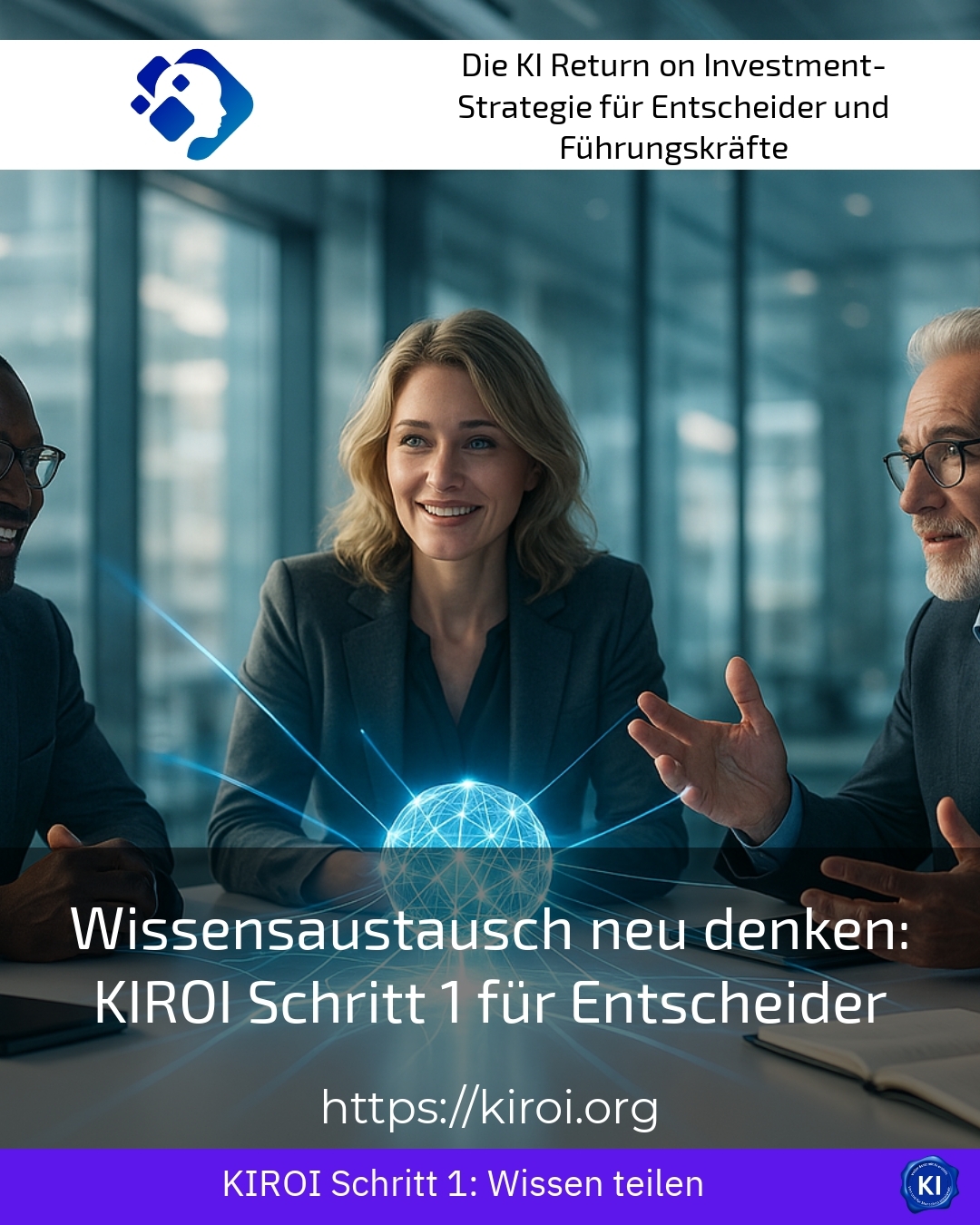
The KIROI approach specifically addresses the first step: raising awareness among decision-makers is the central focus. Clients often report that sharing knowledge is not a given. That's why I support companies in developing a new culture of exchange step by step. The aim is to create a culture of openness and mutual trust in which knowledge sharing becomes a matter of course[4].
Within transruption coaching, we jointly analyse the current starting situation, identify the biggest barriers, and develop suitable measures. This allows structural hurdles such as outdated systems, a lack of time resources, or the feeling that knowledge means power to be addressed specifically.
Impulses for designing a new exchange culture
Recruit leaders who act as role models for knowledge sharing. They actively demonstrate the importance of transparency and mutual support.
Establish feedback loops to systematically reflect on and share experiences within the team. This encourages learning from mistakes and strengthens collaboration.
Making the benefits visible for everyone involved: knowledge sharing not only benefits the organisation but also each individual, as sharing knowledge creates recognition, development opportunities, and new contacts [4].
BEST PRACTICE with a client (name omitted due to NDA agreement): As part of an KIROI project, an internal knowledge platform was established at a medium-sized industrial company. In parallel, regular exchange formats such as short presentations took place. This enabled employees to make their expertise visible and use it across departments. This led to noticeable improvements in project workflows and stronger team dynamics, as knowledge no longer remained behind closed doors but was actively shared and utilised.
Methods and Tools for Successful Knowledge Exchange
Effective knowledge transfer is based on a mix of technical and cultural measures. Digital platforms such as social intranets, wikis, or collaborative tools are helpful for storing and exchanging explicit knowledge. However, analogue formats such as peer-to-peer coaching, mentoring programmes, and regular workshops also promote the flow of implicit knowledge.
Agile methods – such as retrospectives or short presentations – help to continuously share experiences and insights. This creates new learning spaces across team boundaries and accelerates innovation[2].
Besides classic documentation, creative formats are also worthwhile. One publishing house introduced knowledge tests in quiz format to motivate colleagues to share their knowledge playfully [4]. An IT service provider uses regular video updates to share project progress and experiences within the team – this creates transparency and closeness, even when working remotely [4].
Concrete tips for decision-makers
Conduct structured interviews with key individuals to extract and embed implicit knowledge within the company.
Create incentives, for example through bonus systems for knowledge contributions or the recognition of subcultures in assessments[4].
Specifically, establish exchange formats that also enable informal knowledge transfer, such as regular meet-ups, brown-bag lunches, or digital coffee breaks.
My analysis
Knowledge sharing is and remains a central lever for innovation, competitiveness, and sustainable business success. Particularly in dynamic markets, organisations that systematically promote knowledge transfer and live it as a genuine culture benefit greatly. The KIROI approach shows that change begins with a conscious assessment of the current situation and small, targeted steps. Transruption coaching is a valuable companion in successfully shaping the path towards a sustainable culture of exchange.
Those who rethink knowledge sharing and place it at the centre of action create real added value – for the company, but also for each individual. It is worthwhile to take the first step together: because only then does knowledge not remain hidden, but becomes the engine of growth and cohesion.
Further links from the text above:
The Office Expert: Knowledge Exchange [1]
Mastering knowledge exchange: KIROI Step 1 for decision-makers [2]
Definition Knowledge Exchange | Business Processes Glossary [3]
Rethinking Knowledge Exchange: KIROI Step 1 [4]
Knowledge sharing in knowledge management [5]
Rethinking knowledge exchange: approaches for decision-makers [6]
Knowledge Sharing: The Ultimate Guide [7]
Mastering Knowledge Exchange: How to Get Started with KIROI [8]
Ways to leverage knowledge sharing [13]
For more information and if you have any questions, please contact Contact us or read more blog posts on the topic Artificial intelligence here.











 Deutsch
  English (UK)