kiroi.org

KIROI - Artificial Intelligence Return on Invest
The AI strategy for decision-makers and managers

Business excellence for decision-makers & managers by and with Sanjay Sauldie

KIROI - Artificial Intelligence Return on Invest: The AI strategy for decision-makers and managers

KIROI - Artificial Intelligence Return on Invest: The AI strategy for decision-makers and managers

Start » Rethinking knowledge exchange: KIROI step 1 for decision-makers
2 November 2025

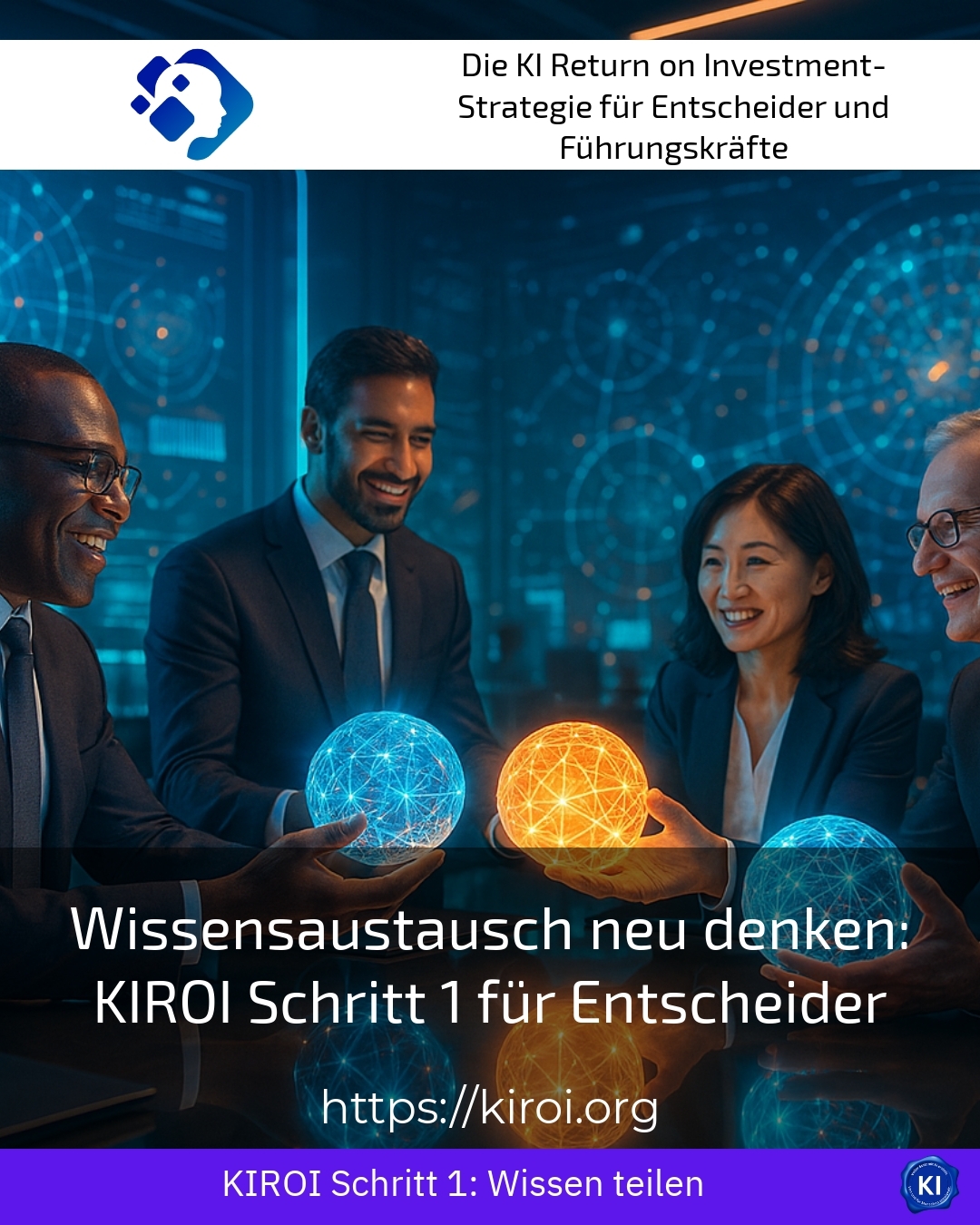
Rethinking knowledge exchange: KIROI step 1 for decision-makers

4.1
(1677)

More and more decision-makers are approaching me with questions on how they can rethink knowledge sharing within their teams. Traditional methods are reaching their limits because knowledge is no longer just contained in documents or databases, but primarily resides in the minds of employees. This is no longer just about information, but about the targeted exchange of experiences, skills and practical know-how. Those who actively shape knowledge sharing create space for innovation, accelerate problem-solving and sustainably improve decision-making processes[1]. This is where, as a transruption coach, I strategically provide impetus and guide companies with KIROI Step 1 – a modular approach that combines practice, reflection and digitalisation.

Rethinking knowledge sharing – why now?

Many companies face a double challenge: knowledge is becoming more complex, and information is becoming outdated faster than ever before[8]. At the same time, there is growing pressure to react flexibly and agilely to change. A classic intranet is no longer sufficient today, as implicit knowledge – such as experience and problem-solving strategies – remains difficult to represent digitally[3]. For example, a manufacturing medium-sized company relies on regular exchange formats between shift managers, because that's where valuable knowledge about processes and disruptions is passed on. Another example: an agency has introduced weekly „Learning Lunches“ where employees share their knowledge about new tools. Large corporations also increasingly see the need to strengthen knowledge sharing not only technically but also culturally.

WHITE Step 1: Impulses for a New Exchange Culture

KIROI stands for a step-by-step development of competences that sustainably enable knowledge sharing. Step 1 focuses on raising awareness among decision-makers. Clients often report that sharing knowledge is not a given. Here, I specifically support the development of a culture of openness and mutual trust. This can mean engaging leaders as role models for knowledge sharing or specifically establishing feedback loops. One example: An insurance company has connected the knowledge of older employees with new colleagues through mentoring programmes. Another example: An IT service provider uses short, regular video updates to share project experiences within the team. It is important to make the benefits visible for everyone involved, as knowledge sharing benefits not only the organisation but also each individual.

Identifying and dismantling barriers to knowledge sharing

Structural or cultural barriers often hinder the exchange of knowledge. These include outdated systems, insufficient time resources, or the feeling that knowledge equals power. Clients often report that employees don't share their knowledge for fear of losing value. Transparent communication can help here, as can clear incentives for sharing know-how. For example, an industrial company has introduced a bonus system for knowledge contributions, and a publishing house uses gamified quiz formats to collect and disseminate knowledge. Digital platforms such as social intranets or collaborative tools also support knowledge exchange, as long as they match users' needs.

Practical examples from the industry

Many companies are looking for ways to keep knowledge sharing alive. An international pharmaceutical group has launched a global „Communities of Practice“ programme, where experts from different locations jointly develop their knowledge. An engineering firm uses regular retrospectives to learn from projects and pass on knowledge directly to the next teams. A service company has set up digital „Expert Hubs“ where employees can find specific answers to technical questions.

BEST PRACTICE with one customer (name hidden due to NDA contract) Following intensive support within the framework of transruptions coaching and KIROI Step 1, a manufacturing company has launched an internal „Fail Fast“ initiative. In short monthly sessions, managers and teams openly share their failed projects, analyse the sources of errors, and jointly discuss solutions. Feedback indicates that trust is growing, fear of failure is decreasing, and new ideas are emerging faster. Simultaneously, a digital wiki has been established where all learning experiences are documented and made accessible to others. Employees report that day-to-day collaboration is noticeably increasing and that innovations are being fostered. This step was only possible because the topic of knowledge sharing was clearly prioritised by senior management and actively demonstrated.

Knowledge sharing as a strategic success factor

Those who specifically promote the exchange of knowledge not only strengthen the innovative capacity but also the resilience of the organisation[5]. This is because jointly developed solutions are often more robust, and existing know-how is utilised more efficiently. Companies that take knowledge sharing seriously often report shorter project durations, higher employee satisfaction, and a more positive error culture. Looking beyond one's own horizons – for example, through partnerships with start-ups, universities, or industry networks – can also enrich the exchange of knowledge and provide new impetus. It is important to regularly reflect on and adapt the process, as every organisation has its own culture and challenges.

My analysis

Knowledge sharing is not a given, but a continuous process that requires targeted impulses, suitable structures, and a lived culture of openness[1]. Decision-makers who take the first step with KIROI create a foundation for sustainable growth and innovation. Those who rethink knowledge sharing benefit from a knowledge-based organisation that masters challenges together and actively shapes change. As a transruption coach, I am happy to accompany you on this journey – with practical methods, spaces for reflection, and an understanding of your individual environment.

Further links from the above text:

Definition of Knowledge Sharing – The Office Expert[1]
Knowledge Exchange in Knowledge Management: Tools & Methods – tixxt[3]
Definition Knowledge Exchange – Business Processes Glossary[2]
3 Ways to Leverage Knowledge Sharing – Atlassian[9]
Knowledge Exchange: The Ultimate Guide – Easygenerator[4]
Knowledge Transfer – Methods, Examples, Definition – Agentur Junges Herz[8]

For more information and if you have any questions, please contact Contact us or read more blog posts on the topic Artificial intelligence here.
How useful was this post?

Click on a star to rate it!

Average rating 4.1 / 5. Vote count: 1677

No votes so far! Be the first to rate this post.

Spread the love

transruption.org

The digital toolbox for
the digital winners of today and tomorrow

Business excellence for decision-makers & managers by and with Sanjay Sauldie

transruption
transruption

transruption: The digital toolbox for
the digital winners of today and tomorrow

Start » Rethinking knowledge exchange: KIROI step 1 for decision-makers
2 November 2025

Rethinking knowledge exchange: KIROI step 1 for decision-makers

4.1
(1677)

More and more decision-makers are approaching me with questions on how they can rethink knowledge sharing within their teams. Traditional methods are reaching their limits because knowledge is no longer just contained in documents or databases, but primarily resides in the minds of employees. This is no longer just about information, but about the targeted exchange of experiences, skills and practical know-how. Those who actively shape knowledge sharing create space for innovation, accelerate problem-solving and sustainably improve decision-making processes[1]. This is where, as a transruption coach, I strategically provide impetus and guide companies with KIROI Step 1 – a modular approach that combines practice, reflection and digitalisation.

Rethinking knowledge sharing – why now?

Many companies face a double challenge: knowledge is becoming more complex, and information is becoming outdated faster than ever before[8]. At the same time, there is growing pressure to react flexibly and agilely to change. A classic intranet is no longer sufficient today, as implicit knowledge – such as experience and problem-solving strategies – remains difficult to represent digitally[3]. For example, a manufacturing medium-sized company relies on regular exchange formats between shift managers, because that's where valuable knowledge about processes and disruptions is passed on. Another example: an agency has introduced weekly „Learning Lunches“ where employees share their knowledge about new tools. Large corporations also increasingly see the need to strengthen knowledge sharing not only technically but also culturally.

WHITE Step 1: Impulses for a New Exchange Culture

KIROI stands for a step-by-step development of competences that sustainably enable knowledge sharing. Step 1 focuses on raising awareness among decision-makers. Clients often report that sharing knowledge is not a given. Here, I specifically support the development of a culture of openness and mutual trust. This can mean engaging leaders as role models for knowledge sharing or specifically establishing feedback loops. One example: An insurance company has connected the knowledge of older employees with new colleagues through mentoring programmes. Another example: An IT service provider uses short, regular video updates to share project experiences within the team. It is important to make the benefits visible for everyone involved, as knowledge sharing benefits not only the organisation but also each individual.

Identifying and dismantling barriers to knowledge sharing

Structural or cultural barriers often hinder the exchange of knowledge. These include outdated systems, insufficient time resources, or the feeling that knowledge equals power. Clients often report that employees don't share their knowledge for fear of losing value. Transparent communication can help here, as can clear incentives for sharing know-how. For example, an industrial company has introduced a bonus system for knowledge contributions, and a publishing house uses gamified quiz formats to collect and disseminate knowledge. Digital platforms such as social intranets or collaborative tools also support knowledge exchange, as long as they match users' needs.

Practical examples from the industry

Many companies are looking for ways to keep knowledge sharing alive. An international pharmaceutical group has launched a global „Communities of Practice“ programme, where experts from different locations jointly develop their knowledge. An engineering firm uses regular retrospectives to learn from projects and pass on knowledge directly to the next teams. A service company has set up digital „Expert Hubs“ where employees can find specific answers to technical questions.

BEST PRACTICE with one customer (name hidden due to NDA contract) Following intensive support within the framework of transruptions coaching and KIROI Step 1, a manufacturing company has launched an internal „Fail Fast“ initiative. In short monthly sessions, managers and teams openly share their failed projects, analyse the sources of errors, and jointly discuss solutions. Feedback indicates that trust is growing, fear of failure is decreasing, and new ideas are emerging faster. Simultaneously, a digital wiki has been established where all learning experiences are documented and made accessible to others. Employees report that day-to-day collaboration is noticeably increasing and that innovations are being fostered. This step was only possible because the topic of knowledge sharing was clearly prioritised by senior management and actively demonstrated.

Knowledge sharing as a strategic success factor

Those who specifically promote the exchange of knowledge not only strengthen the innovative capacity but also the resilience of the organisation[5]. This is because jointly developed solutions are often more robust, and existing know-how is utilised more efficiently. Companies that take knowledge sharing seriously often report shorter project durations, higher employee satisfaction, and a more positive error culture. Looking beyond one's own horizons – for example, through partnerships with start-ups, universities, or industry networks – can also enrich the exchange of knowledge and provide new impetus. It is important to regularly reflect on and adapt the process, as every organisation has its own culture and challenges.

My analysis

Knowledge sharing is not a given, but a continuous process that requires targeted impulses, suitable structures, and a lived culture of openness[1]. Decision-makers who take the first step with KIROI create a foundation for sustainable growth and innovation. Those who rethink knowledge sharing benefit from a knowledge-based organisation that masters challenges together and actively shapes change. As a transruption coach, I am happy to accompany you on this journey – with practical methods, spaces for reflection, and an understanding of your individual environment.

Further links from the above text:

Definition of Knowledge Sharing – The Office Expert[1]
Knowledge Exchange in Knowledge Management: Tools & Methods – tixxt[3]
Definition Knowledge Exchange – Business Processes Glossary[2]
3 Ways to Leverage Knowledge Sharing – Atlassian[9]
Knowledge Exchange: The Ultimate Guide – Easygenerator[4]
Knowledge Transfer – Methods, Examples, Definition – Agentur Junges Herz[8]

For more information and if you have any questions, please contact Contact us or read more blog posts on the topic Artificial intelligence here.

How useful was this post?

Click on a star to rate it!

Average rating 4.1 / 5. Vote count: 1677

No votes so far! Be the first to rate this post.

Spread the love

Other content worth reading:

Rethinking knowledge exchange: KIROI step 1 for decision-makers

written by:

Keywords:

#Big Data #compliance #Datenintelligenz #Ethikrichtlinien #InnovationDurchAchtsamkeit #yellow #artificial intelligence #Sustainability #SmartData #Unternehmenskultur #Verantwortungsketten #Wissensaustausch Knowledge management

Follow me on my channels:

Questions on the topic? Contact us now without obligation

Contact us

[wpforms id="331781" title="false"]

More articles worth reading

    Leave a comment