
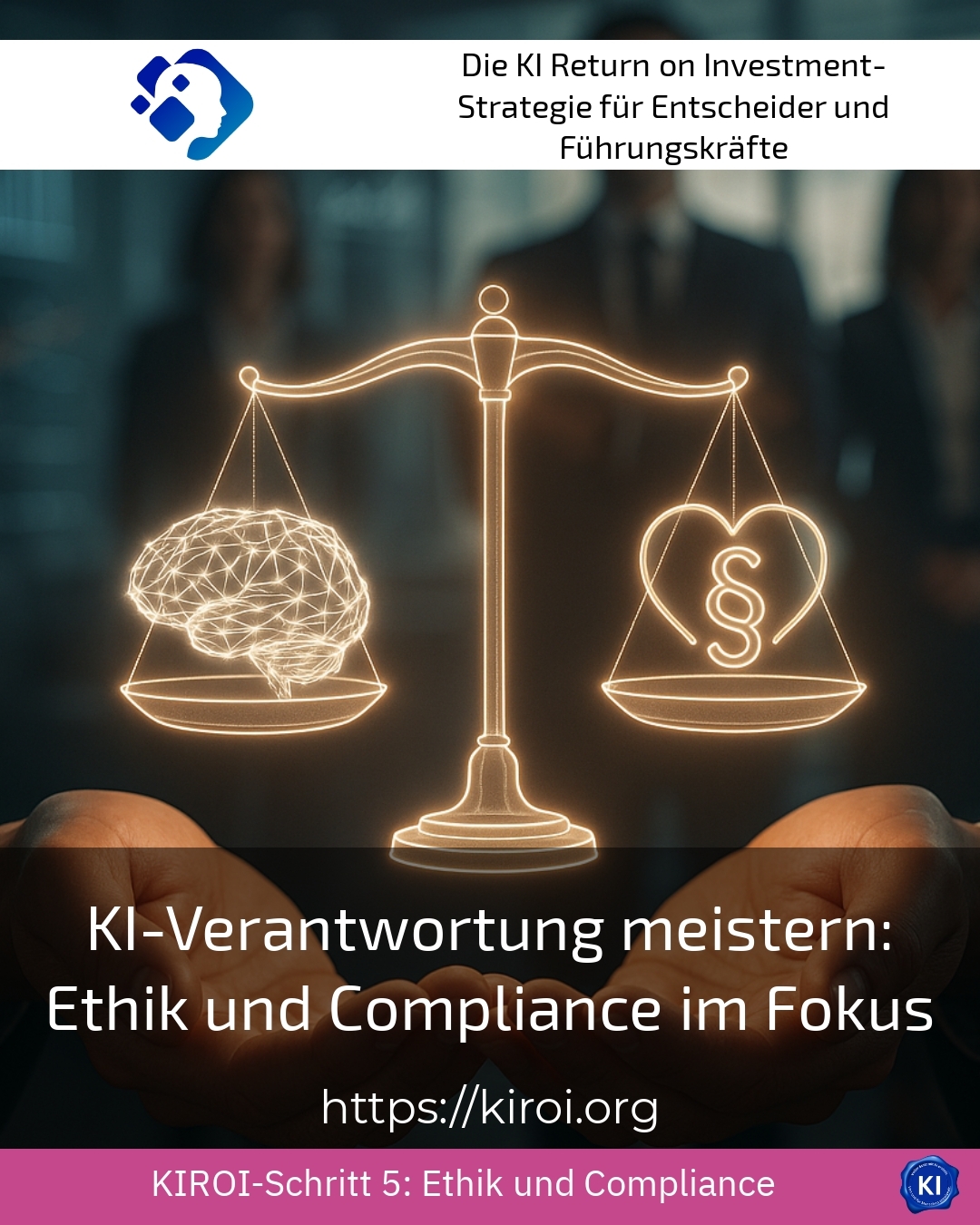
Imagine a smart system making decisions about credit approvals, applications, or medical diagnoses. But who bears responsibility when these decisions turn out to be unfair or flawed? The question of who is responsible for these decisions is crucial. Mastering AI responsibility: focus on ethics and compliance Companies of all sizes employ algorithms today. Algorithms are increasingly permeating our daily lives. They influence which news we see and which products are recommended to us. At the same time, concerns regarding transparency and fairness are growing. This article shows you how organizations can handle automated decision-making systems responsibly. You will learn what ethical principles play a role in this. Furthermore, you will learn concrete approaches for practical implementation.
Understanding the ethical dimension of automated decision-making
Automated systems make millions of decisions every day. These decisions affect people directly and often in a profound way. For example, an insurance company uses algorithms for risk assessment. These systems analyze health data, living circumstances, and behavior. The result affects whether someone receives insurance or not. Similarly, in human resources, applicant management systems sort resumes. In this process, unconscious biases in the training data can lead to discriminatory results [1]. One well-known example shows how a technology company had to shut down its recruitment system. The algorithm systematically discriminated against female applicants. The reason was historical hiring data that favored male candidates.
In healthcare, clinics use intelligent systems for diagnostic support. These analyze X-rays, laboratory results, and patient records. This provides doctors with valuable information for their treatment decisions. But what happens if the system misses a tumor? Who is then liable for the damage? These questions require clear answers. Financial institutions also face similar challenges. Automated trading systems process transactions in milliseconds. A mistake can cause significant financial losses. The responsibility must therefore be clarified from the outset.
Transruptions coaching assists companies with these very questions. The method supports teams in developing ethical guidelines. It provides guidance for sustainable governance structures. Often, clients report uncertainties regarding regulatory requirements. The coaching helps transform these uncertainties into actionable strategies.
Why mastering AI responsibility is essential for companies
Regulatory frameworks are becoming stricter worldwide. The European Union has created a pioneering legal framework with the AI Act [2]. This categorizes applications based on their risk potential. High-risk systems are subject to strict requirements regarding transparency and human oversight. Companies must document how their systems work. They must demonstrate that no unauthorized discrimination is taking place. Violations can result in significant fines.
In retail, large retail chains use price optimization systems. These adapt prices dynamically to demand and competition. However, consumer advocates criticize opaque pricing. Customers may feel disadvantaged if they are shown higher prices. A telecommunications provider came under fire because its system treated long-time customers worse. New customers received better deals than loyal existing customers. The company had to fundamentally revise its approach.
In the educational sector, automated systems are also gaining importance. Universities use them to assess exam results. Schools are deploying adaptive learning systems that individualize teaching content. These technologies offer great opportunities for personalized learning. At the same time, questions arise regarding data protection and fair assessment. Parents and teachers express concerns regarding the comprehensibility of decisions.
Best practice with a AIROI customer
A medium-sized logistics company faced the challenge of ethically reviewing its automated route planning system. The system calculated optimal delivery routes for several hundred vehicles daily, taking into account factors such as traffic volume, delivery windows, and driver profiles. As part of the transruptive coaching, the team identified problematic patterns in the work distribution. Certain drivers systematically received more strenuous routes than others. The reason lay in historical performance data, which unconsciously reinforced biases. Together, we developed criteria for fairer task distribution. The company also implemented a monitoring dashboard for management. This identifies inequalities early and enables manual corrections. Employee satisfaction increased measurably after the switchover. The company reports fewer complaints and lower turnover in the driver workforce. The process took a total of four months and included workshops with all involved parties. The investment has paid off several times through more efficient processes and more motivated employees.
Develop practical compliance strategies for everyday business operations
Compliance begins with a thorough inventory. Companies must first understand which automated systems they are using. For example, a pharmaceutical company documented over fifty different applications. These ranged from research data analysis to marketing automation. Categorizing applications according to risk levels was the next step. High-risk applications in the clinical field received the highest priority during the review.
In the banking sector, algorithms play a central role in creditworthiness assessment. Supervisory authorities demand transparency regarding the decision-making criteria used [3]. Credit institutions must be able to explain why an application has been rejected. This places high demands on technical documentation. Some banks have therefore established so-called Explainability teams. These experts translate algorithmic decisions into understandable explanations for customers.
Energy providers use intelligent networks to optimize the distribution of electricity. These systems predict consumption patterns and automatically control power plants. A failure can lead to power outages for thousands of households. The requirements for reliability and safety are correspondingly high. Companies invest significantly in testing procedures and emergency plans.
Ethics and compliance in focus: establishing governance structures
Successful companies establish dedicated governance structures for their automated systems. An ethics committee can play a central role in this. This committee ideally consists of various disciplines. Technicians, lawyers, ethicists, and subject matter experts bring different perspectives. Together, they develop guidelines for the responsible use of technology.
A car manufacturer has established such a committee for its driver assistance systems. The team examines new features before launching them on the market to assess their ethical implications. For example, it assesses how the system should react in crisis situations. This proactive review prevents later controversies and damage to reputation. In the media sector, publishers use algorithms to personalize news content. Critics warn of so-called filter bubbles that reinforce one-sided worldviews. Some media outlets have therefore introduced transparency reports that explain the criteria used to select content.
Transruptions coaching supports the development of tailored governance frameworks. The approach takes into account industry-specific specifics and corporate culture. Clients particularly appreciate the hands-on guidance during implementation. The method provides inspiration without imposing final solutions.
Best practice with a AIROI customer
An international insurance company wanted to automate its claims management while maintaining ethical standards. The company processes several million claims per year in various countries. The previous system treated similar cases differently, leading to customer complaints. In the coaching process, we first analyzed the existing decision paths in detail. We identified several points where human oversight was lacking. Together, we developed a tiered approval system with clear escalation criteria. Simple standard cases are still processed automatically, significantly speeding up the process. Complex or contentious cases, however, are automatically forwarded to claims handlers. The company also trained its employees on how to handle algorithmic recommendations. The training provided an understanding of the strengths and limitations of the system. Employees learn when they should override the algorithm and how to document it. Customer satisfaction has increased significantly since its introduction because decisions have become more understandable. The project shows how automation and human expertise can work together successfully.
Using transparency as a foundation for trust
Transparency forms the foundation for trust in automated systems. Customers, employees, and regulators expect clear decisions. An e-commerce company therefore introduced explanations for product recommendations. Customers now see why certain items are suggested to them. This openness is perceived positively and strengthens customer loyalty.
In the personnel department, companies are increasingly relying on transparency in algorithmic selection processes. Applicants are informed about the criteria the system evaluates. A technology company even published the basic logic of its hiring algorithm. The company argues that openness attracts more qualified applications. Candidates can tailor their documents more specifically to the relevant criteria.
Public administrations are under special scrutiny when using automated decision-making [4]. Social services use systems to process claims for benefits. Citizens have the right to have their decisions explained. The requirements for accountability are correspondingly high. Some municipalities have therefore introduced algorithm registers. These public directories document all automated systems used.
Mastering AI responsibility through continuous monitoring
Single tests are not enough. Automated systems must be continuously monitored. Their decision quality can change over time. For example, an online retailer noticed that its fraud detection system was blocking increasingly legitimate transactions. The reason was changes in customer behavior following a website relaunch.
In healthcare, diagnostic systems must be regularly calibrated. New medical findings require adjustments to the underlying models. A hospital therefore established quarterly reviews of its clinical decision support systems. Doctors and data scientists jointly assess the quality of recommendations based on current cases.
Financial service providers are subject to strict requirements for their risk models. Supervisory authorities require regular validations and stress tests. One asset manager reports annual costs in the six-digit range for model monitoring. However, these investments are necessary to meet regulatory requirements.
My AIROI Analysis
The challenges surrounding Ethics and compliance in focus These issues will continue to grow in the coming years. Regulatory requirements are becoming stricter continuously. At the same time, societal expectations regarding responsible technology use are growing. Companies that invest early in robust governance structures gain competitive advantages. They avoid costly corrections and reputational damage. The AIROI-method helps organizations systematically address this transformation.
From my experience, successful implementations always start with the people. Technical solutions alone are not enough. Employees need to understand why ethical principles are important. They need to be empowered to critically question algorithmic recommendations. Training and awareness-raising measures therefore play a central role. Companies that involve all stakeholders achieve the best results. Customers, employees, suppliers, and society have different perspectives. This diversity enriches the discourse and leads to better solutions. Transruptions coaching accompanies companies on this path of transformation. The method provides impulses without prescribing ready-made recipes. Each organization must find its own path. However, the fundamental principles remain universally valid: transparency, fairness, accountability, and human oversight.
Further links from the text above:
[1] AlgorithmWatch – Research on Algorithmic Decision-Making Systems
[2] European Commission – Regulatory Framework for Artificial Intelligence
[3] BaFin - Risk Management for Financial Service Providers
[4] Federal Ministry of the Interior – Digital Policy and Public Administration
For more information and if you have any questions, please contact Contact us or read more blog posts on the topic Artificial intelligence here.










 Deutsch
 English (UK)