
Do you really know whether your automated decision-making systems operate fairly and transparently, or are there hidden risks lurking there that could put your company in serious trouble?
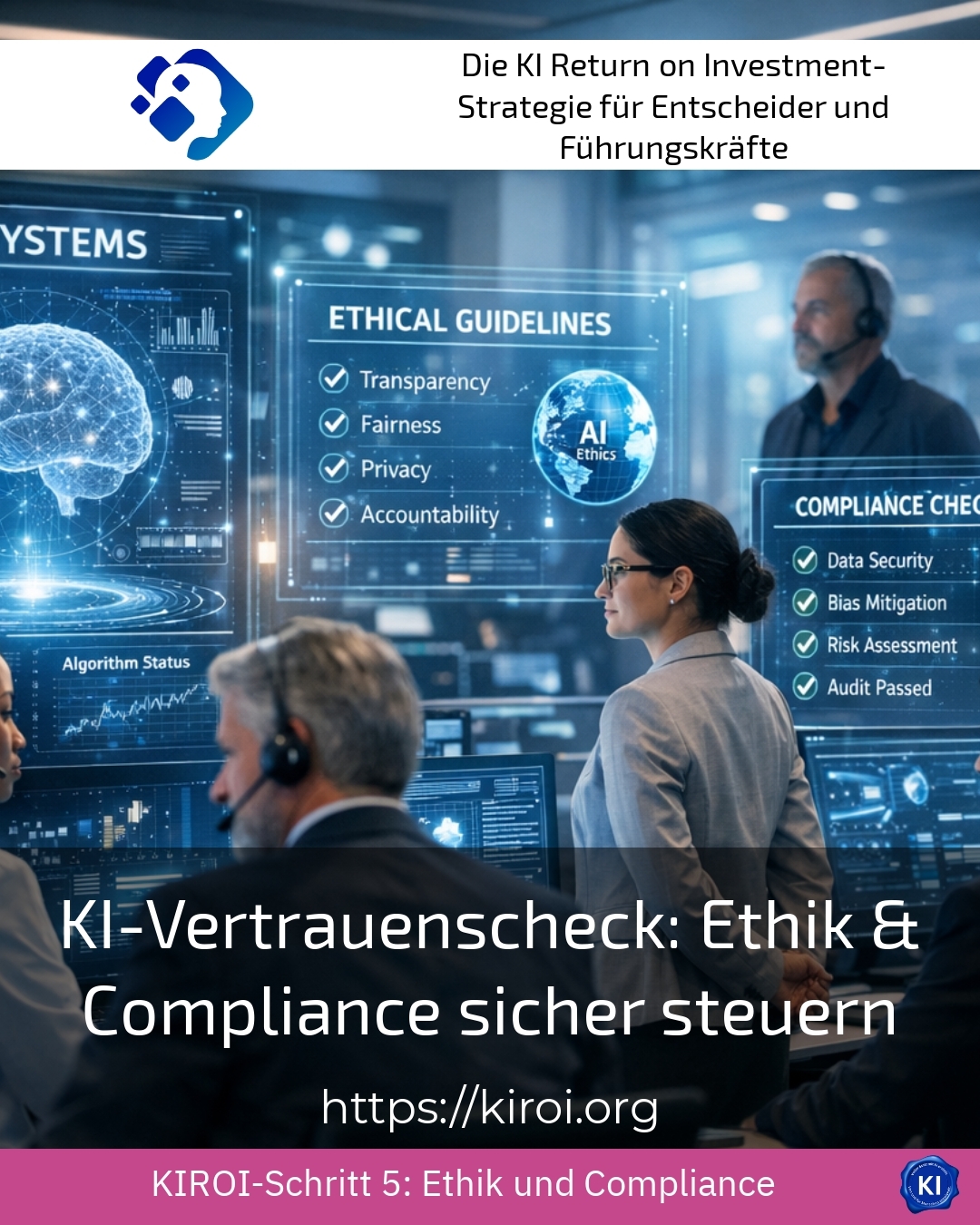
In a world where algorithmic systems increasingly influence critical business decisions, the AI Trust Check: Navigating Ethics & Compliance Safely an existential necessity for organizations of all sizes. Today, companies face the challenging challenge of adopting innovative technologies while consistently adhering to ethical principles and regulatory requirements. This involves going beyond mere technical implementation and delving deeply into values, responsibilities, and the far-reaching consequences of automated processes. The question is no longer whether organizations should address these issues; rather, the question is how quickly they can become capable of acting.
Why ethical control has become indispensable today
Digitalization has unleashed a dynamic in almost all sectors that many decision-makers initially underestimated. Automated systems are now making decisions regarding credit approvals, personnel selection, and medical diagnoses. At the same time, public awareness of the associated risks is growing continuously. Consumers and business partners increasingly expect transparency about how algorithmic decisions are made. Regulatory authorities are accordingly tightening their requirements regarding the traceability of automated processes [1].
In the financial sector, this development is particularly evident and with far-reaching consequences. Banks are using automated scoring models to decide on million-dollar loans. Insurance companies use algorithmic risk analyses to calculate premiums and handle claims. Investment companies rely on automated trading systems that execute transactions in seconds. All of these applications hold significant potential for unintended discrimination and systematic distortions.
Transruptions coaching accompanies companies precisely at this critical intersection between innovation and responsibility. Executives often report being overwhelmed by the complexity of ethical issues. They seek guidance on how to reconcile technological progress and societal responsibility. This coaching provides the impetus for a structured approach to seemingly unsolvable dilemmas.
Best practice with a AIROI customerA medium-sized financial services company faced the challenge of verifying the ethical compliance of its automated credit scoring system. The previous processes had evolved over the years, and no one could say with certainty whether hidden patterns of discrimination lurked within the algorithms. As part of the AIROI mentoring process, a comprehensive inventory of all relevant decision points was initially conducted, with particular attention paid to potential bias sources. It emerged that historical data systematically disadvantaged certain customer groups without the knowledge of those responsible. By gradually implementing fairness metrics and conducting regular audits, the company not only met regulatory requirements but also sustainably strengthened the trust of its customers. The employees were sensitized in workshops on ethical issues and independently developed improvement proposals for critical process steps. Today, the company has a robust governance framework that enables continuous review and adaptation.
AI Trust Check: Ethics & Compliance as a Strategic Competitive Advantage
Many organizations initially view ethical compliance as a tedious compliance exercise and underestimate the strategic opportunities involved. A well-thought-out AI Trust Check: Navigating Ethics & Compliance Safely However, this can become the decisive differentiating factor in competition. Customers and partners are demonstrably more likely to choose companies that handle automated systems responsibly. Investors are increasingly paying attention to ESG criteria and ethical corporate governance when making investment decisions [2].
In the banking sector, several institutions have already recognized that transparent algorithmic decisions can strengthen customer loyalty. A large bank recently introduced a system that explains credit decisions in a comprehensible way. Customer satisfaction subsequently increased measurably, because applicants were able to understand the reasons for approval or rejection. At the same time, the number of complaints to the supervisory authority significantly decreased.
Insurance companies are experimenting with explainable models for claims settlement. One insurer implemented a system that transparently discloses its calculation basis. Insured parties can thus understand why certain claims are settled at a certain amount. This transparency reduces legal disputes and improves customer relationships in a sustainable way.
Asset managers use ethical compliance as a selling point for sustainable investment products. They point out that their selection algorithms systematically exclude certain industries and practices. Investors receive detailed reports on the ethical criteria of their investments. This transparency creates trust and justifies higher fee structures.
The role of leaders in ethical management
Ethical compliance does not begin in the IT department, but in the top management of every company. Executives must take responsibility and set clear guidelines for handling automated decisions. They set the tone for the entire organization and thus significantly influence the corporate culture. Without genuine commitment from the top management, all compliance efforts remain superficial and ineffective [3].
In practice, however, a discrepancy often exists between lip service and actual action. Boards formulate ambitious ethics policies but do not provide sufficient resources to implement them. Compliance departments are faced with unrealistic expectations and are expected to achieve maximum results with minimal budgets. This situation leads to frustration and resignation among the responsible parties.
Transruptional coaching supports leaders in developing authentic ownership. It helps identify blind spots and promote honest self-reflection. Leaders learn to view ethical questions as integral components of their strategic decisions. This development requires time and continuous support.
Best practice with a AIROI customerThe board of a wealth management company recognized that ethical governance of algorithmic investment decisions needed to become a strategic priority. Initially, the leadership team conducted intensive workshops to develop a shared understanding of ethical core principles. Controversial topics such as algorithmic transparency, fairness definitions, and accountability structures were openly discussed. The transruptive coaching accompanied this process and provided impetus for constructive conflict resolution in the face of divergent opinions. Gradually, the team developed a binding ethics code for all automated investment decisions. This code was not only documented but translated into concrete operational processes and provided with measurable metrics. Regular reviews ensure that the formulated principles are actually lived by. Employees report a noticeably changed corporate culture in which ethical concerns are taken seriously and addressed constructively. This transformation required significant investments in time and resources, but has paid off through strengthened customer trust and improved employee engagement.
Practical implementation of an AI trust check: Ethics & Compliance Frameworks
The theoretical discussion of ethical principles must be translated into practical measures. An effective framework consists of several coordinated components. It includes clear governance structures with defined responsibilities and escalation paths. Equally important are technical tools for monitoring and analyzing algorithmic decisions.
In banking, certain practices have proven particularly effective. Regular bias audits check automated credit decisions for systematic biases. Explainability systems document the reasons for each individual decision in a comprehensible way. Feedback mechanisms allow affected customers to challenge algorithmic decisions [4].
Insurance companies are increasingly implementing red-team exercises where internal experts try to uncover vulnerabilities in automated systems. This controlled self-criticism helps identify potential problems early on. Additionally, many companies are establishing ethics boards with external experts. These committees provide independent perspectives and enhance credibility externally.
Investment companies rely on continuous training programs for all employees. These programs not only impart theoretical knowledge but also train practical decision-making skills. Case studies from the company itself make abstract ethical principles tangible. Regular refresher courses ensure that the knowledge remains up-to-date.
Challenges and typical stumbling blocks in implementation
The implementation of ethical compliance frameworks often faces similar obstacles. Unclear responsibilities lead to a lack of real accountability. The lack of resources forces decision-makers to compromise, which undermines the effectiveness of the measures. Resistance from internal departments hinders the consistent implementation of new standards and processes.
Another common problem lies in the complexity of existing systems landscapes. Many financial institutions operate sprawling IT infrastructures with dozens of legacy systems. Implementing uniform transparency and fairness standards across all these systems is extremely complex. Often there isn’t even the knowledge of which automated decisions are made in which systems.
Insurance companies also struggle with the balance between risk management and fairness. Certain statistical correlations can be mathematically relevant in actuarial terms, but they can also be ethically problematic. Balancing economic interests with societal responsibility requires continuous reflection. There are rarely simple answers in these situations.
Asset managers face the challenge of applying ethical standards in a global context. What is considered ethical in one cultural environment may be evaluated differently elsewhere. Defining universal minimum standards while simultaneously taking into account local specifics is demanding. This complexity requires continuous dialogue and a willingness to adapt.
Best practice with a AIROI customerOne regional bank had significant difficulties implementing an ethical compliance framework for its automated processes. The IT department argued that the required transparency requirements were technically not feasible. The functional departments feared efficiency losses due to additional review loops and delayed the introduction of new processes. The AIROI accompanying project began with an honest assessment of all obstacles and resistance. Instead of ignoring or combating them, they were recognized as legitimate concerns and addressed constructively. Together with all involved parties, pragmatic solutions were developed that took both ethical requirements and operational realities into account. Small pilot projects showed that ethical compliance and efficiency do not have to be contradictory. The gradual expansion of successful practices to other areas created acceptance and momentum. After one and a half years of continuous work, the bank now has a functioning framework that is supported by all stakeholders and serves as a model for other institutions.
AI Trust Check: Ethics & Compliance in a Regulatory Context
The regulatory landscape is evolving rapidly and presents companies with growing challenges. European regulatory authorities have formulated comprehensive requirements for algorithmic transparency and fairness. Financial supervisory authorities are continuously tightening their inspections of automated decision-making systems. Failure to comply with these regulations can lead to significant fines and reputational damage [5].
Banks must increasingly demonstrate that their credit decisions are understandable and free from discrimination. Supervisory authorities require detailed documentation of the algorithms used and the decision logic behind them. Regular external audits are mandatory for many institutions. These requirements require significant investment in compliance infrastructure.
Insurance companies are under special scrutiny regarding their pricing and claims handling policies. Algorithms that systematically disadvantage certain customer groups can have regulatory consequences. The burden of proof for the fairness of automated systems lies with the company itself. Proactive compliance is therefore more economically advantageous than reactive claims mitigation.
Asset managers must be able to justify their algorithmic investment strategies to regulators and investors alike. Transparency requirements encompass both the disclosure of the methods used as well as the potential risks. Sustainability regulations additionally require the consideration of ESG criteria in investment decisions. This complexity makes professional compliance management indispensable.
Future prospects and development trends
The importance of ethical compliance will continue to grow in the coming years. Technological developments are enabling increasingly complex automated decision-making systems. At the same time, societal awareness of the associated risks and opportunities is growing. Companies that invest in robust governance structures today will be better positioned in the long term.
In the banking sector, there are trends towards even greater individualization of financial products. Algorithmic systems are increasingly creating personalized offerings based on extensive data analysis. This development significantly increases the need for robust ethical guidelines. The balance between personalization and privacy is becoming a central challenge.
Insurance companies are experimenting with behavior-based pricing that is continuously adjusted. Telematics systems in vehicles capture driving behavior and influence premiums in real time. These developments raise fundamental questions about fairness and privacy. The ethical governance of these innovations requires forward-looking governance.
Asset managers are increasingly integrating alternative data sources into their investment decisions. Satellite images, social media analyses, and other unconventional data are being incorporated into investment strategies. This expansion of the information spectrum creates new ethical challenges. The boundaries between legitimate analysis and questionable surveillance are increasingly blurring.
My AIROI Analysis
The debate about ethical compliance for automated decision-making systems reveals the profound changes the financial sector is facing. Technological innovation alone is not enough to ensure sustainable success. Companies need a holistic understanding of the ethical dimensions of their algorithmic systems and the willingness to actively take responsibility. AI Trust Check: Navigating Ethics & Compliance Safely-Framework offers a structured approach for this complex task.
From my experience in guiding numerous transformation projects, it has become clear that the biggest obstacles are rarely of a technical nature. Rather, initiatives often fail due to a lack of commitment from the senior leadership, unclear responsibilities, and a lack of corporate culture that encourages open discussion of ethical issues. Therefore, successful implementation requires not only technical expertise but above all change management skills and authentic leadership.
Transruptions coaching can effectively support and accompany organizations in these challenges. It provides impetus for the development of individual solutions that fit the specific situation of each company. Clients often report that the external perspective and the structured approach have made the decisive difference. Investing in ethical compliance is not a short-term measure but a continuous process that requires long-term commitment.
Ultimately, it comes down to the fundamental question of what role companies want to play in an increasingly digitized society. Those who position themselves as responsible actors today create the foundation for sustainable trust among customers, partners, and regulatory authorities. This strategic decision-making will significantly influence competitiveness in the years to come and determine the difference between successful and failing organizations.
Further links from the text above:
[1] EU AI Act – First regulation on artificial intelligence
[2] Forbes – Building Trust in AI Systems
[3] Harvard Business Review – A Practical Guide to Building Ethical AI
[4] BaFin – Artificial Intelligence in Financial Supervision
[5] EIOPA – Artificial Intelligence in Insurance
For more information and if you have any questions, please contact Contact us or read more blog posts on the topic Artificial intelligence here.









 Deutsch
 English (UK)