
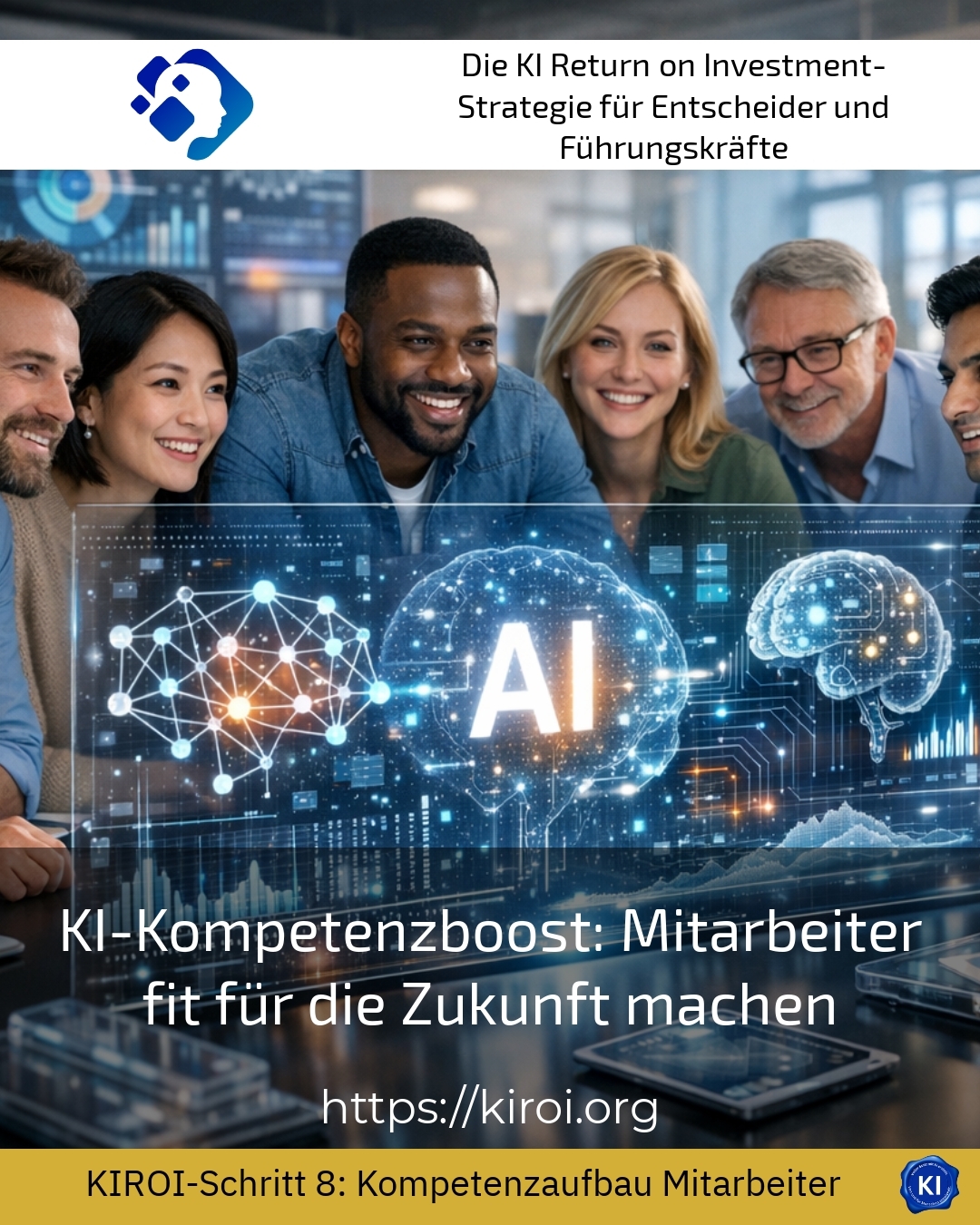
Do you sometimes wonder why some companies seem to glide effortlessly into the digital future while others struggle to keep up and lose their footing? The answer often lies not in the technology itself, but in the people who are supposed to use it. A targeted AI Skills Boost: Getting Employees Ready for the Future Today will decide whether organizations will still be competitive tomorrow. Because intelligent systems only reach their full potential when employees understand how to use these tools in a meaningful way. The transformation therefore does not begin in the server room, but in the minds of the workforce.
Why traditional further education is no longer enough
Traditional training formats are reaching their limits. They were designed for a working world that changed more slowly than today. Seminars that take place once a year can no longer keep up with the speed of technological developments. Employees need continuous learning opportunities that can be flexibly integrated into their work routine. That is why many organizations are adopting new approaches. Microlearning allows for short learning units of a few minutes. Peer learning promotes the exchange of knowledge between colleagues. Coaching programs accompany individuals and teams over extended periods of time.
In the insurance industry, this is particularly evident. Claims handlers must learn to work with automated claims assessment systems. Customer advisors use intelligent assistants to suggest suitable policies. Risk managers use analytical tools that detect complex patterns in data sets. Each of these applications requires specific skills that go beyond pure technical knowledge. In logistics, algorithms optimize routes and inventory levels. Employees must understand how to interpret these suggestions and, if necessary, correct them. The pharmaceutical industry uses machine learning for drug development. Researchers need a basic understanding to be able to evaluate the results.
The AI competence boost begins with understanding
Many employees approach new technologies with a mixture of curiosity and unease. They wonder if their skills will still be in demand. They worry about their professional future. Taking these concerns seriously forms the foundation for successful change processes. Therefore, a strategy that reduces fears while simultaneously inspiring enthusiasm is recommended. Transparent communication about goals and schedules builds trust. Practical use cases demonstrate the concrete benefits in everyday work. Success stories from other departments or companies motivate participation.
Best practice with a AIROI customer
A medium-sized manufacturing company faced the challenge of preparing its workforce for the implementation of intelligent quality control systems. The management decided on a guided transformation that involved all levels of the hierarchy. First, we jointly identified the areas with the greatest potential for change. Subsequently, we developed tailored learning paths for different groups of employees. Production workers received practical training directly at the machines. Team leaders learned how to lead their departments through the change. Management received strategic guidance for the long-term direction of the company. After six months, the participants reported increased confidence in using the new systems. The acceptance of the technology increased measurably. Errors in quality control were significantly reduced. Building an internal learning culture that continued even after the formal project ended was particularly valuable. Experienced colleagues now actively supported less experienced team members. This organic transfer of knowledge proved to be more sustainable than occasional training sessions.
Practical steps for a sustainable AI competence boost
The path to becoming a learning organization requires a systematic approach. First, an honest assessment of the existing competencies is recommended. Where are the employees currently positioned? What skills are needed in the future? What gaps need to be closed? This analysis forms the foundation for all further measures. It helps to target resources and avoid overwork.
In the financial sector, analysts are already using intelligent systems for portfolio optimization today. They need to understand what assumptions underlie the recommendations. Customer advisors in banks are working with chatbots. They handle more complex requests that require personal attention. In the energy sector, algorithms optimize network load. Technicians need to be able to understand the recommendations to quickly respond to disruptions. Retail relies on personalized product recommendations. Sales staff should know how these recommendations are generated.
Leaders as enablers of change
The role of leaders cannot be overestimated. Their behavior shapes the culture of their teams. When they themselves show curiosity and a willingness to learn, their employees follow suit. Conversely, skepticism at the leadership level acts as a brake on the entire organization. Therefore, development programs should always include leaders. They not only need technical knowledge but also competencies in change management.
In the media industry, this connection is particularly evident. Editorial teams must decide how to use automatically generated content. They need an understanding of the possibilities and limitations of such systems. In advertising agencies, creative algorithms support concept development. Art directors should know how to use and develop these impulses. Publishing houses rely on automated translations. Proofreaders must be able to assess the results and improve their quality.
Best practice with a AIROI customer
A larger healthcare facility wanted to prepare its medical and nursing services for diagnostic support systems. The challenge was to recruit highly qualified professionals for a topic that they initially perceived as a threat to their expertise. Together we developed a program that built on the existing strengths of the participants. Female doctors brought their medical expertise. Nursing staff contributed their experience in patient contact. Technical staff explained the systems in understandable language. This interdisciplinary approach proved to be key to success. The participants recognized that their human abilities were not replaced by technology but complemented it. Upon completion of the follow-up program, they used the new tools confidently and critically reflective. Patient care improved because more time was available for personal attention. Initial skepticism gave way to a pragmatic attitude that took advantage of opportunities while at the same time acknowledging limitations.
How transruption coaching accompanies change
Change processes rarely follow a linear path. There are setbacks, resistance, and unexpected obstacles. In such situations, external support can provide valuable assistance. transruptions-Coaching positions itself as a support for projects related to digital transformation and competence development [1]. It is not about delivering ready-made solutions. Rather, professional coaching helps individuals find and implement their own answers.
Clients often report similar challenges. They feel overwhelmed by the speed of change. They don’t know where to start. They experience conflicts between departments with different ideas. They are looking for ways to involve their teams. These topics form typical starting points for coaching processes. The support provides impulses and opens up new perspectives. However, it does not replace the individual responsibility of the participants.
The AI skills boost as a continuous process
Learning does not end with completing a course. In a changing work environment, continuous development becomes a basic prerequisite. Organizations that understand this create structures for continuous learning. They establish internal knowledge networks and promote exchange. They allocate time and resources for further training. They reward curiosity and an attitude of experimentation.
In the automotive industry, engineers today work with simulation systems that automatically optimize their designs. They must learn to critically evaluate these suggestions. In the textile industry, algorithms support the prediction of fashion trends. Designers need a sense of when to trust the data and when to follow their intuition. In the restaurant industry, intelligent systems help with menu planning and inventory management. Kitchen managers should understand how to use these tools in a meaningful way.
Agriculture is increasingly relying on precision farming with sensor-based decision support tools. Farmers need to be able to interpret the recommendations. In the construction industry, algorithms optimize material usage and construction processes. Project managers need a basic understanding of the underlying logic. The tourism industry personalizes travel experiences using intelligent systems. Travel consultants should know how to connect these suggestions with their personal service.
My AIROI Analysis
Empowering employees for the digital future is not an optional extra. It forms the core of any successful transformation strategy. Organizations that invest in the development of their workforce gain sustainable competitive advantages. They can deploy new technologies faster and more effectively. They reduce resistance and friction losses. They create a culture of openness and shared learning.
The AIROI-approach emphasizes the importance of a holistic approach [2]. Technical training alone is not enough. Measures are needed at various levels: individually, in teams, and throughout the entire organization. Leaders play a key role as role models and facilitators. External support can provide valuable impulses, but the actual change work takes place within the company itself.
The experiences from numerous projects repeatedly show the same pattern. Success occurs where people are at the center. Where their concerns are taken seriously. Where they are actively involved in the design processes. Where mistakes are viewed as learning opportunities. These findings may sound banal, but in practice they are often neglected. The focus is too often on technology and too rarely on the people who are supposed to use it. This is exactly where effective competence development takes place. It combines technical knowledge with human development and thus creates the prerequisites for sustainable change.
Further links from the text above:
[1] transruptions-Coaching – Support for Digital Transformation
[2] AIROI-Masterplan – Holistic approach to organizational development
For more information and if you have any questions, please contact Contact us or read more blog posts on the topic Artificial intelligence here.








 Deutsch
 English (UK)