
Why do so many companies fail to integrate intelligent systems, even though the technology is already available?
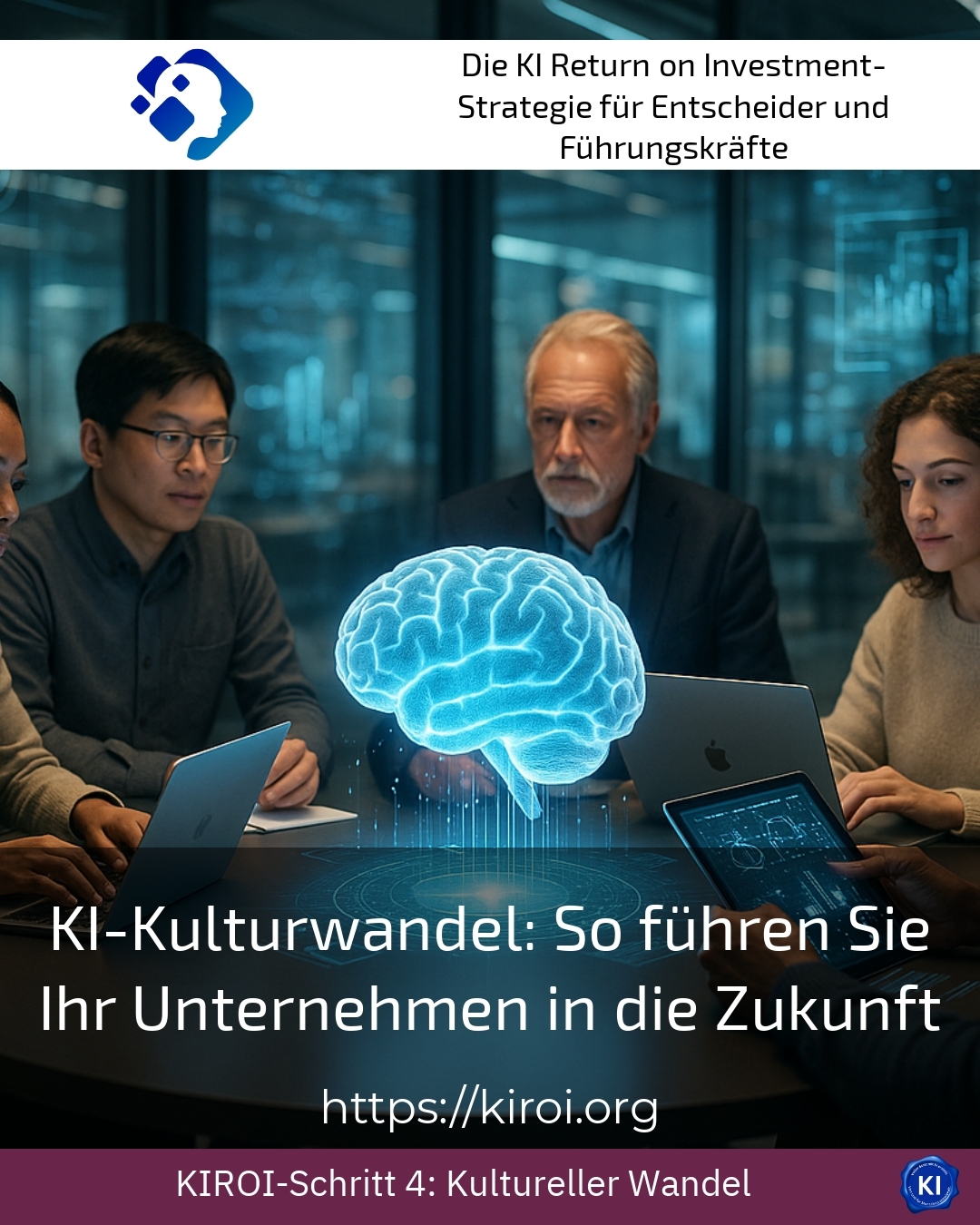
The answer rarely lies in the technology itself. It lies in the minds of the people. AI cultural change It presents organizations with challenges that go far beyond software implementation. Leaders often underestimate the emotional dimension of this transformation. Employees fear for their jobs and their status. Departments defend their existing processes with all their might. It is precisely the cultural readiness that determines success or failure. Companies that consciously shape this change report astonishing results. They not only experience increases in efficiency but also a new form of collaboration. Transruptive coaching accompanies organizations precisely during this sensitive transition phase [1].
Recognising the invisible barriers of the AI cultural shift
Every organization contains cultural patterns. These patterns have evolved over the years. They shape decision-making processes, communication styles, and power structures. When intelligent systems are introduced, two worlds collide. Algorithmic logic clashes with human intuition. Data-based recommendations collide with gut instinct and experience. This tension generates resistance that is often not rational.
For example, a medium-sized mechanical engineering company implemented a predictive maintenance system. The technology worked flawlessly. However, experienced technicians consistently ignored the recommendations. They preferred their decades-long sense of machine sounds. It was only when the company’s management sought dialogue that the picture changed. The technicians became the system’s co-developers. Suddenly, their expertise flowed into the algorithms. The result exceeded all expectations. In a logistics company, a similar pattern was observed in route optimization. Drivers initially perceived the automated suggestions as bullying. The turning point came through regular feedback rounds and real co-creation. A third example comes from the insurance industry, where claims handlers initially boycotted automated claims processing until their expertise was visibly valued.
Best practice with a AIROI customer An internationally operating automotive supplier faced the challenge of expanding its quality control through image recognition systems. The experienced inspectors, some of them for over twenty years at the company, reacted with open rejection. They felt their expertise was in question. As part of AIROI the mentoring process, we developed together with the management a program of integration that made the inspectors into mentors of artificial intelligence. They trained the system with their specialized knowledge of surface defects. They defined the tolerance limits and exceptional cases. This integration changed the entire dynamics within the company. The inspectors became sought-after experts for human-machine collaboration. Other departments sought advice from them. The error rate dropped by over thirty percent. At the same time, job satisfaction increased measurably. Today, the former skeptics proudly report on their role as bridge builders between two worlds.
Rethinking leadership in the age of intelligent systems
The AI cultural change It fundamentally changes the role of leaders. Until now, information superiority and decision-making authority were considered key sources of power. However, intelligent systems democratize access to knowledge. They provide real-time analysis to all levels of the hierarchy. Leadership therefore needs to redefine itself. It shifts from control to enablement. Supervisors become coaches and cultural creators.
One financial services provider experienced this shift first-hand. Team leaders, who had previously guarded information as a source of power, suddenly lost importance. Young employees had the same insights as their superiors through dashboards. The solution lay in a complete realignment of leadership culture. Leaders learned to demonstrate their value through value creation and emotional intelligence. In a pharmaceutical company, we trained middle management in the art of facilitating change. The leaders developed competencies in managing fears and resistance. An energy provider went even further and established a reverse mentoring program. Here, leadership from digitally-savvy young talent learned to use new tools.
Psychological safety as the foundation of the AI cultural transformation
Without psychological safety, any transformation fails. People need to have the courage to admit mistakes. They need spaces for uncomfortable questions and honest feedback. Especially when introducing intelligent systems, many uncertainties arise. Employees often don’t know how to deal with machine recommendations. They feel shy when they don’t understand the logic behind decisions.
A retail chain therefore established so-called learning circles [2]. Here, employees openly exchanged their experiences with the new inventory management system. No one was criticized for asking questions. On the contrary: Queries were considered a sign of commitment. A telecommunications company introduced weekly error culture meetings. Here, failures in handling automated processes were specifically discussed. The third example comes from the healthcare sector, where a network of clinics set up anonymous feedback channels for concerns regarding diagnostic assistance systems.
Communication as the key to successful transformation
The way companies communicate about intelligent systems significantly shapes their acceptance. Often, technical terms and abstract promises of efficiency dominate. This language fails to connect with most employees on an emotional level. It creates distance instead of enthusiasm. Human-centric communication, on the other hand, tells stories of tangible relief.
A construction company initially communicated the introduction of planning software purely technically. The response was modest. Then the communications department changed its strategy. It portrayed individual employees who had gained time through the system for more creative tasks. Suddenly, other departments wanted to participate as well. A media company used internal podcasts to share authentic testimonials. Editors openly discussed their initial fears and later aha moments. An insurance company produced short videos in which long-time employees documented their personal development journey.
Best practice with a AIROI customer A medium-sized food manufacturer wanted to optimize its production planning through intelligent forecasting. The first communication campaign failed miserably. The workforce felt overwhelmed and not included. In the second attempt, we developed a storytelling strategy together. We identified employees who could act as internal ambassadors. These people were respected within the workforce and enjoyed trust. They spoke in company meetings about their own doubts and learning processes. They discussed moments of frustration and surprise. This authenticity opened doors that were previously closed. The management learned to admit uncertainty instead of acting as all-knowing. The transformation became a shared adventure rather than an imposed project. Today, the company is considered a pioneer in its industry for successful human-technology integration.
Using rituals and symbols for cultural change
Culture manifests itself in rituals and symbols. These subtle elements signal what really matters. Companies that value the AI cultural change By taking them seriously, they create new rituals. They establish symbols that make the desired future tangible. They celebrate milestones and publicly honor pioneering achievements.
A software company introduced the monthly Innovation Award. Employees were recognized for developing creative applications for intelligent tools. A commercial company redesigned its offices and created so-called collaboration zones. These spaces symbolized the new era of collaboration between humans and machines. A machine builder installed large screens in the production halls. These showed in real time how the intelligent systems worked and where human expertise could be applied.
Competence development as a continuous process
Cultural change requires new competencies at all levels. These skills cannot be taught in one-time training sessions. They grow through continuous learning and regular reflection. Companies must therefore create learning architectures that support lifelong learning [3].
An accounting firm established so-called learning journeys. Employees went through modular learning units over several months. Between the modules, they applied what they had learned in their projects. One chemical company collaborated with universities and offered certificate programs that could be completed part-time. A logistics company relied on peer learning groups in which employees coached each other. This diversity of learning formats reached different learning types and generations.
My AIROI Analysis
After many accompaniment projects, clear patterns of success emerge. The AI cultural change It succeeds when companies understand it as a human project. Technology alone does not change culture. People change culture. Leaders play a central role in this. They must be role models and at the same time be able to show vulnerability. They need the courage to relinquish control and to allow for experimentation.
The most successful transformations begin with an honest inventory of the current situation. Where is the organization culturally really positioned today? What unspoken rules shape everyday life? What fears lurk beneath the surface? This diagnosis requires openness and external guidance. Transruptions coaching offers exactly this protected space for honest reflection.
The AIROI-Masterclasses not only impart technical knowledge. They primarily develop the cultural sensitivity of leaders. Participants learn to use resistance as a valuable source of information. They practice dealing constructively with ambiguity and uncertainty. They discover how to build psychological safety in their teams.
The future belongs to organizations that combine technology and humanity. This connection does not happen by chance. It must be consciously designed and continuously nurtured. Change is not a project with a defined end. It is a continuous journey. Companies that embark on this journey with curiosity and humility are rewarded. They not only gain efficiency, but also engaged employees. They create cultures in which people and intelligent systems mutually enrich each other.
Further links from the text above:
[1] Transruptions coaching – support in transformation projects
[2] AIROI-Masterclass – Developing competencies for cultural change
[3] AIROI-Blog – Ideas for intelligent organization
For more information and if you have any questions, please contact Contact us or read more blog posts on the topic Artificial intelligence here.









 Deutsch
  English (UK)