
Why do so many companies fail to achieve the actual transformation despite investing millions in technology?
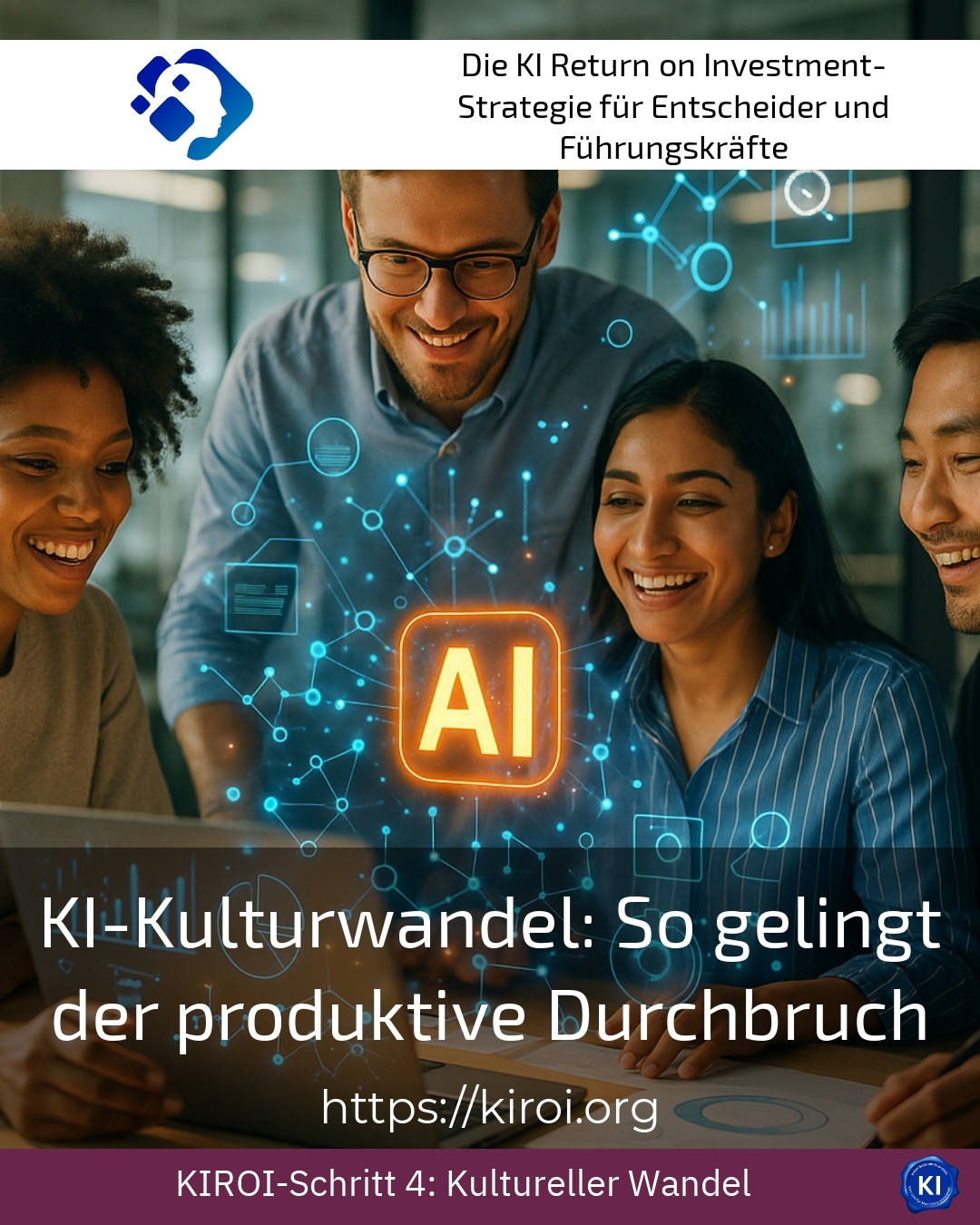
This question concerns executives and decision-makers in almost all industries. The AI cultural change It represents one of the greatest challenges of our time. Technology alone does not create a productive breakthrough. Rather, the way people use new tools determines success or failure. Many organizations significantly underestimate this aspect. They invest in systems and algorithms, while forgetting the most important factor: the people themselves. Clients often report frustration and resistance in their teams. The good news is that with the right guidance, companies can overcome these obstacles and initiate sustainable changes.
The AI culture change begins in people's minds
Any profound change in an organization starts with a change in mindset at the individual level. Employees need to understand why new working methods are necessary and what benefits they will gain from them. Without this insight, rejection or passive resistance quickly arise. In the banking sector, for example, institutions use intelligent systems for credit checks. At first, the employees often feel left behind or threatened in their competence. Similar patterns are evident in the insurance industry when it comes to automated claims processing. In logistics, too, dispatchers struggle with new planning systems. These examples highlight a central point: Technology supports people, but it does not replace them.
Transruptions coaching accompanies companies precisely at this intersection between human and machine. It provides impulses for constructive dialogue within the teams. Leaders learn to take fears seriously while at the same time providing perspectives. Because the AI cultural change It can only be successful if all parties recognize the added value and can actively participate.
Best practice with a AIROI customer
A medium-sized manufacturing company was about to implement an intelligent quality management system. The production workers were skeptical and feared increased monitoring of their work. The transruptive coaching initially accompanied the management level in developing a transparent communication strategy. In several workshops, all the affected departments had the opportunity to ask questions and express concerns. The coaches helped to develop a common vision that highlighted the benefits for each individual workplace. Instead of control, the focus was on relieving the burden of repetitive inspection tasks. After six months of intensive coaching, the employees reported significantly higher job satisfaction. The error rate in production fell by more than thirty percent. Particularly valuable was the realization that change takes time and requires continuous support. Since then, the company has successfully implemented further projects using this structured approach.
Using resistance as an opportunity for real transformation
Many leaders view resistance as an obstacle on the path to achieving their goals. However, this view is too narrow and often prevents sustainable change. Instead, resistance signals that people are involved and are thinking about the matter. In the pharmaceutical industry, this is clearly evident in the introduction of research assistants using machine learning. Scientists fear for their creative autonomy and the value of their expertise. In retail, salespeople are reluctant to adopt personalized recommendation systems. The tourism industry is experiencing similar dynamics with chat-based customer advisory services.
Transruptive coaching begins right here and provides valuable insights for dealing with resistance. It helps teams articulate and constructively address concerns. Leaders develop a better sense of their employees’ needs, leading to solutions that can be supported by all.
The transformation of AI culture needs new leadership skills
Traditional leadership models are reaching their limits in times of profound transformation. Instructions from above no longer work when complex changes are occurring. Instead, a leadership culture based on dialogue and shared development is needed. In healthcare, this is evident in the integration of diagnostic systems into clinical practice. Doctors and nurses need leaders who can withstand uncertainty while providing guidance at the same time. The automotive industry faces similar challenges in transitioning its design processes. In the media industry, entire editorial departments are fundamentally transforming through new production methods.
The guidance provided by experienced coaches supports leaders in this challenging task. They learn to integrate different perspectives and grow together with their teams.
Best practice with a AIROI customer
A financial advisory services company wanted to expand its analytical capabilities through new technological tools. The experienced consultants saw their long-standing expertise at risk and reacted with rejection to the project. The transruptive coaching worked intensively with the management team to develop a new communication culture. In individual discussions and team workshops, the employees’ concerns were taken seriously and documented. Together, all parties developed a model that meaningfully combined human expertise and technological support. The consultants realized that they would gain more time for personal customer service through the new tools. The management team learned to understand change processes not as one-time projects but as continuous development. After one year, most of the consultants reported a noticeable improvement in their work quality. The company was able to significantly increase customer satisfaction and gain new market shares. The investment in cultural support had paid off several times over.
Structured approach for productive breakthrough
Successful transformations do not happen by chance; they are the result of a well-thought-out structure. The AIROI“model” offers a proven framework for sustainable change. It takes into account both technological and human factors equally. In the energy sector, utilities use this approach when implementing smart grid systems [1]. The food industry benefits from it when optimizing production processes through predictive analytics. In the education sector, the structured approach supports the introduction of adaptive learning systems in schools and universities.
The AI cultural change It proceeds in several phases that build upon and reinforce each other. First, there is an analysis of the existing corporate culture and the willingness to change. This is followed by the development of a shared vision that motivates all involved parties. Implementation takes place in manageable steps with regular reflection loops. Finally, the new working method is established within the organization and continuously developed.
Communication as a key factor for the transformation of AI culture
Without successful communication, even the best transformation projects fail due to misunderstandings and rumors. Transparency creates trust and enables genuine participation by all those involved. In the telecommunications industry, this is particularly evident in the automation of customer service processes. Employees need clear information about goals, timelines, and expected impacts on their work. The construction industry experiences similar dynamics when introducing digital planning tools on construction sites. In transportation, companies face the challenge of including drivers and dispatchers equally.
Transruptive coaching provides the impetus for effective change communication at all levels. It helps to formulate the right messages for different target groups. Leaders develop the skills to conduct difficult conversations constructively.
Best practice with a AIROI customer
An international trading company faced the challenge of fundamentally modernizing its warehouse management and making it more efficient. The employees in the logistics centers of various countries had different expectations and fears regarding the changes. The transruptions coaching team developed, together with the project team, a multilingual communication strategy that took cultural differences into account. Regular information sessions in all affected locations created space for exchange and questions from the workforce. The coaches accompanied local management in acting as multipliers for change and supporting their teams. Particularly important was the establishment of feedback channels through which employees could share their experiences. The collected feedback flowed directly into the further development of the project and significantly improved acceptance. After the successful implementation in all locations, the teams reported faster processes and fewer errors. The company now plans to use this approach for further transformation projects in other business areas as well.
Ensure sustainability through continuous support
Many transformation projects initially show promising results but then lose momentum. The reason often lies in a lack of follow-up support and an early withdrawal of support. Sustainable change takes time and continuous attention from all involved parties. In the chemical industry, this is evident in the integration of process optimization systems into existing production processes. The mechanical engineering industry faces similar challenges when introducing predictive maintenance concepts into its plants. The textile industry is transforming its supply chains through intelligent planning systems with a long-term perspective.
Transruptions coaching also accompanies companies beyond the initial project period in their development. It helps them recognize and constructively address setbacks in old patterns. This way, leaders and teams develop a lasting capacity for change that benefits them in future transformations.
My AIROI Analysis
The observation of numerous transformation projects in various industries reveals a clear pattern that repeatedly confirms itself. Technological investments alone do not lead to the desired productive breakthrough; they often fall short of expectations. The decisive success factor lies in the cultural dimension of change and the way people are treated. Organizations that actively involve their employees and take their concerns seriously achieve significantly better results.
The AIROI analysis highlights that successful transformations rest on several pillars and must be approached systematically. First, a clear vision is needed that all stakeholders can understand and support, because they recognize its benefits. Second, transparent communication is essential, addressing fears and providing perspectives without making unrealistic promises. Third, leaders need new competencies to guide their teams through uncertainties and act as role models. Fourth, change must be structured, with manageable stages and regular reflection loops for all involved. Fifth, sustainable support is necessary to secure long-term success and prevent relapses.
Transruptive coaching has proven to be a valuable partner for companies that want to embark on this demanding journey. There are no guarantees of success, but the likelihood increases significantly with professional guidance. The practical examples presented show that productive breakthroughs are possible when organizations are willing to invest in their culture. The human being is always at the center of all considerations and actions. Only in this way do changes emerge that are lasting and create real added value for all involved.
Further links from the text above:
[1] Smart Grids – Intelligent electricity networks of the future
For more information and if you have any questions, please contact Contact us or read more blog posts on the topic Artificial intelligence here.








 Deutsch
 English (UK)