
Why do so many brilliant ideas remain undiscovered in companies, even though the potential has long since been there?
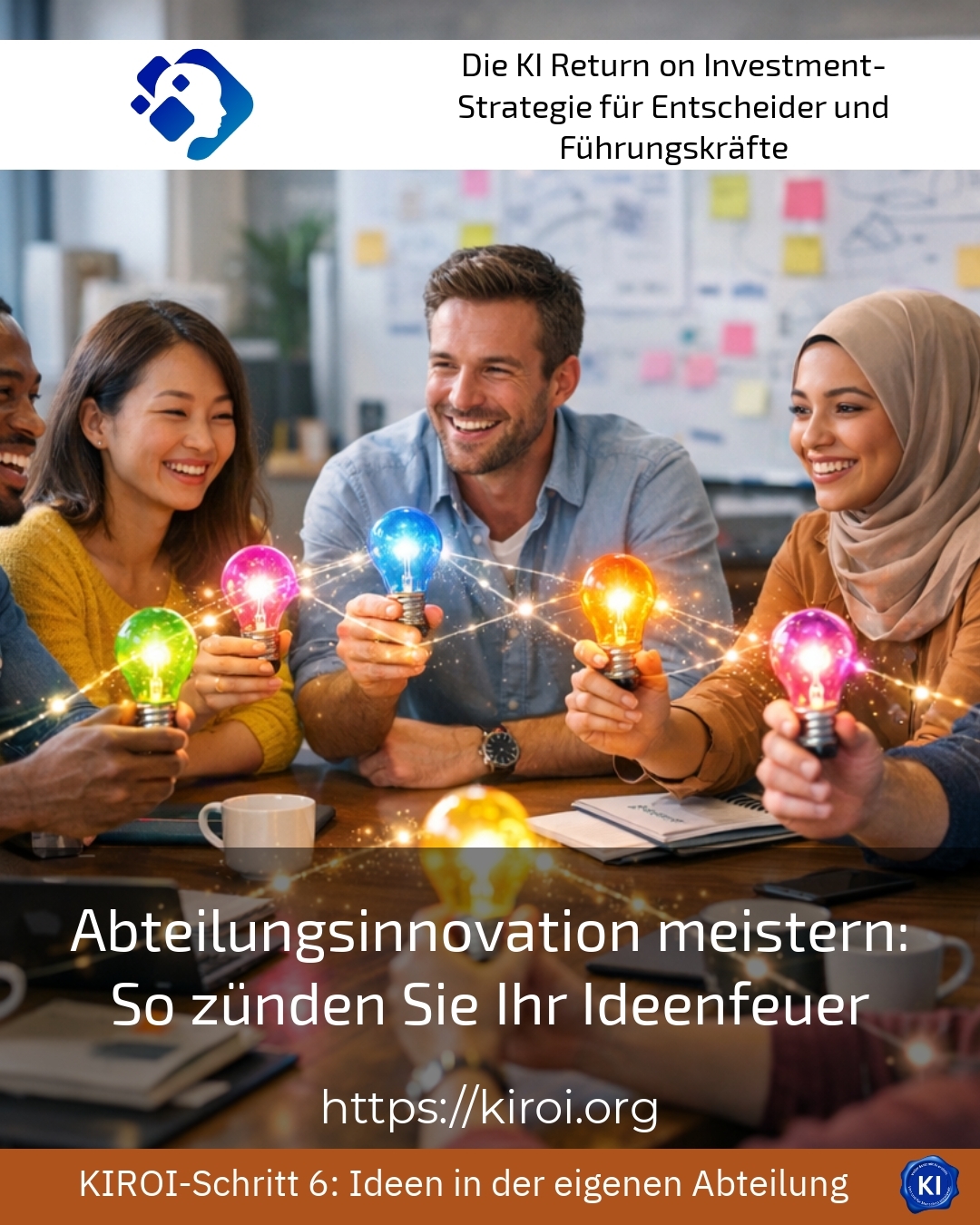
This question concerns leaders and teams alike, because the ability to Mastering Departmental Innovation Today more than ever, decision-making determines the long-term success of an organization. In a time when markets are rapidly changing and technological developments fundamentally challenge traditional business models, companies need more than just good intentions. They need structured approaches to specifically unleash and utilize creative energy in a sustainable way. The following article shows you ways to systematically activate the dormant potential of ideas within your organization.
Understanding the foundations for creative development in organizations
Before we delve into the specific methods, we must first consider the framework conditions that enable creative processes in the first place. Many organizations underestimate the importance of an open culture of error. Employees only bring new ideas to the table when they do not have to fear negative consequences. An atmosphere of trust therefore forms the foundation of any sustainable change.
In the automotive industry, this connection is particularly evident. Manufacturers such as BMW and Mercedes-Benz have established their own innovation labs where teams are allowed to experiment without the usual pressure of time constraints. In the logistics sector, DHL relies on so-called „innovation challenges,“ where employees from all levels of the hierarchy work together on future solutions. The pharmaceutical industry, in turn, uses cross-functional teams to bring together different perspectives and thus advance novel drug development.
Transruptions coaching accompanies organizations through these very transformation projects by developing individual impulses for the respective corporate culture. Clients often report that even small changes in the communication structure can have a significant impact on the development of ideas.
Master department innovation through structured creative processes
Creativity needs structure – this apparent contradiction dissolves when one understands that clear frameworks only allow for room for freedom. Design Thinking, Lean Startup, and Scrum methods offer proven tools for this challenge [1]. The key lies in the right combination of these approaches for the respective organization.
The financial sector provides impressive examples of successful transformation here. ING Bank has shown with its agile organizational model how traditional structures can be broken down. In the insurance sector, Allianz is experimenting with internal start-up programs that are intended to develop new business models. Sparkassen and Volksbanken are, in turn, increasingly relying on regional innovation networks to jointly develop digital solutions for their customers.
Best practice with a AIROI customer
A medium-sized mechanical engineering company from southern Germany faced the challenge that, despite highly qualified employees, hardly any new product ideas were being generated. The existing hierarchy prevented open communication between the departments. As part of a structured coaching process, we first analyzed the existing communication channels and identified critical obstacles. Subsequently, together with the management, we developed a monthly idea forum where suggestions from all departments could be presented. Particularly important was the introduction of an anonymous submission option for initial ideas. Within six months, over fifty concrete improvement proposals were submitted. Of these, twelve resulted in actual product developments or process optimizations. The estimated economic value of these measures was in the seven-digit range. Employees reported a significantly improved work environment and increased motivation. The management recognized that investing in structured creative processes generated a measurable return on investment.
The role of the leader as an innovation driver
Leaders decisively shape the innovation culture through their own behavior. If one does not take new paths themselves, one cannot expect others to be willing to take risks. Authentic role models have a stronger effect than any training program. The trick is to relinquish control while providing guidance at the same time.
In retail, the dm drugstore chain has been demonstrating for years how value-oriented leadership fosters creativity [2]. The company relies on trust rather than strict control. In the technology sector, SAP demonstrates with its internal entrepreneurship programs how large corporations can integrate agile start-up mentality. The media industry, in turn, is experimenting with completely new work models at companies such as Axel Springer.
For a successful Mastering Departmental Innovation Leaders must also allow for uncomfortable questions. Why do we do something this way and not another? What assumptions have we never questioned? These reflection processes require time and resources, but they pay off in the long run.
Develop practical tools for everyday life
The best strategies are of little use without concrete implementation tools. Idea management software, digital collaboration platforms, and regular creative workshops form the operational backbone of successful transformation projects. The selection of the right tools depends heavily on the specific corporate culture.
For example, the food industry is increasingly using crowdsourcing platforms to involve consumers directly in product development. Companies such as Nestlé and Unilever operate open innovation platforms for external partners. In the construction industry, companies such as Hochtief are relying on Building Information Modeling to improve cross-departmental collaboration.
Transruptions coaching supports organizations in selecting and implementing such tools. The focus is not on the technology itself, but on the question of which processes actually offer added value for the specific situation.
Master the departmental innovation through networking and exchange
Isolated departments cannot develop synergies. Conscious networking between different departments creates new perspectives and solutions. Interdisciplinary teams bring together expertise that would never meet in traditional structures.
The chemical industry provides impressive examples of successful collaboration. BASF operates innovation centers where researchers from various disciplines work together on future projects [3]. The energy industry is partnering with start-ups in companies such as E.ON. In healthcare, new delivery models are emerging through the collaboration between hospitals, health insurance companies, and technology providers.
Best practice with a AIROI customer
A traditional family business in the textile industry wanted to fundamentally revise its sustainability strategy. However, the various departments – production, purchasing, marketing, and sales – pursued different priorities. We supported the company in developing a cross-departmental innovation team. First, representatives from all departments were brought together for a joint workshop. During this meeting, the participants identified surprising similarities between their respective challenges. The team developed a concept for recyclable product packaging that simultaneously reduced costs and improved brand perception. Through close collaboration, further ideas for sustainable material alternatives emerged. The production department brought its expertise in technical feasibility, while marketing represented the customer perspective. After eighteen months, the company had successfully established three new product lines on the market. Employee satisfaction increased measurably because employees saw their ideas being taken seriously. The project demonstrated, by example, how structured networking can deliver concrete business results.
Learning to use resistance constructively
Change processes inevitably generate resistance, but this does not have to remain an obstacle. Critical voices often point to real problems that were previously overlooked. Those who take objections seriously and address them constructively gain valuable supporters for the transformation process.
The aviation industry shows how strictly regulated industries can still remain innovative. Companies like Lufthansa are developing new services despite complex compliance requirements. In the banking sector, regulatory requirements are forcing creative solutions in digitalization. The telecommunications industry, in turn, is transforming its business models under enormous competitive pressure.
Clients often report that it is precisely the employees who were initially most skeptical who later became the most committed supporters. This experience underscores the importance of patient and appreciative change management.
Establishing sustainable structures for continuous improvement
One-time workshops are not enough to bring about lasting changes. Organizations need firmly established structures that continuously promote creativity and the development of ideas. Regular retrospectives, innovation budgets, and dedicated time windows for experiments create the necessary spaces for freedom of action.
With its „20 percent time“ initiative, Google has become a model for many companies worldwide. In the German mid-market, the Trumpf GmbH is adapting similar concepts for its workforce. The gaming industry at companies like Ubisoft uses regular game jams to harness creative energy.
The Mastering Departmental Innovation This therefore requires a lot of patience and the willingness to see setbacks as opportunities for learning. Organizations that internalize this attitude create robust foundations for future growth.
My AIROI Analysis
My intensive involvement in transformation projects in a wide variety of industries has shown me that successful idea development always rests on several pillars. Technology alone is never enough to bring about lasting change. Likewise, good intentions are not enough without the corresponding structures and resources. The key lies in the intelligent combination of culture, processes, and tools.
It seems particularly important to me to recognize that each organization must find its own path. Best practices from other companies can provide valuable inspiration, but they are rarely transferable one-to-one. The specific history, culture, and market position of a company shape the possibilities and limits of any transformation. Consulting guidance can help identify blind spots and open up new perspectives.
The AIROI-methodology helps organizations identify their individual strengths and specifically develop them. It is not about short-term success, but about building long-term skills. Companies that consistently take this path develop a resilience that allows them to withstand even difficult times. Investing in creative potential not only pays off financially but also significantly increases the attractiveness as an employer.
Further links from the text above:
[1] Harvard Business Review – Design Thinking Resources
[2] dm-drogerie markt – Company philosophy
[3] BASF Innovation and Research
For more information and if you have any questions, please contact Contact us or read more blog posts on the topic Artificial intelligence here.








 Deutsch
 English (UK)