
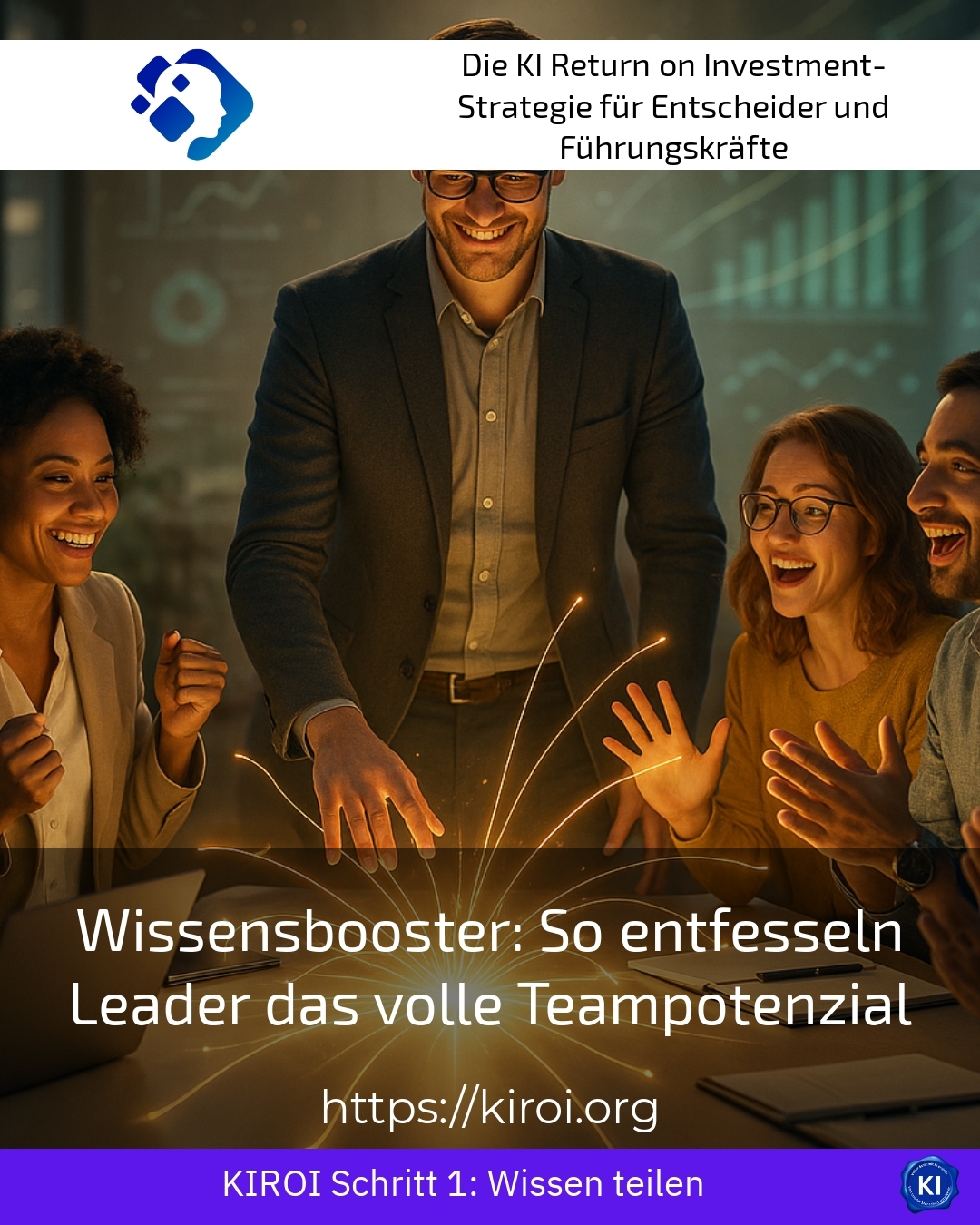
Imagine your team working with an energy that is contagious and effortlessly overcomes even complex challenges. This vision is not an unattainable dream, but the result of targeted leadership that is based on a solid knowledge booster. Leaders who understand how to unleash the full potential of their teams create work environments where creativity, engagement, and willingness to perform flourish. In a world that is constantly changing, the ability to inspire and empower people becomes the decisive success factor. But how exactly does this transformation process take place? What methods have proven effective in practice? And what pitfalls should be avoided? These questions concern leaders in numerous industries and deserve a thorough examination that goes beyond superficial advice.
Understanding the fundamentals of modern leadership
Modern leadership is based on the principle of empowerment rather than mere control. Leaders who inspire their teams to perform at their best rely on trust and autonomy. They create spaces where employees can unleash their strengths. This philosophy differs fundamentally from traditional hierarchical models [1]. In technology companies, this change is particularly evident when agile leaders give their developer teams the freedom to independently try innovative solutions. In healthcare, caregivers experience a new appreciation when clinical management promotes interdisciplinary decision-making processes. In the manufacturing industry, shift supervisors often report increased motivation once production teams are actively involved in optimizing work processes.
The key lies in the realization that humans are inherently capable of performing well. However, this intrinsic motivation is often hindered by rigid structures. Leaders who understand this connection consciously invest in the personal development of each team member. They conduct regular development discussions and identify individual growth potential. Transruptive coaching can help break through entrenched patterns and open up new perspectives.
Establish knowledge boosters through continuous learning
A sustainable knowledge booster is created through the systematic promotion of a learning culture within the company. Teams that regularly develop new competencies remain adaptable and resilient. However, building such a culture requires more than occasional training sessions. It requires a fundamental realignment of organizational priorities. In the financial sector, progressive institutions, for example, implement peer learning programs where experienced advisors pass on their knowledge to younger colleagues. Tradesman-run businesses promote the exchange between masters and apprentices through structured tandem projects. In retail, leading chains establish regular knowledge exchange formats between branches in different regions.
Best practice with a AIROI customer
A medium-sized logistics company approached us with the request to fundamentally improve communication between the dispatch and warehouse staff. The teams had been working side by side for years, and these silo structures led to loss of efficiency and frustration on both sides. As part of the transruptive coaching, we developed a rotation program together, in which employees spent two weeks each in the other department. This measure created a deeper understanding of the respective challenges and working conditions of the other department. The participants often reported surprising insights that they would have never gained without this perspective change. Additionally, we established weekly short meetings where representatives from both teams discussed current challenges and jointly developed solutions. After six months, there was a significantly improved collaboration, which was also reflected in measurable metrics. The error rate in ordering decreased significantly, and the lead times shortened noticeably. This example illustrates impressively how targeted incentives can trigger lasting changes.
Creating psychological safety as a foundation
No team can reach its full potential if fear is the dominant emotion [2]. Psychological safety describes the confidence to take risks without fearing negative consequences. Leaders play a crucial role in establishing this climate. They must authentically demonstrate that mistakes are viewed as learning opportunities. This is evident in architectural firms, where project managers openly discuss their own planning errors and share the insights derived from them with the team. Advertising agencies benefit from a culture where unconventional creative concepts can be presented without pressure to evaluate them. Law firms often experience a quality improvement when young lawyers are allowed to express their concerns about contract clauses without fear of repercussions.
Creating psychological safety begins with small but consistent behavioral changes. Leaders should practice active listening and value every contribution. They should interpret questions as a sign of commitment and not as weakness. Especially important is the handling of critical voices, which often provide valuable insights into blind spots. Accompanying transruptive coaching can help leaders reflect on their own behavioral patterns and shape them more consciously.
Knowledge booster through effective communication structures
Communication forms the nervous system of any organization. A true knowledge booster arises where information flows freely and relevant expertise is systematically shared. Designing effective communication structures requires both technical and cultural measures. Pharmaceutical companies, for example, use digital knowledge platforms where research teams document their findings and make them accessible across departments. Hotel chains establish morning briefings where service staff exchanges current guest feedback and resulting improvement ideas. Mechanical engineering companies implement lessons-learned workshops after each completed project to secure the knowledge gained for future initiatives [3].
The quality of communication depends largely on the willingness to engage in genuine dialogue. Monologues and one-way information are not enough. Leaders must actively solicit feedback and make their decision-making processes transparent. They should regularly create informal opportunities for discussion where sensitive topics can also be addressed. This investment in communication quality pays off through increased engagement and better results.
Best practice with a AIROI customer
An international software developer approached us with the desire to optimize the collaboration between their distributed development teams across different time zones. The existing communication routines led to misunderstandings and delayed project progress. The team members often felt isolated and not sufficiently involved in the strategic decisions. Together, we analyzed the existing communication channels and identified critical gaps in the information flow. Through transruptive coaching, we developed a multi-stage concept that intelligently combined synchronous and asynchronous communication formats. The introduction of structured handover protocols between the time zones ensured that relevant information was transmitted reliably. Additionally, we established quarterly virtual team events that fostered personal exchange and mutual acquaintance. The leadership learned to consider cultural differences in communication and adapt their approach accordingly. After implementation, team members often reported a strengthened sense of belonging despite the geographical distance. Project timelines were measurably shortened, and the quality of the developed software improved noticeably.
Recognizing and promoting individual strengths
Every person possesses unique talents and abilities. Leaders who recognize and utilize these individual strengths sustainably maximize the team potential [4]. However, this strengths-based leadership requires careful observation and genuine interest in each team member. In corporate consulting, the value of this approach becomes evident when project teams are assembled in a way that optimally complements analytical and creative talents. Restaurant businesses benefit when chefs know the special skills of their cooks and use them accordingly. Event management agencies experience success when the organizational and communicative strengths of employees are specifically combined.
Identifying strengths requires different methods and perspectives. Leaders should combine structured observations with direct conversations. Feedback from colleagues and customers also provides valuable insights. Particularly insightful is observing when employees enter a flow state and effortlessly achieve peak performance on tasks.
Knowledge booster through targeted delegation and empowerment
A sustainable knowledge booster arises through the consistent delegation of responsibility and decision-making authority. Teams that are given genuine freedom to act develop ownership and identify themselves more strongly with their tasks. This form of empowerment requires leaders to have the ability to let go and relinquish control. This is evident in insurance companies when agents are allowed to make customer decisions independently within defined frameworks. Educational institutions benefit when teachers are able to develop and test pedagogical concepts independently. Energy providers experience innovations when technical teams are given responsibility for optimizing their systems themselves.
Successful delegation requires clear frameworks and defined decision-making spaces. Leaders must communicate transparently what powers they delegate and what outcomes they expect. At the same time, they should remain available as a resource and supporter. Supportive transruptive coaching can structure the process of gradual responsibility transfer and identify potential obstacles early on.
My AIROI Analysis
The systematic development of team potential represents one of the most demanding and at the same time rewarding tasks of modern leadership. The approaches outlined in this article illustrate that sustainable change does not arise through short-term measures but through consistent cultural work. Leaders who are willing to critically reflect on their own role and continuously develop it create the conditions for exceptional team performance. It is repeatedly shown that the human component makes the decisive difference. Technological tools and structural optimizations can support, but they do not replace the quality of interpersonal relationships. Supervision by professional transruptive coaching offers leaders a protected space to try out new behaviors and question established patterns. Clients often report that this external perspective reveals blind spots and provides transformative impulses. The presented examples from various industries illustrate that the basic principles of successful leadership are universally applicable, even if the concrete implementation must always be context-specific. The key is the willingness to take the first step and to perceive the change process as an ongoing journey. Investing in leadership competencies and team culture pays off through increased commitment, higher innovation power, and better business results.
Further links from the text above:
[1] Harvard Business Review – Leadership and Managing People
[2] Psychological Safety and Learning Behavior in Work Teams
[3] McKinsey – People and Organisational Performance
[4] Gallup CliftonStrengths
For more information and if you have any questions, please contact Contact us or read more blog posts on the topic Artificial intelligence here.








 Deutsch
 English (UK)