
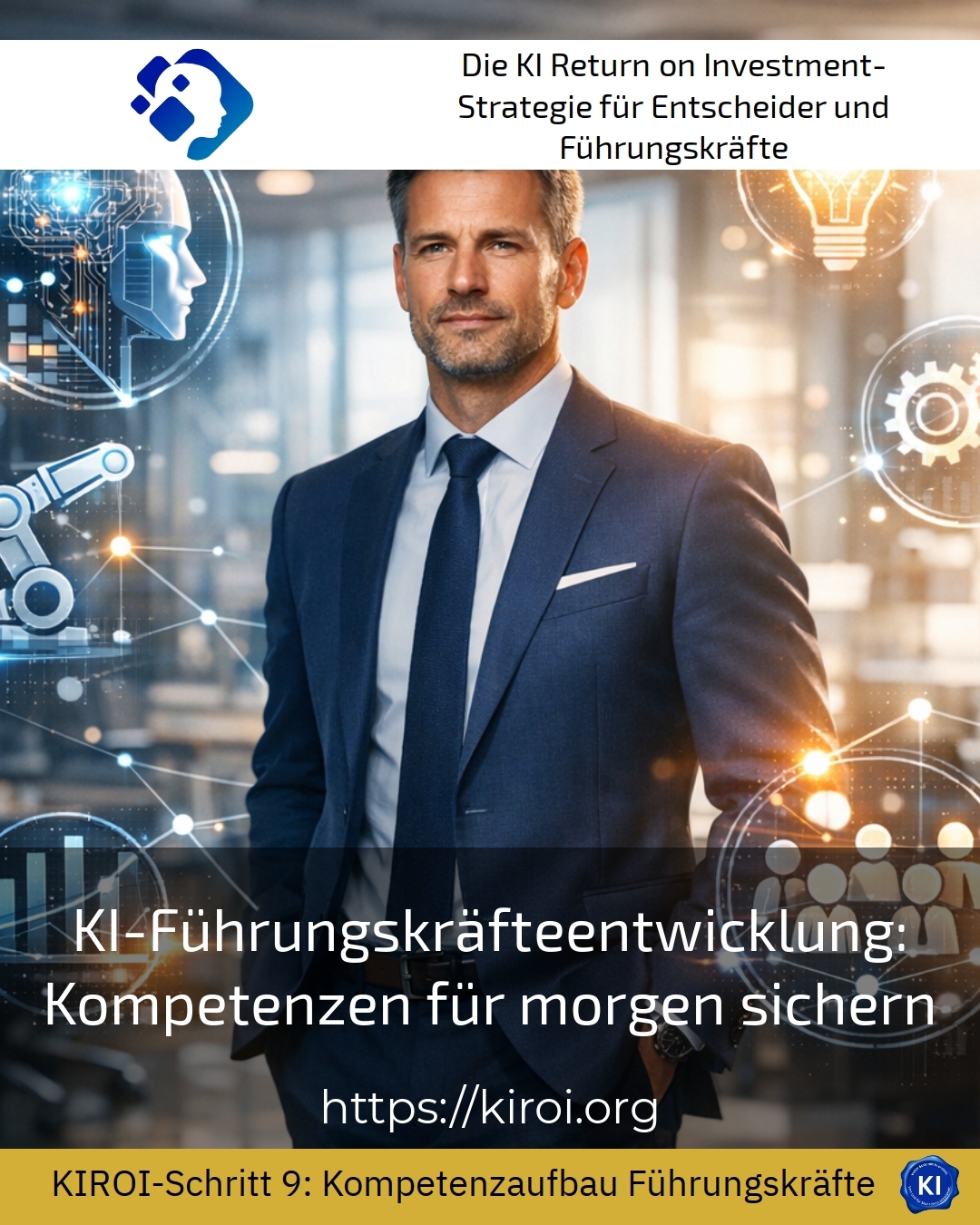
Will your executives still be able to make the right decisions in five years when intelligent systems have long since permeated all processes? This question currently concerns both human resources managers and board members, because the AI Leadership Development: Securing competencies for tomorrow It is increasingly becoming a focus of strategic corporate planning. The rapid development of algorithmic technologies not only changes operational processes but fundamentally transforms what constitutes successful leadership and the skills that decision-makers will need in the future.
The new reality in the executive ranks
Executives face an unprecedented challenge. They must understand systems that learn on their own. At the same time, they must guide their teams through change. This task requires entirely new competencies. Traditional management approaches often fall short here. Clients often report experiencing overwhelming complexity due to technological complexity. Others struggle with integrating intelligent tools. Many executives feel unprepared for these demands.
In the financial sector, this development is particularly evident, as algorithms are already preparing credit decisions today, detecting attempts at fraud and optimizing investment strategies, while human decision-makers must learn to critically evaluate and reflect on these machine recommendations. Banks such as Deutsche Bank or Commerzbank are now investing substantial sums in the further training of their leadership team, because they recognize that technological knowledge alone is no longer sufficient [1]. The insurance sector is following this trend. Here, intelligent systems take over the assessment of claims. Risk assessment is also being automated. Therefore, executives must understand when human judgment remains indispensable.
AI leadership development as a strategic imperative
The systematic AI Leadership Development It becomes a crucial competitive factor because companies without competent leadership at the interface between humans and machines will eventually lose the lead in the medium term. transruptions coaching helps organizations structure this transformation and design individual development paths for their decision-makers, with the focus always on the connection between technological understanding and human leadership skills.
In manufacturing, we are currently experiencing fundamental changes as intelligent manufacturing systems autonomously optimize production processes, perform predictive maintenance, and enable real-time quality control, requiring production managers to develop new skills to orchestrate these systems while simultaneously supporting their employees in the changing workplace. Automotive suppliers such as Bosch and Continental have recognized that they must actively empower their executives. They are integrating algorithmic assistance systems into their decision-making processes. The chemical industry faces similar challenges. Here, intelligent systems are optimizing recipes. They are autonomously controlling complex production processes.
Best practice with a AIROI customer
A medium-sized mechanical engineering company from the Ruhr region faced the challenge of preparing its entire senior management to integrate intelligent production systems. The initial situation was characterized by considerable resistance, as many experienced production managers were skeptical about technological changes. Within the framework of a twelve-month follow-up program, we developed together with the company a customized competence model that included both technical basic understanding as well as ethical reflection and change management skills, so that the executives were gradually empowered to understand intelligent systems not as a threat but as an extension of their decision-making capabilities. Particularly valuable was the integration of practical application cases from their own production. The executives learned directly through example. They saw how algorithmic recommendations supported their work. Often, the participants reported a paradigm shift. Their initial skepticism turned into genuine interest. At the end of the program, the executives had transformed from skeptical observers into active agents of digital transformation, which was measurable in shorter implementation times for new technologies and higher acceptance within their teams.
Developing core competencies for the future
The ability to critically evaluate algorithmic recommendations forms the core of modern leadership competencies. Decision-makers must understand how systems arrive at their results. They must be aware of their limitations. Only then can they make responsible judgments [2]. In healthcare, this competence is particularly important. Diagnostic algorithms support doctors in complex decisions. Medical executives in hospitals and clinics face the task of training their teams in the meaningful use of these tools while ensuring that the human component of patient care is not lost.
Furthermore, the ability to reflect ethically gains significant importance, as intelligent systems make decisions that can have far-reaching consequences for people, whether in personnel selection, lending, or medical treatment. Leaders must set clear guidelines here. They must assume their responsibility. In the HR services industry, this challenge is particularly evident. Matching algorithms bring together applicants and jobs. Companies like Randstad or Hays invest in the training of their executives to ensure the fairness and transparency of these systems and to enable potential discrimination by algorithms.
Transformation through targeted support
The successful AI Leadership Development: Securing competencies for tomorrow It requires a holistic approach that goes far beyond technical training and places the personal development of the leader at the center; therefore, transruptive coaching can provide particularly valuable impulses as a support for projects related to this transformation. Leaders come to us with a variety of issues. Some experience uncertainty when dealing with technology. Others seek guidance on ethical questions. Many want support in team transformation.
In retail, we are observing interesting developments. Intelligent systems predict demand there. They optimize inventories and personalize customer interactions. Store managers and regional managers must learn to integrate these data-driven recommendations into their daily decisions while simultaneously making the customer experience human-friendly, because despite all automation, personal contact remains a crucial differentiating factor [3]. Therefore, retail companies such as REWE or the Schwarz Group are developing comprehensive programs to empower their executives at all levels.
Overcoming resistance and creating acceptance
One of the biggest challenges in the AI Leadership Development It lies in overcoming emotional resistance and developing a constructive attitude towards technological change, without ignoring legitimate concerns or underestimating the complexity of change. Clients often report fears within their teams. These concerns relate to workplace safety. They also concern changed roles. In the logistics industry this is particularly evident. Autonomous systems are increasingly taking on planning tasks there. They optimize routes and coordinate supply chains. Logistics managers at companies such as DHL or DB Schenker therefore not only have to develop new competencies themselves, but also accompany their employees through this profound transformation.
The energy sector faces similar challenges because intelligent grids and predictive maintenance systems are revolutionizing the way energy supply is planned and controlled, requiring executives at utilities such as E.ON or EnBW to learn to understand and strategically deploy these complex systems. At the same time, they must involve their teams. They must build trust. Only then will sustainable transformation succeed.
Best practice with a AIROI customer
A leading logistics company from southern Germany approached us because the implementation of an intelligent scheduling system encountered significant resistance within the workforce, and even experienced executives were unsure how to handle this change, despite the obvious economic benefits of the system. Together, we developed a multi-stage follow-up program that first enabled the leadership team to understand and critically evaluate the system before empowering them in a second step to lead their teams through the change process and act as authentic ambassadors of the transformation. Particularly important was the work on internal beliefs. The leadership team reflected on their own fears. They developed a new perspective on technology. This personal development resonated with their teams. Participants often reported a new sense of self-awareness. They now felt like the architects of change. The result was impressive: The acceptance of the new system increased significantly, the turnover in the affected departments decreased measurably, and the company was able to realize the planned efficiency gains faster than originally forecast because the leadership team guided its teams through the change authentically and competently.
Sustainable development instead of short-term training
Successful leadership development in this context requires a long-term approach that promotes continuous learning and creates space for reflection, because technological developments progress so quickly that point-in-time training measures inevitably become outdated before they are fully implemented. In the telecommunications industry, we see successful examples. Companies like Deutsche Telekom are establishing learning cultures there. These enable continuous development. Leaders are encouraged to experiment with new technologies [4]. They are allowed to make mistakes and learn from them.
The pharmaceutical industry is pursuing similar approaches because intelligent systems are being used here from drug development to clinical research, and executives must be able to understand and responsibly employ these complex applications, with regulatory requirements adding an additional dimension of complexity. Companies such as Bayer or Merck are therefore investing significantly in the development of their executives to be successful at the intersection between innovation and compliance.
My AIROI Analysis
The integration of intelligent systems into corporate processes is advancing relentlessly and will fundamentally change the requirements for leadership in the coming years. Therefore, organizations are well advised to invest in the systematic development of corresponding competencies today. My analysis clearly shows that companies often underestimate the human dimension. They focus too much on technical implementation. The real challenge lies in empowering people.
From my experience in guiding numerous transformation projects, it can be concluded that three factors are crucial for success: first, a clear understanding by the management of the need for this development; second, the willingness to invest sufficient time and resources; and third, the inclusion of external perspectives that can broaden the often blind eye of the business. The most successful companies combine technical training with personal development. They create spaces for reflection and exchange. They foster a culture of continuous learning.
Transruptions coaching can provide valuable insights here. We accompany leaders on their personal development journey. We support organizations in designing sustainable development programs. The future belongs to those companies that empower their leaders today. These decision-makers will successfully orchestrate people and machines tomorrow. They will navigate their organizations through complex transformations. This is the central insight of AIROI my analysis.
Further links from the text above:
[1] McKinsey – AI, Automation and the Future of Work
[2] Harvard Business Review – Artificial Intelligence
[3] World Economic Forum – Artificial Intelligence
[4] Gartner – Artificial Intelligence Insights
For more information and if you have any questions, please contact Contact us or read more blog posts on the topic Artificial intelligence here.







 Deutsch
 English (UK)