
Have you ever wondered why some teams seemingly develop breakthrough ideas effortlessly, while others, despite enormous effort, stall at the very beginning?
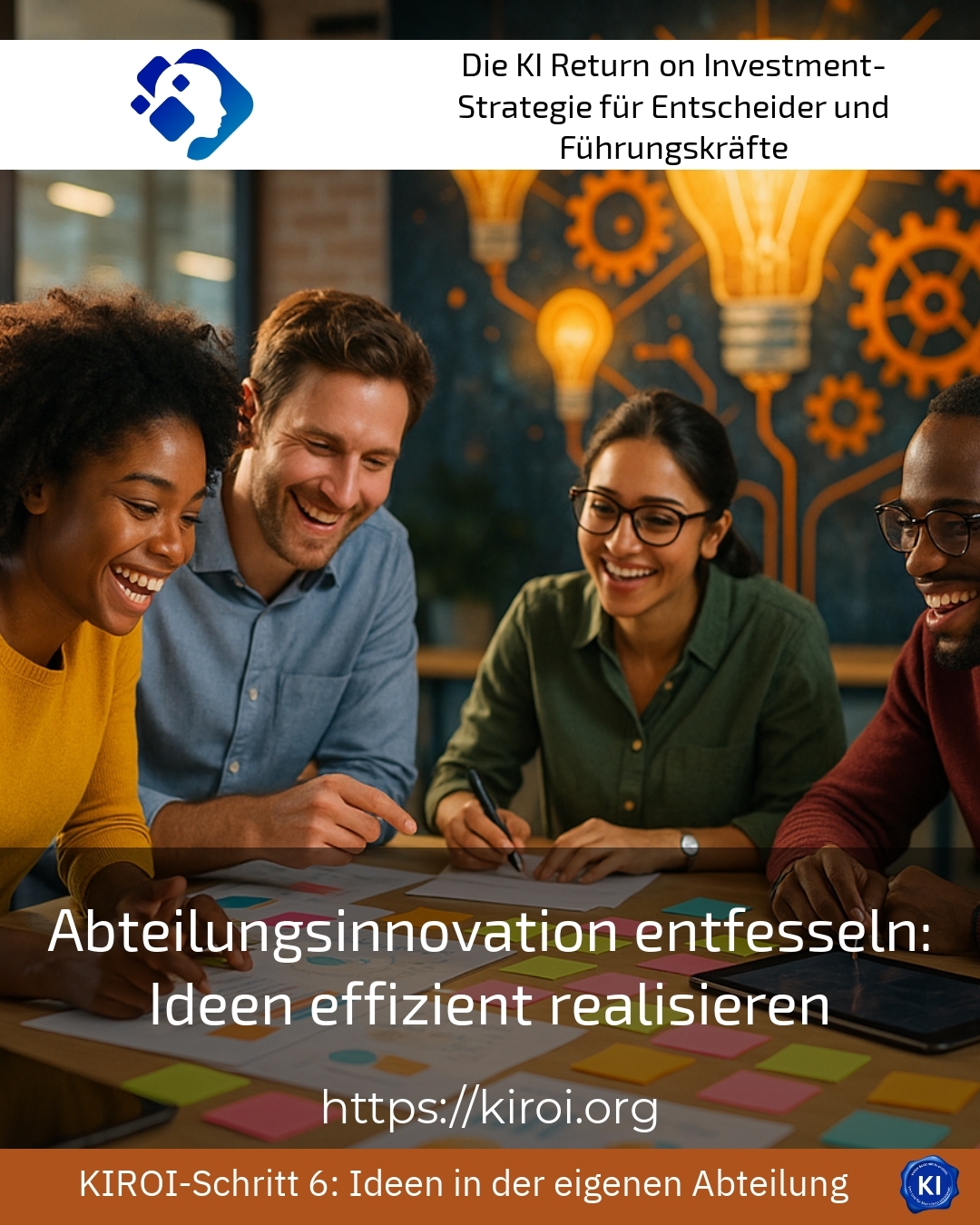
The answer often lies not in a lack of creativity or a lack of commitment, but rather in the way organizations approach the process of Unleashing departmental innovation and structure. In a time when markets are changing rapidly and technological developments can transform entire business models within just a few months, the ability to systematically realize ideas becomes the decisive competitive advantage. Companies that understand how to activate the creative potential of their employees while establishing efficient implementation structures position themselves significantly more successfully in the market. This is not about individual flashes of genius; it is about a continuous process that connects creativity and efficiency. This is exactly where transruptional coaching as professional support comes into play.
Why traditional structures hinder progress
Many organizations struggle with a fundamental paradox of their own development. On the one hand, they desire creativity and fresh impulses. On the other hand, they have created structures that systematically suppress exactly these qualities. Hierarchical decision-making processes significantly slow down processes. Departmental thinking prevents the free exchange of knowledge and experiences. Risk-averse executives often unconsciously block unconventional approaches.
A technology company with several hundred employees experienced this particularly clearly when it tried to introduce a new digital service. The original idea originated from customer support. But the proposal had to go through seven different approval levels. After eighteen months, the idea was finally approved. However, a competitor had already successfully established a similar service on the market. Such experiences are a lasting frustration for dedicated employees. They lead to innovative minds either becoming silent or leaving the company.
A medium-sized machine manufacturer reported similar challenges in product development. Engineers had developed promising improvement proposals for existing systems. However, these ideas regularly ended up in the bureaucratic wheels of the internal organization. A financial services provider, in turn, recognized that its rigid organizational structure was massively hindering the development of digital customer services. In all three cases, the problem lay not in a lack of ideas but in dysfunctional implementation structures.
Unleashing department innovation through cultural transformation
The key to successfully realizing ideas lies primarily in a cultural transformation that impacts deeply within the organization and fundamentally changes the thinking of all involved. This change does not begin with new processes or tools. It begins with a changed mindset among leaders. When supervisors perceive mistakes as learning opportunities, they create psychological safety. Employees then dare to share even imperfect ideas. It is from these raw diamonds that the most valuable innovations often emerge.
A logistics company implemented regular innovation workshops at all levels of the hierarchy. Warehouse employees worked on improvement proposals on an equal footing with management. Within two years, the team developed over thirty implementable optimizations. These ranged from more efficient picking processes to energy-saving lighting concepts. A healthcare provider used similar formats to improve patient care. Nurses brought practical ideas that the management would never have developed.
Best practice with a AIROI customer
An internationally operating trading company faced the challenge of breaking up its departmental structures that had developed over the years and establishing a true culture of cross-functional collaboration. The leadership level recognized that valuable ideas regularly failed to cross departmental boundaries, and the company thereby lost significant competitive advantages. As part of a transruptive coaching process, the company first developed a clear understanding of its existing communication barriers and identified the key obstacles to the free flow of ideas between the various departments. Subsequently, a structured program was implemented that combined regular cross-departmental brainstorming sessions, transparent feedback loops, and rapid decision-making processes. The introduction of innovation champions, who acted as bridge builders between different departments and actively supported promising ideas throughout the implementation process, proved particularly effective. After about eighteen months, the company reported a significant increase in implemented improvement proposals and a noticeably improved collaboration between previously isolated areas. Employee satisfaction in the participating teams increased measurably, as employees now experienced that their ideas were actually heard and implemented.
Practical tools for change
Cultural transformation requires concrete tools and methods for everyday work. Many companies report positive experiences with design thinking approaches. This methodology consistently puts the user at the center of all considerations. One software company used this approach to develop a new project management solution. The team initially conducted intensive discussions with potential users. Based on these insights, prototypes were developed that were tested and improved multiple times.
A retail company adopted agile methods such as Scrum and Kanban for its internal development projects. The visualization of work progress on boards significantly increased transparency. Barriers were detected and eliminated more quickly. An energy provider experimented with hackathons, in which teams developed functional prototypes within two days. This compressed work method unleashed enormous creative energy.
Unleashing the role of leadership in department innovation
Leaders play a crucial role in unleashing innovative potential in their teams. They are no longer primarily decision-makers and controllers, but facilitators and supporters. This shift in roles is difficult for many supervisors. It requires letting go of control and trusting in the abilities of the employees. At the same time, it does not mean passivity. Leaders actively create spaces for creativity. They remove obstacles and provide resources.
A automotive supplier transformed its leadership culture fundamentally through an intensive development program. Leaders learned to integrate coaching techniques into their daily work. They asked more questions instead of immediately giving answers. A pharmaceutical company established the concept of servant leadership in its research teams. Team leaders understood their role in creating optimal working conditions for their scientists. A consulting firm introduced regular reflection rounds in which leaders critically examined their own behavior.
These changes rarely occur on their own and require professional guidance. Here, transruptions coaching supports organizations in designing and implementing sustainable transformation processes.
Create structures for quick implementation
In addition to the cultural dimension, organizations also need structural adjustments that enable the rapid implementation of promising ideas. Long approval processes effectively kill innovation. Therefore, advanced companies establish decentralized decision-making authorities. Teams are given budgets and scope for action to enable self-directed experimentation. Failures are deliberately planned and viewed as a source of learning.
A media company established an internal innovation fund that enabled quick start-up funding. Employees could submit applications via a simple online form. Decisions were made within two weeks. A telecommunications provider established a separate unit for disruptive projects that operated largely independently of the corporate bureaucracy. An insurance company established a system of innovation ambassadors who navigated promising ideas through the organization and overcame resistance.
Best practice with a AIROI customer
An established service provider with several thousand employees was looking for ways to break through its sluggish decision-making structures and establish a faster implementation culture. The average time from initial idea to market introduction of new services exceeded two years, which became increasingly problematic in a dynamic competitive environment. Together with transruptions coaching, the company first analyzed its existing processes and identified the biggest time-wasters and bottlenecks in the system. It was revealed that many delays were not caused by factual necessities but by excessive hedging mentality and unclear responsibilities. The company subsequently introduced a three-stage decision-making model that provided different approval processes depending on the significance of an idea. Smaller improvements could now be implemented independently by teams, medium-sized projects only required one approval, and only strategically significant initiatives went through the full decision-making process. This differentiation significantly accelerated implementation and simultaneously relieved senior management of routine decisions. The employees experienced this new freedom of action as motivating and developed significantly more initiative than before.
Using technology as a catalyst
Modern technologies can significantly accelerate the innovation process when used correctly [1]. Digital collaboration platforms enable the exchange across locations and time zones. Artificial intelligence supports the analysis of large data volumes and the identification of patterns. Prototyping tools enable quick visualizations and testing of concepts.
A construction company used virtual reality to present designs to customers and internal stakeholders. Change requests could be visualized and discussed immediately. A consumer goods manufacturer used machine learning algorithms to analyze customer feedback. The system identified potential improvements that human analysts would have missed [2]. A logistics service provider experimented with digital twins of its warehouses to test optimizations without risk.
However, experts warn against the indiscriminate use of technology [3]. Tools alone cannot solve cultural problems. On the contrary, they can even exacerbate existing dysfunctions. Therefore, technological equipment must always be embedded in a holistic transformation approach.
Unleashing departmental innovation through cross-departmental collaboration
The most valuable innovations often arise at the intersections between different fields and disciplines. When people with different perspectives and backgrounds work together, unexpected connections and novel approaches to solutions emerge. Cross-departmental project teams bring together diverse expertise. They overcome the limited perspective of individual disciplines.
A chemical company formed interdisciplinary teams of researchers, marketing experts, and production specialists to develop new materials. This combination led to products that were both technically compelling and marketable. A financial institution brought together IT specialists with customer advisors to develop digital services. Direct collaboration avoided misunderstandings and accelerated the development. A healthcare company integrated patients and their families into its product development teams for medical devices.
Embedding sustainability in the innovation process
Innovation must not remain a one-time event but become an integral part of the organizational culture. This requires continuous investments in people, processes, and structures. Regular training keeps knowledge up to date. Continuous reflection improves processes gradually. Adaptable structures respond to changing requirements.
An electronics company established an internal innovation lab that was permanently equipped with resources. Here, employees from all departments could work on future projects. A textile company introduced annual innovation weeks in which regular operations were reduced. The company used the freed up time to work intensively on new ideas. A food manufacturer implemented a mentoring program that brought together experienced innovators with emerging talent.
Professional transruption coaching helps organizations ensure this sustainability and create long-term development paths.
My AIROI Analysis
The ability to unleash the innovative potential of teams and departments and to efficiently translate ideas into reality is increasingly crucial for the long-term success of organizations. It is becoming increasingly clear that isolated measures such as individual creative workshops or the introduction of new software tools have only limited impact. Real transformation requires a holistic approach that takes into account the cultural, structural, and technological dimensions alike.
What seems particularly important to me is the realization that innovation is not an end in itself, but should always be at the service of concrete goals. Organizations that closely link their innovation efforts to their strategic orientation achieve significantly better results than those that view innovation as a separate activity. The examples presented impressively show how different the concrete implementation paths can be, depending on industry, size, and starting situation.
Leaders play a key role in this process that cannot be delegated. Their willingness to relinquish control and to trust others forms the foundation for real change. At the same time, they must actively create spaces and provide resources. This balance between letting go and actively shaping the future presents many leaders with significant challenges. Professional guidance can provide valuable support and accelerate development processes. Ultimately, the goal is to empower organizations to continuously renew themselves and respond flexibly to changing requirements.
Further links from the text above:
[1] McKinsey – Innovation Insights
[2] Harvard Business Review – Innovation
[3] Forbes – Innovation
For more information and if you have any questions, please contact Contact us or read more blog posts on the topic Artificial intelligence here.








 Deutsch
 English (UK)