
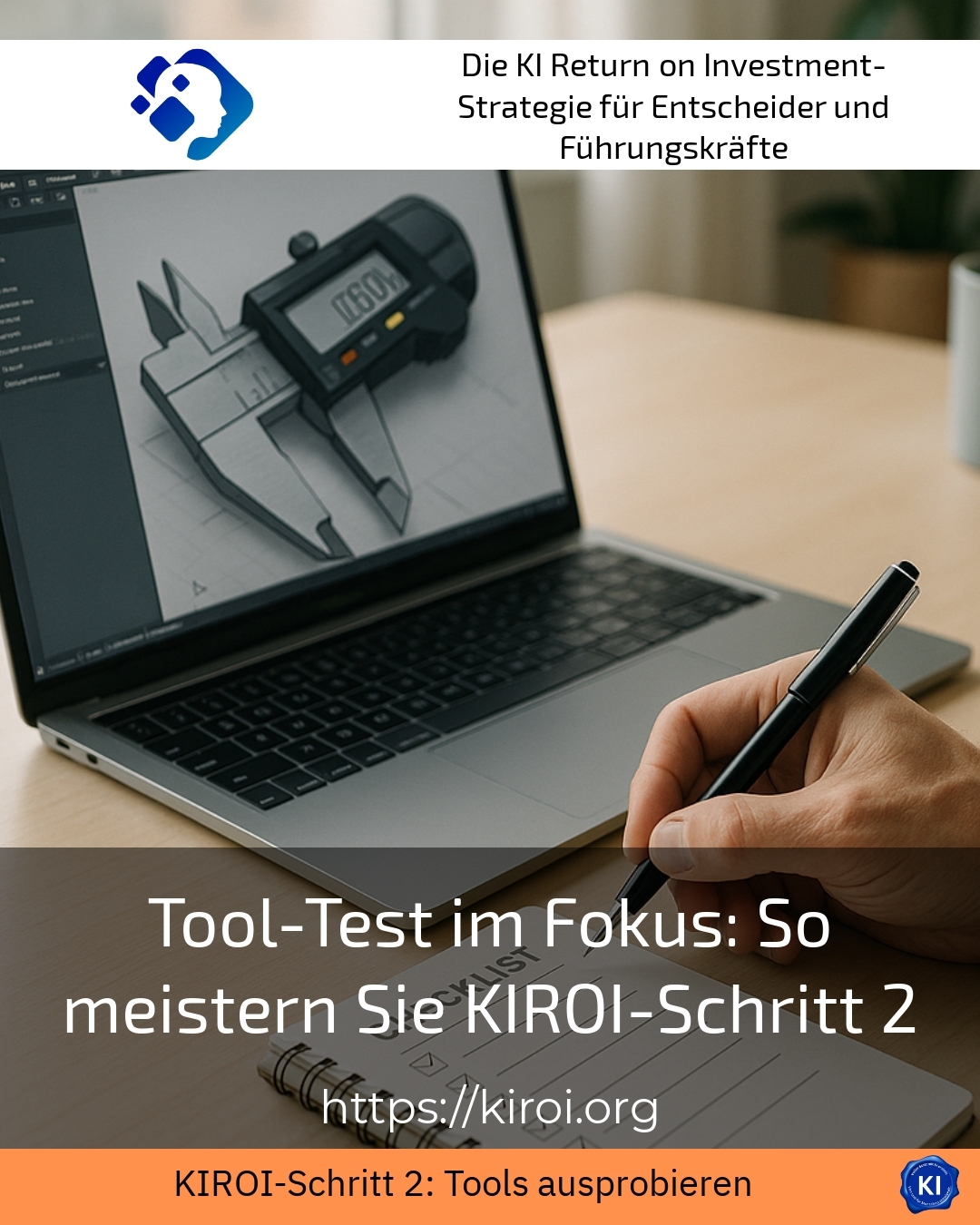
The tool test is an essential step to identify the optimal software solution for individual company requirements in AIROI Step 2. It is not just about mere trial and error, but about targeted testing and support that helps decision-makers derive sustainable added value from the implementation.
Why the Tool Test in AIROI Step 2 is Crucial
In today's world, companies are faced with a multitude of software options, which are often difficult to compare. The tool test in AIROI Step 2 supports the selection of systems not only based on theoretical criteria but also their evaluation in practical application. A gym, for example, can use the tool test to check which customer data management system can be best integrated into training operations. Another example: a marketing team tests various automation tools to find out which one best facilitates campaign management. In facility management, too, maintenance and energy efficiency solutions can be tested for their day-to-day suitability through a structured tool test.
Companies often report that systematic testing increases employee acceptance because they are involved in the process early on, and their feedback is genuinely reflected in the selection process. Furthermore, good documentation of test results ensures greater transparency and thus greater certainty in decision-making.
Practical procedure of a successful tool test
The tool test should be understood as a dynamic process. It is crucial to first define clear objectives and criteria. These could include, for instance, user-friendliness, integration capability, security, or even an increase in efficiency in everyday work. A company in the logistics sector might prioritise smooth interfaces, while a service provider could focus on the automation of routine tasks.
This is followed by the selection of relevant test users who will actively work with the tool. For example, a retailer can involve their sales teams to check how well a new point-of-sale system works. It is important to create realistic test environments, for example through pilot projects that ensure representative practical relevance.
Gathering feedback is the next key step. Open communication should be practised here, and user experiences should be carefully analysed, for example, in workshops or surveys. In industry, this helps to identify technical limitations early on, which might be less apparent in everyday office life. The results make it possible to make well-founded adjustments and to base the final decision on a broad factual foundation.
BEST PRACTICE with one customer (name hidden due to NDA contract) A medium-sized manufacturing company used the tool test to find suitable software for resource planning. By involving department heads and technical teams in the testing process, weaknesses were identified early on and individual adjustments were made. User satisfaction increased significantly, and the implementation went smoothly.
Support through coaching: Valuable support in tool testing
Transruption coaching offers crucial support here. Coaching helps to precisely define the criteria for tool testing, to steer the process with purpose, and to correctly interpret the data obtained. A retail company reported that the coaching support led to a more clearly structured testing phase and that employees were more motivated to use the new merchandise management system. Another example from the service sector shows how the coach helped to prepare the test results in such a way that they convinced senior management.
Thus, the tool test in AIROI Step 2 transforms from a technical review into a strategic instrument that supports sustainable innovation and process improvements. In this way, companies gain not only a tool but also a companion that promotes added value for the entire team.
Important tips for effective tool testing
To successfully implement the tool test, the following measures are recommended:
- Clear goal definition: What should be achieved with the tool?
- Early involvement of future users to understand user needs
- Testing in realistic scenarios and pilot projects for practical insights
- Collect and systematically evaluate open and regular feedback
- Documentation and transparent communication of results
A gym testing new training scheduling software can make the introduction easier with these tips. Similarly, a medium-sized service provider can benefit from a structured feedback round to optimally engage employees. In facility management too, such approaches can better identify savings potential.
My analysis
The tool test in AIROI step 2 is an indispensable instrument for companies wishing to shape their digital transformation in a targeted and sustainable manner. It allows tools to be evaluated not just on paper, but also in practice, taking all relevant user perspectives into account. This holistic approach promotes acceptance and supports successful integration into existing processes. With the appropriate support from transruption coaching, the process also becomes more structured and results-oriented.
Establishing the tool test as an integral part of strategic decisions provides companies with valuable impetus, fosters innovative strength, and creates a stable foundation for future growth.
Further links from the text above:
Tool Test in AIROI Step 2: How Decision-Makers Find the Best
Tool testing for decision-makers: Successfully using AIROI step 2
AI as a threat or opportunity in times of skilled labour shortage
For more information and if you have any questions, please contact Contact us or read more blog posts on the topic Artificial intelligence here.









 Deutsch
  English (UK)