
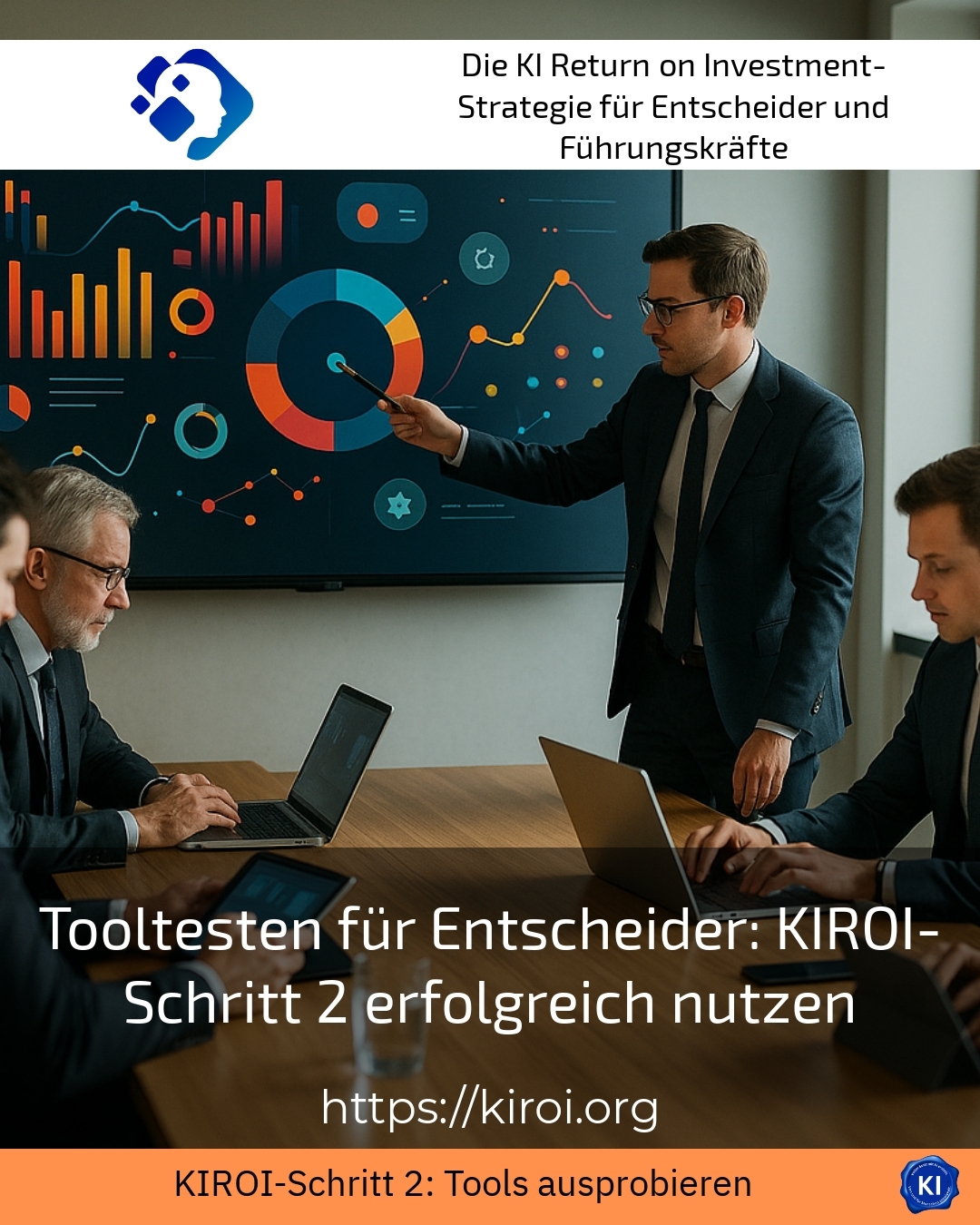
Tool testing is becoming increasingly important for decision-makers, as it helps to select the right tools for individual requirements. In AIROI Step 2, tool testing represents a structured method for testing software solutions in practice, thereby creating a sound basis for decision-making. This involves not only pure trial-and-error, but also a well-thought-out analysis that defines use cases and supports sustainable integration.
The systematic approach to tool testing in AIROI Step 2
A successful tool test always begins with the precise capture of requirements. Decision-makers first define clear use cases, allowing them to specifically select suitable tools. This is the only way to ensure that the test remains relevant to practice and that later feedback is meaningful. This is followed by the selection of potential tools that must be convincing in terms of both functionality and usability.
It is important not only to focus on technical features but also to assess compatibility with existing systems and flexibility for individual adjustments. This ensures that the tool reliably supports everyday work and does not just represent another hurdle in the process.
In companies in the manufacturing industry, tool testing is used, for example, to check early warning systems for machine malfunctions. Here, the test helps to detect the systems in good time and reduce downtime. At the same time, this increases productivity and process stability.
The tool testing also shows its strengths in the area of office organisation: automation tools are examined for how well they can be integrated seamlessly into existing office applications. Data protection and user-friendliness also play a significant role in this.
Practical examples from various industries
BEST PRACTICE with one customer (name hidden due to NDA contract) A medium-sized consulting firm used Tooltesting to evaluate an AI-based analysis platform. The results showed that the tool not only enabled competitive advantages through in-depth data analysis but also increased team acceptance through its intuitive operation.
In the healthcare sector, some institutions specifically use tool testing to examine digital documentation systems under real working conditions. This increases efficiency and minimises sources of error.
In trade, tool testing is used to test e-commerce solutions in terms of performance and customer satisfaction. This allows targeted improvements to be made, sustainably boosting sales.
Tips for successful implementation of tool testing
For optimal use of the AIROI Step 2, it is recommended to understand tool testing as a dynamic process. Regular repetitions and adjustments often lead to better results. The following measures support decision-makers in this:
- Clear definition of objectives and KPIs before testing begins
- Involving future users early on to check usability
- Test in as realistic scenarios as possible, ideally in pilot projects
- Gather and analyse open feedback to make adjustments
- Do not neglect technical integration and security
It is particularly helpful to document the insights gained and share them with the team. This creates a shared understanding of the advantages or limitations of the tested solutions.
Concrete support through transruption coaching
Many decision-makers face the challenge of competently supporting tool testing. Transruption coaching offers valuable impulses here. It assists with planning, implementation, and evaluation, and effectively supports projects throughout the entire process. This way, tool testing can be prevented from becoming an end in itself, instead becoming a genuine decision-making tool.
In practice, coaches support the team in defining the right criteria, interpreting test results, and deriving meaningful next steps. This creates more confidence for decision-makers and increases the acceptance of new tools.
My analysis
Tool testing in the AIROI Step 2 is an indispensable building block for making well-informed decisions when selecting software solutions. Clear objective definitions, practical tests, and continuous adaptation foster trust in the tools. Numerous examples from industry, healthcare, and commerce demonstrate that added value can be effectively realised through this approach.
Decision-makers benefit from transparent methodology and targeted support to successfully map complex requirements. This makes tool testing not only a project-based activity but also a long-term support for everyday work.
Further links from the text above:
Tool Test in AIROI Step 2: How Decision-Makers Find the Best
Tool Testing in AIROI Step 2: How to Successfully Implement AI
For more information and if you have any questions, please contact Contact us or read more blog posts on the topic Artificial intelligence here.










 Deutsch
  English (UK)