
Will you still be performing the same tasks in five years as you do today, or has your entire professional profile fundamentally changed by then?
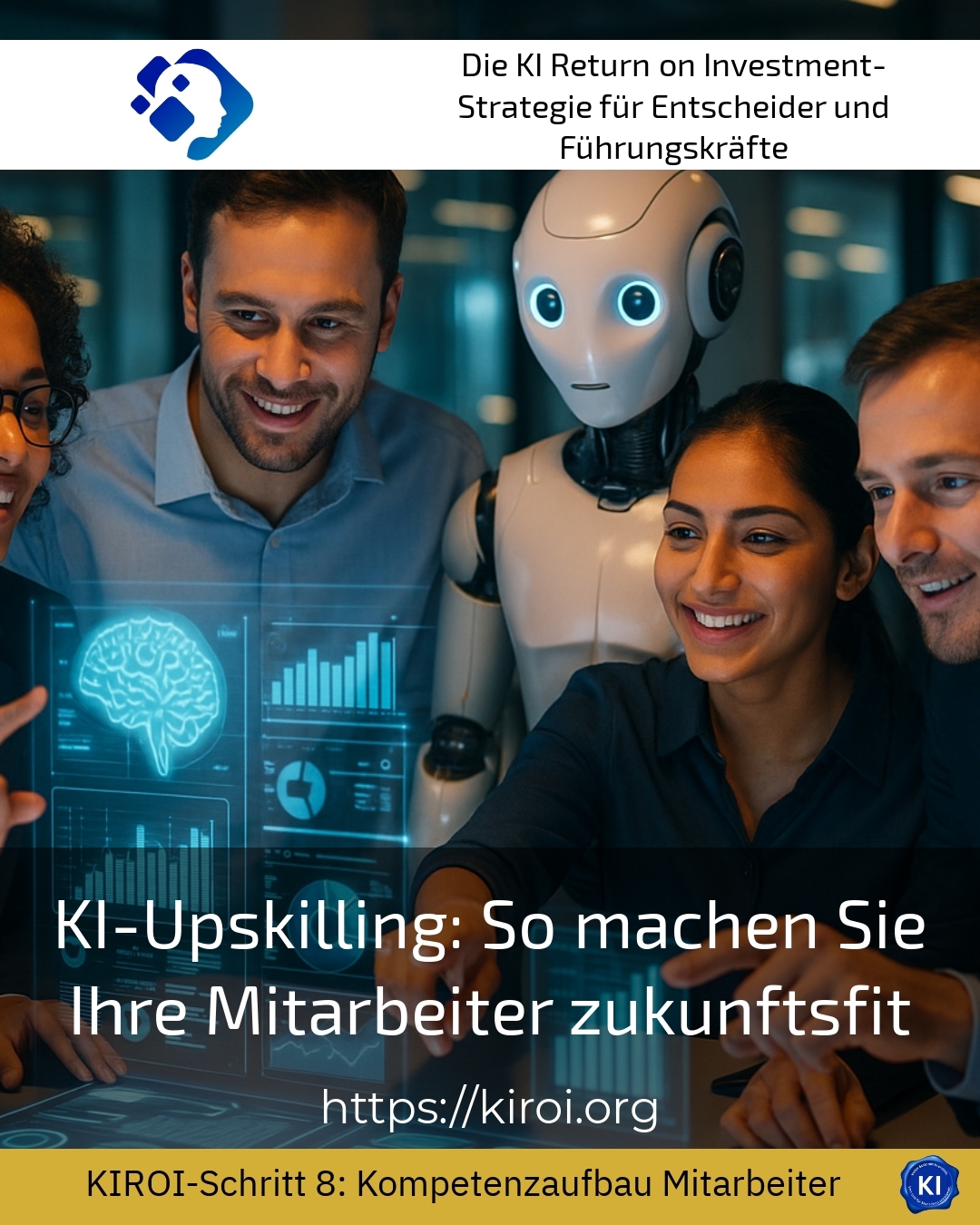
This question currently concerns executives and human resources managers in almost all sectors of the economy, as the rapid development of algorithmic systems and automated processes puts traditional skill profiles to the test. AI Upskilling In this context, it refers to the structured process through which organizations systematically prepare and empower their workforce to collaborate with intelligent technologies. This transformation does not happen overnight; it requires thoughtful guidance, strategic planning, and above all a deep understanding of the individual needs of the people within an organization.
Why qualifying your workforce should be a top priority now
The speed with which work requirements change surprises even experienced market observers time and again. Companies often report that activities that only a few years ago were carried out exclusively by skilled workers can now be carried out more efficiently with algorithmic support. This development not only affects highly specialized technology areas; it has now permeated all departments of an organization. The human resources department uses intelligent systems to pre-select applicants, while the controlling department employs automated analyses for more precise forecasts. At the same time, new opportunities are emerging in marketing for personalized customer communication, and production benefits from predictive maintenance.
Transruptions coaching supports organizations in these complex transformation projects because technological changes always require human development processes as well. Employees who feel threatened by the introduction of new systems often react with resistance or resignation. Therefore, it is crucial to provide early impulses and to take fears seriously.
Best practice with a AIROI customer
A medium-sized company with around 450 employees faced the challenge of digitizing its entire administration and introducing intelligent assistance systems at the same time. The initial skepticism of the workforce was significant, as many feared that their long-standing expertise could be undermined. The project team chose a participatory approach, in which employees from all levels of the hierarchy were actively involved in the design process. First, so-called digital scouts were trained who acted as multipliers in their respective departments and supported colleagues. These scouts received intensive training that included both technical fundamentals and communication skills. After six months, it became apparent that the acceptance of the new systems was significantly higher than originally predicted. The employees reported that they felt valued through the mentoring and saw the change as an opportunity rather than a threat. In particular, the regular reflection rounds helped them to identify concerns early and to work on them constructively.
AI upskilling as a strategic competitive advantage
Organizations that invest early in the competency development of their workforce gain significant advantages over competitors that neglect this aspect [1]. The ability to not only acquire new technologies but also effectively utilize them increasingly determines economic success. This is not about training every employee to become a programmer, but rather about a fundamental understanding of the possibilities and limitations of algorithmic systems.
In practice, it turns out that three key competence areas are particularly relevant. The first field encompasses the ability to critically evaluate automatically generated results. Employees must understand when they can trust the recommendations of a system and when human judgment is required. The second field concerns communication with intelligent systems, that is, the art of formulating precise queries and correctly interpreting results. Finally, the third field relates to ethical reflection, because the use of automated decision-making tools raises numerous questions.
Practical approaches for sustainable AI upskilling
Designing effective qualification programs first requires a careful analysis of the existing skills level and actual needs [2]. Clients often report that they feel overwhelmed by the abundance of continuing education offerings and do not know which content is relevant to their specific situation. This is where structured support comes into play, developing individual learning paths that are tailored to the specific requirements of the respective workplace.
A proven approach involves integrating learning directly into the workday rather than relegating it to separate training events. In doing so, employees have the opportunity to try out new tools in real-world conditions and reflect on their experiences as a team. This form of workplace-based learning has proven particularly effective because the transfer to practice occurs immediately.
Furthermore, leaders play a crucial role in shaping a learning-promoting culture. When supervisors themselves demonstrate openness to new technologies and make their own learning processes transparent, a climate is created in which employees also feel confident to ask questions and admit uncertainties. This psychological safety is a fundamental prerequisite for successful change processes.
Best practice with a AIROI customer
An international organization with locations in several European countries implemented a corporate-wide qualification program based on the principle of peer learning. The basic idea was that employees with different backgrounds worked together in mixed groups and learned from each other. Experienced colleagues shared their knowledge with newcomers, while they in turn brought fresh perspectives and questions. The program was accompanied by regular coaching sessions where obstacles were discussed and solutions were jointly developed. Particularly noteworthy was the decision to explicitly recognize learning time as working time and provide corresponding resources. This clear prioritization sent a strong signal to the entire workforce and underscored the strategic importance of the initiative. After a year, eighty percent of the participants reported that they felt much more confident in dealing with new technologies. Furthermore, cross-departmental collaboration had improved, as new networks had emerged through collaborative learning.
The human dimension of technological transformation
While focusing on technical competencies, the emotional side of change processes must not be underestimated. People react to profound disruptions with a wide range of emotions, from excitement to curiosity to fear and rejection [3]. Transruptive coaching takes these emotions seriously and creates spaces in which they can be expressed and processed. This support often proves to be just as important as the actual professional qualifications.
Many employees are concerned that their previous professional experience could be lost its value. They wonder if decades of learning and specialization are suddenly becoming obsolete. It is important here to communicate in a differentiated way and to point out that human judgment and knowledge of experience are by no means becoming superfluous. Rather, the focus shifts from routine tasks to tasks that require creativity, empathy, and complex decision-making abilities.
Another challenge lies in addressing different generations and skill levels equally. While younger employees often approach new technologies more confidently, older colleagues bring valuable experience that is indispensable for critically evaluating automated results. Success AI Upskilling- Programs use this diversity as a resource and promote intergenerational exchange.
Concrete steps to implement AI upskilling
The successful implementation of a qualification program begins with an honest assessment of the current situation. Which activities are expected to change in the coming years? What new skills are needed, and which existing skills are gaining in importance? These questions should not be answered solely by the management, but should be embedded in a broad dialogue with the workforce.
The next step is to identify and provide suitable learning formats. A combination of different approaches has proven effective in this regard. Self-directed learning with digital resources offers flexibility, while face-to-face workshops enable personal exchange. Mentoring programs connect experienced colleagues with less experienced colleagues, and practical projects create opportunities for application-oriented learning.
Ultimately, continuous evaluation is essential to monitor the success of the measures and, if necessary, to adapt them accordingly. In doing so, not only quantitative indicators such as participation rates should be considered, but also qualitative aspects such as the satisfaction of learners and the actual transfer to everyday work life.
Best practice with a AIROI customer
A service company with high customer contact faced the challenge of optimizing its service processes with intelligent assistance systems while maintaining the personal touch that its customers particularly appreciated. The qualification program was therefore deliberately designed in two parts: technical training combined with workshops to strengthen interpersonal skills. On the one hand, employees learned how to effectively use the new tools to respond faster to requests and provide relevant information. On the other hand, in moderated discussion rounds, they reflected on how, despite technological support, they could maintain an authentic relationship with their customers. A special element of the program were so-called empathy simulations, in which the participants took on the perspective of customers who were being confronted for the first time with automated systems. These exercises fostered a deeper understanding of potential irritations and helped develop communication strategies that combined technical efficiency with human warmth. The feedback from both employees and customers was overwhelmingly positive, showing that both aspects could be successfully integrated.
My AIROI Analysis
The systematic qualification of staff for collaboration with intelligent technologies represents one of the central leadership tasks of our time. From my consulting practice, I know that organizations that approach this process holistically and consider both technical and human aspects are significantly more successful than those that limit themselves to purely technical training. The willingness to change does not arise through top-down instruction, but through genuine participation and the experience of being taken seriously.
What seems particularly important to me is the realisation that AI Upskilling No project is a one-time event; it is a continuous process that must be embedded into the corporate culture. Technological development is advancing relentlessly, and the skills that are sufficient today may already be outdated tomorrow. Therefore, organizations need structures that not only enable lifelong learning but actively promote and value it.
At the same time, I advise being relaxed about excessive expectations. Not every new technology will revolutionize the workplace, and not every trend deserves immediate attention. A smart strategy combines openness to innovation with critical scrutiny and is based on the actual needs of the organization and its people. Transruptive coaching can provide valuable insights in this navigation and help leaders distinguish between substantial developments and fleeting hype.
In conclusion, I would like to emphasize that the future viability of organizations ultimately depends on the people who work in them. Technology is a tool whose value is only realized through competent and responsible use. Investments in the development of employees are therefore not costs but perhaps the most important contribution to long-term competitiveness.
Further links from the text above:
[1] McKinsey: Upskilling as a Strategic Imperative
[2] World Economic Forum: The Future of Jobs Report
[3] Harvard Business Review: Insights on Change Management
For more information and if you have any questions, please contact Contact us or read more blog posts on the topic Artificial intelligence here.









 Deutsch
 English (UK)