
Why do so many companies fail to implement intelligent systems despite expensive technology investments, while others seem to benefit effortlessly from the new opportunities and sustainably strengthen their market position?
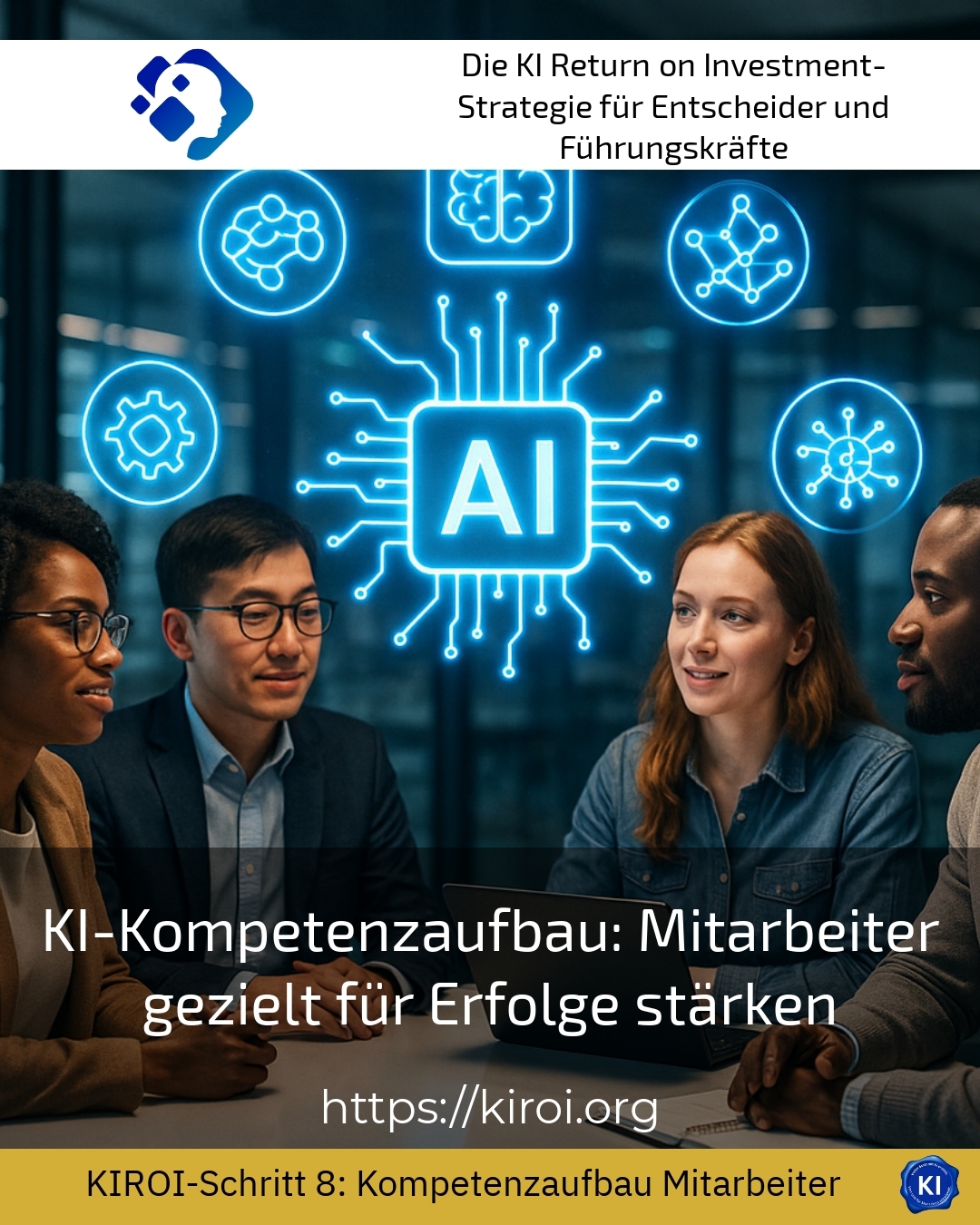
The answer rarely lies in the software itself. It is rather hidden in the minds of the people who are expected to work with these tools on a daily basis. AI competence building Today, it represents a crucial success factor. Companies invest millions of dollars in modern systems. At the same time, they neglect systematically empowering their workforce. This discrepancy leads to frustration at all levels. Employees feel overwhelmed and left alone. Executives wonder why they are not seeing productivity gains. The management team doubts the original investment decision. The problem lies not in the technology; it lacks structured guidance and targeted competence development.
The hidden challenge: bringing people and machines together
Smart systems are fundamentally changing work processes. They automate routine tasks and create space for creative activities. But this transformation is only possible with prepared teams. For example, a medium-sized mechanical engineering company implemented a predictive maintenance system. The technology reliably detected machine failures in advance. Nevertheless, the expected savings remained unfulfilled. The maintenance teams did not trust the predictions. They adhered to proven routines. Only after intensive training and guidance did their behavior change. The employees suddenly understood the logic behind the recommendations. They began to see the technology as a support.
One automotive supplier experienced similar difficulties. The company implemented an AI-based quality control system. The image recognition software identified production errors faster than any human eye. Nevertheless, the rejection rates initially increased. The inspectors deliberately ignored the system’s instructions. They felt threatened by their expertise. A structured coaching program fundamentally changed this dynamic. The employees learned to combine their professional expertise with the system’s capabilities. They became valuable human-machine teams.
Similar patterns are also evident in the logistics industry. A large shipping retailer used intelligent route optimization. The drivers should follow the suggested routes. Many did not. They trusted their experience more than the algorithm. Only when they understood the calculation basis did their behavior change. They realized how the system combined traffic data and delivery windows. This understanding created acceptance and willingness to cooperate.
Building AI Competence as a Strategic Necessity
The systematic development of employee skills requires a thoughtful approach. One-time training is not enough. Companies need continuous learning processes and professional support. Transruptions coaching offers a proven framework for this. It supports organizations in the profound transformation of their working methods. The methodology combines technical knowledge with behavioral change. It takes into account individual learning needs and organizational conditions.
A pharmaceutical company faced enormous challenges. The company wanted to use AI-based diagnostics in research. The scientists were skeptical. They feared losing their expertise. An accompanying coaching program specifically addressed these concerns. The researchers learned to use intelligent systems as tools. They retained final decision-making authority. This clarity created trust and motivation.
In the banking sector, the importance of competence development becomes particularly evident. Credit decisions are increasingly based on algorithmic analyses. The employees must understand and classify these recommendations. A regional credit institution therefore invested heavily in further training. The employees learned to critically question system proposals. They developed an understanding of the strengths and limitations of the technology. This combination of human judgment and machine analysis improved the decision quality measurably.
Best practice with a AIROI customer
A medium-sized machine tool manufacturer from southern Germany approached us because the implementation of an intelligent production planning system met with massive resistance. The production managers felt left out and not sufficiently involved. They sabotaged the new system by continuing to plan according to old patterns and consistently ignoring the software suggestions. The management was at a loss and was already considering abandoning the entire project. As part of our transruptive support, we first developed a deep understanding of the concerns and concerns of all involved parties. We conducted numerous one-on-one discussions and moderated workshops in which the employees were able to share their perspectives openly. It became apparent that many of the fears were based on misunderstandings and that the previous communication had neglected essential aspects. We established a mentoring program in which technically-savvy colleagues supported and mentored their team members. Additionally, we organized hands-on learning units in which the production managers were able to understand the system logic. After six months of intensive mentoring, the atmosphere had fundamentally changed, and the company was finally able to realize the efficiency gains predicted because the people behind the technology had understood the real value they could deliver.
Practical steps for sustainable AI competence building
The development of skills in handling intelligent systems follows certain principles. First, companies must honestly assess their current level of competence. Where are the employees today? What knowledge gaps exist? This inventory forms the basis for targeted measures. For example, a chemical company used anonymous surveys. The results surprised the management level. Many employees had fundamental understanding gaps that no one had suspected.
The second step involves defining concrete learning objectives. What should the employees be able to do after the qualification? An insurance company formulated precise competency descriptions. The claims analysts should be able to interpret AI damage analyses. They should be able to recognize exceptions and make reasoned decisions. This clarity helped in designing appropriate learning formats.
Selecting suitable methods represents the third step. Not everyone learns in the same way. Some prefer structured seminars. Others benefit from practical exercises in the workplace. An electronics manufacturer successfully combined different approaches. Online modules provided basic knowledge. Practical workshops deepened the application. Coaching sessions accompanied the individual development.
Cultural transformation as the foundation of change
Competency development alone is not enough. Companies also need to change their culture. They need an environment that allows experimentation and forgives mistakes. A telecommunications provider recognized this need early on. The company established so-called innovation spaces. There, employees could riskily try new technologies. They learned through trial and error. These experiences eliminated fears and strengthened self-confidence.
Executives play a central role in this transformation. They must actively lead the change and support it. A trading company therefore initially intensively trained its senior management. The managers learned how to support their teams in times of change. They developed coaching skills and communication abilities. This investment paid off multiple times. The employees felt better supported and guided.
The collaboration between departments is also changing through intelligent systems. A food manufacturer experienced this dynamic immediately. Quality assurance suddenly worked more closely with production. Both areas used the same data and analyses. This new interconnectedness required changed communication patterns. An accompanying coaching helped them overcome these challenges.
The role of professional guidance in building AI competence
Many companies underestimate the need for accompanying support during technological transformations. They focus on technology and forget about people. Transruptive coaching addresses this gap precisely. It offers structured support for all involved. The methodology takes into account both individual and organizational aspects. It combines competence development with cultural change.
One energy provider successfully used this guidance. The company implemented AI-based grid control. The technicians were supposed to work with intelligent recommendation systems. Initial skepticism was high. A multi-month coaching program fundamentally changed the attitude. The employees developed confidence in the technology. They recognized the added value for their daily work.
A medical technology company had a similar experience. The engineers were supposed to use AI-based development tools. Many feared that their creative abilities would be devalued. An accompanying coaching program addressed these concerns. The employees learned to use the technology as a tool to enhance their expertise. They became more productive without losing their identity as engineers.
Best practice with a AIROI customer
An international automotive supplier with several thousand employees in various locations sought support in implementing a company-wide AI system for supply chain management. The challenge was not only in the technical implementation but above all in the varying acceptance at the different locations. While some branches welcomed the innovation, others showed massive resistance and threatened indirect sabotage actions. Our transruptive coaching addressed the cultural differences and developed site-specific follow-up concepts that took local specifics into account. We formed internal champions at each location who acted as multipliers and contact points, able to support their colleagues in daily life. Regular cross-location workshops fostered the exchange of experiences and created a sense of community despite geographical distance. After eighteen months of intensive support, the company not only successfully implemented the system, but also established a new culture of technological openness that extended far beyond the original project and permanently changed the organization.
Long-term perspectives and sustainable development
The AI competence building It does not end after a training series. It must be understood as a continuous process. Technology is constantly evolving. Therefore, employees need regular updates of their knowledge. A software company established monthly learning formats. Short sessions kept the workforce up to date. This investment in continuous development paid off.
Recruitment is also changing due to the new requirements. Companies are looking for employees with the appropriate skills. A machine manufacturer adjusted its job profiles accordingly. Technical understanding and a willingness to learn gained importance. At the same time, the company invested in the development of existing employees. This combination ensured the long-term need for expertise.
Collaboration with external partners is also gaining in relevance. Universities and training providers are a useful addition to internal programs. A chemical company cooperated with a technical university. Employees were able to obtain professional qualifications on the job. This partnership brought fresh perspectives to the company.
My AIROI Analysis
The systematic development of employee competencies in handling intelligent systems represents one of the most important strategic challenges for companies in all industries today. My experience from numerous coaching projects clearly shows that technological investments cannot realize their potential without parallel investments in people. Companies that treat both dimensions equally achieve more sustainable results than those that rely solely on technology [1]. The key lies in the combination of structured competence development with cultural transformation and professional guidance. Individual learning needs must be taken into account as well as organizational frameworks and leadership aspects. The role of transruptional coaching is gaining increasing importance in this context, because it addresses exactly this multidimensionality and supports companies holistically in their transformation [2]. My analysis of different industries and company sizes shows that successful transformations typically take between twelve and twenty-four months and require continuous support. One-time training measures are not enough. Companies need long-term development programs that adapt to changing requirements. The investment in people pays off many times over, both through higher productivity and through increased commitment and reduced turnover [3].
Further links from the text above:
[1] McKinsey – The State of AI
[2] RisaWave – Transruptions-Coaching
[3] World Economic Forum – Future of Jobs Report
For more information and if you have any questions, please contact Contact us or read more blog posts on the topic Artificial intelligence here.






 Deutsch
 English (UK)