
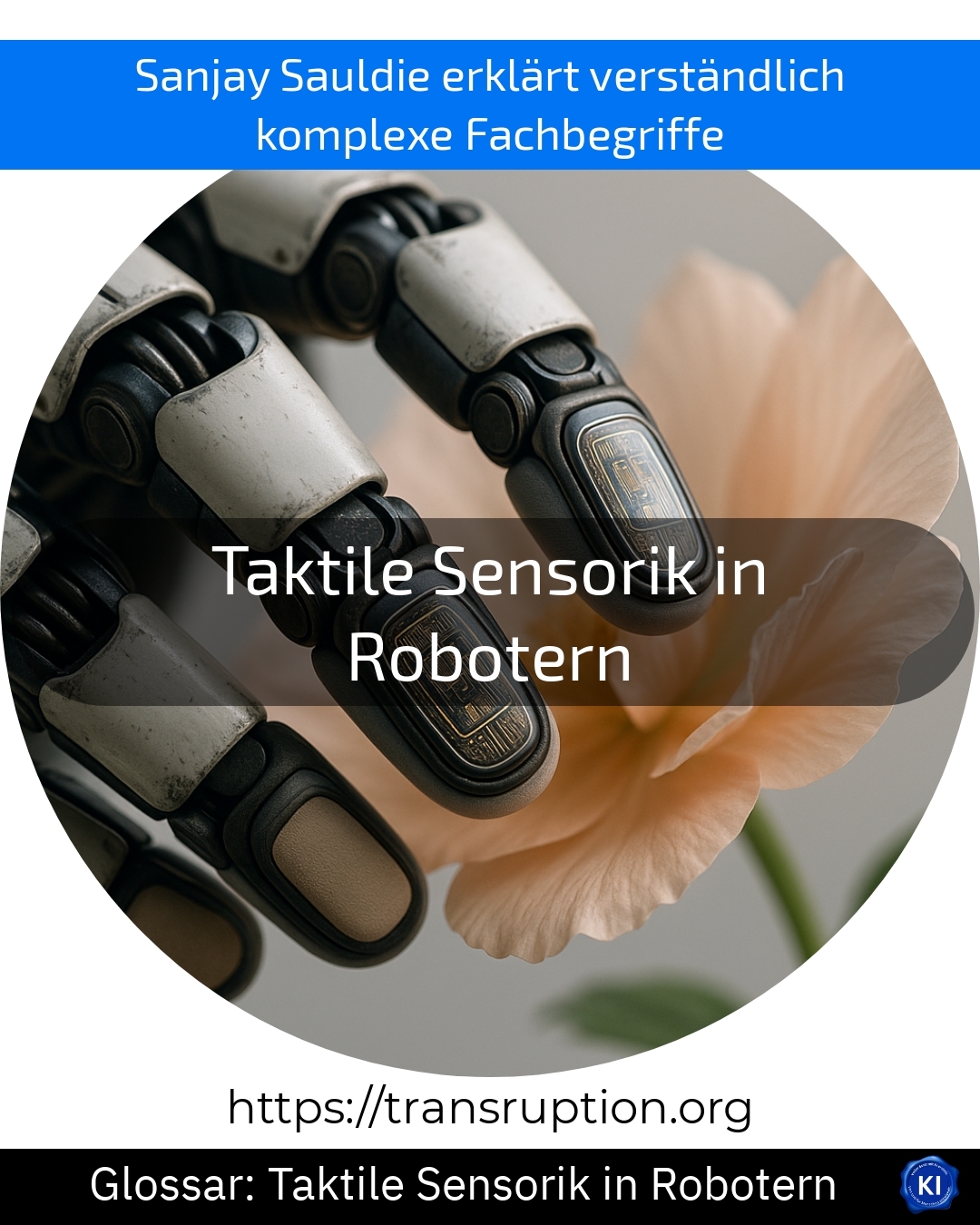
Tactile sensing in robots is primarily at home in the fields of robotics, automation, and artificial intelligence. It describes the ability of robots to perceive and evaluate touches and pressure, similar to the human sense of touch.
Using special sensors on gripping arms or robot hands, machines can detect how firmly they are pressing against an object or whether they have a secure grip on it. This makes robots much more flexible and safer, for example, when sorting fragile products or assembling sensitive components.
A simple example: a robot assembles a smartphone. Thanks to tactile sensors, it immediately senses if a glass panel is not seated correctly and carefully corrects it without breaking it. Without these sensors, the robot could only operate with a pre-set force and could potentially cause damage.
Tactile sensing in robots is revolutionising many industries, making workflows more precise, safer, and more efficient. This technology is particularly crucial for increased automation and quality in industry and manufacturing. In everyday life too, for example in domestic robots or medical robots, tactile sensing is gaining increasing importance.











 Deutsch
  English (UK)