
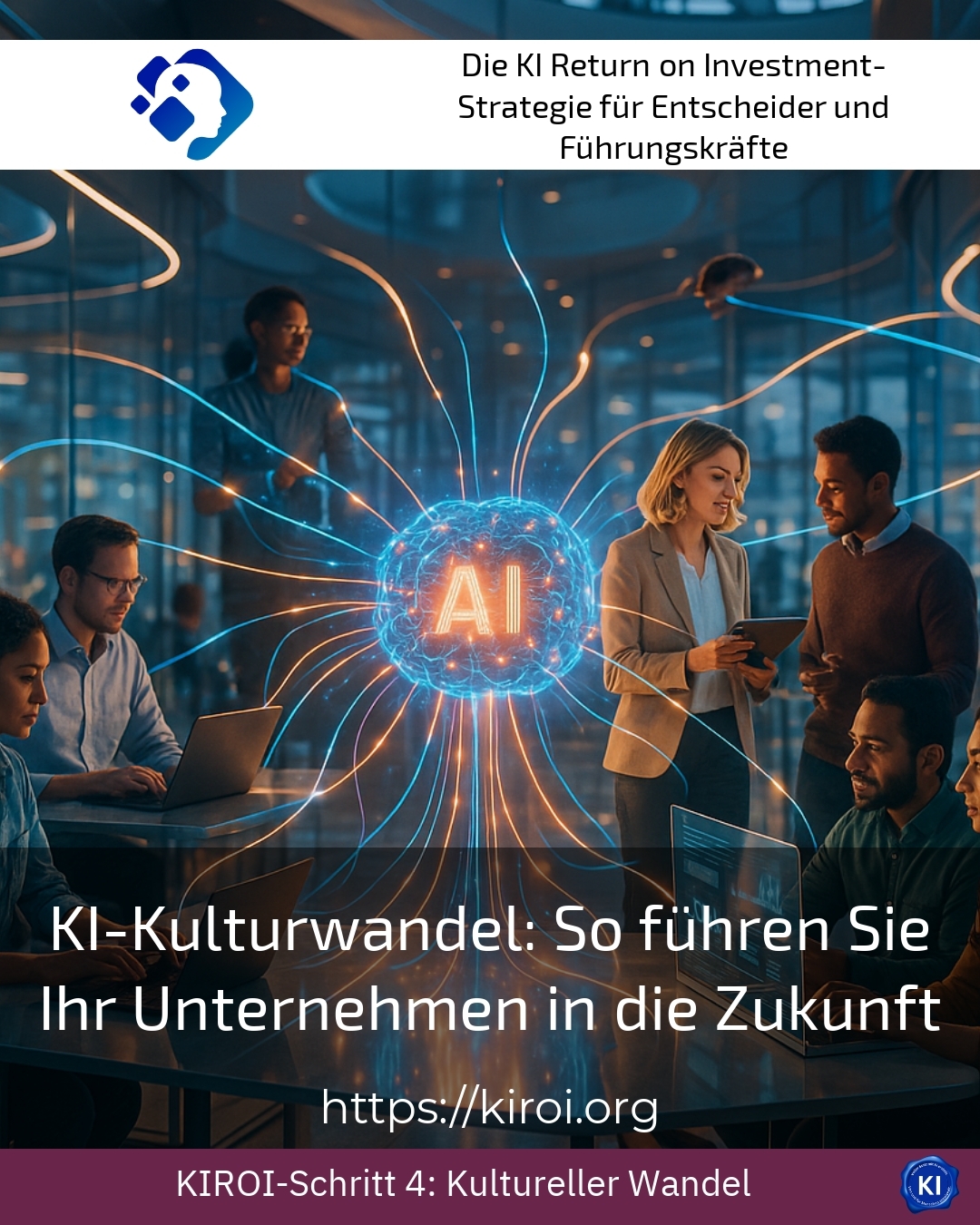
The way companies operate is undergoing a fundamental change. Those who hesitate today may lose out tomorrow. AI cultural change presents leaders with entirely new challenges. At the same time, it opens up unimagined opportunities for everyone willing to break new ground. This is not just about technology, but above all about people and their readiness for change.
Why the AI culture shift means more than just technology
Many organisations make a crucial mistake. They view the introduction of intelligent systems as purely a technical project. In doing so, they completely overlook the human dimension. A mechanical engineering company recently introduced an automated quality control system. The employees felt overlooked and reacted with resistance. The project initially failed due to a lack of acceptance, not the technology itself.
A supplier in the automotive sector had similar experiences. The management invested significant sums in predictive maintenance systems. However, they failed to involve the technicians. These technicians felt their expertise was not valued. The project only moved forward when the management changed its approach. A logistics company, in turn, took the opposite path. It brought all employees on board from the start. The result was significantly higher acceptance and faster implementation [1].
Best practice with a AIROI customer
A medium-sized company in plant engineering faced a particular challenge. Management wanted to introduce intelligent assistance systems in production. At the same time, there was great scepticism among long-serving skilled workers. Many feared that their expertise could be devalued. As part of the transruption coaching, we jointly developed a participatory approach. The experienced employees became active architects of change. They contributed their expertise and trained the new systems with their wealth of experience. The result exceeded all expectations: acceptance increased significantly, and the quality of the automated processes improved noticeably. Clients often report similar breakthroughs when they involve their teams early on. The project became a role model for other company locations. The skilled workers developed into internal ambassadors for change.
The role of leaders in AI cultural change
Leaders largely influence how changes are received within a company. Their attitude is contagious to the entire workforce. The plant manager of a metal processing company recognised this early on. He participated in training himself and showed genuine interest in the new possibilities. His openness had a ripple effect on the whole team. In another case, the leadership team was rather distant. The employees sensed this and reacted accordingly with reservation.
This was particularly evident with a manufacturer of industrial components. The managing director invested a lot of time in personal conversations with her teams. She listened carefully to concerns and took suggestions seriously. This attitude built trust and enabled a smoother transition. In contrast, a competitor relied on pure top-down communication. The result was resistance and delays in implementation [2]. A third example vividly demonstrates the importance of leading by example. The technical director of a manufacturing company used the new systems himself in his daily work. He openly shared his experiences with the team and also admitted his own initial difficulties.
Communication as the Key to Successful Change
Transparent communication forms the bedrock of any successful transformation. Employees want to understand why changes are happening and how they are affected. One electronics manufacturer established regular dialogue forums. There, employees could ask questions and voice concerns. This open atmosphere helped to reduce anxieties and foster motivation. A supplier to the aerospace industry went one step further. The company appointed so-called change ambassadors in each department. These served as points of contact and intermediaries between management and the workforce.
Negative news is also part of honest communication. A mechanical engineering company had to restructure certain areas of work. Management informed employees early on and offered training measures. This openness was appreciated by the employees and significantly eased the transition.
Qualification and competence development at the centre of the AI culture change
No sustainable change can succeed without targeted further training. Employees need new skills to cope with changing requirements. A manufacturer of precision instruments developed a comprehensive training programme. The courses imparted both technical knowledge and so-called soft skills. Particular focus was placed on dealing with uncertainty and change. An automotive supplier partnered with a university to develop tailored qualification offerings. Employees were able to acquire new skills alongside their jobs [3].
A particularly innovative approach comes from a precision engineering company. There, experienced specialists and younger employees learned from each other. The older ones shared their knowledge gained from experience, while the younger ones contributed technical expertise. This reciprocal learning strengthened cohesion and accelerated overall competence development.
Best practice with a AIROI customer
An internationally operating mechanical engineering company came to us with a complex request. The company had already invested heavily in new technologies. However, their utilisation remained at a low level. Employees felt overwhelmed by the new systems. In transruption coaching, we jointly analysed the causes of this blockage. It turned out that the training sessions were designed too abstractly and were out of touch with practical reality. We developed a new concept with a direct connection to the employees' daily work. Small learning groups worked on real tasks from their own areas. The successes motivated them to take further steps and reduced their reluctance. After six months, the active use of the new systems had tripled. The company today saves significant time on recurring tasks. At the same time, employees report higher job satisfaction because monotonous activities have been eliminated.
Adjusting organisational structures and breaking down silos
Traditional structures can significantly slow down change. Many companies are still organised into rigid departments with little interaction. A tool manufacturer recognised this problem in good time and reorganised itself into interdisciplinary project teams. The results improved significantly because different perspectives could converge. A manufacturer of industrial robots took a similar approach. The company created cross-departmental working groups for strategic projects. This significantly accelerated knowledge sharing.
Physical spaces also play a role in collaboration. An electronics manufacturer completely redesigned its office space. Open meeting zones now promote spontaneous exchange between departments. These spatial changes noticeably support the cultural shift [4].
Dealing with resistance and fears
Resistance to change is natural and understandable. It often signals legitimate concerns that want to be heard. A medical technology company initially experienced strong resistance from its workforce. Instead of ignoring this, management set up anonymous feedback channels. The concerns collected were taken seriously and considered in further planning. An automotive supplier offered psychological support for employees particularly affected. This support helped many to overcome their fears and embrace new things.
It is particularly helpful to make early successes visible. A manufacturer of packaging machines regularly communicated positive developments. Employees who benefited from the changes shared their experiences with colleagues. This peer-to-peer communication was often more convincing than official announcements.
Sustainability and long-term perspectives
A real cultural shift doesn't happen overnight. It requires patience, perseverance, and continuous attention. A supplier to the energy industry consciously set long-term goals. The company understands change as an ongoing process, not a one-off project. A manufacturer of laboratory technology regularly reviews the status of cultural development. Feedback rounds and employee surveys provide important clues for adjustments. A third example shows how important flexibility is. A plant manufacturer had to adapt its original plans several times. The willingness to correct course proved to be a crucial success factor [5].
My AIROI Analysis
The AI-driven cultural transformation presents companies with far-reaching challenges. It demands a rethink at all organisational levels. Technological investments alone are insufficient to bring about sustainable change. People must be at the centre of all considerations because even the best technical solutions will fail without acceptance. Leaders bear a special responsibility in this regard as role models and pioneers. Their attitude significantly shapes how the change is received and lived within the organisation.
The accompanying support provided by transruption coaching can help organisations to avoid typical stumbling blocks and to shape change constructively. This is not about ready-made solutions, but about impulses and guidance on each company's individual journey. Experience shows that participative approaches are significantly more successful than authoritarian directives. Employees who experience themselves as active shapers engage positively with the change. Qualification plays a central role in this, as new competences create security and self-confidence. Organisational structures must be adapted to the changed requirements in order to promote collaboration and knowledge exchange. Resistance deserves attention and respect, as it often contains valuable pointers for further development. Long-term thinking is essential because genuine cultural change takes time and cannot be forced. Companies that consistently follow this path will be able to seize the opportunities of new possibilities.
Further links from the text above:
[1] McKinsey – Culture Change That Sticks
[2] Harvard Business Review – Leadership and Change Management
[3] World Economic Forum – Future of Work and Skills
[4] Deloitte – Organisation Transformation
[5] Gartner – Change Management Insights
For more information and if you have any questions, please contact Contact us or read more blog posts on the topic Artificial intelligence here.






 Deutsch
  English (UK)