
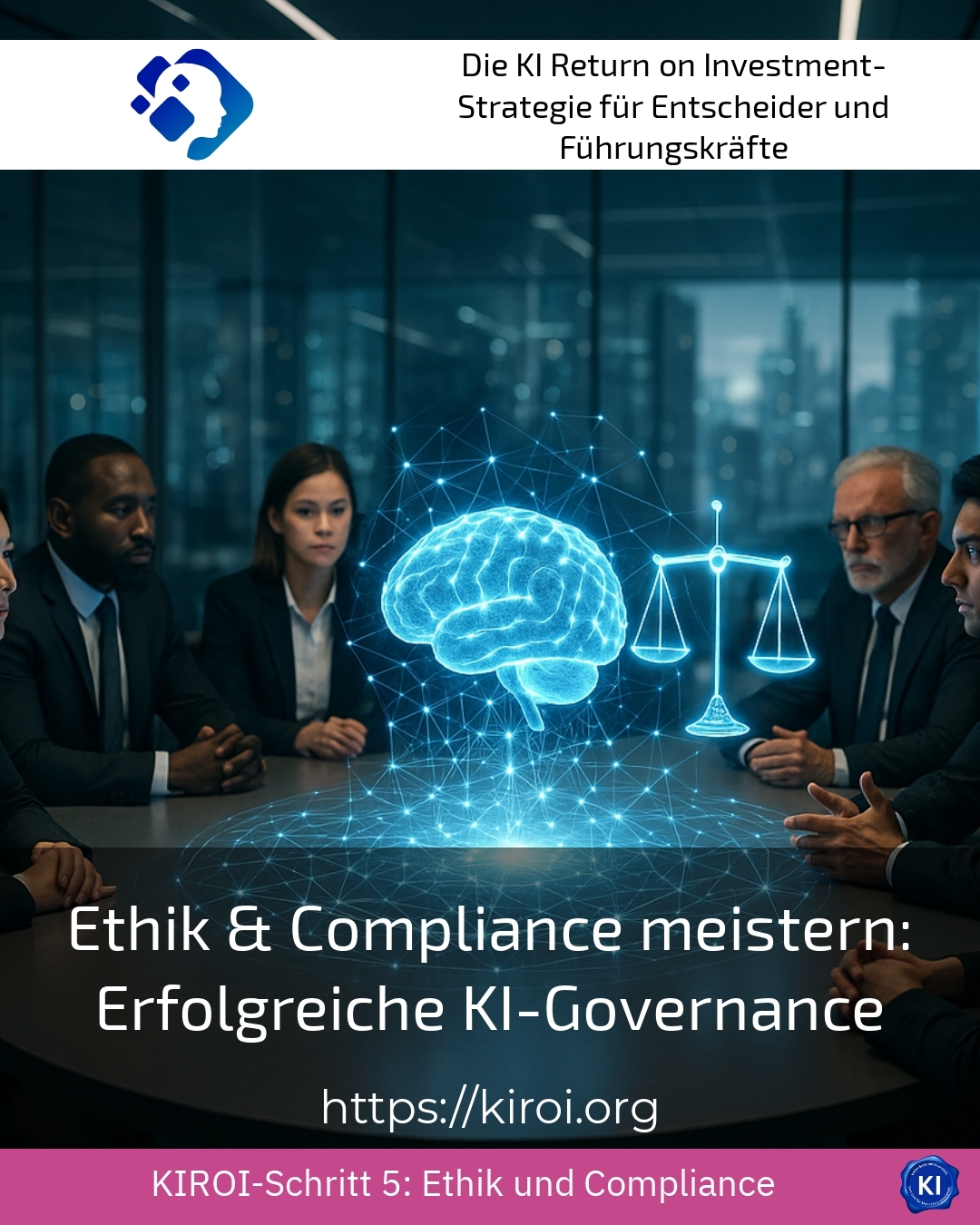
The digital transformation is transforming our business world at an astonishing pace, and with it, completely new challenges are emerging for companies of all sizes. As intelligent systems increasingly make decisions that directly affect people, a central question arises: How can successful AI governance be achieved in a time of constant change? The answer lies not only in technical solutions but above all in well-thought-out frameworks that combine responsibility and innovation. Companies that get their strategies right today will be among the winners tomorrow. But the path to achieving this requires courage, foresight, and the willingness to question established paradigms.
The fundamentals of responsible technology management
Responsible technology management does not begin with the implementation of complex regulations, but rather with a fundamental understanding of what values a company wants to represent and how these values can be translated into concrete actions. It is repeatedly shown that organizations that develop clear guidelines early are significantly better positioned than those that only react when problems have already arisen [1]. Developing a viable strategy requires the involvement of various perspectives from different business areas.
In practice, this means that leaders must first understand the impact automated decision-making processes can have on employees, customers, and business partners. For example, a financial services provider must carefully consider how to make algorithmic credit decisions transparent, while a healthcare company must exercise particular caution when processing sensitive patient data. These industry-specific requirements make it clear why standardized solutions often aren’t sufficient.
Best practice with a AIROI customer
A medium-sized manufacturing company faced the challenge of implementing intelligent quality control systems without compromising the trust of its long-standing workforce. In a transruptive coaching session, we developed a participatory approach together, in which employees were involved from the very beginning in the implementation process. The factory workers brought their practical knowledge, while management was responsible for the strategic direction. Within six months, a governance framework was created that took both technical requirements and human needs into account. The error rate in production fell by a significant twenty percent, while at the same time employee satisfaction increased measurably. Particularly noteworthy was that the employees perceived the new systems not as a threat, but as support for their daily work. This success impressively demonstrates how important careful guidance can be in such transformation projects.
Successful AI governance through transparent processes
Transparency forms the foundation of any successful governance strategy because it creates trust and at the same time provides the basis for continuous improvement. Companies that openly communicate how their systems work and what decision criteria underlie them position themselves as trustworthy partners in an increasingly skeptical market environment [2]. However, this openness also requires the courage to admit one’s own weaknesses and learn from mistakes.
In the insurance industry, for example, leading providers are now relying on so-called explainability dashboards that make it clear to customers why certain premiums are calculated. In the human resources field, advanced companies are developing mechanisms that ensure that recruitment processes are fair and free from discrimination. These examples illustrate that transparency is not only a moral imperative but also brings tangible business benefits.
Documenting decision-making plays a central role in this. Supervisory authorities worldwide are tightening their requirements for the traceability of automated decisions. Companies that act proactively in this area not only gain regulatory certainty but also develop a deeper understanding of their own processes. This understanding, in turn, enables targeted optimizations and innovations.
Practical implementation in daily business operations
Translating abstract principles into concrete instructions for action poses significant challenges for many organizations. Successful companies therefore rely on multidisciplinary teams that combine technical expertise with legal knowledge and ethical competence. These teams do not operate in isolation; they are closely integrated into the operational business processes.
A logistics company recently told us how introducing regular ethics audits had improved its route optimization. The original solution had calculated efficient routes, but neglected the drivers’ working conditions. After the revision, taking ethical criteria into account, both employee satisfaction and delivery reliability improved. Examples like these show that responsible action and economic success are by no means incompatible.
Risk management as an integral component of AI governance
Every new technology carries risks, and intelligent systems are no exception. Well-thought-out risk management identifies potential dangers early on and develops strategies to minimize these risks [3]. The goal is not to prevent innovation, but to steer it in safe directions.
In retail, for example, companies are increasingly using predictive models for inventory planning. However, a flaw in such systems can lead to massive overstocking or critical supply bottlenecks. Therefore, forward-thinking retailers implement multilayered control mechanisms that combine automated plausibility checks with human expertise. This hybrid approach combines the best of both worlds.
The energy sector also provides insightful examples. Network operators are deploying intelligent load-balancing systems, where misjudgments can have serious consequences. Leading companies in the industry have therefore developed comprehensive fail-safe mechanisms that automatically switch to manual control in the event of unrealistic results. This approach illustrates how technological innovation and safety thinking can go hand in hand.
Best practice with a AIROI customer
A telecommunications company approached us because its customer service chatbot had repeatedly caused negative headlines. Although the system had efficiently handled customer inquiries, it occasionally provided answers that were perceived as insensitive or inappropriate. As part of our support, we developed a multi-stage quality assurance system that combined automated checks with human oversight. Additionally, we established a feedback loop that enabled continuous learning from customer complaints. The implementation took about four months and required intensive collaboration between technical teams and customer service staff. The result exceeded all expectations: Customer satisfaction measurably increased, while at the same time processing times could be further optimized. This project illustrates how transruptional coaching can help address complex challenges holistically and develop sustainable solutions.
Training and competence development as success factors
The best governance structure remains ineffective if employees do not understand it or cannot apply it. Therefore, forward-thinking companies invest significant resources in training programs that not only impart technical knowledge but also promote ethical reflection. These programs are not exclusively aimed at executives or IT specialists.
For example, a car manufacturer has developed a comprehensive training program that sensitizes all employees to the opportunities and risks of intelligent systems. From the production worker to the board member, all employees undergo modules tailored to their respective areas of responsibility. This investment pays off: problems are identified earlier, and innovative ideas emerge at all levels of the hierarchy.
The importance of continuous training is also evident in the banking sector. Institutions that regularly train their employees report significantly fewer compliance violations and a higher rate of innovation. Employees feel empowered to critically examine new technologies and contribute constructively to improvements.
Cultural change as a prerequisite for sustainable governance
Successful AI governance requires more than guidelines and processes – it demands a fundamental cultural change. Organizations must create an atmosphere in which ethical concerns can be openly discussed without employees fearing negative consequences [4]. This psychological safety forms the foundation for responsible behavior at all levels.
In healthcare, the importance of such a culture is particularly evident. Hospitals that promote an open culture of error see better treatment outcomes because problems can be detected and resolved more quickly. Translated to the use of intelligent systems, this means: Employees who dare to express doubts about algorithmic decisions contribute significantly to quality assurance.
The pharmaceutical industry provides further insightful examples. Research departments that employ data-driven analytical methods benefit enormously from a culture that encourages critical questioning. Scientists who report unusual findings without hesitation help to identify errors early and efficiently allocate resources.
External partnerships and collaborations are strengthened
No company can handle the complex challenges of responsible technology management alone. Therefore, partnerships with research institutions, industry associations, and specialized consulting companies are becoming increasingly important. These collaborations enable the exchange of best practices and accelerate the development of common standards.
In the mobility sector, leading companies, for example, work closely with universities to explore ethical issues surrounding autonomous driving. These collaborations not only enrich academic research but also provide practically applicable insights for product development. Similar partnerships are emerging in medical technology, where manufacturers are working with clinics to develop responsible solutions for diagnostic support systems.
My AIROI Analysis
The discussion about responsible technology governance clearly shows that we are at a crucial turning point. Companies that lay the foundations for sustainable governance today will enjoy significant competitive advantages in the years to come. The goal is not to slow down technological progress, but to design it in a way that serves people.
My experience from numerous consulting projects shows that successful organizations share certain common characteristics. They do not view governance as a burdensome obligation, but as a strategic opportunity. They invest in people as well as in technology. And they understand that responsibility is not an obstacle to innovation, but a necessary prerequisite for it.
At the same time, I observe that many companies are still uncertain about how to approach this transformation. The complexity of the topic can be overwhelming, and this often leads to a paralysis of action. This is where our approach comes in: Through structured support, we help organizations build a governance structure step by step that suits their specific situation. This individual approach distinguishes sustainable success from short-term, illusory solutions.
The years ahead will be crucial. Regulatory requirements will continue to rise, and societal expectations for responsible business practices are growing. Those who act now not only gain an advantage; they also help shape a future in which technology is used for the benefit of all.
Further links from the text above:
[1] Federal Ministry for Economic Affairs and Climate Protection – Artificial Intelligence
[2] AlgorithmWatch – Civil society organization for algorithmic responsibility
[3] Federal Office for Information Security – Companies and Organizations
[4] Platform Learning Systems – The platform for artificial intelligence
For more information and if you have any questions, please contact Contact us or read more blog posts on the topic Artificial intelligence here.









 Deutsch
 English (UK)