
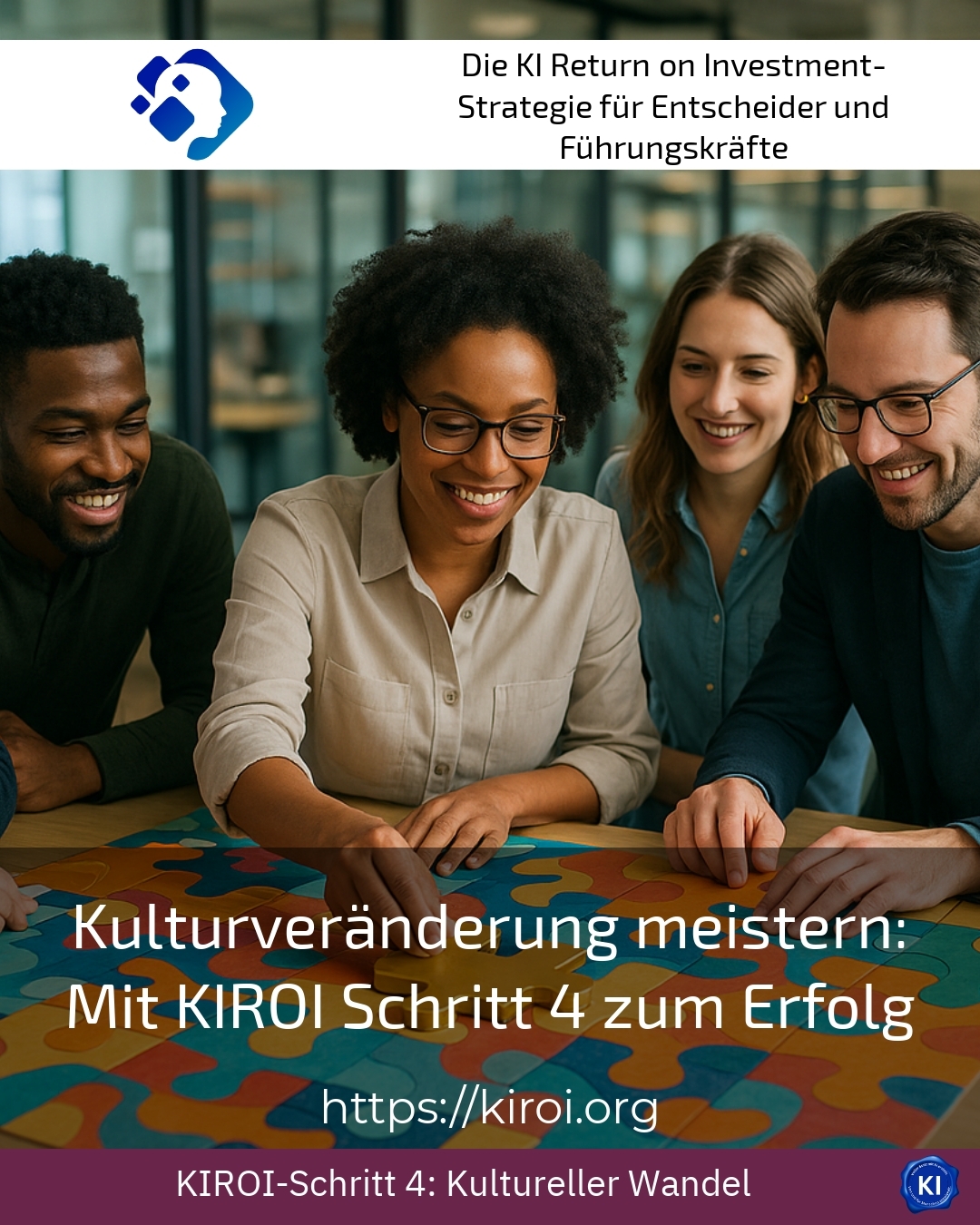
Cultural change is a key lever for companies today that want to face new challenges and grow sustainably. Many organisations recognise that classic approaches are not enough on their own. Instead, a structured process is needed that systematically changes values, behaviours, and beliefs. Cultural change is not achieved through superficial measures, but through a profound transformation that involves leaders, employees, and processes equally.
Cultural Change: Why It's Necessary
Companies today face complex demands. Market changes, new technologies, and increasing expectations for collaboration require a flexible and open corporate culture. Cultural change helps organisations become more agile and foster innovation. Clients often report coming to us with issues such as a lack of communication, low motivation, or resistance to change.
A practical example: A medium-sized mechanical engineering company was experiencing stagnant innovation rates and internal conflicts. Through targeted cultural change, management was able to introduce new communication formats and involve the team more closely. The result was a noticeable improvement in cooperation and an increase in creative solutions.
Another example: a global consumer goods manufacturer introduced regular feedback rounds and workshops. This created an open feedback culture that strengthened trust and increased employee retention. A service company also benefited by specifically coaching managers and developing shared values.
Cultural Change with AIROI Step 4
AIROI Step 4 is a proven approach to systematically drive cultural change. It relies on the active role of leaders as role models and multipliers. They are not just implementers, but shapers of the new culture. New values and behaviours are anchored through targeted measures such as coaching, workshops and regular reflections.
For example: In a large service company, AIROI Step 4 was used to empower managers as drivers of cultural change. The combination of individual coaching and collective reflection led to greater acceptance of the new leadership principles. Employees reported increased transparency and a stronger identification with the company's objectives.
Another example: A global consumer goods manufacturer only truly began its transformation when the leadership team learned to communicate constructive feedback openly. This led to a noticeable culture of trust and higher engagement. A mid-sized mechanical engineering company also benefited by establishing regular team discussions and feedback rounds.
Cultural Change: Practical Steps
For a successful culture change, a clear plan is recommended. First, the existing culture should be analysed. This includes surveys, interviews, and observation of workflows. Next, a „target culture“ is defined, which describes the desired values and behaviours.
Leaders should act as role models and reflect on their own blind spots. Regular communication rounds and open meeting formats promote transparency and participation. New spaces and formats, such as retrospectives or check-in/check-out at team meetings, enable change in everyday life.
An example: A service provider introduced regular retrospectives to monitor the progress of the cultural transformation. Employees were able to provide feedback and develop solutions together. Another example: A global consumer goods manufacturer appointed „ambassadors“ for the new culture who reported directly to senior management. A medium-sized engineering firm also benefited by highlighting successes and boosting motivation.
My analysis
Cultural change is a complex process that requires time and continuous support. AIROI Step 4 shows how leaders can act as active designers and role models. The combination of individual support, collective reflection, and new communication formats promotes the sustainable embedding of the desired culture. Companies that embark on this path often report increased employee motivation and improved competitiveness.
Further links from the text above:
Successful culture transformation for businesses
AIROI Step 4: Driving Cultural Transformation with Purpose
Cultural change: 6 effective steps to transform company culture
Mastering Organisational Culture Change: AIROI Step 4 Revealed
Cultural change in companies: Your path to the future
For more information and if you have any questions, please contact Contact us or read more blog posts on the topic Artificial intelligence here.









 Deutsch
  English (UK)