kiroi.org

KIROI - Artificial Intelligence Return on Invest
The AI strategy for decision-makers and managers

Business excellence for decision-makers & managers by and with Sanjay Sauldie

KIROI - Artificial Intelligence Return on Invest: The AI strategy for decision-makers and managers

KIROI - Artificial Intelligence Return on Invest: The AI strategy for decision-makers and managers

Start » KIROI Step 4: Driving Cultural Transformation with Purpose
21 March 2025

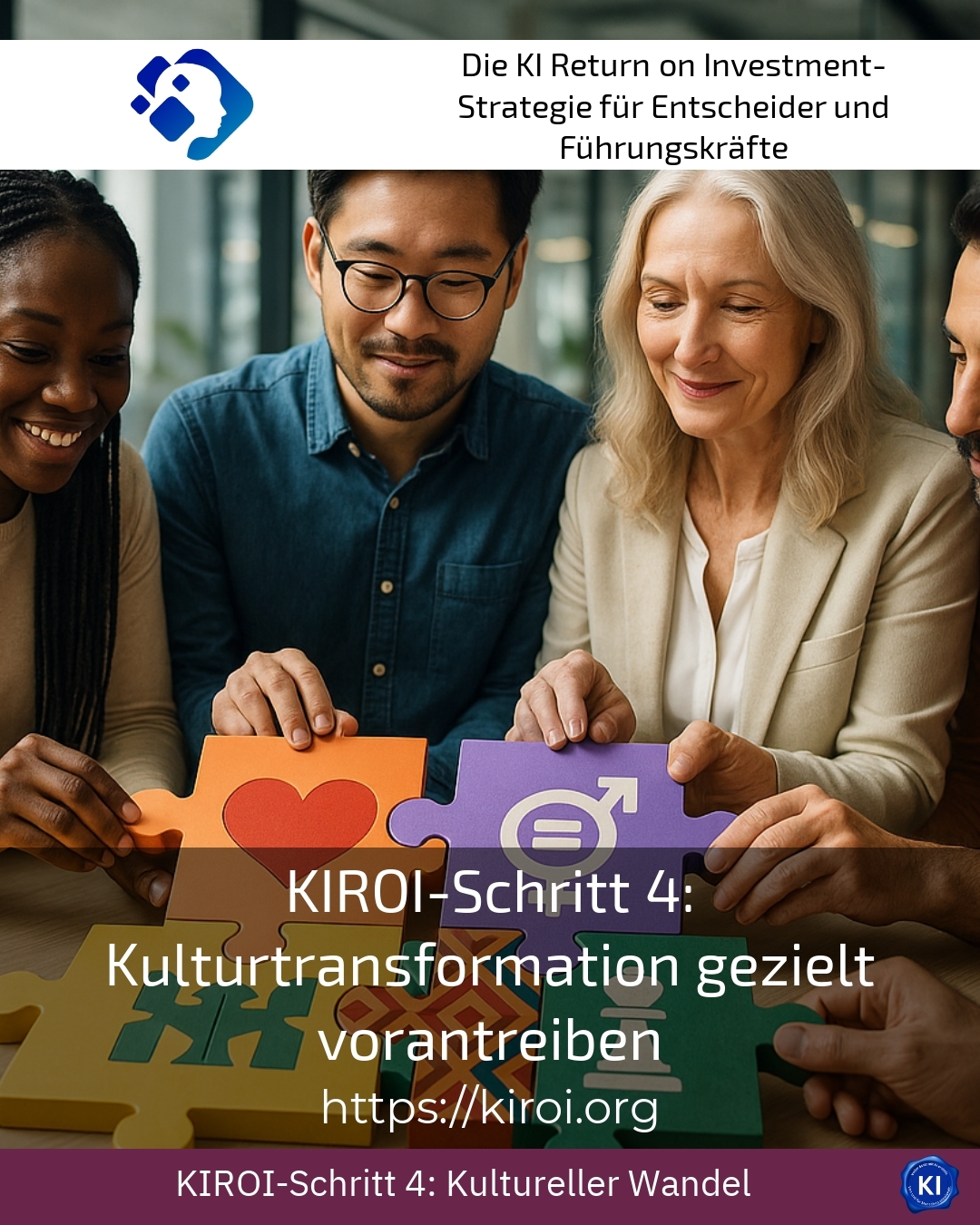
KIROI Step 4: Driving Cultural Transformation with Purpose

4.9
(1768)

Cultural transformation is a crucial lever for many companies today to remain competitive and innovative in the long term. According to modern insights, such a transformation cannot be achieved through superficial measures, but rather through targeted changes to values, behaviours, and beliefs within the organisation. KIROI Step 4 supports companies in systematically and effectively driving cultural transformation.

Shaping and promoting cultural transformation deliberately

At its core, cultural transformation means change at a deeper level. Companies don't change their culture solely through communication campaigns or symbolic gestures. Rather, it's about developing behaviours and attitudes that foster innovation and collaboration. At transruptions-Coaching, we guide companies through precisely this process – with impulses, strategies, and suitable methods that sustainably initiate and support cultural change.

A common topic that leaders come to us with is the challenge of making cultural change tangible without overwhelming employees. Some teams report that while they want change, it's unclear how they can truly live new values in their day-to-day work. This is where we focus our efforts, supporting them in selecting suitable measures, such as communication training, feedback workshops, or interdisciplinary project groups that provide practical experience in new ways of working.

BEST PRACTICE with a Client (Name withheld due to NDA) Guidance from transruptive coaching helped a medium-sized mechanical engineering firm foster its cultural transformation from siloed thinking to open, cross-team collaboration. Regular feedback sessions and joint workshops created a new awareness of mutual understanding and trust, which greatly improved collaboration and increased innovation.

Insights from Practice: Methods for Culture Transformation

In practice, cultural transformation is successful when it operates on multiple levels simultaneously. These include

  • the involvement of managers as role models and active supporters,
  • the creation of spaces for open exchange and collaborative work,
  • as well as the adaptation of structures and processes that enable and reward changes in behaviour.

As an example, an international IT company not only used agile methods in project management but also restructured meeting formats to promote transparency and participation. This led to a noticeable increase in employee responsibility and team dynamics.

Similarly, a service provider redesigned its office space to visualise and reinforce a cultural shift with open workspaces and informal meeting zones. Employees reported more open communication and stronger networking.

In another example, a manufacturing company described how it established a culture of continuous improvement through targeted training and feedback systems. Employees felt valued and found more enjoyment in their work.

The Role of Leaders in Cultural Change

Leaders are key figures in cultural transformation. They must not only communicate new values but also embody them. This builds credibility and motivates employees to follow suit.

A typical concern in consultations is how managers can appear authentic through concrete behavioural changes. Here, we offer practice-oriented coaching sessions in which managers reflect on their roles and develop options for action.

BEST PRACTICE with a client (name withheld due to NDA): In a medium-sized company, management was closely supported to transition from a controlling to a coaching leadership style. This enabled employees to have more scope for self-organisation and fostered an innovation-friendly culture.

From knowledge to lived change: action recommendations

To effectively drive cultural transformation, it is advisable to consider the following steps:

  • Clear objectives Let's make sure the values and behaviours that should be dominant in the company SMART (Specific, Measurable, Achievable, Relevant, Time-bound). To help me formulate these, please tell me: * **What is the company's overall mission and vision?** (This will help ensure the values are relevant.) * **What are the key strategic objectives for the next 1-3 years?** (This will help make the goals achievable and relevant.) * **What are the biggest challenges the company is currently facing?** (Understanding challenges can highlight areas where specific values or behaviours are most needed.) * **What are some examples of behaviours that you would like to see more of, or less of, in the company?** (This will help with specificity.).
  • Analysis of the existing culture To make the current situation transparent through surveys and interviews.
  • Engage leaders You are multipliers and require your own coaching and support.
  • Creating new spaces and formats Open meetings, workshops, and feedback rounds facilitate change in everyday life.
  • Continuous support Cultural change is a process; milestones should be regularly reviewed and adjusted.

A company in the automotive supply industry reports how the introduction of regular retrospectives and the breaking down of hierarchies contributed to a noticeably agile culture. Employees felt more motivated and innovative.

Even a financial services provider was able to establish more open communication through the conscious promotion of a culture of error and trust, and was thus able to react more quickly to market changes.

Another example shows a technology start-up that advanced a culture of collaboration through transparent target processes and regular exchange events, enabling stability and growth.

My analysis

A successful culture transformation can significantly improve a company's innovative strength and collaboration. Prerequisites include clear goals, active leadership, suitable spatial and communication formats, and continuous support. KIROI Step 4 shows how these complex elements can systematically work together to support sustainable change. Companies that take this path often report increased employee motivation and better competitiveness.

Further links from the text above:

Cultural transformation as the basis for lasting success [1]

Examples of strong company culture [2]

How do I transform my company culture? 5 steps [3]

Cultural transformation across the entire organisation [11]

For more information and if you have any questions, please contact Contact us or read more blog posts on the topic Artificial intelligence here.
How useful was this post?

Click on a star to rate it!

Average rating 4.9 / 5. Vote count: 1768

No votes so far! Be the first to rate this post.

Spread the love

transruption.org

The digital toolbox for
the digital winners of today and tomorrow

Business excellence for decision-makers & managers by and with Sanjay Sauldie

transruption
transruption

transruption: The digital toolbox for
the digital winners of today and tomorrow

Start » KIROI Step 4: Driving Cultural Transformation with Purpose
21 March 2025

KIROI Step 4: Driving Cultural Transformation with Purpose

4.9
(1768)

Cultural transformation is a crucial lever for many companies today to remain competitive and innovative in the long term. According to modern insights, such a transformation cannot be achieved through superficial measures, but rather through targeted changes to values, behaviours, and beliefs within the organisation. KIROI Step 4 supports companies in systematically and effectively driving cultural transformation.

Shaping and promoting cultural transformation deliberately

At its core, cultural transformation means change at a deeper level. Companies don't change their culture solely through communication campaigns or symbolic gestures. Rather, it's about developing behaviours and attitudes that foster innovation and collaboration. At transruptions-Coaching, we guide companies through precisely this process – with impulses, strategies, and suitable methods that sustainably initiate and support cultural change.

A common topic that leaders come to us with is the challenge of making cultural change tangible without overwhelming employees. Some teams report that while they want change, it's unclear how they can truly live new values in their day-to-day work. This is where we focus our efforts, supporting them in selecting suitable measures, such as communication training, feedback workshops, or interdisciplinary project groups that provide practical experience in new ways of working.

BEST PRACTICE with a Client (Name withheld due to NDA) Guidance from transruptive coaching helped a medium-sized mechanical engineering firm foster its cultural transformation from siloed thinking to open, cross-team collaboration. Regular feedback sessions and joint workshops created a new awareness of mutual understanding and trust, which greatly improved collaboration and increased innovation.

Insights from Practice: Methods for Culture Transformation

In practice, cultural transformation is successful when it operates on multiple levels simultaneously. These include

  • the involvement of managers as role models and active supporters,
  • the creation of spaces for open exchange and collaborative work,
  • as well as the adaptation of structures and processes that enable and reward changes in behaviour.

As an example, an international IT company not only used agile methods in project management but also restructured meeting formats to promote transparency and participation. This led to a noticeable increase in employee responsibility and team dynamics.

Similarly, a service provider redesigned its office space to visualise and reinforce a cultural shift with open workspaces and informal meeting zones. Employees reported more open communication and stronger networking.

In another example, a manufacturing company described how it established a culture of continuous improvement through targeted training and feedback systems. Employees felt valued and found more enjoyment in their work.

The Role of Leaders in Cultural Change

Leaders are key figures in cultural transformation. They must not only communicate new values but also embody them. This builds credibility and motivates employees to follow suit.

A typical concern in consultations is how managers can appear authentic through concrete behavioural changes. Here, we offer practice-oriented coaching sessions in which managers reflect on their roles and develop options for action.

BEST PRACTICE with a client (name withheld due to NDA): In a medium-sized company, management was closely supported to transition from a controlling to a coaching leadership style. This enabled employees to have more scope for self-organisation and fostered an innovation-friendly culture.

From knowledge to lived change: action recommendations

To effectively drive cultural transformation, it is advisable to consider the following steps:

  • Clear objectives Let's make sure the values and behaviours that should be dominant in the company SMART (Specific, Measurable, Achievable, Relevant, Time-bound). To help me formulate these, please tell me: * **What is the company's overall mission and vision?** (This will help ensure the values are relevant.) * **What are the key strategic objectives for the next 1-3 years?** (This will help make the goals achievable and relevant.) * **What are the biggest challenges the company is currently facing?** (Understanding challenges can highlight areas where specific values or behaviours are most needed.) * **What are some examples of behaviours that you would like to see more of, or less of, in the company?** (This will help with specificity.).
  • Analysis of the existing culture To make the current situation transparent through surveys and interviews.
  • Engage leaders You are multipliers and require your own coaching and support.
  • Creating new spaces and formats Open meetings, workshops, and feedback rounds facilitate change in everyday life.
  • Continuous support Cultural change is a process; milestones should be regularly reviewed and adjusted.

A company in the automotive supply industry reports how the introduction of regular retrospectives and the breaking down of hierarchies contributed to a noticeably agile culture. Employees felt more motivated and innovative.

Even a financial services provider was able to establish more open communication through the conscious promotion of a culture of error and trust, and was thus able to react more quickly to market changes.

Another example shows a technology start-up that advanced a culture of collaboration through transparent target processes and regular exchange events, enabling stability and growth.

My analysis

A successful culture transformation can significantly improve a company's innovative strength and collaboration. Prerequisites include clear goals, active leadership, suitable spatial and communication formats, and continuous support. KIROI Step 4 shows how these complex elements can systematically work together to support sustainable change. Companies that take this path often report increased employee motivation and better competitiveness.

Further links from the text above:

Cultural transformation as the basis for lasting success [1]

Examples of strong company culture [2]

How do I transform my company culture? 5 steps [3]

Cultural transformation across the entire organisation [11]

For more information and if you have any questions, please contact Contact us or read more blog posts on the topic Artificial intelligence here.
How useful was this post?

Click on a star to rate it!

Average rating 4.9 / 5. Vote count: 1768

No votes so far! Be the first to rate this post.

Spread the love

Other content worth reading:

KIROI Step 4: Driving Cultural Transformation with Purpose

written by:

Keywords:

#Big Data #ChangeManagement #compliance #Datenintelligenz #Ethikrichtlinien 1TP5ManagersBalance #InnovationDurchAchtsamkeit #Kulturtransformation #artificial intelligence #Sustainability #SmartData #Unternehmenskultur #Verantwortungsketten

Follow me on my channels:

Questions on the topic? Contact us now without obligation

Contact us

[wpforms id="331781" title="false"]

More articles worth reading

    Leave a comment