
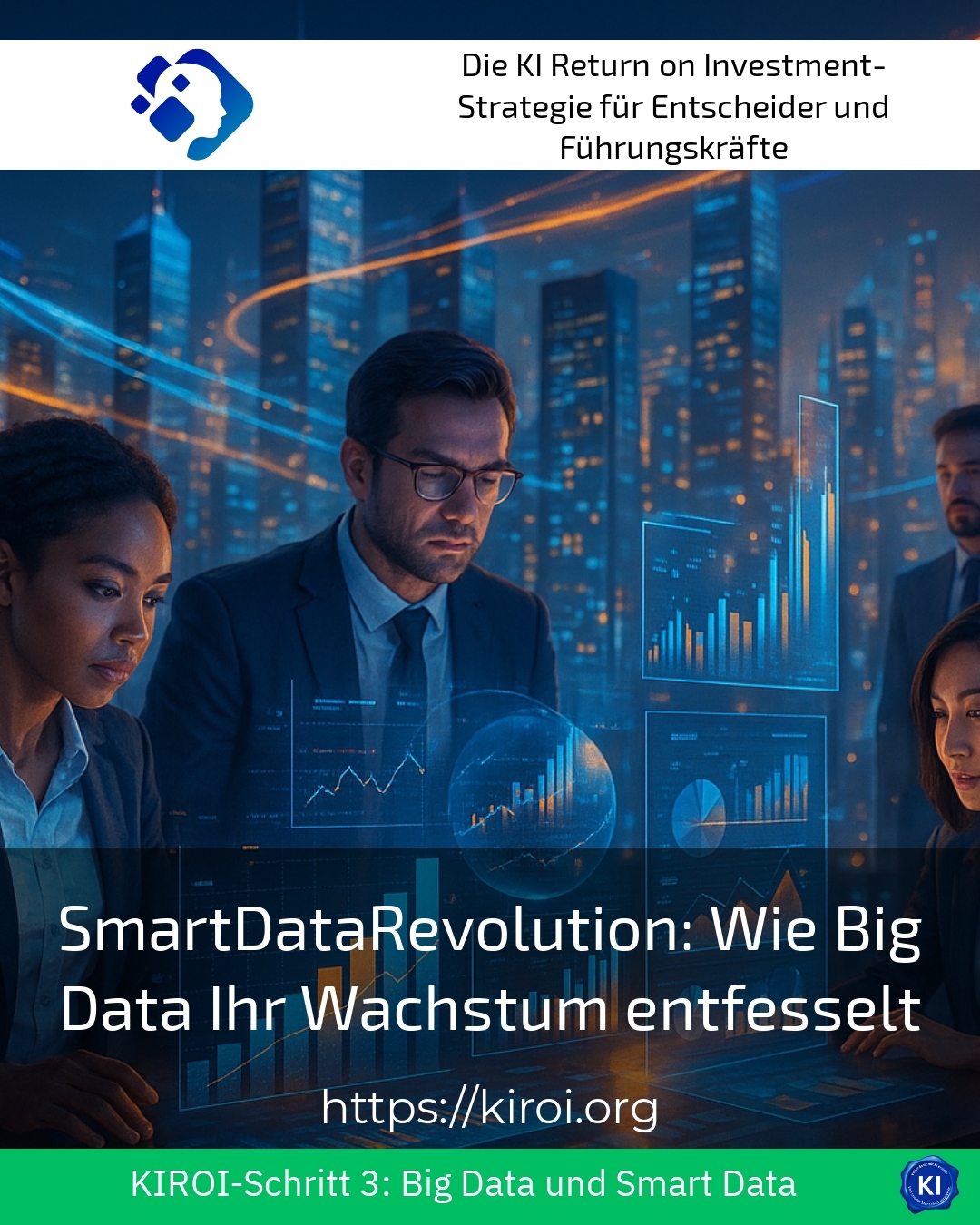
Imagine your company could anticipate every single customer wish before it's even expressed. SmartDataRevolution: How Big Data Unleashes Your Growth is currently changing the way successful organisations work and grow. While many leaders are still hesitant, pioneers are already leveraging intelligent data analytics for measurable growth. In this post, you'll learn how to harness this transformation for yourself.
The SmartDataRevolution: How Big Data Unleashes Your Growth and Opens Up New Opportunities
Every day, unimaginable amounts of digital information are generated worldwide. Companies collect customer data, transaction histories and behavioural profiles. At first glance, this flood of data seems overwhelming and chaotic. Yet it is precisely here that enormous potential lies hidden. Intelligent analytical methods transform raw data into valuable insights. This creates competitive advantages that were previously unthinkable.
Leading companies in retail are already using predictive models for inventory planning. A major fashion retailer significantly optimised its stock levels through demand forecasting. The return rate noticeably decreased because customers received more suitable recommendations. Similarly, the logistics industry uses real-time analyses for route optimisation. Haulage companies are reducing fuel costs and delivery times simultaneously through data-driven decisions.
In healthcare, analytical systems support doctors with complex diagnoses. Hospitals detect outbreaks of infection earlier through pattern recognition in patient data. Insurance companies calculate risks more precisely and offer more individualised tariffs. These developments clearly show: data-driven decisions support better outcomes in almost all industries.
Strategic data utilisation as a growth driver
Many leaders come to transruption coaching with similar challenges. They report data silos that isolate departments from one another. Often, there is a lack of a clear strategy for the meaningful use of existing information. Others struggle with outdated systems that make modern analytics difficult. Still others are looking for ways to reconcile data protection and innovation.
The financial industry impressively demonstrates the possibilities offered by intelligent data utilisation. Banks detect fraud attempts in real time through behavioural analyses of transactions. Asset managers use algorithmic models for their clients' improved investment strategies. Fintech companies are revolutionising lending through alternative, data-based creditworthiness checks. These innovations are not accidental but arise from systematic data strategies.
In the manufacturing industry, predictive maintenance enables significant cost savings for companies. Sensors continuously monitor machine parameters and report impending failures in a timely manner. Production lines optimise themselves autonomously based on real-time quality data. Automotive manufacturers reduce scrap rates through learning systems in quality control. These examples illustrate the transformative potential of systematic data analysis.
Best practice with a AIROI customer
A medium-sized trading company from a German-speaking region approached us with a common challenge. The company possessed extensive customer data from various sales channels, but this data was stored in separate systems. The marketing department lacked a unified customer view, which led to inefficient campaigns. As part of the transruption coaching, we collaboratively developed a step-by-step integration strategy for the existing data sources. First, we identified the most important data streams and prioritised their consolidation based on business value. Subsequently, we guided the implementation of a central customer data platform with clear governance rules. The team received impetus for the development of meaningful dashboards and automated reports. After several months of intensive support, those responsible reported significantly improved conversion rates in the online shop. The personalising of email campaigns led to higher open rates and more repeat purchases. Particularly pleasing was the increased collaboration between IT and Marketing through shared objective definitions. This project exemplifies how structured support can break down data silos and create real added value.
SmartDataRevolution: How Big Data Unleashes Your Growth through Customer Understanding
A deep understanding of customer behaviour is a crucial competitive factor today. Streaming services analyse usage patterns for real-time personalised recommendations. E-commerce platforms dynamically adapt product displays to individual preferences. Telecommunications providers identify churn intentions early and can take targeted countermeasures. These applications demonstrate how customer-centricity becomes tangible through data analysis.
In tourism, tour operators use booking data for tailored package deals and recommendations. Hotels dynamically optimise their pricing based on demand forecasts and competitor analyses. Airlines analyse passenger data for improved services throughout the journey. Cruise companies individually personalise onboard programmes according to their guests' interests.
Clients often report initial concerns regarding data protection and customer acceptance. These worries are valid and deserve serious consideration in every project. However, transparent communication and genuine customer value often create surprising acceptance. People willingly share data when they receive relevant experiences in return.
Technological foundations for data-driven growth
The infrastructure for intelligent data utilisation has fundamentally changed in recent years. Cloud platforms now enable scalable analytical capabilities without high initial investments. Machine learning is increasingly finding its way into standard applications and business processes. Real-time streaming technologies process data streams immediately after their creation without delay [1].
Energy suppliers are using IoT sensors for smart grids and consumption optimisation. Agricultural businesses are already using satellite data and soil sensors for precision farming today. Cities are analysing traffic flows for optimised traffic light control and real-time parking space management. The construction industry is increasingly using digital twins for project planning and building management.
However, many data initiatives fail not because of the technology, but due to other factors. A lack of data culture, insufficient expertise, and unclear responsibilities often hinder progress. This is why transruptions-Coaching supports organisations in addressing cultural aspects alongside technical ones. The combination of strategy, technology, and people makes the crucial difference.
Data Quality as the Foundation of Every Smart Data Revolution: How Big Data Unleashes Your Growth
Even the most advanced analysis methods inevitably fail with poor data quality. Incomplete customer master data leads to inaccurate segmentation and missed marketing opportunities. Inconsistent product information causes frustration for customers and internal teams alike. Outdated supplier data results in supply chain problems and unnecessary costs for businesses.
Pharmaceutical companies invest heavily in the quality assurance of clinical trial data for regulatory approvals. Banks systematically scrutinise transaction data for anomalies and regulatory compliance. Insurance companies meticulously validate claims data to prevent fraud and overpayments. These industries demonstrate how data quality management can become an integral business process.
In transruptions coaching, we support teams in establishing sustainable quality processes for data. This involves not only technical validation rules but also responsibilities. Data Stewardship must be embedded within organisations to achieve long-term success. Only then can trustworthy datasets be created as the basis for valuable analyses.
Best practice with a AIROI customer
An industrial engineering company sought guidance on implementing predictive maintenance. The initial situation was complex, as machine data was collected but barely used systematically. Unplanned downtimes caused significant production losses and customer dissatisfaction in the service business. As part of the coaching, we first developed a clear vision for data utilisation. Which machines should be prioritised, and which data was actually relevant? Together, we developed a pilot project of manageable scope but with a significant impact. The teams received impetus for collaboration between production, IT, and data science. Following the successful pilot phase, those responsible reported a noticeable reduction in unplanned downtime. Service technicians were able to plan maintenance assignments better and procure spare parts in a timely manner. The new data literacy that had grown throughout the company was particularly valuable. Employees now understood the value of systematic data collection and maintenance in their daily work. The project served as a beacon for further digitalisation initiatives throughout the corporate group. This development shows how smaller pilots can effectively initiate large transformations.
Ethics and responsibility in data handling
As data usage increases, so does the responsibility for ethical conduct significantly. Algorithmic decision-making systems can unintentionally amplify biases and promote discrimination. Personal data requires the utmost care in collection, storage, and processing at all times. The European General Data Protection Regulation sets important frameworks for responsible data usage [2].
In human resources, companies are increasingly using analytical methods for applicant selection and performance appraisal. Particular sensitivity is required here to ensure fair procedures for everyone. Credit decisions by automated systems must always be designed to be transparent and comprehensible. Data-based insurance premiums must not lead to social exclusion of certain groups.
Media companies face the challenge of carefully balancing personalisation and filter bubbles. Social networks must be able to reconcile user interests with societal responsibility. Health applications navigate the sensitive tension between utility and potential for misuse. These examples highlight: data ethics is not a restriction, but a prerequisite for sustainable innovation.
The Human Dimension of the Smart Data Revolution
Despite all technological possibilities, people remain important at the heart of successful data strategies. Analytical insights only become actionable decisions through human interpretation. Leaders must develop data literacy to critically evaluate data-driven recommendations. Teams need psychological safety to collaboratively discuss data-based insights openly.
In sales, analytical tools support field staff in prioritising customer contacts. In marketing, segmentation helps campaign managers target potential customers precisely. In customer service, analyses enable faster problem resolution by better preparing agents. These applications demonstrate that technology and people ideally complement each other.
Many clients report resistance within their organisations to data-driven approaches initially. Employees fear surveillance or the loss of their expertise and experience. Transruption coaching deliberately addresses these concerns through participatory design of the change processes. This gradually creates acceptance and genuine commitment to data-based transformation.
My AIROI Analysis
The systematic use of data for business decisions is no longer a temporary fad. It is rapidly evolving into an indispensable part of successful corporate management across all industries. Organisations investing in data literacy today are creating sustainable competitive advantages for tomorrow. This is not primarily about technology, but about culture and skills.
From my experience supporting numerous transformation projects, I recognise recurring patterns of success. Successful organisations begin with specific business questions rather than technology selection as their primary focus. They invest in data quality and governance before sensibly starting complex analyses. They consciously foster data-savvy talent and create interdisciplinary teams for innovation projects.
At the same time, I often see avoidable mistakes that slow down or cause initiatives to fail. Overly ambitious large projects without quick successes rapidly lose organisational support after a while. Isolated data science teams without links to specialist departments frequently produce irrelevant results. A lack of executive sponsorship repeatedly leads to a shortage of resources and political resistance within organisations.
And so, my recommendation is: start with manageable pilot projects that demonstrate genuine added value. Gradually build up competencies and systematically learn from early experiences. Anchor data responsibility within executive management and create clear governance structures for it. Support from experienced partners can help to avoid typical pitfalls successfully. Transruption coaching offers precisely this structured support for your data-driven transformation projects.
Further links from the text above:
[1] Gartner Definition: Big Data
[2] General Data Protection Regulation (GDPR) – Full Legal Text
For more information and if you have any questions, please contact Contact us or read more blog posts on the topic Artificial intelligence here.








 Deutsch
  English (UK)