
Have you ever wondered why some companies seem to be able to predict the future with seeming ease, while others struggle in the dark and are surprised by changes in the market?
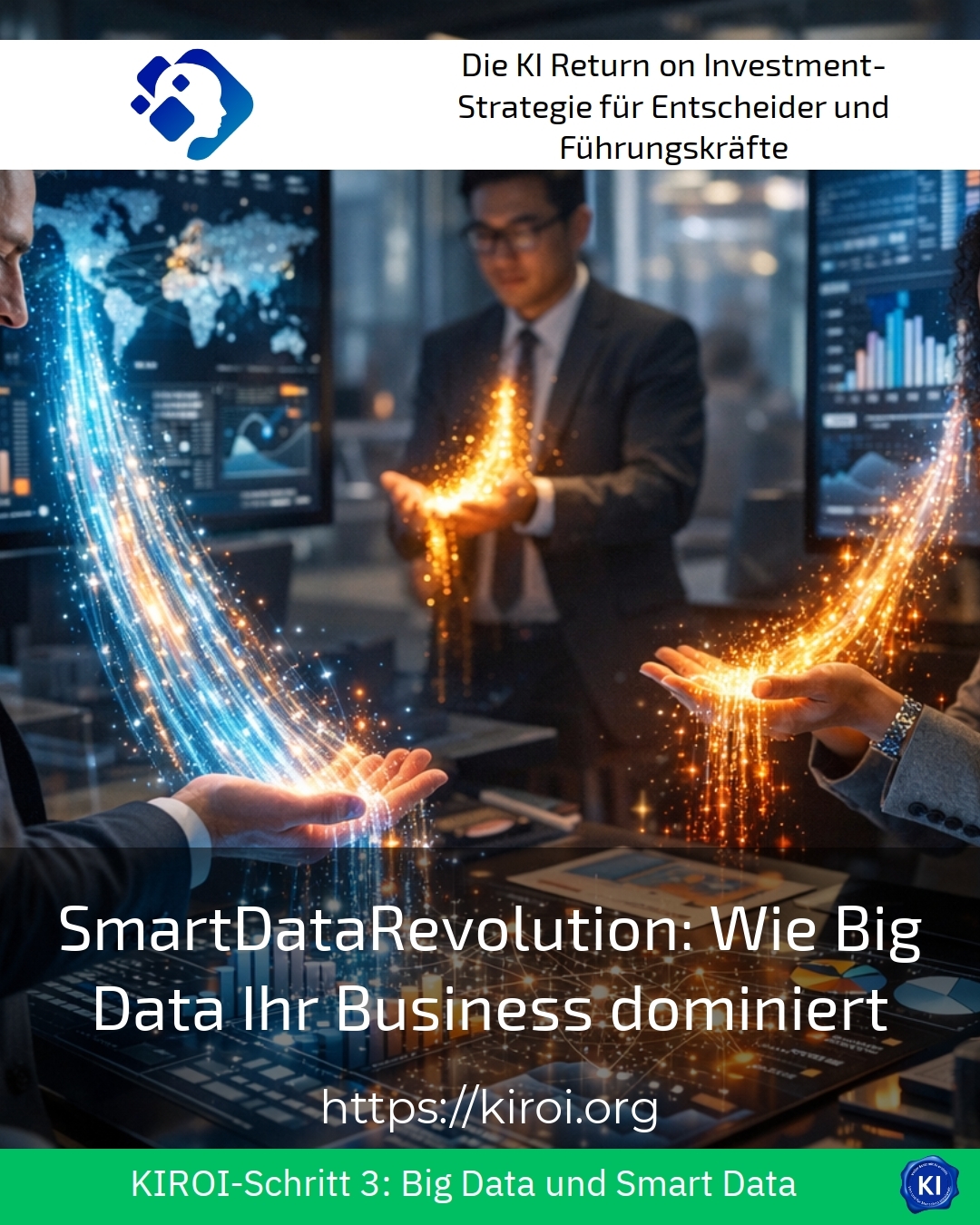
The answer lies in one SmartDataRevolution: How Big Data Dominates Your Business, This transformation is currently permeating all industries and bringing about fundamental changes. It is no longer just about simply collecting information. Instead, a completely new paradigm of decision-making is emerging. Organizations that understand and actively shape this transformation gain significant competitive advantages. At the same time, transruptive coaching provides valuable support for such complex projects. Let’s explore together the mechanisms at work here.
The fundamental transformation through SmartDataRevolution
Companies today generate unimaginable amounts of information. Every customer interaction leaves digital traces. Production processes continuously generate measurement data. Logistics chains produce real-time location data. This flood of data at first seems overwhelming. But this is precisely where enormous potential lies hidden. Intelligent analysis tools extract valuable insights from it. Often, clients report surprising insights through systematic evaluations.
In retail, for example, leading providers analyze their customers’ purchasing behavior in great detail, allowing them to optimize assortments, dynamically adjust prices, and deliver personalized recommendations that, in turn, lead to higher conversion rates [1]. Logistics companies use sensor data from their fleets to adapt routes in real time and significantly reduce fuel consumption. Insurance companies are now assessing risks much more precisely by integrating diverse data sources.
Best practice with a AIROI customer
A medium-sized manufacturer of industrial components faced the challenge of significantly reducing its production losses while optimizing maintenance costs. As part of intensive coaching support through transruptive coaching, a comprehensive inventory of all available data sources was initially conducted. It turned out that numerous sensors were already providing valuable information, but they were not systematically evaluated. Together, we developed a strategy for integrating these data streams into a central analysis platform. Implementation took place gradually over several months. First, the most critical machines were equipped with additional measurement sensors. Subsequently, we trained employees in using the new dashboards and evaluation tools. The result significantly exceeded initial expectations. The unplanned downtime was reduced by more than forty percent. At the same time, maintenance costs decreased because repairs could now be planned in advance. The management regularly reports on the positive impact on overall profitability.
Strategic application areas of the SmartDataRevolution
The applications range across virtually all business areas. In marketing, data-driven approaches help to more precisely target audiences. Campaigns can be optimized in real time. Budgets are used more efficiently. Financial departments benefit from improved forecasting models. Liquidity planning gains in accuracy. Human resources managers gain insights into employee satisfaction and turnover risks.
Banks have long recognized the value of analyzing transaction data for fraud prevention, which is why they now employ highly sophisticated algorithms that detect suspicious patterns within milliseconds and automatically trigger warnings [2]. Telecommunications providers analyze network load to identify capacity bottlenecks early on and to target investments. Energy providers optimize grid stability by intelligently linking consumption forecasts with weather data and the production capacities of renewable energy sources.
In healthcare, fascinating applications are emerging. Hospitals use patient data to improve treatment outcomes. Pharmaceutical companies are accelerating drug development through data-driven research. Health insurance companies can tailor prevention programs more precisely. In doing so, the human being remains at the center of everything. The technology serves as a tool, not an end in itself.
Overcoming challenges in the SmartDataRevolution
The path to a data-driven organization rarely follows a straight line. Many companies struggle with fragmented data silos. Departments often work with different systems. Integration requires technical expertise. At the same time, data protection requirements must be observed. Compliance requirements set clear limits. Employees need training in using new tools. Cultural changes take time and patience.
For example, a leading automotive supplier realized that its various production sites used completely different data formats, making comprehensive analysis almost impossible and requiring significant investment in standardization [3]. Retail companies face the challenge of connecting online and offline channels and creating a uniform customer image. Machine builders must retrofit their products with sensors to benefit from predictive maintenance.
Best practice with a AIROI customer
A regional retail chain with several dozen stores approached us with a specific request. The management team had realized that valuable information about customer behavior remained untapped. Point-of-sale systems, customer cards, and online orders existed as separate data worlds. As part of the transruptive coaching process, we developed a roadmap for the gradual integration together. First, we conducted interviews with executives from all departments. During these discussions, we identified the most pressing questions and the biggest pain points. Subsequently, we prioritized the implementation steps based on effort and expected benefits. A central data warehouse was implemented that brings together all data sources. Modern visualization tools now enable non-experts to conduct insightful analyses. Store managers can now track daily sales trends and adapt assortments. The marketing department creates personalized offers based on individual purchasing behavior. Customer satisfaction has increased measurably, and sales are developing positively.
Understanding and utilizing technological fundamentals
Modern analytics platforms offer impressive possibilities. Cloud solutions scale flexibly with the data volume. Machine learning algorithms recognize patterns that people hide. Real-time processing enables immediate responses. Visualization tools make complex relationships understandable. Even medium-sized companies can now use technologies that were previously reserved for large corporations.
Logistics service providers, for example, rely on real-time tracking with GPS sensors, combine this with traffic data and weather information, and can thus significantly improve their delivery time forecasts, which in turn increases customer satisfaction [4]. Manufacturing companies implement digital twins of their production facilities to initially test process optimizations virtually. E-commerce platforms use recommendation algorithms that analyze the purchasing behavior of millions of users and generate personalized product suggestions.
However, the technical infrastructure is only one aspect of the equation. Equally important is the competence of the employees. Data analysts are in high demand as skilled professionals. Executives must learn to make decisions based on data. Training programs provide the necessary skills. Change management processes accompany cultural transformation.
Taking advantage of SmartDataRevolution as a competitive advantage
Companies that make data-driven decisions act faster and more precisely. They recognize market trends early. Customer churn can be predicted and prevented. Product developments are based on actual needs. Resources are used more efficiently. The competitive position improves sustainably.
A media company was able to fundamentally revise its content strategy by analyzing user behavior and doubling the dwell time on its platforms, which directly led to higher advertising revenue [5]. Hotel chains optimize their pricing by taking into account booking trends, event calendars, and competitive prices. Airlines maximize their seat utilization by sophisticated revenue management systems.
The speed of change continues to accelerate. Those who do not act today risk losing out. At the same time, there are enormous opportunities for organizations that boldly move forward. The first step often involves cataloging existing data sets. Then comes the identification of use cases with high business value. Pilot projects provide initial insights and create acceptance.
My AIROI Analysis
The comprehensive analysis clearly shows that data-driven strategies are no longer an option today but have become a necessity for sustainable business success; the concrete implementation must always be tailored individually to the specific framework conditions and objectives of the respective company. SmartDataRevolution: How Big Data Dominates Your Business offers enormous opportunities, but at the same time requires careful planning and professional guidance.
From my experience in guiding numerous transformation projects, I can identify some key success factors. First, organizations need a clear vision of the questions they want to answer with data. Technology alone does not solve business problems. Second, involving all relevant stakeholders from the outset is crucial. Obstacles often arise from ignorance or uncertainty. Third, companies should start with manageable pilot projects. Rapid successes create momentum and acceptance. Fourth, transformation requires continuous investment in employee competencies. Fifth, data protection must be considered from the outset.
Transruptions coaching can provide valuable insights and serve as a support for these complex projects. The external perspective helps to identify blind spots. Methodological support structures the process. Experience from comparable projects accelerates implementation. The future belongs to companies that understand data as a strategic resource and use it systematically.
Further links from the text above:
[1] McKinsey Digital – Big Data Analytics Insights
[2] Gartner – Definition and Trends of Big Data
[3] Harvard Business Review – Data Analytics Articles
[4] Forbes – Bernard Marr on Big Data
[5] IBM – Big Data Analytics Solutions
For more information and if you have any questions, please contact Contact us or read more blog posts on the topic Artificial intelligence here.








 Deutsch
 English (UK)