
Have you ever wondered why some property portfolios seem to run effortlessly, while others constantly struggle with failures, energy waste, and skyrocketing operating costs?
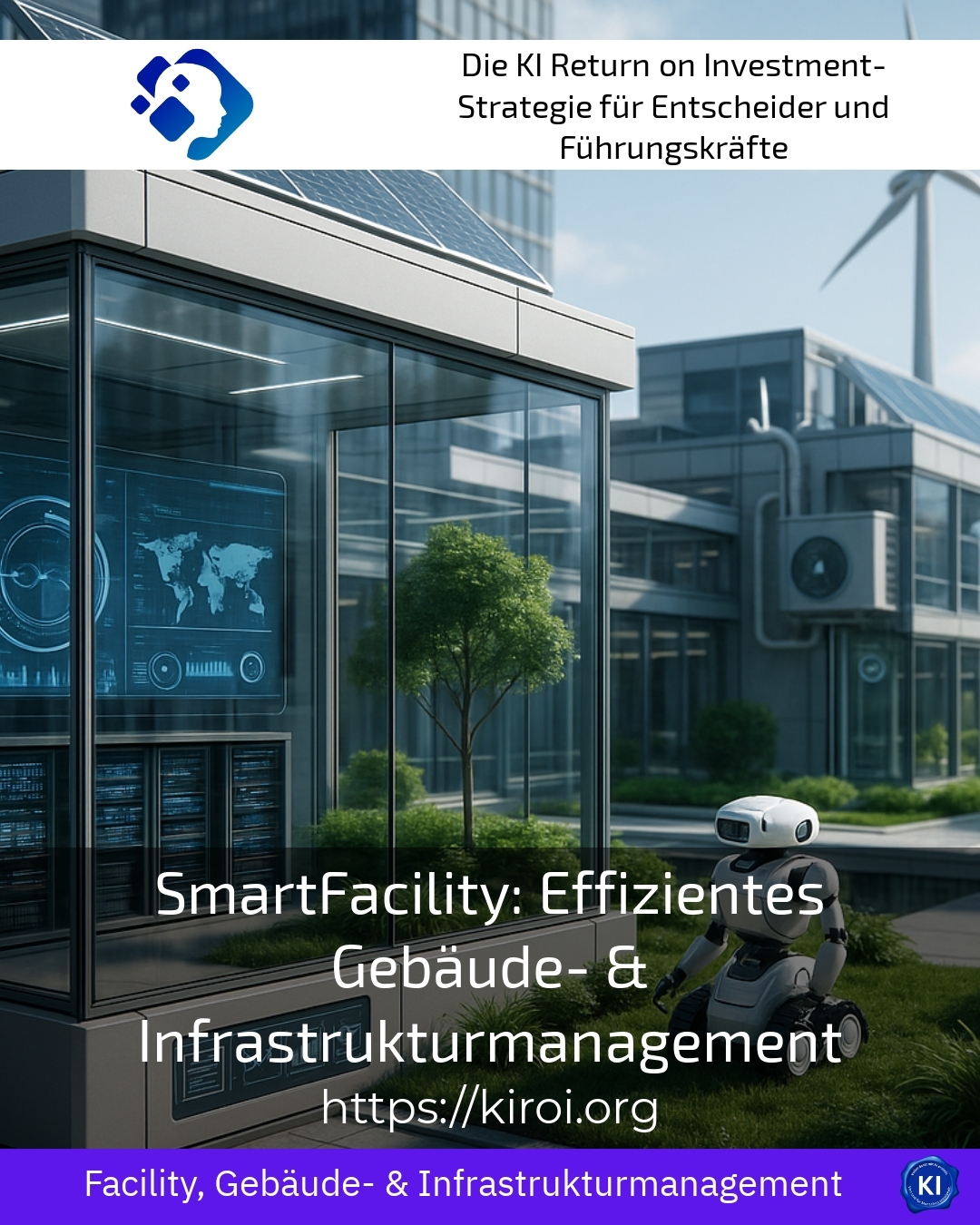
The answer often lies in a well-thought-out SmartFacility- an approach that combines modern technologies with intelligent control, thereby opening up completely new possibilities. At a time when resources are becoming scarcer and sustainability is no longer just a buzzword, but has become an economic necessity, decision-makers are looking for ways to future-proof their properties. The integration of sensor technology, data analysis and automated processes is fundamentally changing how we think about the management of real estate and technical systems. But what does this mean in concrete terms for companies, municipalities and operators of large building complexes who are confronted with complex challenges on a daily basis?
Understanding digital transformation in property management
Traditional approaches are increasingly reaching their limits. Reactive maintenance, paper-based documentation and isolated systems cause significant inefficiencies. Modern solutions therefore rely on connected ecosystems. These enable a holistic view of all relevant parameters.
For example, let us consider a large hospital with several thousand square metres of floor space, where the air conditioning in the operating theatres is just as critical as the monitoring of the emergency power supply and the control of the lift systems. This clearly shows that a SmartFacility-concept achieves far more than conventional building management systems, because it not only controls individual trades, but also recognises correlations and acts proactively. Another clear example is provided by logistics centres, in which temperature zones for different product groups must be precisely maintained while energy consumption is simultaneously optimised without compromising product quality [1].
University campuses also benefit enormously from intelligent control systems. They efficiently coordinate lecture hall lighting, ventilation and access control. This creates pleasant learning environments while reducing operating costs.
Best practice with a AIROI customer
A medium-sized shopping centre operator faced the challenge of equipping its twelve sites with a standardised digital infrastructure, after the existing siloed systems had led to significant additional costs and loss of information. As part of a transruptions coaching programme, we supported the project team over a period of eighteen months in the phased implementation of a central control platform that integrates all systems, from lighting and ventilation to car park monitoring. Staff frequently reported that, thanks to the new dashboards, they were able to gain a complete overview of all sites for the first time and identify anomalies at an early stage, before they led to costly outages. The ability to compare consumption patterns across the various centres and thus identify best practices internally proved particularly valuable, resulting in energy savings of around seventeen per cent within the first year. The transruptions coaching not only supported the technical implementation but also provided impetus for changing internal processes and training staff, who are now able to work independently with the new systems.
SmartFacility as a lever for sustainable operational management
Sustainability and economic viability are by no means mutually exclusive. Rather, they go hand in hand. Intelligent systems continuously optimise resource use. They reduce waste while simultaneously lowering operating costs.
Industrial companies with large production halls now use predictive maintenance concepts that can predict when a machine or a building services component will fail based on vibration sensors, temperature measurements and power consumption analyses. This proactive approach makes it possible to plan maintenance work precisely. This avoids unplanned downtime and extends the lifespan of the systems [2]. Hotels are also among the sectors that particularly benefit from intelligent building control, as the comfort of guests here must be directly linked to energy efficiency.
A luxury hotel reported, for example, that the automatic adjustment of room temperature based on occupancy data and weather forecasts not only reduced energy consumption by about twenty percent, but at the same time increased guest satisfaction because the rooms always had the desired temperature upon arrival. Airports represent another fascinating field of application. Here, huge terminal areas have to be air-conditioned. At the same time, thousands of passengers must be guided safely and critical infrastructures permanently monitored.
Data-driven decision making in day-to-day property management
The availability of real-time data is fundamentally changing decision-making processes. Intuition and experience remain important, but they are supplemented by reliable information. This leads to better outcomes for everyone involved.
Local authorities responsible for schools, administration buildings and sports facilities frequently face the challenge of deploying limited budgets in such a way that both ongoing operations can be secured and necessary modernisation work financed. A SmartFacility-approach can provide support here. It identifies potential savings and prioritises investments according to objective criteria. Resources are thus targeted precisely where they deliver the greatest benefit.
Data centres represent a particularly critical use case because even the smallest fluctuations in air conditioning can lead to failures that entail not only technical but also considerable economic consequences. Retail chains are increasingly using intelligent systems. They analyse customer flows and optimise lighting and air conditioning. This improves the shopping experience while simultaneously reducing costs [3].
Best practice with a AIROI customer
A housing association with a portfolio of over three thousand units across various neighbourhoods approached us with the aim of reducing operating costs for its tenants whilst simultaneously cutting its own administrative burden, which was considerable due to the need to coordinate numerous service providers and handle complaints. The transruptions coaching programme supported the organisation in first conducting a review of the existing technical infrastructure and then developing a roadmap for gradual digitalisation, with particular emphasis placed on involving all stakeholders. Staff from the property management team frequently reported that they were initially sceptical about the new technologies, but through intensive training and the opportunity to contribute their own ideas, they became genuine advocates of the change. The fact that the system now automatically reports maintenance requirements and coordinates tradespeople’s visits was particularly well received; this has significantly reduced response times in the event of faults and led to a measurable increase in tenant satisfaction. The holistic support provided by the transruptions coaching programme ensured that not only were technical solutions implemented, but the organisational conditions necessary for their successful operation were also put in place.
Integration as the key to Smart Facility success
Isolated systems create data silos and prevent holistic optimisation. Successful digitalisation projects therefore rely on integration. They connect different trades and data sources with one another. This creates a comprehensive picture of the property.
Pharmaceutical companies, with their stringent requirements for cleanrooms, temperature control and documentation, serve as a prime example of the benefits offered by end-to-end networking. Here, not only must technical parameters be seamlessly monitored, but all data must also be archived in a tamper-proof manner for regulatory purposes, which is only efficiently possible through integrated systems. Cultural institutions such as museums and archives face similar challenges. They must protect sensitive exhibits from fluctuations while simultaneously ensuring that visitor areas are pleasantly air-conditioned [4].
Manufacturing companies often report that it was only the combination of building automation and production control that enabled real synergies, because, for example, factory ventilation is now automatically adjusted to the production schedule and switches to energy-saving mode during stoppages. Retirement homes also benefit from integrated approaches. They combine convenience functions with safety systems. This creates living spaces that promote independence while offering protection.
Mastering implementation challenges
Every transformation project comes with hurdles. However, these are surmountable. With the right strategy and guidance, even complex endeavours succeed. What is crucial is a structured approach.
Many organisations that come to us regarding digital property management report failed pilot projects, a lack of acceptance among employees or systems that were indeed purchased but never properly used. Transruptions coaching addresses these exact pain points. It not only analyses technical requirements; it also takes into account organisational frameworks and human factors.
Exhibition organisers provide a clear example. They need to configure their halls flexibly for a wide variety of events. In doing so, safety regulations must be observed and energy consumption optimised. Office buildings with modern workplace concepts such as hot-desking and activity-based working also require intelligent systems that record occupancy, condition rooms accordingly and at the same time provide data for space optimisation [5].
My AIROI Analysis
My in-depth involvement with numerous projects in the field of smart property management has shown me that the technological aspect is often overemphasised, whilst the truly decisive factors for success lie in other areas. Organisations that successfully implement their digitalisation initiatives are consistently characterised by a clear vision that is supported and communicated by senior management, as well as by a willingness to fundamentally question existing processes, rather than simply replicating analogue workflows in digital form.
Transruption coaching has proven to be particularly effective. It combines technical expertise with change management. This ensures that not only are systems implemented, but people are brought along on the journey too. This creates the foundation for sustainable success. Examples from a wide range of industries illustrate that there is no one-size-fits-all solution; instead, every organisation must find its own path that suits its culture, resources and specific requirements.
I was particularly encouraged by the fact that even organisations with limited budgets or older buildings can achieve significant improvements if they take a strategic approach and focus on the most impactful measures. The SmartFacilityThought is not an end in itself here. Rather, it serves the goal of creating better environments for people. At the same time, resources are conserved and economic goals are achieved. This triple value creation is what makes the approach so attractive to future-oriented decision-makers who have recognised that the way we operate buildings and infrastructure can make a significant contribution to tackling the major challenges of our time.
Further links from the text above:
[1] Baunetz Wissen – Building Services Engineering Basics
[2] VDI guidelines for building operation and maintenance
[3] GEFMA – Digitalisation in Facility Management
[4] DGNB – Sustainable Building and Operation
[5] Bitkom – Smart Building Initiatives
For more information and if you have any questions, please contact Contact us or read more blog posts on the topic Artificial intelligence here.








 Deutsch
  English (UK)